
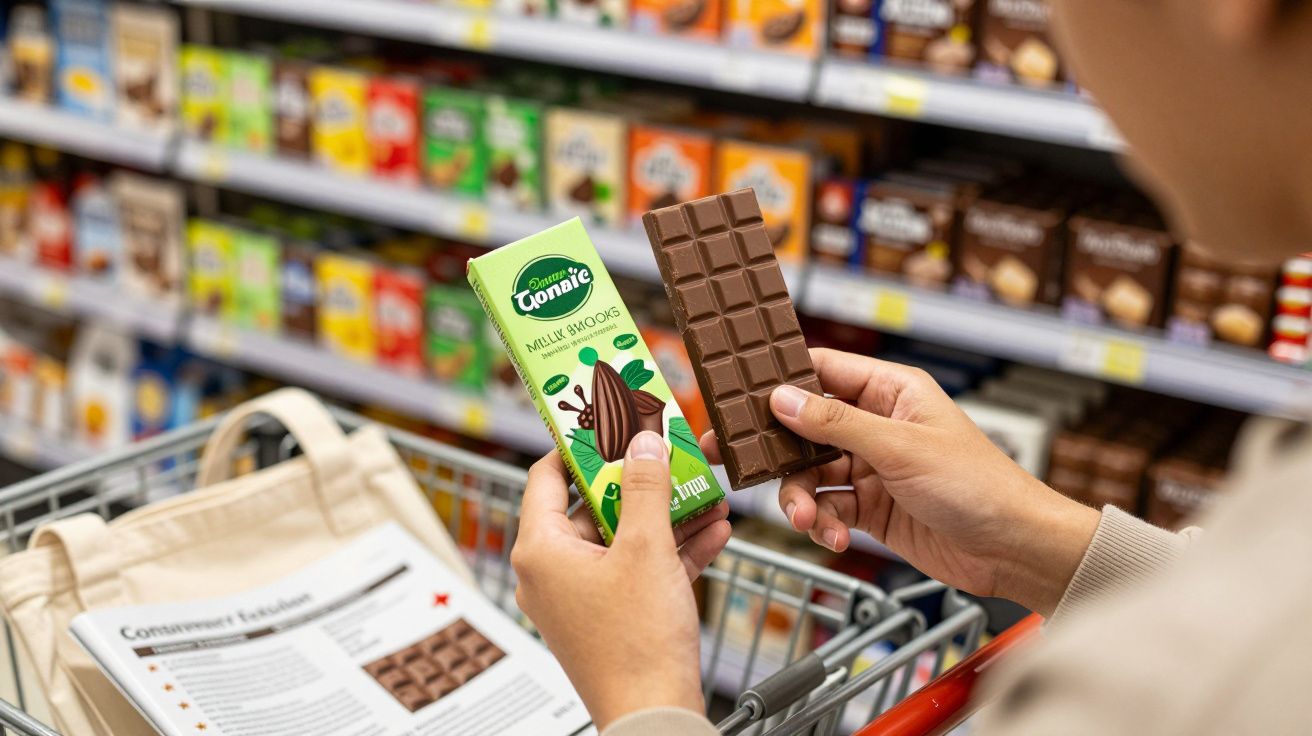
When you’re stood in front of the supermarket shelves, one thing jumps out immediately: an enormous range of milk chocolate. Classic dairy, “extra smooth”, caramelised, studded with nuts - it all looks tempting. A special issue from the well-known magazine 60 Millions de consommateurs set out to scrutinise this exact corner of the aisle, putting industrially produced supermarket milk chocolate bars under the microscope. The findings are sobering overall, though two products do offer a couple of unexpected bright spots.
What the major test actually assessed
The review looked only at mass-produced bars sold in supermarkets - not small-batch creations from chocolatiers. For each bar, the experts examined several dimensions in detail:
- Ingredients list: amount of sugar, saturated fat content, cocoa percentage, fibre, and emulsifiers such as lecithin
- Nutritional profile: Nutri-Score rating, energy value, and levels of fat and sugar
- Social and environmental criteria: organic certification, fair trade commitments, and supply-chain transparency
- Deforestation risk in West Africa, the central growing region for cocoa beans
The nutritional scoring was applied stringently. A quick comparison with dark chocolate highlights the underlying issue: dark chocolate typically ends up with a Nutri-Score D, while milk chocolate generally slips another step to E. The main reason is the higher proportion of sugar - and, in many cases, more fat as well.
The tests make one thing plain: milk chocolate remains a confectionery product with a notable health downside - even among the better-rated options.
Alongside health metrics, the assessment also considered how manufacturers back up claims around “sustainable cocoa”. Many brands rely on blends that mix certified and non-certified cocoa. Tougher schemes such as Fair for Life or Symbole Producteurs Paysans scored extra points because they come with clearer standards and more robust checks.
Only two milk chocolate bars deliver a slightly better result
The most surprising takeaway is also the simplest: out of all the milk chocolate bars assessed, only two stood out as meaningfully better - and even those managed just 11 points out of 20. In other words, there is no “ideal” product here, only the least problematic choice compared with the rest of the shelf.
Ethiquable milk chocolate bar: organic, fair trade, and no lecithin
One of the two higher-ranked bars comes from Ethiquable. This milk chocolate, designed to melt gently in the mouth and made with cocoa from Peru, contains 32% cocoa. It carries both organic and Fairtrade labelling and avoids lecithin as an emulsifier. In price terms, it typically sits around €2.30–€2.70 per bar, placing it mid-pack among more premium options.
The test team highlighted three main strengths:
- a comparatively short ingredients list
- a higher cocoa content than many standard supermarket bars
- credible, independent certifications for organic production and fair trade
Monoprix milk chocolate bar: more affordable, with a fair trade claim
The second bar to reach 11 out of 20 is a Monoprix own-label milk chocolate bar that carries an explicit fair trade message. The testers also viewed the balance of price, quality and ethical commitments positively. Importantly, the Fairtrade certification is provided by an independent body, which gives extra weight to the stated cocoa origin claims.
Just behind these two, well-known brands follow - for example, Côte d’Or scored 10 out of 20. Near the bottom sat a very soft, very sugary Lindt variety, which received only 8.5 out of 20. The key criticism was its extremely high sugar and fat content - a clearly unfavourable nutritional profile.
The “winners” are not healthy snacks - they are simply the smaller indulgence compared with the rest of the aisle.
What this means for everyday supermarket shopping
The findings underline a blunt reality: there are differences between brands, but no product magically turns milk chocolate into a wellness food. Every bar tested remains energy-dense, sweet and fatty. Nutrition specialists commonly advise limiting intake to around two small squares a day if you eat milk chocolate regularly.
One interesting detail in the dataset is that cocoa butter and cocoa powder levels vary less than many people assume. The decisive factor is usually sugar. If you want to make a slightly better choice, don’t rely only on the cocoa percentage on the front - also compare the grams of sugar and saturated fat per 100 g on the nutrition table.
A further practical point - often overlooked - is portion design. Some bars are made to be easy to overeat (very soft texture, high sweetness, large segments). Choosing bars with smaller squares or a firmer snap can make it easier to stick to the “a couple of pieces” approach without feeling deprived.
How to spot a slightly better milk chocolate bar
If the two higher-rated bars aren’t available in your local supermarket, you can still pick similar products using a few straightforward rules:
- Keep the ingredients list short: fewer components usually means less intensive processing. Added vegetable oils or long chains of emulsifiers can point to heavier industrial formulation.
- Aim for at least 30% cocoa: using this threshold gets you closer to the level of the top-scoring bars in the test.
- Compare sugar: the nutrition panel quickly shows which bar contains relatively less sugar and saturated fat.
- Look for meaningful labels: organic certification combined with more demanding fair trade schemes such as Fair for Life, SPP or Max Havelaar suggests social criteria are being taken seriously too.
A glance at the Nutri-Score can also provide an extra clue, even if milk chocolate performs poorly overall. Within the category, there are still small but real differences.
Why milk chocolate remains a problem for health and the environment
The test touches on two major problem areas: effects on the body and the global supply chain. From a health perspective, consistently high sugar intake increases the long-term risk of tooth decay, weight gain and related conditions. The sugar–fat combination is also highly rewarding for the brain, which is why many people end up eating more than they intended.
On the production side sits cocoa farming. A large share of global cocoa comes from West Africa, where agriculture is frequently shaped by low incomes, fragile structures and pressure to keep expanding cultivated land. That dynamic can encourage the clearing of rainforest areas. Stricter fair trade programmes aim to secure higher earnings and improved environmental standards, but their reach is still far from universal.
It’s also worth remembering that environmental impact isn’t limited to cocoa alone. Packaging (especially multi-layer plastics) and the sourcing of other ingredients can raise a product’s footprint. Where possible, choosing bars with clearer sourcing statements and simpler packaging can support the same “less harm” intention that the test rewards.
Shopping more consciously won’t transform the entire industry overnight, but it does send a small signal towards fairer, more transparent production.
Practical tips for chocolate lovers who don’t want to give it up
The test does not argue for banning milk chocolate from your life. For many people it’s tied to childhood memories, comfort and simple pleasure. A more realistic approach is to buy it less often, choose better-quality options, and set clear limits on portion size.
A workable day-to-day compromise could look like this:
- choose smaller bars rather than automatically reaching for the 200 g format
- treat milk chocolate deliberately as a dessert after a meal, not as boredom snacking
- swap in darker chocolate with a higher cocoa percentage now and then, as it usually contains less sugar
- combine a couple of squares with fruit, nuts or plain yoghurt - it tends to satisfy faster
Labels can be confusing at first glance. Terms like “cocoa butter”, “cocoa mass” or “emulsifier (lecithin)” sound technical, yet they reveal a lot. Lecithin, for instance, helps processing and creates a smoother melt, but it isn’t a nutritional necessity. Bars that skip it often signal a more traditional approach to chocolate-making.
For parents, the question becomes even more pressing: children often prefer sweet milk chocolate. Clear boundaries help - for example, specific days or fixed amounts. If you also apply the quality criteria highlighted by the test, you can noticeably reduce sugar and fat intake across the weeks, without making chocolate entirely off-limits.






Comments
No comments yet. Be the first to comment!
Leave a Comment