
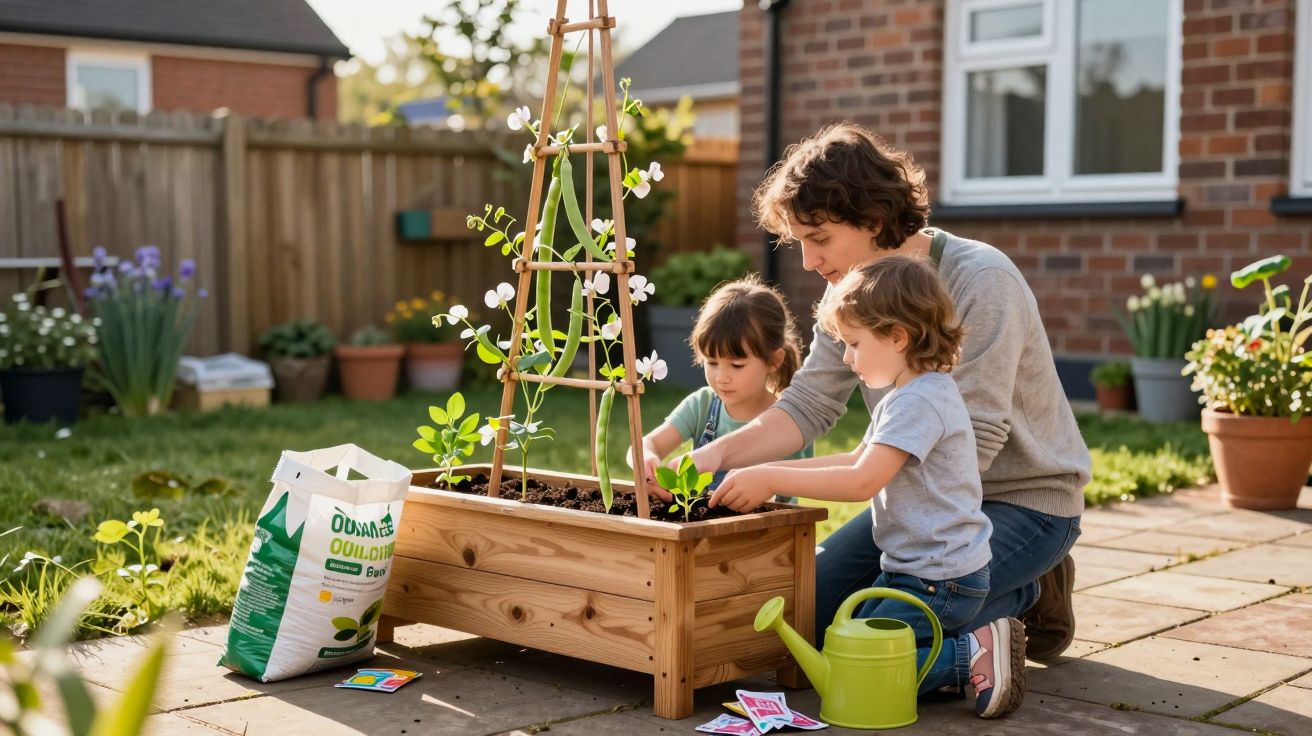
A new planter with trellis is arriving in Lidl stores, and it tackles several classic problems of small outdoor spaces in one go: not enough greenery, a lack of privacy, and very limited room. It’s especially relevant for anyone planning to spend spring on a balcony, terrace or tiny garden-without splashing out on bulky outdoor furniture.
What’s behind the Lidl planter trend
From 12 March, Lidl’s UK stores will stock the Parkside Planter With Trellis for £29.99. The idea is straightforward yet genuinely practical: a sturdy wooden planter box at the bottom for compost and plants, topped with a solid trellis that doubles as a decorative feature and a privacy screen.
One piece creates space for herbs, flowers and climbers-and turns bare areas into a green wall.
The planter holds roughly 20 litres of compost and supports up to 30 kg. That makes it suitable not only for a few scattered blooms, but also for fuller planting schemes. With a width of 60 cm, a depth of 28 cm, and a height of around 1 metre, it’s noticeable without swallowing half a balcony.
The wood comes pre-treated with a water-based stain and, according to the retailer, is weather- and UV-resistant. There’s also a fitted plastic liner, designed to protect the timber from constant moisture and make planting and repotting easier. Screws and instructions are included, so it’s ready to assemble and use in typical “middle aisle” fashion.
Why smaller gardens benefit most
Many city homes have nothing more than a narrow balcony or a compact terrace. Traditional raised beds or large troughs can look oversized and feel impractical. This Lidl planter with trellis uses a different approach: minimal floor space, more height.
- Needs very little footprint thanks to its 28 cm depth
- Vertical greening instead of pots scattered everywhere
- The trellis creates privacy without putting up a solid fence
- Easy to reposition-no permanent fixings required
That’s particularly useful for renters who aren’t allowed to attach anything to balcony railings or the building exterior. Rather than installing a privacy screen, you can use a movable piece that simply comes with you when you move. If you live on a busy road, fast-growing climbers can soften the view of traffic and concrete while creating a calmer feel outdoors.
Family-friendly: a mini bed for small hands
This planter isn’t just decorative-it can also be a simple way to introduce children to gardening. Because the planting area is raised, kids don’t have to crouch on the ground, but can still reach compost, watering can and leaves comfortably.
A small, personal bed helps children learn responsibility-without the garden looking like a freshly dug building site afterwards.
Parents can set clear zones: a “children’s section” in the planter for quick growers, and a mix of fragrant or colourful climbers trained up the trellis. That reduces stress because the entire lawn or flower border doesn’t become the experimental area.
Ideas: what children can plant in it
- Nasturtium: easy to sow, edible flowers, bold colours
- Sugar snap peas: climb well and provide small snacks straight off the stem
- Dwarf sunflowers: striking blooms and an obvious sense of progress
- Cherry tomatoes: ideal when there isn’t space for a full-size bed
Many parents are surprised by the behavioural effect: children tend to water more reliably when the bed is clearly “theirs”. The trellis strengthens that sense of ownership because the project feels like a mini stage-where something visibly changes week by week.
Getting the most from 20 litres of compost
With limited volume, a bit of planning pays off. Instead of planting at random, aim for a considered mix of herbs, flowering plants and climbers that won’t compete too aggressively.
| Plant type | Best for | Benefit in the Lidl planter |
|---|---|---|
| Rosemary, thyme | Sunny balconies | Stay relatively compact, strong scent, useful for cooking |
| Mint (kept in its own pot) | Partial shade | Vigorous growth, contained by the pot, great for iced tea |
| Nasturtium | Children’s/family projects | Trails and climbs, edible flowers, colourful living screen |
| Sweet pea, clematis, compact climbing rose | Longer-term greening | Uses the trellis well and looks like a living wall |
For the trellis, choose climbers that produce foliage quickly. Sweet peas, clematis, nasturtiums or climbing beans can cover the wooden frame in short order. If you prefer perennials, plan for winter protection-such as an insulating mulch layer, or fleece on very cold nights.
Care: low effort, consistent routines
Even though the timber is pre-finished, long-term upkeep still matters. Regular watering, occasional feeding, and reapplying stain every one to two years can extend the life of the planter significantly.
Simple routines-like a fixed evening watering slot-keep plants healthier and stop the planter becoming dried-out “decor”.
Practical day-to-day tips:
- Use plant feet, a tray, or felt pads so the base isn’t standing in puddles.
- In summer, water early morning or late evening to reduce evaporation.
- Apply liquid feed at a light dose every 2–3 weeks, especially for heavy feeders like tomatoes.
- Remove spent blooms regularly so plants put energy into new buds.
If time is tight, mix water-retaining granules into the compost or add a thin layer of expanded clay pellets beneath it. This creates a small reservoir and helps the planter cope with the occasional missed watering.
Privacy hack: turning the trellis into a living screen
Many people buy expensive plastic or fabric screening first, and only think about plants afterwards. This planter flips that logic: privacy comes from growth, not from sheet material.
A realistic example: a roof terrace sits right beside a neighbour’s flat, and conversations carry easily across a 5-metre gap. Rather than cluttering the railing with bulky items, a line of planters with trellises along the exposed edge can do the job. Within a month or two, climbers form a semi-transparent, living barrier. It won’t block sound much, but it will significantly break direct sightlines.
In high summer, dense foliage can also create gentle shade, cooling the area behind it slightly. Air tends to circulate better than behind rigid plastic screening, which can make compact balconies feel less stuffy.
Risks people often overlook
As convenient as the design is, a few points are worth taking seriously. The official maximum load is 30 kg-and compost, plants and retained water can add up faster than most people expect.
- Balcony load limits: in older buildings, distribute weight rather than placing everything near one corner by the railing.
- Wind load: the trellis can act like a small sail; in exposed locations, consider securing it to a wall or railing (where permitted).
- Drainage: ensure drainage holes don’t drip over the balcony edge onto a neighbour below.
- Pests: dense planting can attract aphids or slugs; quick checks help prevent an infestation.
Keeping these in mind can avoid unnecessary friction with neighbours or building management. In blocks of flats, it’s also sensible to check any house rules-particularly about dripping water and loading the balcony edge.
The Parkside Planter With Trellis in real UK living situations
The same product can play very different roles depending on how you live. In a single-person flat, it might become a stylish statement piece with scented jasmine climbing up the trellis. In a family home, it can double as a learning project and a privacy solution. In a terraced house garden, it can soften the transition between patio and lawn, giving the seating area a more sheltered feel.
One practical layout is to place two or three planters in a row behind a patio dining table. After a few weeks, the seating area feels like a small green alcove. Guests no longer look out onto wheelie bins or parked cars, but onto leaves, flowers-and the occasional bee passing through.
Two extras that make a big difference
First, think about watering access before you plant. If the planter is tucked into a tight corner, watering becomes awkward and tends to get skipped. Leave enough room to reach the base easily with a watering can, and consider positioning it where runoff won’t cause problems.
Second, improve results by choosing the right compost blend. A quality multi-purpose compost works for most options, but adding a little horticultural grit can help drainage for Mediterranean herbs like rosemary and thyme. For tomatoes and other hungry plants, mixing in a slow-release fertiliser at the start can reduce how often you need to feed.
Why products like this have real trend potential
The popularity of compact, flexible garden solutions is closely tied to modern city living: limited outdoor space, renting rather than owning, and tight budgets. A planter with trellis fits that reality because it combines multiple functions without feeling complicated.
Retailers benefit from a further effect: the price feels manageable, the use is instantly clear, and the results are visible-often within weeks. That combination is exactly what fuels rapid spread on social media. A simple before-and-after of a dull balcony turned into a green corner is, effectively, ready-made advertising.
For anyone who wants more greenery, more structure and a bit more privacy this spring-without taking on a major project-the Lidl Parkside Planter With Trellis is a very practical starting point. The rest is compost, water, a few seeds, and the patience to let plants do what they do best.




Comments
No comments yet. Be the first to comment!
Leave a Comment