
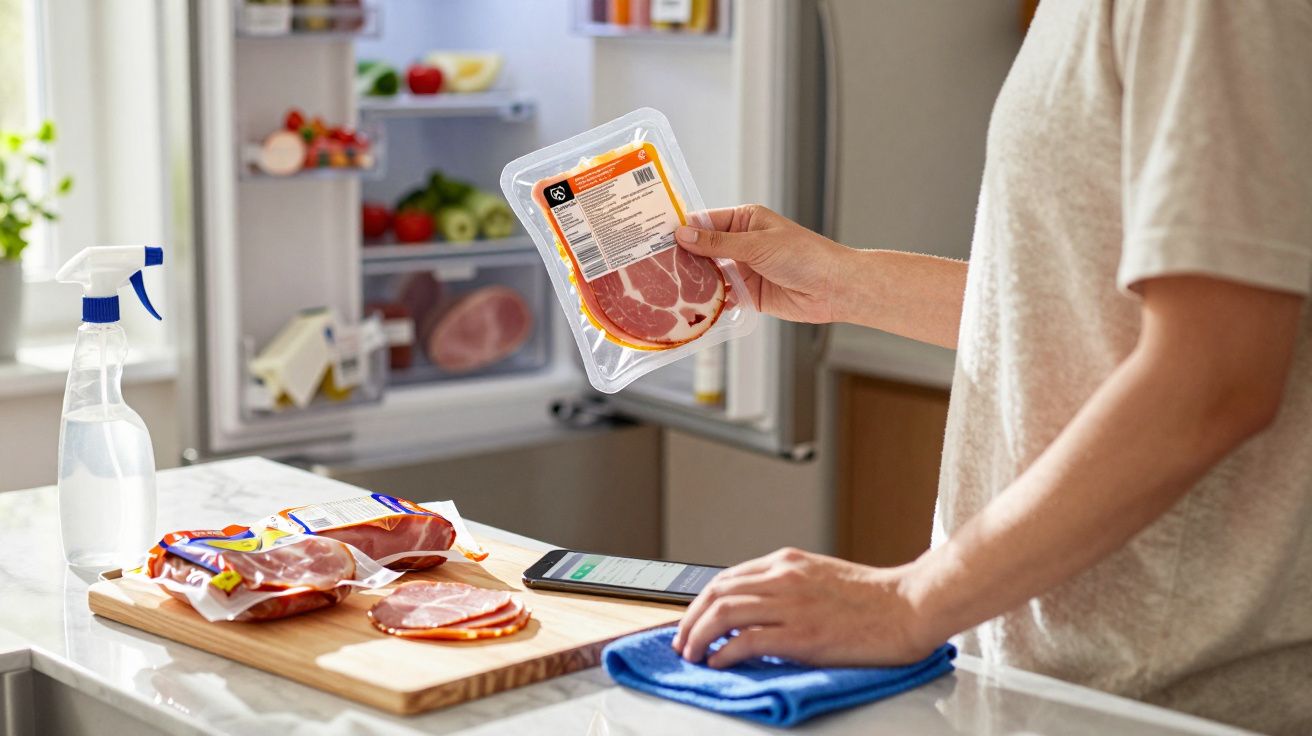
Several packs of pre-sliced cooked ham are currently being removed from chilled supermarket shelves across France. The reason is a potential contamination with Listeria bacteria, which can be particularly dangerous for pregnant women, older people and anyone with a weakened immune system. The products affected include well-known national brands that have been widely sold in major supermarkets.
Nationwide recall in France: popular cooked ham and Listeria risk
France’s government consumer-alert platform has issued a countrywide recall covering thinly sliced, pre-packed cooked ham. The notice centres on multiple Aoste products as well as a Carrefour cooked ham sold under the “Le Marché – Filière Qualité” range. All the items concerned are sold in plastic trays from the chilled aisle.
The issue is that certain batches may contain Listeria monocytogenes. This bacterium can cause listeriosis, an infection that is sometimes severe. Although there has not been a large number of known cases, manufacturers and authorities are acting as a precaution and recalling the products.
If you have any of the affected ham in your fridge, do not eat it. Return it or dispose of it.
According to the official guidance, the recalled packs were sold in many large retail chains, including Intermarché, E.Leclerc, Auchan, Casino, Super U, Carrefour, Maison du Frais and Aoste factory outlets. The sales period runs from the end of February up to 6 March 2026.
Products on the recall list (Aoste cooked ham / Carrefour cooked ham)
The recall does not cover all ham products-only clearly identified items with specific codes. You can verify this using three details printed on the packaging:
- the 13-digit GTIN (usually near the barcode)
- the batch/lot number
- the best-before or use-by date
Authorities currently list the following combinations among those affected:
- Aostinos cooked ham, 2 slices, 130 g, GTIN 3449840404123, Batch 12025301, Use-by 18 March 2026
- Carrefour “Le Marché – Filière Qualité” cooked ham in cloth, GTIN 3560070496006, Batches 12025640 or 12036283, Use-by 18 March 2026 or 21 March 2026
If you find one of these packs, the recommendation is to leave it unopened and do not taste it-not even a small piece. With listeria, there may be no obvious change in smell, appearance or taste.
What to do with recalled packs
You have two straightforward options:
- Return it to the shop: Stores typically accept returns at customer service or the till and usually refund the purchase price, often even without a receipt.
- Dispose of it at home: If you prefer not to go back to the supermarket, you can throw the pack away with household rubbish. Keep it sealed to reduce the chance of contact.
In both cases: do not sample the ham, do not feed it to pets, and wash your hands thoroughly afterwards. If you have already opened a pack and handled the product, clean worktops, knives and chopping boards with hot water and detergent.
How Listeria can make you unwell
The reported hazard involves Listeria monocytogenes. These bacteria are present in the environment and can multiply even in refrigerated foods. Ready-to-eat chilled items are commonly implicated-such as sliced cheese, smoked fish and, in this case, ham.
For many people, listeriosis may be mild. However, it can have serious consequences for certain groups. One of the most difficult aspects is the long incubation period: symptoms may not appear until up to eight weeks after eating contaminated food.
Even days or weeks after a sandwich made with contaminated ham, a fever can still develop-and by then, many people no longer connect it to what they ate.
Authorities advise watching for symptoms including:
- fever (sometimes with few other signs)
- headache and aches in muscles or joints
- general malaise and fatigue
- in severe cases, neurological symptoms such as confusion or a stiff neck
In pregnancy, infection may cause only mild symptoms but can still put the unborn baby at risk. Older adults and people with weakened immune systems are also more vulnerable. If you are in a higher-risk group and have eaten the affected ham, contact your GP promptly if symptoms develop and mention the possible exposure.
Who should be especially vigilant
While the warning applies to everyone, these groups should check their fridges particularly carefully:
- pregnant women
- people with chronic illnesses or who have had an organ transplant
- older adults
- people with serious underlying conditions such as cancer or HIV
If you fall into one of these categories, it is generally wise to be cautious with pre-sliced deli meats. Once opened, packs remain safe for only a short time even in the fridge; the manufacturer’s date is an upper limit, not a guarantee.
How to check your ham packs properly
A quick glance in the deli drawer is often not enough. It is more reliable to pick up each pack and read the information next to the barcode. A practical way to do it:
- Take the pack out of the fridge and turn it over.
- Locate the 13-digit GTIN near the barcode.
- Find the batch/lot and the use-by date nearby.
- Compare each detail against the recall list.
If you have several packs from the same brand, check them one by one. It is common to have different batches at home if you bought them on different shopping trips.
Reducing your risk with pre-sliced meats in general
This recall is a reminder of how sensitive ready-to-eat chilled foods can be. A few habits can help reduce everyday risk:
- Buy sliced meats as fresh as possible and use them quickly.
- After opening, reseal tightly or transfer to a clean, lidded container.
- Keep your fridge at 4–6 °C and verify with a thermometer.
- Store sliced meats away from raw meat to avoid cross-contamination.
- If anything smells or looks off, throw it away rather than taking a chance.
If you are wondering whether heating helps: listeria are killed by sufficiently high temperatures, so thoroughly cooked foods are far safer. With ready-to-eat ham eaten cold (for example in sandwiches), that safety step is missing-so authorities act quickly even on suspicion of contamination.
Why listeria recalls are handled so strictly
At first glance, recalling only a handful of batches can look disproportionate. It is costly for retailers and manufacturers and tends to attract significant attention. With listeria, specialists take this approach deliberately to prevent serious individual cases.
Because symptoms can begin many weeks after exposure, tracing an infection back to a specific food is often difficult. A prompt recall as soon as contamination is suspected reduces the chance that vulnerable people come into contact with the bacteria at all. For shoppers in France, that means one practical step: check what is in your fridge, and if in doubt, choose a different cooked ham.
Two extra sensible steps: cleaning and staying informed
If you stored any recalled pack in your fridge-especially if it was opened-take a moment to wipe down the area where it was kept. Clean shelves and drawers with hot, soapy water, then dry them thoroughly, and wash reusable containers that may have touched the outer packaging.
Finally, keep the label or take a clear photo of the GTIN, batch/lot and use-by date before returning or disposing of the pack. If you later need to report symptoms to a healthcare professional or confirm details with a retailer, those codes make the discussion much quicker and clearer.




Comments
No comments yet. Be the first to comment!
Leave a Comment