
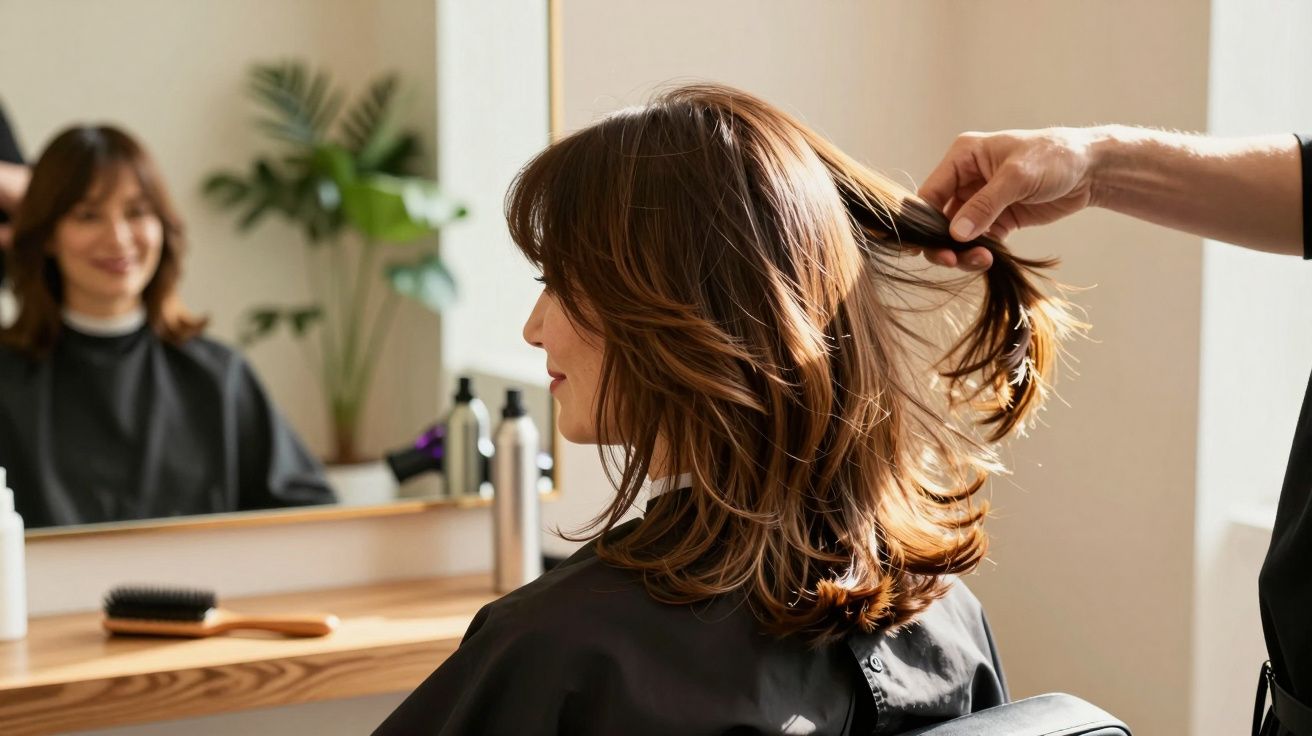
Over the years, it isn’t just your skin that changes - your hair texture does too. Strands that once had body can suddenly hang limp, blow-drying barely creates lift, and any extra length looks more tired than glamorous. Hairdressers agree on one thing, though: with the right cutting technique, fine hair can look noticeably fuller, more modern and far more lively in a short space of time - without spending ages styling in front of the mirror.
Why hair often looks finer after 50
Around the menopause, hormone levels shift - and your scalp feels the effects as well. Blood circulation can reduce, and hair roots often produce strands that are thinner and more delicate. Add in past colouring, straightening and frequent blow-drying, and the mid-lengths and ends become weakened, with tips breaking more easily.
- Individual hairs become finer.
- Your ponytail suddenly looks narrower.
- There’s less lift at the roots, and the style collapses more quickly.
- Long lengths visually pull the hair down even more.
This is exactly where a hairdresser steps in: rather than simply “growing it out”, the aim is to cut the hair so it gains the look of more fullness and structure.
The cut hairdressers swear by for fine hair
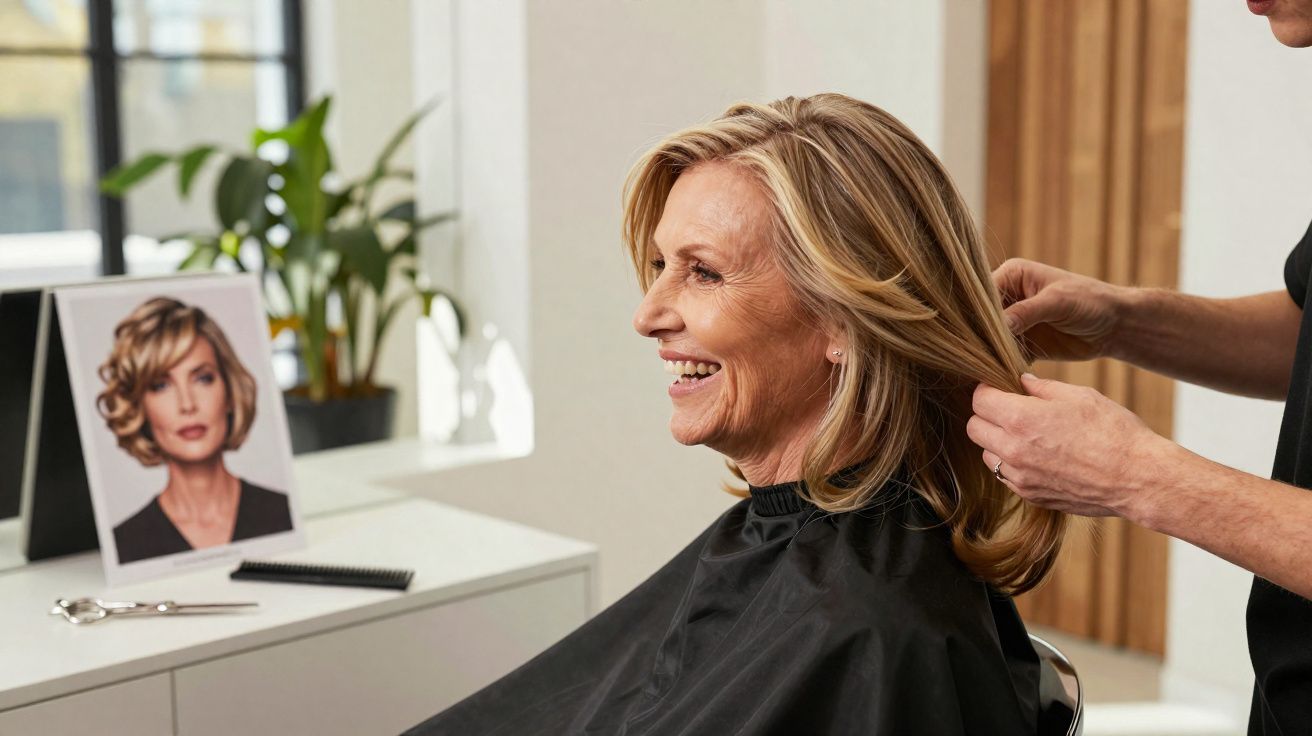
The professional favourite is a well-executed layered cut - in other words, a cut with soft, cleverly positioned layers. It can sit at chin length, shoulder length, or slightly above; the technique matters far more than the exact number of centimetres.
A modern layered cut gathers the hair’s mass, removes damaged length and creates volume where it’s needed most: at the roots and around the face.
Hairdressers tend to advise against endlessly growing fine, stressed hair. The longer the hair, the more weight drags on already fragile ends. The result: it breaks more easily, looks wispy and feels flat.
How layers make fine hair look thicker
With a thoughtfully planned layered cut, hairdressers work with different lengths that blend into one another. This creates movement and removes weight where it causes droop, while keeping other sections intentionally denser.
The key benefits at a glance:
- More visual density: Shorter sections sit over longer ones, making the hair appear fuller.
- Less breakage: Damaged ends are removed, allowing healthier growth.
- Fresher contours: The face is framed, lines look softer, and the overall impression appears more youthful.
- Less styling effort: The shape naturally adds bounce, so a hairdryer and round brush have less work to do.
Layers placed strategically around the face can be especially transformative: they distract from flat roots, highlight the eyes and cheekbones, and soften facial contours.
The ideal length for fine hair after 50
Very long hair can be demanding with a fine texture. It needs more care, is harder to style with volume, and sinks under its own weight. That’s why many experts prefer medium lengths.
For many women with fine hair, the sweet spot is between the chin and collarbone: long enough for variety, short enough for visible volume.
Some popular options include:
- Layered long bob: Around shoulder length with gentle layers - polished, but not severe.
- Chin-length bob with soft graduation: Frees up the nape and creates instant fullness.
- Short, layered cut with a longer top section: Ideal if you’re ready to move on from longer lengths.
Crucially, the cut should always be tailored to your face shape and the amount of hair you have. A rounder face often suits slightly longer front sections, while a narrower face can carry more layers and extra volume at the sides.
Styling: how to get the most out of fine hair
Even the best cut only really shines when the styling supports it. Pin-straight, ultra-sleek hair can emphasise gaps quickly when the texture is fine. Soft movement, on the other hand, creates the illusion of fullness.
Waves instead of a straightener-sleek finish
For fine hair, stylists often favour loose waves or softly defined curls. They keep hair looking lively and add volume without appearing harsh.
- Loose waves: Create with a hairdryer and round brush or a large-barrel curling iron, then lightly brush out the ends.
- Soft curls: Twist only a few sections - avoid turning the whole head into tight ringlets.
- Texture over perfection: A slightly tousled finish looks more current than a flawless, overly smooth blow-dry.
If you don’t want to give up your straightener look, at least add root-lift products and avoid pressing the hair poker-straight; shape it gently instead.
Volume from the roots: products and blow-dry technique
Fine hair is easily weighed down by heavy products. Rich oils, thick waxes and very creamy styling formulas can coat each strand like a film and pull it flat.
Lightweight products that add body without heaviness are the key: a volumising mousse, a texturising spray, and possibly a root-lift spray.
Your blow-drying technique matters just as much:
- Prepare towel-dried hair with heat protection and a volumising product.
- Blow-dry with your head slightly lowered, lifting the roots with your fingers as you go.
- Finish by shaping a few sections with a round brush, then let them cool briefly to set.
If you like, work a small amount of dry shampoo or volumising powder into the roots at the end. It adds hold without flattening the lengths.
Mistakes that make fine hair look older faster
Many styling habits from earlier years no longer suit today’s hair texture. Hairdressers repeatedly flag these common issues:
- The same long hairstyle forever: Lengths past the bust can look tired and heavy as hair thins.
- Overly dark, solid colour: A hard, dark block of colour can make hair look flatter.
- Too much product: Multiple layers of hairspray, heavy treatments at the roots, lots of shine spray - all of it reduces lift.
- Tight ponytails or buns: They tug at the roots and may worsen thinning.
Softer shades with gentle highlights, combined with a cut that moves, make the hair texture appear calmer and keep attention on your face and expression rather than every individual strand.
How often to visit the hairdresser - and what to ask for
Fine, ageing hair benefits from regular trims. Many professionals suggest a schedule of roughly every six to eight weeks so the shape doesn’t become ragged and the ends stay healthier.
| Interval | Benefit |
|---|---|
| Every 6 weeks | Shape stays precise, split ends are barely visible |
| Every 8 weeks | A good compromise if you still want some growth |
| Less often than every 10 weeks | Higher risk of brittle ends and limp, sagging outlines |
At your appointment, it helps to be very specific about what bothers you: “My roots always fall flat”, “The back looks so lifeless”, “I don’t want to spend ages styling every day”. That way, your hairdresser can adjust the layers, the length and a fringe - if you want one - with precision.
A few extra tips for hair that looks stronger
Fine hair responds immediately to the way it’s cared for. Very rich masks are best kept for mid-lengths and ends, not the roots. In many cases, a lightweight routine that doesn’t weigh hair down is more than enough.
- Apply conditioner and treatments through the lengths and ends only, not onto the scalp.
- Wash with lukewarm water rather than very hot - it’s kinder to scalp and hair structure.
- Be gentle when drying: press out water rather than rubbing vigorously.
- Use a smooth pillowcase to reduce friction overnight.
If you notice particularly sensitive areas or increased thinning, it’s worth asking a dermatologist to take a look. Sometimes there’s an underlying scalp condition or a nutrient deficiency that can be treated.
In the end, fine hair after 50 isn’t a styling sentence. With a thoughtfully placed layered cut, a length that doesn’t drag the hair down, and straightforward volumising styling, even delicate strands can look fuller, fresher and modern. The right hairstyle can take years off your face - and save you time in the bathroom each morning.
Fine hair after 50: colour and scalp care that support a layered cut
A layered cut does a lot of the heavy lifting, but a few smart choices alongside it can make the result look even denser. Subtle colour placement - such as soft highlights or a gentle blend between shades - adds dimension, which helps fine hair look less flat than a single, all-over colour.
Scalp care also matters more than many people realise. Keeping the scalp comfortable and clean (without over-stripping it) can support healthier-looking hair at the roots. If your scalp feels tight, flaky or unusually sensitive, consider switching to a gentler shampoo and rotating in a clarifying wash occasionally - and seek professional advice if symptoms persist.



Comments
No comments yet. Be the first to comment!
Leave a Comment