
Many people assume their towels are clean because they only dry “clean” bodies - and that very assumption can become the problem.
In day-to-day life, towels often slip to the bottom of the cleaning list. Bed linen gets changed routinely, underwear certainly does - yet the bath towel can end up hanging on a hook for weeks. Microbiologists say that’s a mistake, and it can lead to anything from spots to serious skin infections.
Why towels become a germ hotspot so quickly
At first glance, a towel seems harmless: fluffy, dry, clean. After each shower, we’re only wiping water off our skin, right? It isn’t quite that simple.
Each time you dry yourself, the fabric collects:
- dead skin flakes
- body oils and sweat
- residues of shower gel, shampoo, make-up and creams
This mixture works its way deep into the fibres. If the towel is then left damp in a warm bathroom, it creates an ideal breeding ground.
Moisture + warmth + skin residue: this combination allows bacteria and fungi to multiply rapidly - often after only a few uses.
US microbiologist Philip Tierno of New York University warns that after just two or three uses, a towel can harbour noticeably more germs. If it then hangs around unwashed in the bathroom for days, the risk increases for:
- skin irritation and itching
Practical towel hygiene: drying, washing and storage
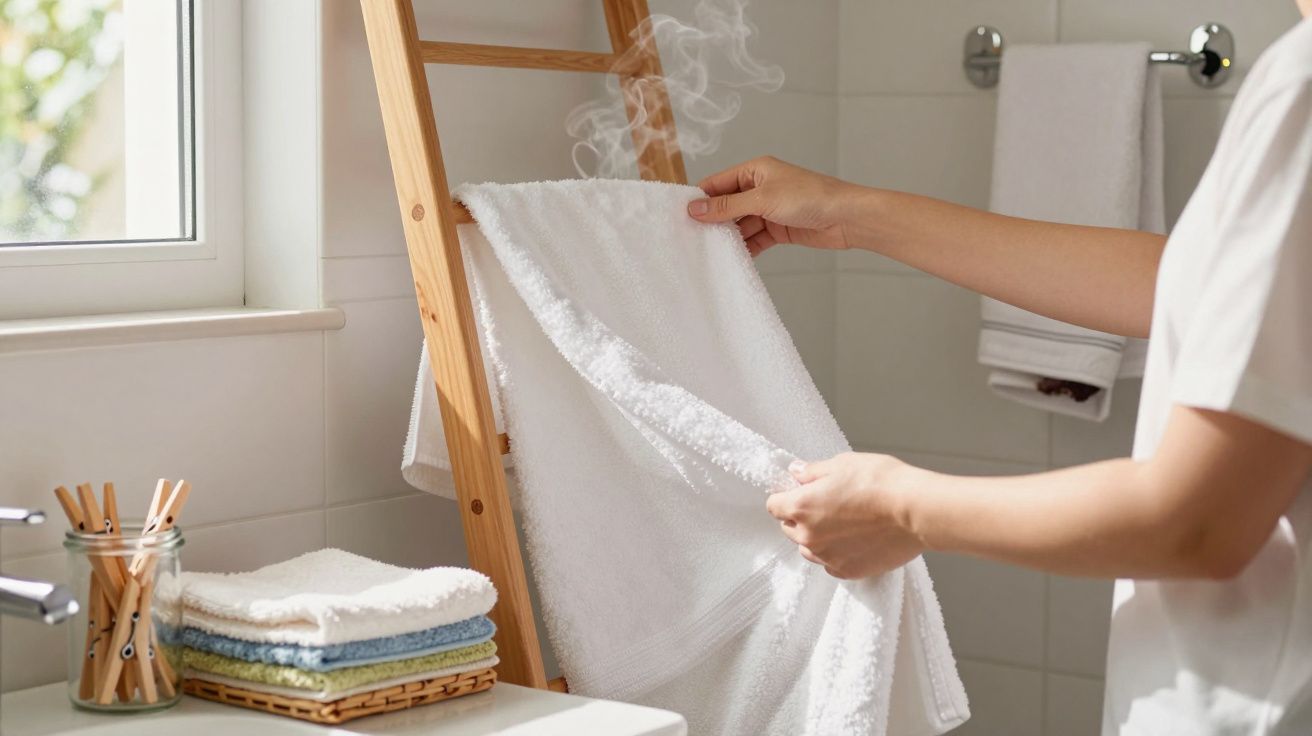
To reduce bacteria and fungi on towels, the most important step is letting them dry properly between uses. Spread the towel out fully (rather than leaving it bunched on a hook), and ventilate the bathroom well so moisture can escape.
Washing habits matter too. Launder towels regularly and avoid sharing them, especially if anyone in the household has sensitive skin, spots, or minor cuts. It also helps to keep towels separate from items that may carry more grime (such as cleaning cloths), so germs are less likely to transfer during washing.




Comments
No comments yet. Be the first to comment!
Leave a Comment