
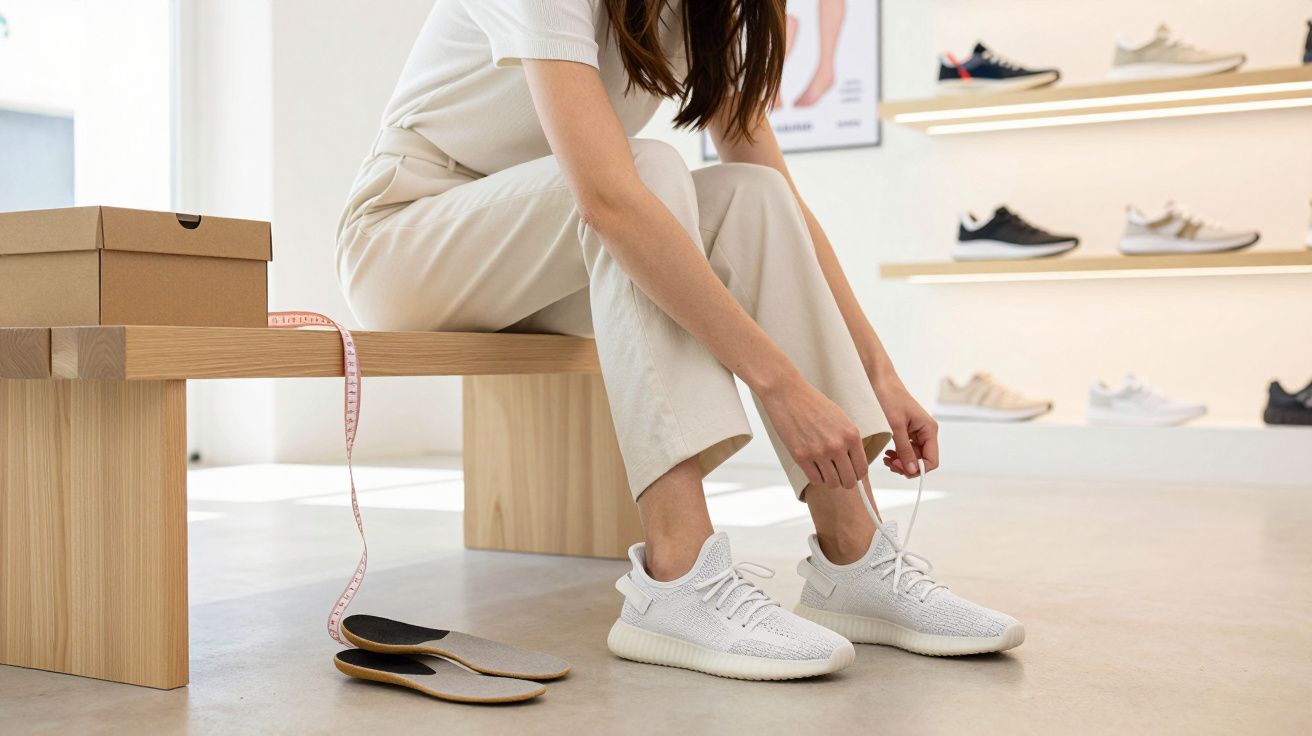
Social feeds on TikTok, Instagram and similar platforms are currently packed with clips promising “magic” sneakers that visually transform the foot: wide before, then slim and refined after. The shoes look like a hybrid of trainer and sock, hugging the foot so closely that, on video, it can seem almost airbrushed. With boots being packed away and lighter footwear back in rotation, plenty of fashion fans are tempted by the effect-while doctors and orthopaedic specialists are taking a far more sceptical view.
How a new sneaker hype is “slimming” our feet
For months, a fresh silhouette has dominated the algorithm: away from chunky dad shoes with thick soles, and towards narrow, futuristic-looking sneakers. Creators often show a direct comparison-first in a classic, wider trainer, then in a new close-fitting pair-and the contrast can look dramatic.
The concept is simple: the foot shouldn’t just feel comfortable in the shoe; it should look as small and delicate as possible. A tapered toe area, a sleek outline, and even the illusion of a longer leg-marketed as a style shortcut. That expectation pushes brands towards ever more delicate shapes, even when they start to work against the foot’s natural structure.
This trend isn’t only about stylish sneakers-it’s about chasing an “ideal” small foot, with knock-on effects for posture and joints.
High-tech knit instead of leather: why these sneakers fit so differently
The key difference is the upper. Many trend sneakers rely on modern knitted and net-like fabrics such as mesh and knit. These textiles form almost the entire top of the shoe-like a snug, elastic sleeve wrapped around the foot.
Compared with traditional leather or sturdy canvas, this construction adds very little bulk. Extra padding, thick tongues and rigid overlays are often stripped away. The result is a shoe that wears like a second skin. Sports brands originally developed these builds to make running shoes lighter and more breathable; now they’ve migrated into lifestyle ranges where the priority is often the look first.
Visually, the impact is obvious in the mirror: less material, fewer seams and fewer “breaks” in the outline. Because the upper traces the foot so precisely rather than widening it with structure, the foot appears slimmer.
Up to 1.5 centimetres “gone”: an optical illusion with a measurable effect
Fashion fans call them “magic shoes”-and measurements suggest there’s something to the claim. University-based studies report an apparent narrowing of roughly 1 to 1.5 centimetres at the widest part of the foot.
That effect mainly comes down to two things:
- A smooth surface: Without side seams or stitched-on panels, the foot reads as one continuous, narrower shape.
- Monochrome colour blocks: Single-colour pairs make the outline look calmer and longer, with fewer contrasts to break it up.
There’s also a mild compression component. The fabric gently squeezes the foot, particularly at the sides. In photos and videos, that produces exactly what the trend sells: a slimmer, almost dressy-looking foot-even for people who usually find trainers look wide.
A styling trick: how trousers and sneakers can make your legs look longer
If you style the look deliberately, you can amplify the illusion. What happens above the shoe is crucial. Shorter trouser lengths that show the ankle are widely seen as the most flattering option.
The TikTok and Instagram combination for slim-looking sneaker proportions
- ankle-length cropped trousers or 7/8 jeans
- slim or straight legs, with no excess fabric bunching over the shoe
- either a bare ankle or very fine, close-fitting socks
This creates a continuous line from the leg down to the toe. The shoe’s front looks narrower, the ankle looks more delicate and the whole leg appears longer. By contrast, wide cargo trousers or flares draped over these slim sneakers usually flatten the effect-the foot “disappears” and proportions can quickly look off-balance.
When the “sock shoe” fits too tightly: where the risks begin
As appealing as the silhouette may be, the health downside is real. Many of these sneakers are designed to fit extremely tight to preserve that narrow line. The feel can be close to compression hosiery-except without any medical grading or personalised fitting.
Orthopaedic specialists commonly flag several issues:
- Too little lateral support: If the sides lack stability, the foot can roll inwards or outwards more easily. Over time, that increases strain on the ankle and knee.
- Restricted toe freedom: Toes need room to spread slightly with every step. If they’re constantly squeezed, deformities become more likely.
- Pressure hotspots in the forefoot: Tight knit uppers can affect circulation and irritate nerves-numbness by the evening is a warning sign.
If your toes feel noticeably numb or tingly at the end of the day, your trend sneakers are too tight-the body is already signalling distress.
Long-term compression can encourage problems such as hallux valgus (a painful misalignment of the big toe). Inflamed tendons, irritated joint capsules and persistent foot pain are also possible outcomes.
Why the “boxer toe” can help protect your toes in trend sneakers
The reassuring part: not every shoe in this style is automatically harmful. One detail makes a major difference-the shape of the toe box, often referred to in the trade as the “boxer toe”. This is the reinforced section at the front that should give toes space and protection.
What shoppers should look for
- A firm toe cap: The front shouldn’t collapse entirely like a sock; it should hold a defined shape.
- Enough width: Toes should not overlap or press hard against each other inside.
- Forward room: Rough guidance is about a thumb’s width between the longest toe and the end of the shoe.
Ideally, you want a shoe that pairs a stable toe box with a flexible knit structure across the instep. That way, you keep the modern look without forcing toes into a tight tube.
Variety matters: how to enjoy the trend without damaging your feet
Anyone aiming to keep their feet healthy over the long term should treat these sneakers as an occasional styling tool, not an everyday default. Professionals generally advise rotating shoes rather than wearing the same close-fitting pair day after day.
A practical weekly approach:
- Wear fashion-forward knit sneakers with a slim silhouette 1–2 days per week.
- Choose better-supported sneakers (for example, leather or a sturdier textile build) for the rest of the week.
- During any try-on, do a quick body check: pressure points are a deal-breaker, not something you should “break in”.
If you already have knee, hip or back issues, it’s sensible to have your footwear choice reviewed from an orthopaedic perspective. Small changes in foot position can ripple upwards through the body.
A related factor many people miss: socks, swelling and sizing through the day
Feet don’t stay the same size from morning to evening. Heat, walking, and long periods of standing can cause mild swelling, which makes tight knit uppers feel even more restrictive later on. Trying on sneakers in the afternoon (and with the socks you’ll actually wear) can help you avoid buying a pair that only feels acceptable for the first hour.
It’s also worth choosing socks that don’t add friction around the toes. Thin, smooth socks can reduce rubbing, while thick seams across the forefoot can increase pressure exactly where these shoes already squeeze.
When fashion and medicine work together: what healthier trend shoes could look like
Many brands have realised that a purely visual approach doesn’t hold up if customers end up in pain. Early collections are already trying to combine slim styling with roomier toe boxes, stronger heel support and more stable insoles.
Some designs-already available in parts of the market-aim to deliver:
- a sleek outer line while still providing extra internal space,
- interchangeable insoles to suit different foot shapes,
- targeted reinforcement at pressure zones (heel, midfoot and toes).
For consumers, buying remains a balancing act: the mirror shows the silhouette, but your body provides the real verdict on comfort and tolerance. If you listen to both, you can follow the trend without sacrificing your feet.
One final, often overlooked point: feet change over time. Width, arch height and muscle tone aren’t fixed. If you invest in extremely narrow trend sneakers now, bear in mind that your foot may not match the same mould in a few years. Shoes with a little adaptability-and a bit of spare room-are more likely to keep working as your body changes.

Comments
No comments yet. Be the first to comment!
Leave a Comment