
In the kitchen, there’s a surprisingly simple rescue.
Many people spend a small fortune on nail strengtheners, specialist polishes and salon treatments-only to end up right back where they started, with split tips and snapped nails. Often, the answer is already in your cupboard and fridge: a straightforward pairing of castor oil and lemon can noticeably reinforce brittle nails. Add an egg yolk mask, and you have a routine that feels like a mini at-home beauty salon-just far more affordable and more natural.
Why nails suddenly break: the real causes of brittle nails
Nails that crack, split, peel or flake rarely change overnight for no reason. In most cases, several triggers stack up at the same time:
- frequent contact with water and cleaning products
- harsh nail varnish removers that contain lots of acetone
- long-term wear of gel nails or acrylics
- cold weather, dry indoor heating and not enough moisture
- nutrient shortfalls, for example biotin, iron or zinc
- stress, which can show up in your nails and skin as well
If you’re tough on your hands day to day, you may not notice the damage until nails start tearing, discolouring or looking dull. And in many situations, it’s a mix of external stress (like chemicals and water) and internal factors (such as diet or hormone changes).
When you understand what’s behind brittle nails, you can tailor your care properly-rather than simply covering up the symptoms.
The good news is that nail condition can improve. With the right fats, vitamins and a bit of patience, hands can look markedly healthier-even without a gel overlay.
Castor oil and lemon for stronger nails: the unexpected kitchen power duo
Castor oil is familiar to many from old-fashioned home remedies. For nails, it’s genuinely versatile: thick, rich in fatty acids and vitamin E, and well suited to supporting the nail plate.
Here’s what castor oil can do for nails:
- nourishes and smooths the surface
- helps brittle nails stay more flexible, which reduces breakage
- supports the nail matrix, encouraging steadier growth
- softens and conditions dry cuticles at the same time
Lemon acts like a natural boost alongside it. Lemon juice contains fruit acids and vitamin C, which can gently clarify and tone.
Put simply: the oil helps build and cushion, while the lemon adds freshness and visible clarity.
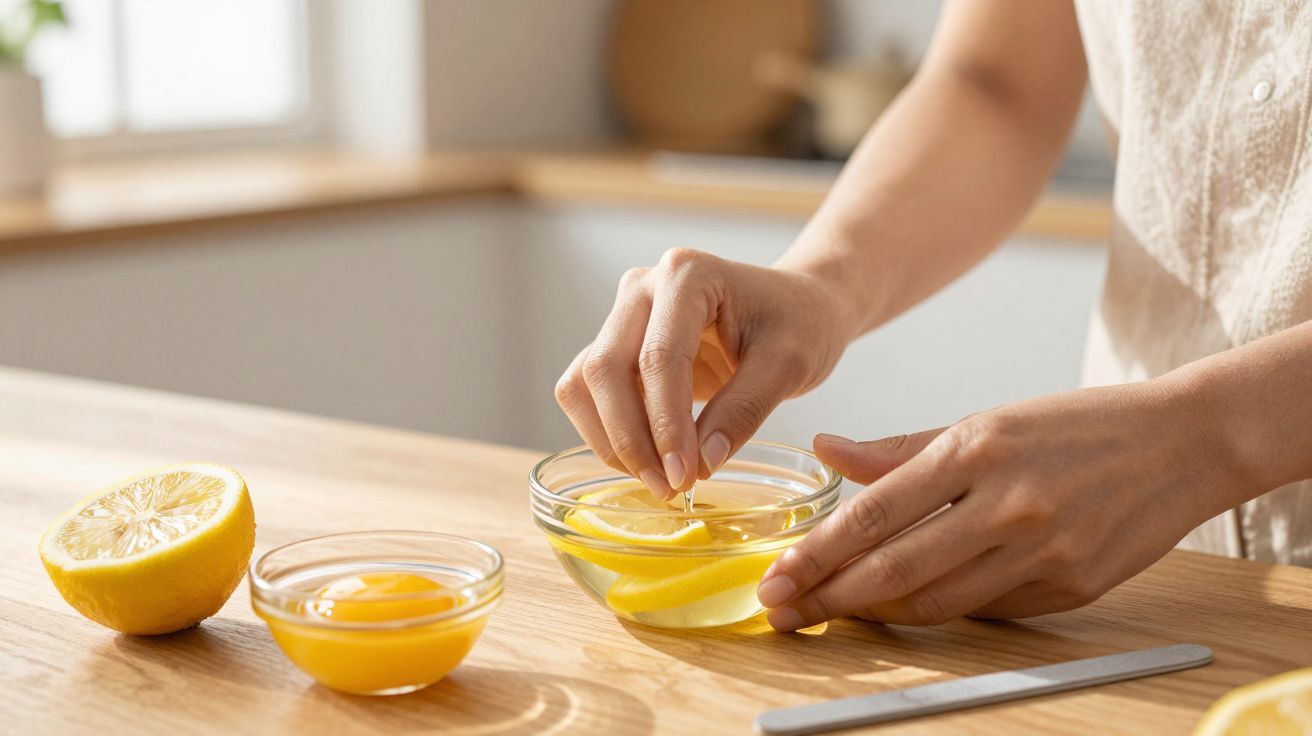
How to make a castor oil and lemon nail soak
For a quick DIY nail bath, you only need a small amount:
- 1 tablespoon castor oil
- juice of ½ a fresh lemon
Follow this simple mini-ritual:
- Mix the castor oil and lemon juice together in a small bowl.
- Dip in your fingertips so the nails and cuticles are covered.
- Leave for 10 minutes, lightly massaging your nails now and then.
- Work the remainder into the nails and skin; only blot off any excess with a towel.
If you schedule this soak two to three times a week, you’ll usually notice after a few sessions that nails feel firmer, smoother and less rough.
A practical bonus: the blend absorbs surprisingly well. If you blot rather than fully washing it off, your hands won’t feel greasy for hours.
Egg yolk mask for nails: an intensive treatment from the fridge
If you want a deeper conditioning hit, a simple combination of egg yolk and olive oil can be remarkably effective. Egg yolk is packed with proteins, biotin and fats-key building blocks that can support nail structure.
Recipe: egg yolk nail mask
- 1 fresh egg yolk
- 1 teaspoon olive oil (cold-pressed if possible)
Apply it like this:
- Whisk the egg yolk and olive oil with a fork or small whisk until smooth.
- Remove any leftover varnish and gently pat nails dry.
- Use a brush or fingertips to apply to nails and cuticles.
- Leave on for 15 minutes, keeping your hands as still as possible.
- Rinse with lukewarm water and avoid harsh soap.
After this treatment, nails usually look smoother straight away, feel less dull, and have a flexible-but-stable finish-an effect that can build week by week.
Once a week is enough for a longer-term result. If your nails are very worn, you can start with twice weekly for the first two weeks, then scale back.
Everyday habits that keep nails strong and well cared for
Without a few baseline habits, even the best treatments fall flat. Small changes make a big difference.
Protection at home and in daily life
- Wear rubber gloves whenever you clean or wash up.
- Avoid long baths and very hot water, which can make nails swell and weaken.
- Don’t use nails as tools-no prising open tins or scraping off stickers.
Treating your hands as working tools (and protecting them accordingly) prevents many splits and breaks at the tips.
A simple pre-bed nail routine
A tiny evening ritual can work like a daily spa:
- Use a minuscule drop of castor oil or almond oil on each nail.
- Massage in gently, including the cuticles.
- Leave overnight; if you like, wear thin cotton gloves.
Those few seconds each night can significantly amplify the benefits of the nail soak and egg yolk mask, because your nails keep getting a steady supply of fats and vitamins.
Extra support: filing and “polish breaks” that help nails recover
Gentle shaping supports everything else you’re doing. File carefully in one direction only, ideally with a glass file or a fine paper file, so the tips don’t fray and split.
It also helps to build in longer polish breaks-for example, every few weeks go without coloured varnish or artificial nails for a period-so the nail plate has time to rebound.
Diet, risks and sensible additions
Nail care isn’t just topical. A balanced diet with enough protein, iron, zinc, biotin and omega-3 fatty acids supports growth from within. If your nails are repeatedly extremely brittle, it’s wise to keep an eye on your blood results too-particularly if you suspect low iron.
Even home remedies aren’t risk-free. Lemon can irritate very sensitive skin, especially if you have small cuts around the nail. If that sounds familiar, increase the oil ratio or dilute the lemon juice with a little water. If you have an egg allergy, skip the egg yolk mask and stick to oils.
One more practical point: frequent hand sanitiser use (common for many jobs) can be just as drying as cleaning products. If you sanitise often, follow up with a fragrance-free hand cream and a quick cuticle massage-this helps prevent the dry, tight skin that can lead to splitting around the nail edge.
Finally, if you notice persistent discolouration, thickening, lifting from the nail bed, or pain and swelling, it may be more than everyday brittleness (for example, infection or a skin condition). In that case, it’s sensible to speak to a pharmacist or GP rather than trying to fix it with treatments alone.
With a little patience, these simple steps become an easy routine: a brew break, a bowl on the table, nails into the castor oil and lemon soak, the egg yolk mask once a week-and suddenly your hands look so polished you’d swear you’ve just walked out of a professional salon.




Comments
No comments yet. Be the first to comment!
Leave a Comment