
The first time I clocked it, I was in a café when a woman in her sixties walked past the window. Silver hair, jeans, white trainers, a leather bag. Nothing showy - yet heads turned. It wasn’t her outfit or her shape that drew the eye. It was the way her hair moved: light, swishy, cut into a current shape that felt miles away from the rigid “helmet” looks many of our grandmothers ended up with.
At the next table, another woman - same age bracket - kept fussing with her firm, rounded blow-dry using her phone as a mirror. The difference was stark: same decade of life, completely different vibe.
Sooner or later, most of us feel that pull: Is my haircut making me look older than my fine lines ever could?
And there’s one style that repeatedly comes up when hair professionals talk about a more youthful look.
The haircut after 60 that stylists quietly swear by: the modern, slightly layered bob
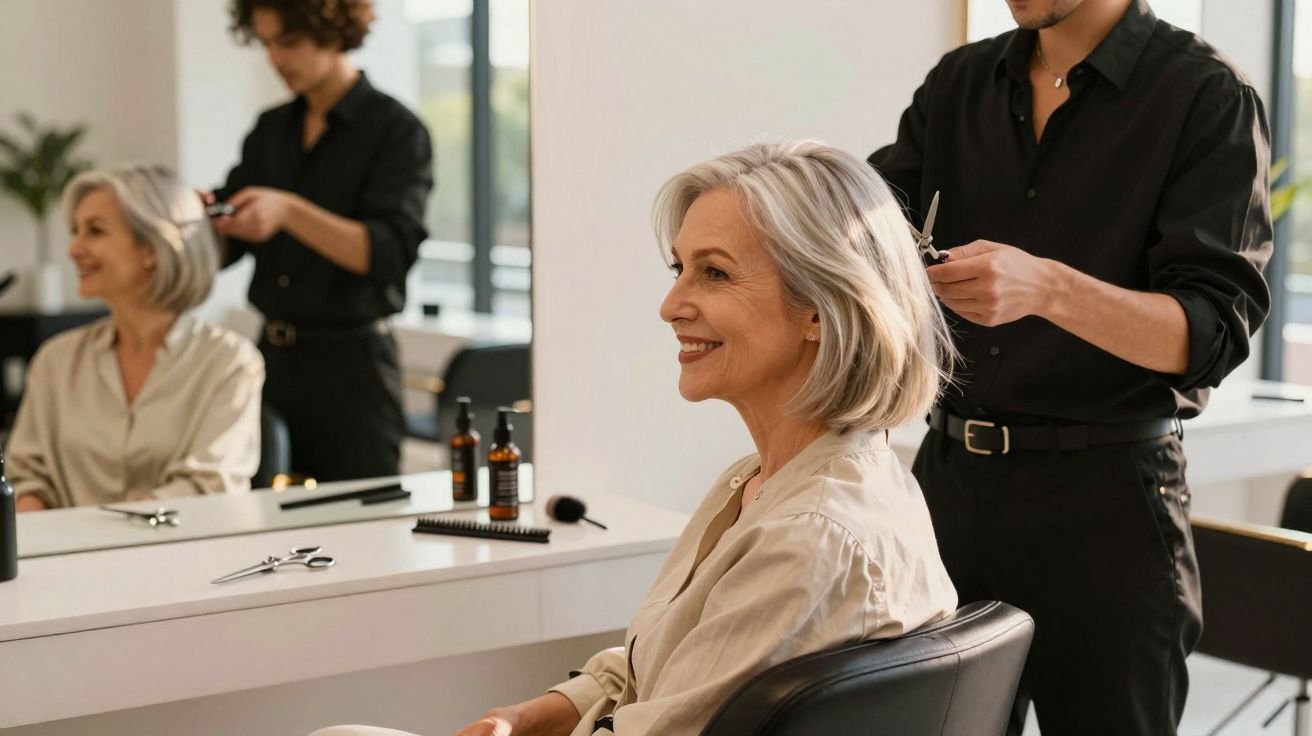
Ask ten working hairstylists which haircut tends to make women over 60 look the most youthful and you’ll hear a familiar answer, again and again: a modern, slightly layered bob, usually somewhere between jaw-length and the collarbone. Not the stiff, “corporate-era” bob. A softer, airier version - one that actually moves.
This shape helps the face look more open, adds definition without making features look harsh, and suits grey, white or coloured hair. It doesn’t announce, “I’m trying to be 30.” Instead, it reads as: “I’m comfortable in my age - and I’m fully switched on.”
That’s the real point: not chasing youth, but looking lively.
Imagine Anne, 64, a retired teacher. For years she’d stuck with the same short, rounded cut she’d worn since her forties - neat, heavily set, not a strand allowed out of place. Then her granddaughter delivered the kind of honesty only a ten-year-old can manage: “Gran, your hair looks like Playmobil.”
It stung. Still, she booked in with a recommended stylist. They took it to just below the jaw, put in soft layers around the front, and eased the line at the back. No dramatic fringe. No big colour overhaul. Just a cleaner, fresher outline.
The following week, three different people asked whether she’d been away on holiday. Not one person asked if she’d “had something done” to her face.
Why a modern layered bob looks more youthful after 60
So why does this kind of bob read as younger? First, it restores movement. With age, hair often becomes drier, finer and less dense. Very long, heavy styles - or very tight, cropped ones - can draw attention to that change. A layered bob removes bulk, creates texture, and helps light reflect through the hair rather than sitting on top of a solid block.
Second, the length does a lot of quiet work. Keeping it around the jaw or collarbone can make the neck look longer and give the lower face a more defined appearance, which is useful as the jawline naturally softens over time. It’s essentially “contouring” without any make-up.
Third, the overall message changes. Old-fashioned, heavily set hair tends to say, “Don’t touch.” A slightly undone bob says, “I’m still living my life.”
How to ask for (and live with) a truly modern bob after 60
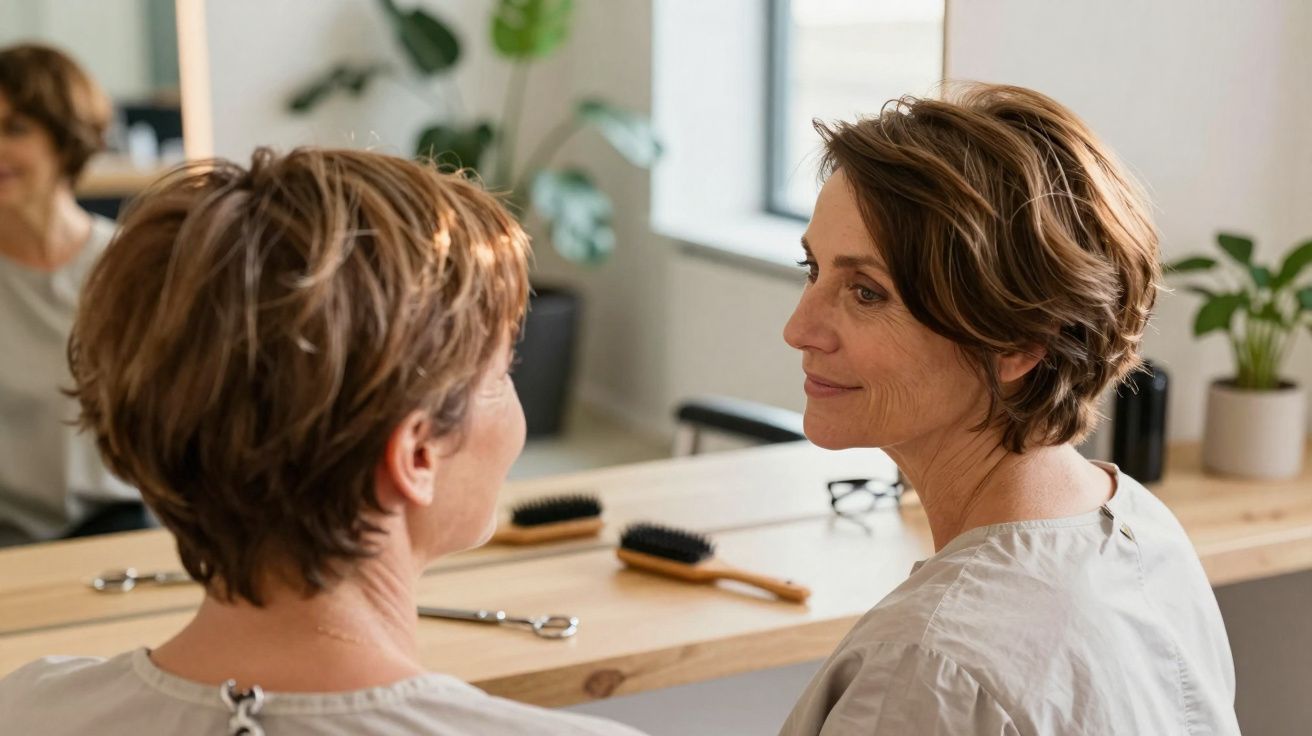
In the salon, it helps to talk in terms of movement and softness, not only the length. Ask for a bob that lands between the jaw and the collarbone, with gentle, barely-there layers (often described as invisible layering). Request lighter pieces at the front so the hair around your face doesn’t sit too heavily.
Be clear that you don’t want a tight, ruler-straight line that hugs the neck. A softly textured outline that naturally curves and falls tends to be kinder on mature skin.
If you wear glasses, mention it. Ask for the sides to be shaped so they sit comfortably with your frames rather than bunching up against them. It sounds minor, but it changes the whole balance.
At home, the aim is straightforward: less effort, more ease. Rough-dry using your hands with your head slightly tipped forward to lift the roots. Then use a round brush - or simply your fingers - to smooth just the front sections that frame the face.
Realistically, hardly anyone does a full salon blow-dry every day. The good news is that this cut is meant to look good with a natural fall, not like a sculpted helmet.
The biggest trap is slipping back into old habits: too much hairspray, too much height at the crown, ends curled under like it’s the 1980s. That’s the moment the bob flips from “fresh” to “dated”.
One extra factor that often makes the difference is the parting. A severe centre part can emphasise thinning at the scalp, while a softly off-centre part (or a slightly zig-zag part) can create the impression of fuller roots without teasing or heavy product. If your hair has started to thin around the temples, a stylist can also tailor the front layers to sit more gently there.
It’s also worth thinking about hair condition as part of the cut. In much of the UK, hard water and frequent heat styling can leave greys feeling wiry and lengths looking dull. A weekly moisturising mask and a clarifying wash every few weeks (followed by conditioner) can keep the bob looking airy rather than fluffy. The goal isn’t “perfect” hair - it’s hair that behaves.
“After 60, I’m not cutting hair to make women look younger,” explains Paris-based stylist Léa Martin. “I cut hair so the face can breathe. A light bob that shifts when they laugh - that’s what changes everything.”
Keep the ends light
Ask for subtly tapered ends, especially around the face, so the hair doesn’t sit like a solid slab.Respect your natural texture
Whether your hair is curly, wavy or straight, the bob should work with what your hair naturally does - not require a daily fight.Soften the colour
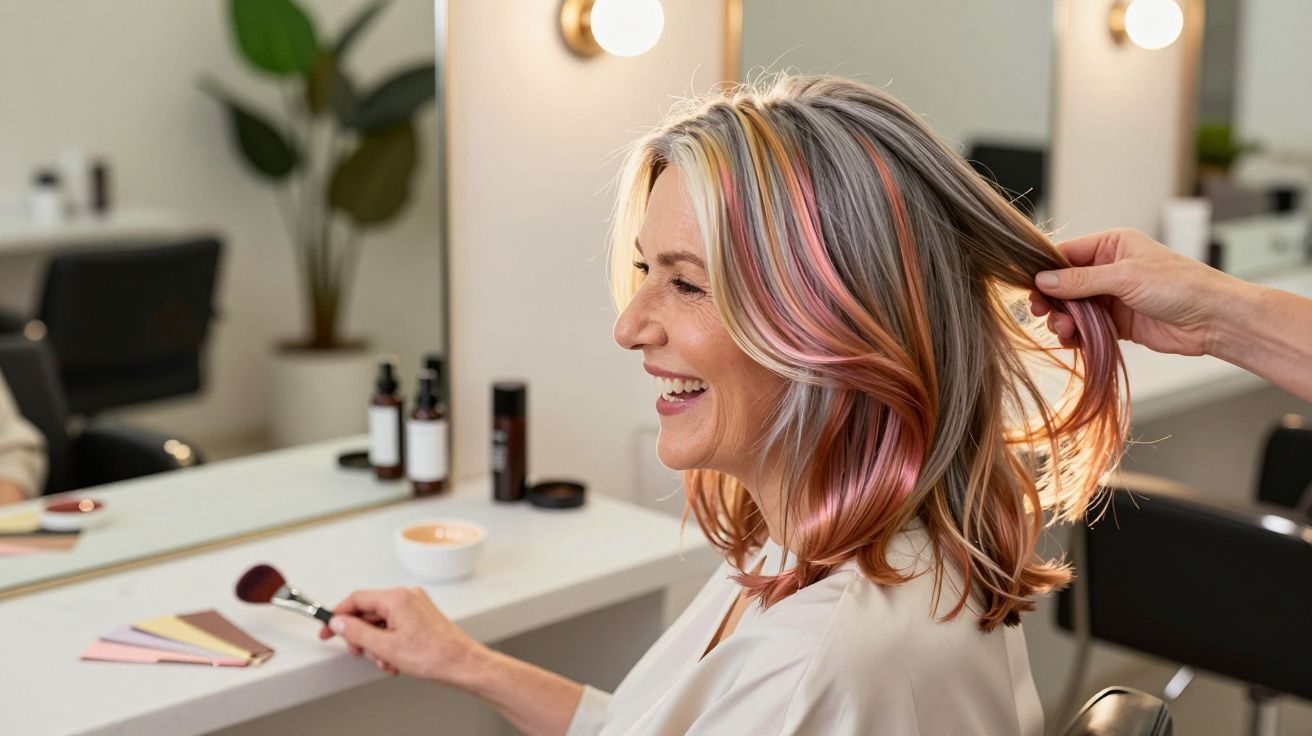
A harsh, flat dye can add years faster than grey ever will. Gentle highlights, lowlights or a blended silver finish add depth and luminosity.Avoid a thick “fringe wall”
If you like a fringe, keep it airy and slightly longer, with small gaps so the brows can still be seen.Plan a “mini refresh” cut
Every 6–8 weeks, a quick tidy of the outline and removal of dry ends helps the shape stay lifted and youthful.
Beyond the scissors: what changing your haircut really changes
When a woman over 60 lets go of an old, rigid style and steps out with a lighter bob, something else often shifts too: posture, pace, the way she looks at herself in the mirror. It isn’t vanity - it’s a sense of alignment. The outside finally matches the inside.
Most people know that moment: you catch a photo of yourself and think, That doesn’t feel like me. The right haircut won’t delete your years, and it shouldn’t. What it can do is bring your face and your story into the same picture - without feeling like you’re wearing a costume.
That’s why so many stylists gently steer 60+ clients away from extremes: very long hair with exhausted ends, or ultra-short, tight crops that can feel severe. Those looks can become a kind of armour. A modern, slightly layered bob sits comfortably in the middle: enough length to feel feminine, enough shape to feel deliberate.
The blunt truth is that most “age-appropriate” rules were designed to prevent embarrassment, not to help anyone feel good. Once that fear loosens, there’s room to experiment again: change the parting, tuck one side behind the ear, let silver streaks shine rather than hiding them.
If you suspect you’re stuck in a haircut that belongs to a different decade of your life, this is a low-risk way to test a change: book a consultation, take photos of the soft, layered bobs you like, and talk honestly about your routines. Do you swim? Wear a cycling helmet? Hate styling? A good stylist will shape the bob around your real days - not a magazine fantasy.
The most youthful thing about a hairstyle after 60 isn’t how many centimetres come off. It’s the feeling that your hair is finally working with you, not against you.
And that one shift can carry far beyond the bathroom mirror.
| Key point | Detail | Value for the reader |
|---|---|---|
| Modern layered bob | Jaw to collarbone length, soft movement, lighter front pieces | Visually lifts the face while staying easy to wear day to day |
| Adapted styling | Minimal blow-dry, natural texture, avoid rigid products | Saves time and avoids an “overdone” look that can age the face |
| Global refresh | Softer colour, regular micro-trims, fit with glasses and lifestyle | Creates a coherent, youthful image without chasing lost youth |
FAQ:
What exact length is best for a youthful bob after 60?
Most stylists aim for somewhere between mid-neck and the collarbone. Going shorter can look crisp but may make features seem harder; going longer can pull the face down if hair is fine.Can I wear this bob with naturally curly or wavy hair?
Yes - and it can look brilliant. Ideally, curls are cut dry or slightly damp, the layers are kept soft, and a lightweight cream or mousse is used so curls stay defined without going crunchy.Does going grey ruin the youthful effect of the bob?
Not in the slightest. A modern bob can make grey or white hair look striking. Many stylists add subtle highlights or lowlights for dimension and to avoid a flat or slightly yellow tone.How often should I trim my bob to keep it looking fresh?
Every 6 to 8 weeks is ideal. It doesn’t need to be dramatic - just enough to neaten the outline and remove dry ends so the shape doesn’t drop.What if I’m scared of looking “too trendy” for my age?
Ask for a softer, classic version: gentle lines, no extreme angles, and no ultra-blunt fringe. A modern bob isn’t about trends - it’s about balance, ease and movement that suits your features and your pace of life.



Comments
No comments yet. Be the first to comment!
Leave a Comment