
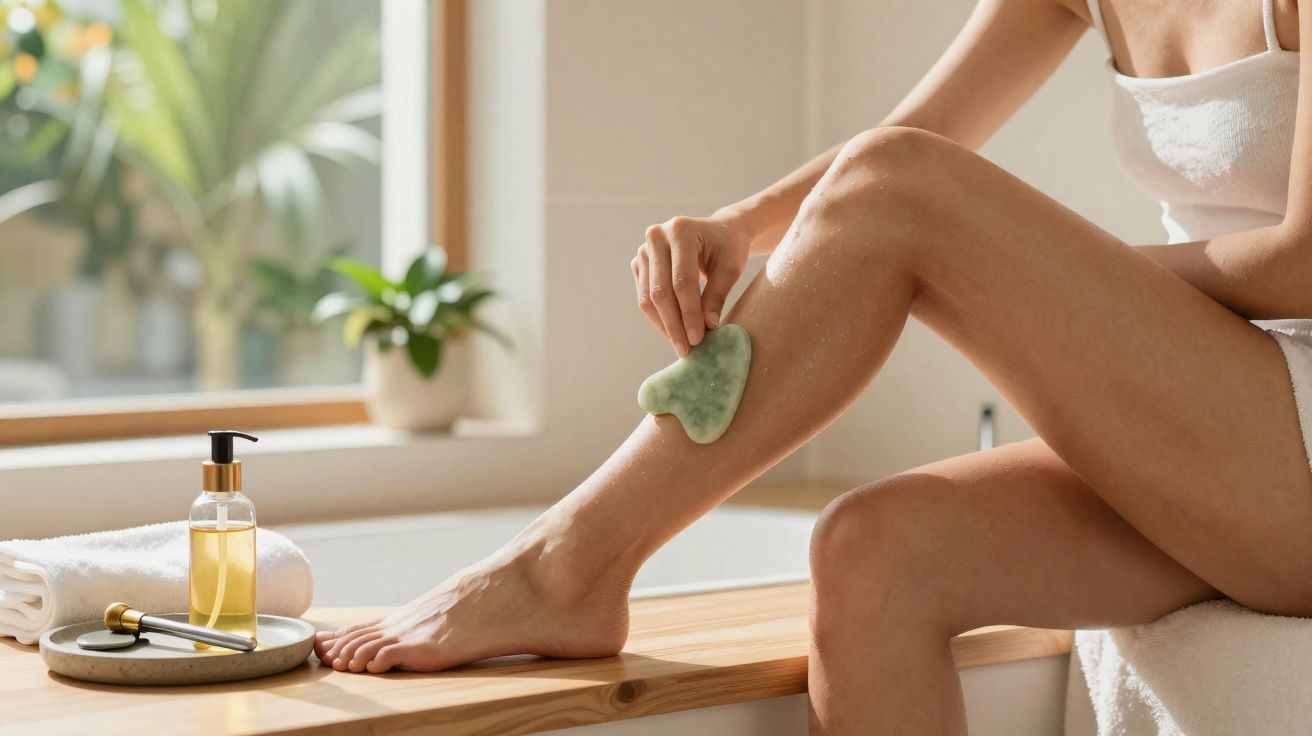
Every evening seems to replay the same story: jeans that suddenly feel restrictive, calves that look a little puffy, and that persistent dimpled skin that appears unimpressed by even the richest body lotion.
With heavy legs and cellulite that refuses to shift, plenty of people are trading expensive spa appointments for a small, sculpted tool tucked away in the bathroom cabinet: the body gua sha. Borrowed from Asian rituals and now reframed through the language of lymphatic drainage, it has become a home-friendly way to support circulation and comfort.
From facial gua sha to a full-body gua sha ritual
Gua sha comes from traditional Chinese medicine. In its original form, it involved drawing a smooth stone across the skin to encourage circulation and ease tension. While facial gua sha has had years in the social media spotlight, the larger, more robust body gua sha is now taking centre stage.
The principle is uncomplicated. A body gua sha is a bigger, often curved tool made to follow the contours of the thighs, buttocks, stomach and arms. Used with an oil or a rich cream, it’s moved over the skin in steady strokes to help stimulate blood flow and encourage lymph movement.
The body gua sha is often associated with lighter-feeling legs, a smoother skin texture and a firmer sensation - all in just a few minutes of massage.
Compared with professional lymphatic drainage sessions in a clinic (which can mean frequent appointments and a sizeable budget), a body gua sha offers a routine you can do at home. It is not a true substitute for a qualified therapist, but with consistent use it can mirror some of the same underlying mechanisms.
Body gua sha and lymphatic drainage: how it supports lymph flow
The lymphatic system works like the body’s quiet housekeeping team. It transports waste, surplus fluid and immune cells through a network of vessels. When that flow becomes sluggish, fluid can collect in tissues - which is when puffiness and heaviness tend to show up.
Used with the correct direction and a sensible level of pressure, a gua sha tool can help encourage lymph along pathways that sit close to the skin’s surface. There’s no need to press firmly; in fact, many practitioners emphasise that gentle, rhythmic passes usually do more than harsh scraping.
A well-done gua sha massage should feel warming and enlivening - not painful, not bruising, and not intensely reddening the skin.
Swiss brand IRÄYE has shaped its body gua sha around this approach, creating an ergonomic tool designed to track the body’s natural curves. When paired with a “melting” texture such as a shaping cream or oil, it aims to help disperse excess fluid, smooth uneven-looking areas and support firmer-looking skin.
Choosing a body gua sha tool (and keeping it hygienic)
If you’re new to the technique, choose a tool that feels comfortable to hold and has edges that glide easily over larger areas such as thighs and calves. Whatever the material, keep it clean: wash with mild soap and warm water after use, dry thoroughly, and avoid sharing it. Hygiene matters, particularly if you’re using rich creams or oils that can build up on the surface.
Water retention and cellulite: what changes (and what doesn’t)
Two topics tend to come up repeatedly: water retention and cellulite. They can overlap, but they are not identical.
| Issue | What it is | Where it shows |
|---|---|---|
| Water retention | A build-up of excess fluid in the tissues, causing swelling and a heavy feeling. | Ankles, calves, hands, sometimes stomach. |
| Cellulite | A mix of fat cells, water and connective tissue that pulls the skin downwards. | Thighs, buttocks, hips, sometimes arms and stomach. |
When circulation slows, water retention can become more noticeable and cellulite can look more pronounced. By supporting blood flow and lymphatic drainage, the body gua sha is used with the goal of reducing swelling and gradually improving the look and feel of skin texture.
Brands that focus on this method typically recommend brief sessions of three to ten minutes, using slow, upward strokes repeated several times per area. The most commonly worked zones include:
- front and back of the thighs
- buttocks
- stomach and waist
- upper arms
- calves and full legs
A frequent report is that legs feel lighter straight after the massage, with more visible changes in skin texture appearing over time when the routine is maintained daily or several times per week.
How to use a body gua sha without damaging your skin
Many routines are easiest to do after a warm shower, when skin is clean and more relaxed. Applying a generous layer of body oil or cream is essential: it protects the skin barrier and gives the tool enough slip to glide properly.
IRÄYE, for instance, combines its tool with a sculpting cream that includes botanical actives such as caffeine, butcher’s broom, horse chestnut and goldenrod. These ingredients are commonly selected for their potential to support circulation and improve the appearance of dimpled areas. Using a gua sha to massage them in can help spread the formula evenly and keeps you working each zone for longer.
The brand’s clinical-style testing reports that most users felt their skin looked firmer, calmer and more elastic after four weeks of consistent use.
Even with an ergonomic tool, your technique makes the difference. Practitioners often advise:
- beginning at the ankles and working upwards towards the heart
- choosing long, unhurried strokes rather than fast, choppy movements
- holding the tool at roughly a 30–45° angle to the skin
- using pressure that feels definite but never painful
- repeating each area five to seven times before moving on
Who should be cautious with gua sha massage
Although gua sha can look gentle, it isn’t appropriate for everyone. Anyone with pronounced varicose veins, a history of blood clots, or diagnosed circulation conditions should talk to a healthcare professional before adding vigorous massage to their routine. The same caution applies during a high-risk pregnancy, and whenever the skin is broken, inflamed or infected.
If you notice sharp pain, bruising or pronounced red marks, treat it as a sign the pressure is too much or the technique needs adjusting. The point is not to “break” cellulite through force; it is to support circulation progressively. In most cases, lighter pressure done regularly is both safer and more effective than dramatic scraping.
When professional lymphatic drainage may be the better option
A body gua sha is a helpful at-home tool, but it may not be enough if swelling is persistent, sudden, one-sided, or accompanied by pain. In those situations, it’s sensible to seek medical advice and, where appropriate, work with a trained therapist for lymphatic drainage rather than relying solely on home massage.
What realistic results look like
No tool can remove cellulite completely, because it is influenced by hormones, genetics and the architecture of connective tissue. What gua sha can realistically offer is a more even-looking surface, less swelling linked to water retention, and a greater sense of tone and comfort.
In practice, the people who see the most satisfying changes are usually stacking habits: a consistent body gua sha routine, regular movement throughout the day, good hydration and some awareness of salt intake. In that context, body gua sha becomes one component of a wider approach that supports the body rather than waging war against it.
Understanding lymphatic drainage at home
“Lymphatic drainage” can sound clinical, but the basic goal is simple: encourage lymph to move when it’s moving slowly. In a clinic, a therapist uses precise hand techniques along lymph pathways. At home, the body gua sha offers a simplified way to give that system a gentle nudge.
Unrealistic expectations can be a stumbling block. A more grounded timeline often looks like this: after the first massage, legs may feel warmer and lighter. After one to two weeks of daily use, morning puffiness and tight clothing can ease. After several weeks, skin may appear smoother with less visible dimpling - particularly when combined with a cream designed for cellulite.
How to build a balanced body-care routine
If you’d like to try the method, a straightforward plan might include:
- applying a hydrating or shaping body cream twice daily
- doing one gua sha session per day on target areas, three to ten minutes in total
- fitting in regular walking or other low-impact movement to support blood and lymph flow
- adopting simple habits such as raising the legs in the evening and avoiding sitting still for long stretches
Some people store their tool somewhere cool to add a refreshing effect to heavy legs. Others turn the routine into a short evening ritual, using slow strokes as a way to reconnect with their body rather than scrutinise it in the mirror.
Used with care, the body gua sha becomes more than a trend-led accessory. It can be a practical reminder to look after circulation, respond early to feelings of heaviness, and recognise that firmer, smoother-looking skin often comes from small, consistent actions repeated over time.
Comments
No comments yet. Be the first to comment!
Leave a Comment