
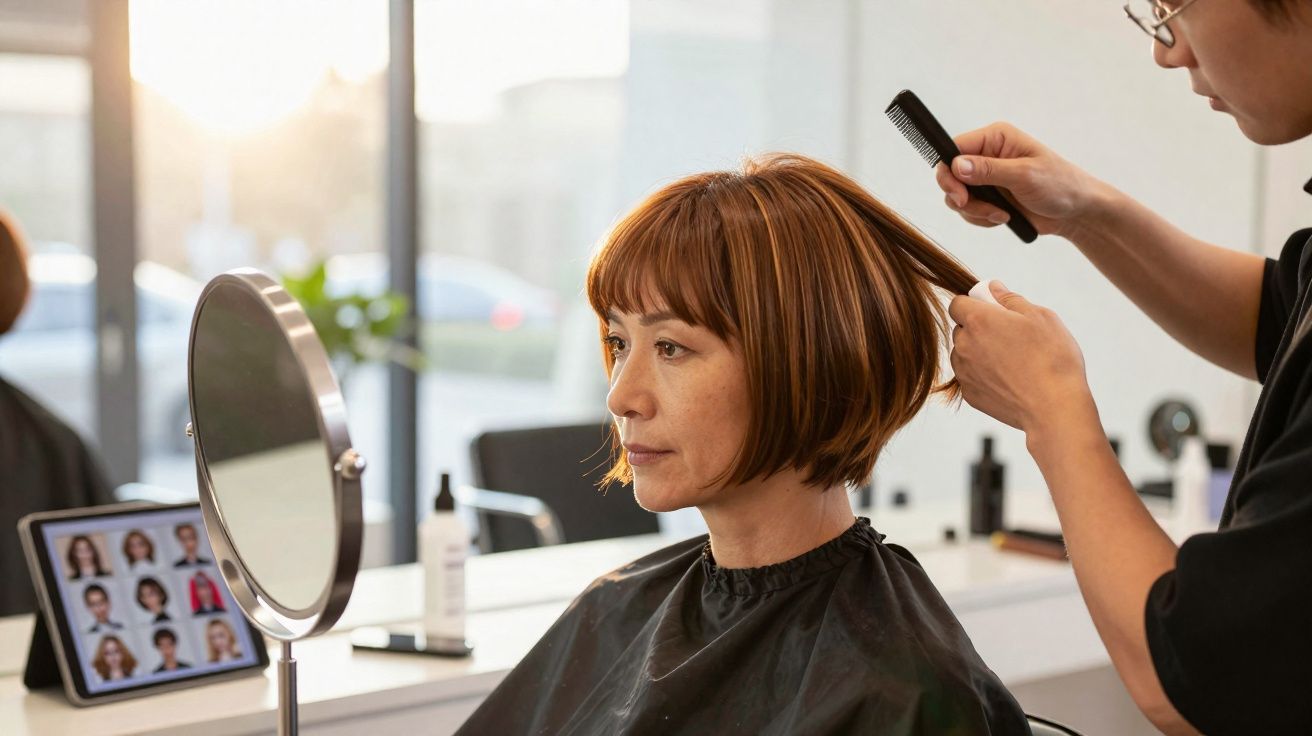
Polished, precise and quietly face-sculpting, the contour pixie is the short haircut starting to dominate salon moodboards for spring 2026.
As brighter mornings return and jumpers stop feeling essential, hairdressers are nudging clients towards a cropped cut that does more than simply sit around the face - it actively shapes it. With the crispness of a big chop and the finesse of well-placed make-up, the contour pixie is tipped to become one of the most requested looks for spring and summer appointments.
Contour pixie haircut: what it is (and what makes it different)
At its core, the contour pixie is an updated take on the classic pixie cut, built on contrast, control and customisation. The nape and sides are kept short, tidy and close, while the top is left longer for movement and styling flexibility. That part isn’t new.
What changes everything is the “contour” element.
The contour pixie is cut to sculpt facial features, rather than simply to shorten hair.
Instead of following a fixed template, your stylist tailors the outline around your cheekbones, jawline and forehead. The shape is subtly “cinched” in the places that matter, creating a hair equivalent of contouring powder: gentle graduation through the temples, thoughtfully retained length near the cheekbones, and a fringe chosen with intention rather than cut on autopilot.
Why salons are betting on it for spring 2026
Short hair trends tend to circle back: one season leans into sharp bobs, the next swings towards shaggy lobs, and then the pixie returns again. The contour pixie fits neatly into that rhythm, but it feels more current because it avoids the copy-and-paste effect - the one where every short cut looks identical from Instagram to the high street.
Global stylist Cos Sakkas, a long-time creative force at Toni & Guy, has been championing the contour pixie in the UK and internationally. His message is straightforward: short hair should amplify what’s distinctive about your face, not flatten it into a one-size-fits-all blueprint.
Rather than producing the same pixie on everyone, the contour pixie highlights what your face already does well.
It also matches today’s appetite for personalised beauty. In the same way that skin tints are blended to suit undertones and foundations now come in broad shade ranges, haircuts are increasingly shaped around bone structure, hair density and real-life routines.
How stylists tailor the contour pixie to different face shapes
The real power of this cut is how finely it can be adjusted - millimetre by millimetre. Here’s how stylists typically adapt it to flatter common face shapes:
- Round face: Extra height through the top and a cleaner, squarer fringe line can visually lengthen the face and add definition.
- Square face: Softer edges and a gently curved fringe help balance a strong jawline and reduce any feeling of severity.
- Oval face: Most variations work well, so the conversation usually shifts towards hair texture and lifestyle rather than “correcting” proportions.
- Angular face: Slightly longer pieces around the temples and cheekbones can soften sharper lines without disguising them.
The goal isn’t to chase “perfect proportions”. It’s to tweak weight, length and volume so your features look deliberate and balanced - not accidental.
Texture matters: fine, thick, straight or curly
Another reason the contour pixie is finding so many fans is how well it adapts across hair types and natural patterns.
On fine or thinning hair
A traditional pixie can sometimes cause fine hair to fall flat, especially if it’s over-layered. With a contour pixie, the layering is placed more carefully. The nape and sides are cropped close for a clean outline, while the top retains slightly denser sections to create soft, airy lift.
By taking away bulk where it drags and keeping density where lift is needed, the cut can mimic the look of thicker hair.
Light texturising at the crown helps prevent a limp finish, while the perimeter stays crisp so the overall shape feels intentional rather than fluffy.
On thick or wavy hair
With thicker hair, going short can trigger unwanted “puff” at the sides. A contour pixie manages this by using internal layering to remove weight while keeping the outer line controlled, rather than hacking away at the surface. The top can remain a touch longer and wavier for a relaxed, tousled finish, while the sides sit closer to the face.
Curly hair can suit this shape brilliantly too - especially when curls are shaped to create a halo of movement across the top and towards the forehead, instead of being forced into a rigid outline that fights the natural curl pattern.
Fringe rules that make the contour pixie feel bespoke
The fringe (sometimes called bangs) is often where the contour pixie becomes truly personal. Sakkas emphasises that the most flattering fringe usually slightly contrasts with the face shape, rather than mirroring it.
| Face shape | Recommended fringe |
|---|---|
| Round | A squarer, more structured fringe to add definition |
| Square | A softer, more rounded fringe to balance angles |
| Wide face | A narrower, controlled fringe that doesn’t add width |
| Narrow face | A fuller, wider fringe to create horizontal balance |
One option stands out for sheer versatility: the curtain fringe. Parted loosely down the centre and blended into the sides, it suits most contours and grows out gracefully - reassuring if you’re wary of committing to a blunt, straight-across fringe.
Why women over 50 are choosing the contour pixie
For decades, short hair has been a dependable choice for women over 50 who want something sharp, modern and easy to live with. The contour pixie builds on that reputation, adding a subtle anti-age effect without making it the headline.
Because the nape and sides are kept clean, the overall shape can lift the eye line and make the neck look more defined. Meanwhile, movement through the top stops the style from appearing rigid. The cleverest work often happens at the fringe and around the temples.
A well-positioned contour fringe can soften the look of forehead lines and fine crow’s feet without hiding the face behind heavy hair.
If deeper forehead lines are a priority, a fuller fringe that skims the brows can act like a soft-focus filter. If crow’s feet are the main concern, your stylist may shape the sides to fall lightly towards the outer corners of the eyes without covering them. The result tends to read as brighter and more open - without relying on aggressive layering or harsh colour.
What to say (and show) at the salon
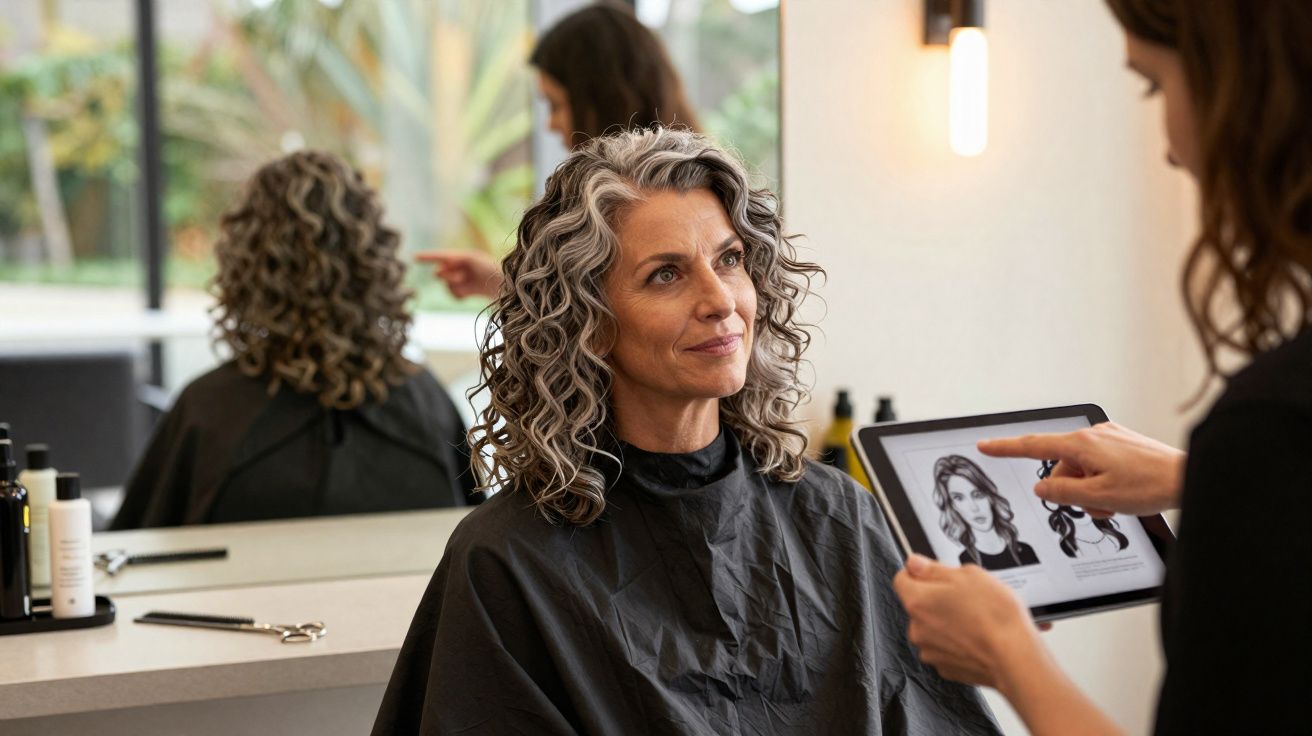
Walking in and asking for a “contour pixie” alone may not be specific enough, because interpretations vary between salons and stylists. Photos are helpful, but a brief, clear conversation is just as important. Consider covering:
- Which features you’d like to emphasise: cheekbones, eyes, jawline, neck.
- Which areas you’d prefer to soften: deep lines, a very high forehead, a strong jaw.
- How much day-to-day styling you’re realistically prepared to do.
- Your natural texture and what it does when you let it air-dry.
From there, your hairdresser can fine-tune the length on top, how close the sides sit, and the exact shape and direction of the fringe. A particularly good sign is when they keep checking the cut from multiple angles and finish with small, precise snips around the cheekbones and temples - that final refinement is the contour element at work.
A useful extra note: hairlines, cowlicks and partings
Because a contour pixie relies on precision, your hairline and natural growth patterns matter more than they might with longer styles. If you have a strong cowlick at the crown or a stubborn parting, the top length and the direction of the fringe should be planned around it - otherwise the cut can spring up unpredictably.
It’s also worth mentioning if you’re growing out previous layers or dealing with thinning at the temples. In many cases, a contour pixie can be adapted to create a cleaner outline while keeping strategic softness where you want coverage.
Styling and upkeep: what everyday life looks like
Even with its tailored finish, the contour pixie isn’t particularly high-maintenance. Most versions benefit from a trim every 4 to 7 weeks to keep the outline sharp. The top tends to grow out more softly, so the shape often stays flattering even as it relaxes.
Day to day, styling can be as simple as:
- Working a small amount of lightweight mousse or volumising spray into damp hair, then rough-drying with your fingers.
- Using a pea-sized amount of texture cream on the top for separation and movement.
- Smoothing the fringe with a small round brush if you prefer a more polished result.
For evenings, wax or pomade can define the fringe direction or create a slightly wet, sculpted look. If you want something more effortless, a dry texturising spray gives an undone, weekend finish.
Helpful terms to know before you book
Salon consultations can feel like learning a new language. Two terms are particularly relevant to a contour pixie:
- Internal layering: Shorter sections cut underneath the top layer to remove bulk without making the outside look choppy. Essential for thick or wavy hair.
- Graduation: Hair cut progressively longer from the nape upwards to form a gentle slope. This helps shape the head and stops the back from looking blocky.
Knowing these phrases makes it easier to explain what you like (or dislike) in reference photos - and helps you avoid a result that feels too severe or, on the flip side, too fluffy.
Looking ahead: colour, grow-out and small adjustments
The contour pixie pairs beautifully with colour. Soft highlights through the top and around the fringe can add an extra contour effect by catching light where you want emphasis. Deeper lowlights at the nape can increase depth and make the neck appear more defined.
If jumping straight to a very short cut feels like too much, many stylists suggest a “trial run”: a slightly longer crop or short bob cut with contouring principles - cinched sides, cheekbone focus and a considered fringe. Living with that shape for a few weeks can show how your features respond before you commit to a tighter pixie.
For anyone stuck in a hairstyle rut, the contour pixie offers a clear promise: a modern cut that works in real life, grows out well, and pays attention to the architecture of your face - not just the length of your hair.



Comments
No comments yet. Be the first to comment!
Leave a Comment