
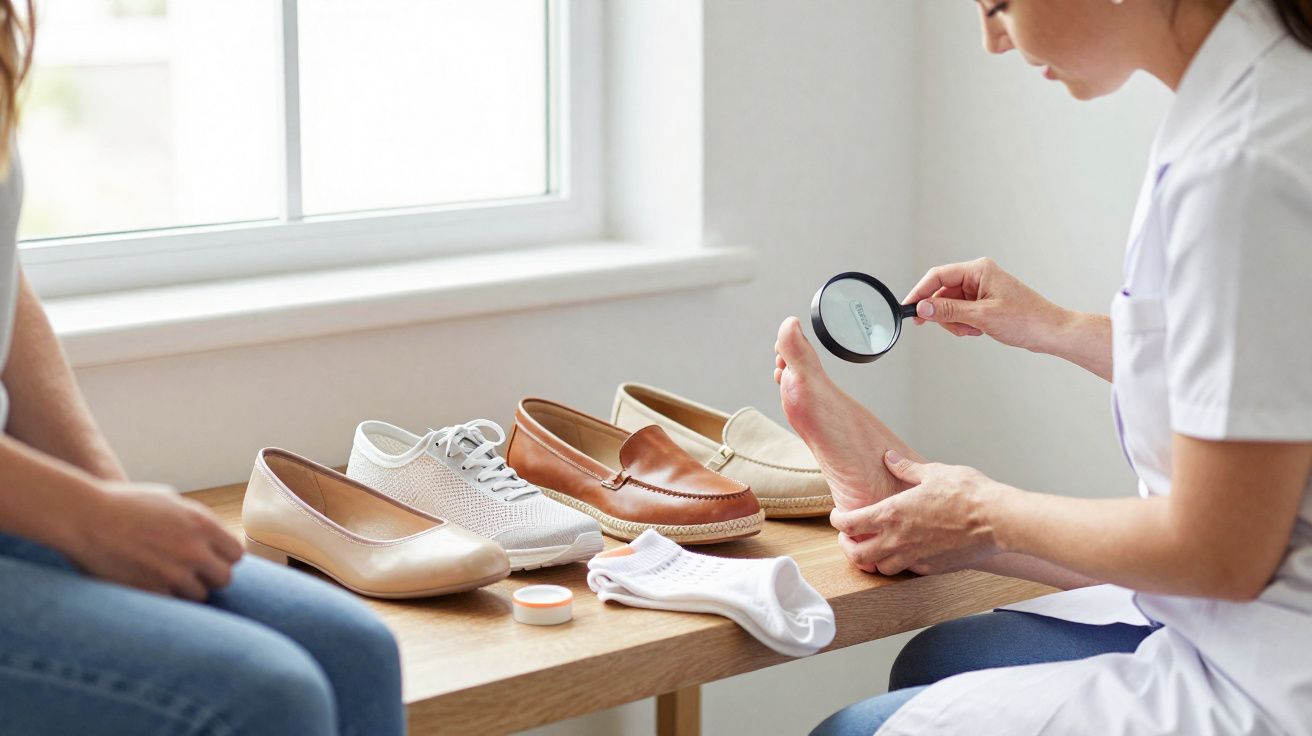
Yet one overlooked detail can undo everything.
As the weather warms and our feet finally break free of bulky winter footwear, one podiatrist’s warning is cutting through the seasonal enthusiasm. A widely used, inexpensive material found in countless spring shoes can quietly irritate the skin, hold on to sweat and encourage infections. Plenty of pairs on the high street look chic-even premium-but inside they can act like miniature saunas.
Why a podiatrist says synthetic shoes are a problem
In clinics across France, the podiatrist who sounded the alarm notices the same cycle year after year: the moment people swap to lighter spring shoes, foot complaints spike. The biggest issue is often not the heel height or the shape of the toe box, but what the shoe is made of-especially the material surrounding the foot.
Shoes that are largely synthetic tend to retain heat and sweat, turning an ordinary working day into hours of skin becoming waterlogged.
Synthetic uppers and linings offer very little breathability. Air barely circulates, and moisture is not managed in a healthy way. Feet sweat naturally-even when you feel “cool”-and that moisture needs somewhere to go. When the upper is plastic-based, it simply gets trapped.
When sweat can’t escape, the skin pays the price
When humidity is held against the skin, the outer layers soften. In podiatry this is known as maceration. Skin can become pale, wrinkled and delicate-much like fingertips after a long soak in the bath. In that weakened condition, fungi and bacteria have an ideal environment.
The earliest signs commonly show up between the toes: itching, peeling, and tiny cracks. If it continues, it can develop into a more widespread fungal infection, spreading beneath the arch or along the sides of the foot.
Ongoing dampness, warmth and rubbing inside synthetic shoes create ideal conditions for fungal infections and stubborn odour.
Odour is another frequent consequence. When sweat cannot evaporate, bacteria break it down and release compounds that cling to the inside of the shoe. Synthetic materials-particularly low-cost plastic “leathers”-tend to hold on to these smells far longer than natural alternatives.
Blisters, swelling and the spring heat effect
The podiatrist also highlights a practical, physical problem: many synthetics hardly stretch. Unlike real leather, they do not gradually shape themselves to your foot as you wear them.
As temperatures rise in spring and summer, feet often swell slightly over the course of the day as circulation increases. In a natural, flexible material, the shoe will give a little. In a stiff synthetic outer, there is minimal flexibility-so pressure points develop, friction increases and blisters become more likely.
Common hot spots include the back of the heel, the outer edge near the little toe, and the tops of the toes in closed shoes. Once a blister forms in a warm, damp, poorly ventilated shoe, it can take longer to heal and is more vulnerable to infection.
Synthetic shoes warm the foot, trigger extra sweating, and then fail to accommodate the slight swelling that comes with warmer weather.
Where synthetic materials hide in your spring shoe collection
This issue is not confined to glossy plastic court shoes. Synthetic fibres crop up in many styles that appear “light” or “breathable” at first glance, including:
- Affordable ballerina flats with thin, plastic-feeling uppers
- Trend-led trainers combining canvas with plastic “leather” panels
- Sandals with synthetic straps that cling to damp skin
- Slip-on espadrilles with plastic-coated linings
You’ll often see these marketed as “vegan leather”, “PU leather” or “faux leather”. From a foot-health perspective, these are typically plastic-based materials with limited breathability.
The materials that podiatrists actually recommend for healthier feet
Spring footwear is not automatically a problem. The podiatrist’s preference is for natural materials that allow air movement and help moisture disperse. A few stand out for everyday wear.
Leather and suede: tried-and-tested choices
For many practitioners, genuine leather remains the benchmark. Its tiny pores allow airflow, and its fibre structure can absorb a small amount of moisture before releasing it gradually.
Quality leather becomes softer after a handful of wears, shaping to the foot and reducing rubbing on sensitive areas.
Suede-made from the underside of the hide-feels gentler against bare skin. For spring, it can be a comfortable middle ground: lighter in feel, reasonably breathable and often kinder on the foot. Nubuck (a finely buffed leather) offers the structure of smooth leather with a soft finish similar to suede.
Natural fabrics for trainers and espadrilles
For relaxed, everyday wear, natural textiles are a dependable option:
| Material | Main benefit | Best for |
|---|---|---|
| Cotton canvas | Promotes airflow; easy to wash | Trainers, slip-ons, everyday plimsolls |
| Linen | Very breathable; stays cooler in hot weather | Espadrilles, lightweight loafers, beach shoes |
| Natural raffia | Very light; airy weave; dries quickly | Sandals, woven mules, holiday shoes |
These fibres let air circulate around the foot and cope with brief periods of perspiration far better than plastic-based textiles. They’re particularly helpful if you spend hours walking or standing in mild to warm conditions.
How to read labels and avoid plastic traps
A shoe can look like leather on the outside while hiding a mostly synthetic interior. The podiatrist’s advice is simple: read the composition label carefully before you buy. Watch out for phrases such as:
- “Coated leather”: often indicates a thin leather layer covered with a plastic film
- “PU”, “PVC”, “synthetic upper”: typically means non-breathable materials
- “Imitation leather”, “faux leather”, “synthetic leather”: almost always points to plastic
For better foot health, look for labels that specify full-grain leather, genuine leather, cotton, linen or other natural fibres-for both the upper and the lining.
Price can hint at quality, but it isn’t foolproof. Some mid-range shoes combine leather exteriors with cheaper synthetic linings that are hidden from view. Checking both the upper and the lining helps you avoid that common pitfall.
What happens if you keep wearing synthetic shoes?
Wearing synthetic shoes occasionally for a short stroll is unlikely to cause major harm. The bigger issue is repeated, all-day use-commuting, office hours, errands and evenings out in the same plastic-based pair.
Over time, the protective skin barrier can become compromised. Fungal infections may return repeatedly, particularly in people who also wear tight-fitting sports trainers. If you have diabetes or circulation problems, the stakes are higher: small blisters and cracks can heal more slowly and may develop into more serious complications.
There can also be a behavioural knock-on effect. When shoes start to smell, people often reach for deodorising sprays or powders, which may disguise early infection rather than prompting proper treatment.
Practical scenarios and small changes that help
Picture an office worker who walks part of their commute and spends the day in synthetic ballet flats. The morning walk causes sweating. In the office, the air conditioning cools the room, but moisture remains trapped around the toes. By mid-afternoon, the skin is softened, the heel starts rubbing, and a blister begins. By the end of the week, redness and itching show up between the toes.
Put the same person in leather flats with a breathable leather or cotton lining, and the situation often improves noticeably. Moisture spreads out and evaporates more easily, friction is reduced, and the skin is less prone to damage. Without changing the heel height or the overall look, switching material alone can remove several triggers for discomfort.
If you do need to wear synthetic shoes from time to time, you can limit the downsides by rotating pairs so each one dries fully, choosing thin socks made from natural fibres when possible, and taking shoes off soon after getting home to let your feet air out.
Key terms that often confuse shoppers
Some common label claims sound reassuring but are worth decoding:
- Breathable: frequently a marketing term; it’s most meaningful when supported by natural materials or proven mesh designs
- Microfibre: may be synthetic or natural; many microfibres are plastic-based, so check the composition
- Antibacterial: can reduce bacterial growth temporarily, but it does not solve the underlying issue of moisture and poor ventilation
Spending a few extra minutes checking these details in the shop can save you weeks of irritation, blisters and appointments with a podiatrist as spring shifts into full summer.
Extra foot-care habits a podiatrist would add
Material choice matters most, but daily habits can strengthen the results. Let shoes dry completely between wears, and consider alternating styles across the week (for example, leather shoes one day and canvas trainers the next). If your feet sweat heavily, washing and drying carefully-especially between the toes-can reduce the likelihood of maceration and fungal flare-ups.
If itching, peeling or cracking keeps returning despite changing footwear, it may be time to speak to a pharmacist or podiatrist. Treating a fungal infection early is usually quicker and far less disruptive than trying to tackle it once it has spread.




Comments
No comments yet. Be the first to comment!
Leave a Comment