
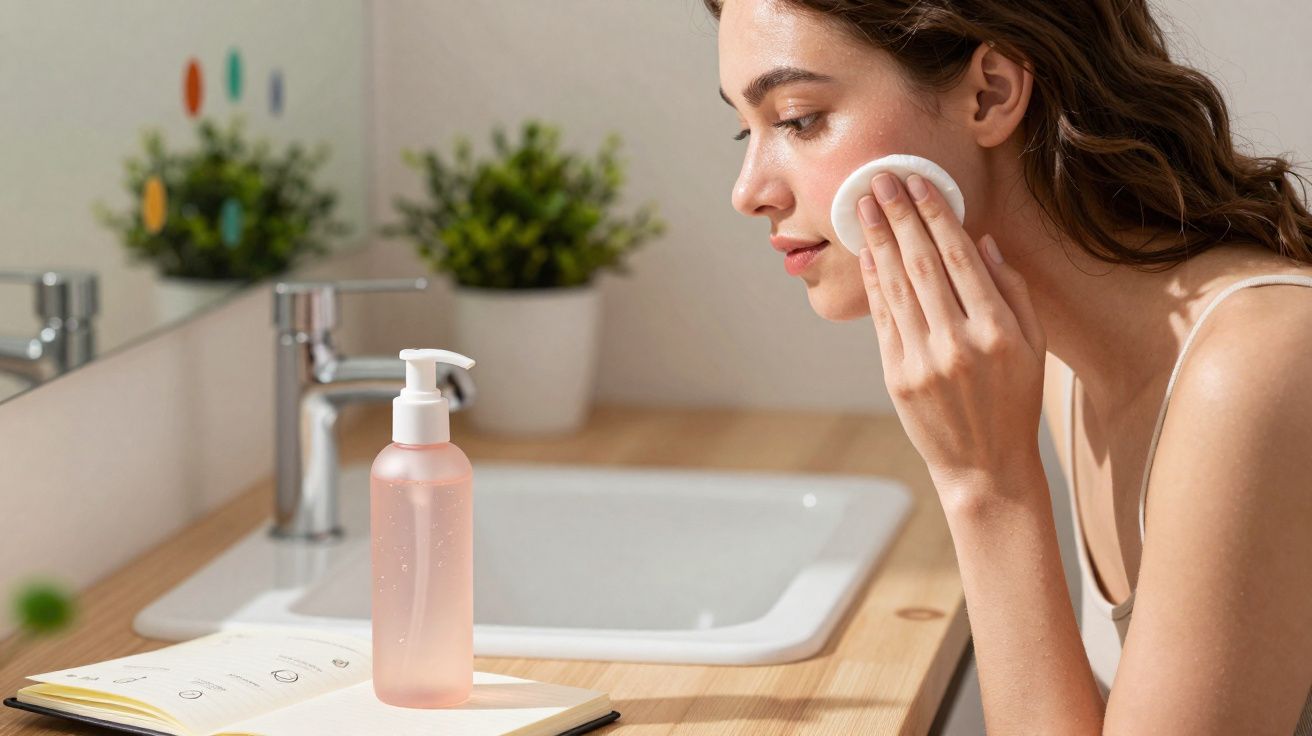
Many people want smooth, luminous skin yet feel wary of acids and traditional exfoliants. Redness, stinging and tightness are common complaints, and plenty of people have had at least one bad experience. A new Talika Glow-Lotion claims to tackle exactly that fear: exfoliation without putting the skin under stress. A chemist reviewed the formula in detail and praised it publicly.
Talika Glow-Lotion: what’s actually new about it?
At its core, the lotion merges two functions in one step: hydration and a gentle chemical peel. The chemist describes it as a hybrid between a moisturising essence and an exfoliating lotion-less like a “strip-your-skin” peel and more like a lightweight, daily treatment layer.
The centrepiece of the formula is 2% lactic acid, an alpha-hydroxy acid (AHA) widely considered milder than many other exfoliating acids. Lactic acid helps loosen the bonds between dead surface cells so they can shed more evenly, while aiming to avoid unnecessary irritation to the skin barrier. It also supports a slightly acidic skin pH, which is a key condition for a resilient protective barrier.
The idea is that mild lactic acid, moisture-binding ingredients and “food” for microorganisms can make skin look smoother while also helping it become more robust over time.
Talika also positions the product as largely natural: according to the brand, 96% of the ingredients are from natural origin. The promise is a visible glow without the “acid shock” many people associate with chemical exfoliants.
“Glass Skin” from Korea-adapted for sensitive and reactive skin
The concept clearly takes inspiration from Korean skincare routines. The term “Glass Skin” refers to skin that looks exceptionally even, smooth and reflective-almost like polished glass. Importantly, that look is not achieved through exfoliation alone; it relies on a combination of gentle smoothing, consistent hydration and a stable skin barrier.
This is where the Glow-Lotion is meant to fit: it lifts away dead cells gradually, while also aiming to hydrate deeply and support the skin microbiome. The positioning is explicit-this is intended for people with sensitive skin or skin that flushes and reacts easily.
Hydration, care and balance: the key ingredients working together
Rather than leaning on one “hero” ingredient, the formula is built around a set of actives designed to complement each other:
- Lactic acid (2%): a mild AHA that helps remove dead surface cells and supports a slightly acidic pH.
- Lactobionic acid (PHA): an especially gentle exfoliating acid that also helps bind moisture and refine skin texture without feeling harsh.
- Low molecular weight hyaluronic acid: penetrates more deeply, attracts water within the skin and helps create a plumper look.
- Prebiotics from green microalgae: intended to act as “nutrition” for beneficial bacteria on the skin’s surface.
- Postbiotics: by-products of microorganisms that may help keep the microbiome more stable.
This combination is intended to deliver more than a short-lived sheen. The goal is skin that, over time, is less prone to redness and irritation. The chemist illustrates the microalgae-derived prebiotics as “good food” for the skin’s bacteria-substances that help helpful microorganisms hold their ground.
Skin microbiome: why the bacteria on your skin have become the main character
In recent years, microbiome has become one of the biggest buzzwords in skincare-often with good reason. It refers to the community of bacteria, fungi and other microorganisms living on the skin. Together, they form a kind of protective ecosystem that helps deter harmful germs, calm inflammatory responses and reinforce barrier function.
Overly aggressive peels, harsh surfactants, or simply layering too many strong products can disrupt that balance, leaving skin dry, irritated and more prone to inflammation. The Glow-Lotion attempts to counter that risk by incorporating prebiotics and postbiotics to support the microbiome instead of constantly challenging it.
When pre- and postbiotics do their job, skin can look less reactive, respond less dramatically, and be more forgiving of everyday mistakes.
For sensitive skin types in particular, this approach can be appealing because it aims to work with the skin’s own defences rather than focusing purely on symptom control.
Gentle chemical exfoliation for every day: how Talika says to use it
Talika frames the product as intentionally minimalist and deliberately different from intensive “peel courses”. The texture is a light gel-lotion applied with fingers directly to the face and neck. The chemist notes that daily use can be suitable-provided your skin tolerates it well.
A straightforward routine based on the intended use looks like this:
- Cleanse with a mild cleanser, then pat the skin dry gently.
- Dispense a few drops of the Glow-Lotion into your palm.
- Press and pat it into the skin with your fingertips-avoid rubbing.
- Follow with a serum and/or a light moisturiser.
- In the morning, always finish with sunscreen.
The lotion is positioned as a good match for anyone who has been nervous about stronger acid products but still wants a smoother texture and more radiance. The chemist characterises it as a sensible introduction to chemical exfoliation.
Who is the Talika Glow-Lotion for-and where are the limits?
A quick look at the bottle reveals the basics: 100 millilitres for around €29 (roughly £25, depending on exchange rates). That places it firmly in the mid-range category. If you already use several high-strength acids, it’s worth considering whether adding another exfoliating step is genuinely helpful or whether it risks pushing your skin into over-exfoliation.
The product is likely to be most interesting for:
- People with sensitive or reactive skin who have struggled to tolerate acids in the past.
- Beginners who want to start chemical exfoliation without jumping straight into high percentages.
- Fans of Glass Skin routines who want smoothness and glow without an aggressive “peel”.
- Anyone prioritising microbiome support and barrier-focused skincare.
On the other hand, if you’re dealing with inflamed acne, open areas, or a severely compromised barrier, extra caution is sensible. In those situations, a tailored discussion with a dermatologist is usually recommended before introducing additional acids.
Risks to watch for, even with a mild formula
Even when a product is designed to be gentle, one rule still applies: acids are still acids. With daily use, effects can accumulate. Common warning signs include:
- persistent stinging immediately after application,
- widespread, intense redness,
- visible flaking or a tight, “stretched” feeling,
- new pustules or micro-inflammation that wasn’t there before.
If this happens, spacing out applications can help-using it every other evening, or every third evening. Also be careful when combining with other strong actives such as retinoic acid, high-percentage glycolic acid, or potent exfoliating pads, as skin can become overwhelmed quickly.
What lactic acid and lactobionic acid (PHA) can change in real life
To understand why skin may look smoother and fresher after a few weeks, it helps to look at the mechanism. Lactic acid gently loosens the “glue” that holds dead surface cells together. As those cells shed more evenly, the complexion often looks less dull and fine dehydration lines can appear less noticeable.
Lactobionic acid belongs to polyhydroxy acids (PHA). These molecules are larger than many classic AHAs, so they tend not to penetrate as deeply. That means they often work more on the surface and are, in many cases, better tolerated. PHAs are also known for their water-binding properties, which is why they’re popular for dry and sensitive skin types.
Using an AHA with a PHA can create a controlled “micro-exfoliation” effect-more about evening things out than forcing a dramatic renewal.
In practical terms, that can translate into a more awake-looking complexion, pores that appear more refined, and a smoother base for make-up. If you’ve ever felt that foundation clings to dry patches, this type of gentle exfoliating-hydrating product can be particularly helpful.
Practical routine planning: fitting the Glow-Lotion into what you already do
A common concern is how to add a product like this without rebuilding your entire routine. One workable option is to use the lotion as your second step after cleansing in the evening. In the morning, many people can keep things simple: gentle cleanse, the lotion (if tolerated), moisturiser, then a high SPF.
If you use retinol, an alternating schedule is often kinder: retinol one night, Talika Glow-Lotion the next. That way, you reduce the chance of two powerful categories tugging at the barrier at the same time. With vitamin C serums, you can test whether your skin is comfortable with the combination in the morning, or whether the lotion is better kept as an evening-only step.
Results also require patience. Mild acids commonly take two to four weeks to show a stable, noticeable effect. If you switch products too quickly, you can miss that tipping point. The chemist’s philosophy here is clear: consistency and gentleness beat chasing a new trend every month.
Two extra points worth considering: patch testing and seasonal use
Even with a mild AHA/PHA blend, it’s sensible to patch test-especially if you’re reactive. Applying a small amount behind the ear or along the jawline for a few nights can reveal early signs of intolerance before you commit to full-face, daily use.
It’s also worth adjusting frequency by season and lifestyle. In brighter months, when UV exposure is higher, sunscreen becomes non-negotiable with any exfoliant, and some people prefer using the lotion less often. In winter, when indoor heating and cold air can dry the skin, you may find the hydration-focused design (hyaluronic acid plus PHAs) fits particularly well-so long as you keep an eye on any tightness or stinging and scale back if needed.






Comments
No comments yet. Be the first to comment!
Leave a Comment