
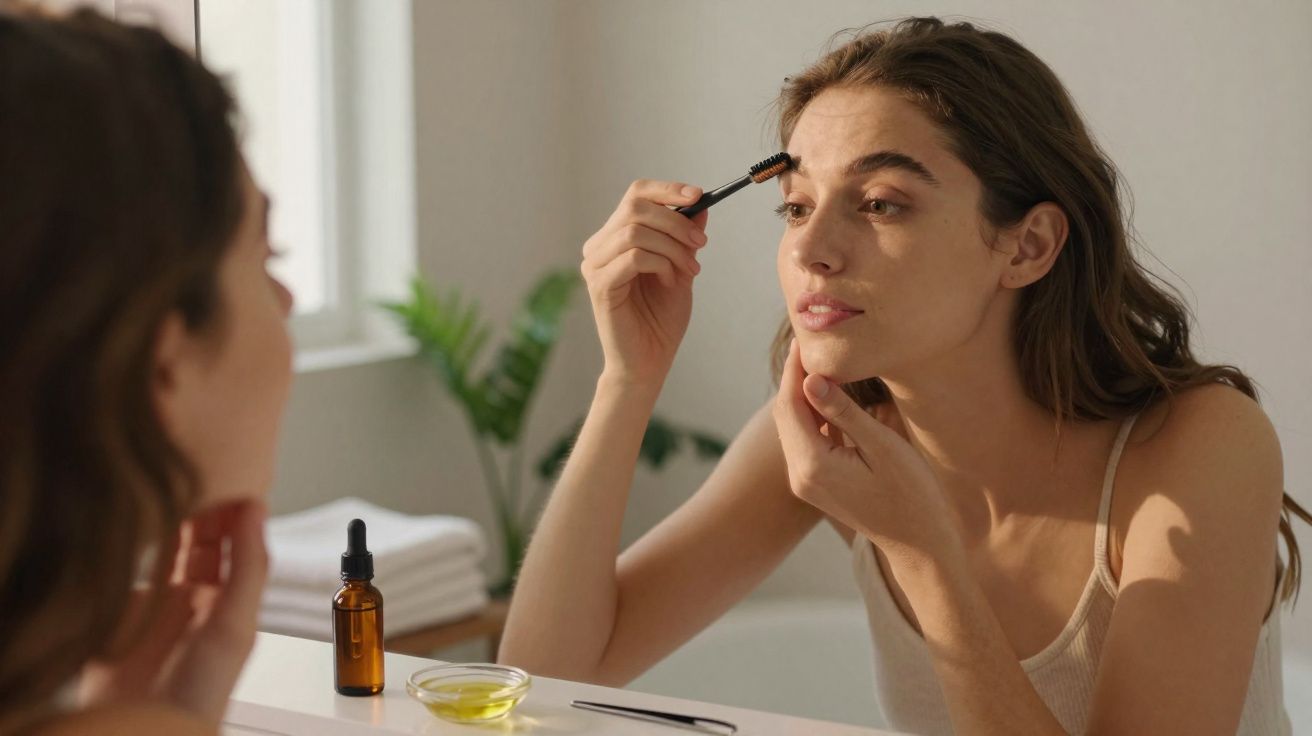
Many people only realise in photos or under harsh bathroom lighting just how much their brows shape their whole expression. If you want to reverse the trend for ultra-thin, over-plucked or bleached eyebrows, a few consistent steps can bring noticeably more fullness back within weeks - without a studio visit, microblading or expensive treatments.
Why so many people suddenly want fuller brows again
Beauty trends swing like a pendulum: after extra-full “boy brows”, TikTok and Instagram pushed pencil-thin brows and bleached arches back into the spotlight. Celebrities such as Kendall Jenner and Dua Lipa showed how dramatically a face can change when the brows almost disappear. In everyday life, though, that look only really suits a small number of people.
After a few months, many notice the same issues: the fullness is gone, the eyes look less defined, and the face loses structure. It becomes particularly tricky if you’ve been tweezing or waxing for years - some hair roots eventually stop producing hair, and the brow can stay sparser than it used to be.
If you want naturally denser brows again, you mainly need two things: consistent care and a firm “no” to the tweezers - for several weeks at least.
The good news is that in many cases hair roots respond well once they’re given a break and looked after regularly. Four practical habits help get the process moving.
1) A longer tweezer break: let them grow, even when it’s annoying
The most important step is also the most uncomfortable: you have to give your eyebrows time. That means no daily “tidying session” in front of the mirror.
How long should your tweezing break last?
- At least 6 to 8 weeks without extensive tweezing
- Only remove hairs that are clearly outside your natural line
- Use the mirror from a little further back, so you don’t obsess over every tiny hair
Eyebrow growth phases typically span 4 to 12 weeks. If you “correct” every other day, you keep catching hairs right as they appear - which is why your brows never look any fuller.
A clear goal helps. Take photos of your brows at the start (straight on and in profile), then repeat at 4 weeks and 8 weeks. You’ll spot progress even if the in-between stage feels messy day to day.
Temporary shaping: solve the look without tweezers
If uneven bits bother you, use shaping tricks rather than the tweezers:
- A clear brow gel tames hairs that stick out
- A lightly covering concealer under the brow arch visually hides “overgrowth”
- A fine brow pencil defines the top edge so the eye area still looks clean
This keeps your face looking structured without creating fresh gaps.
Extra tip: keep the brow area calm so hairs can do their job
If you’re trying to regrow brows, treat the skin there gently. Avoid harsh scrubbing, strong acids right over the brow line, or aggressive exfoliation that can irritate follicles. When you cleanse, use light pressure and pat dry rather than rubbing.
2) Daily brushing: a small movement with a big impact
The second lever is simple: brush your brows every day. It sounds basic, but it delivers several benefits at once.
How to brush properly
Use a clean spoolie (a brow brush or an old mascara wand, thoroughly washed):
- Brush the hairs straight up first
- Then sweep them slightly diagonally outwards, following the direction of growth
- Spend 15 to 20 seconds per brow
This movement stimulates microcirculation - meaning blood flow in the skin around the hair roots increases, helping nutrients reach the follicles more efficiently. At the same time, you’re positioning each hair so the brow looks fuller automatically, even without product.
Regular brushing also shows you where the real gaps are - and where unbrushed hairs were simply creating the illusion of “nothing there”.
Many people realise their “missing” brow was partly a styling issue. A consistent brushing routine can make some sparse areas look noticeably smaller straight away.
3) Targeted care: serums, peptides & oils for stronger hairs
Step three is an evening care ritual. This is where spending a little can be worth it, because brow hairs tend to respond well to the right ingredients.
Which products genuinely help?
| Product type | What it does | How to use it |
|---|---|---|
| Peptide serum | Strengthens the hair root and can improve density | Apply a thin layer with the applicator directly along the brow line |
| Conditioning brow gel | Gathers, conditions and protects during the day | Work in after brushing in the morning |
| Plant oil (e.g., castor oil) | Nourishes hair and skin; can feel mildly thickening | Apply a tiny drop with a cotton bud; keep it out of the eye |
What matters most is not using everything at once. Choose one or two products and stick with them. Care works slowly: noticeable changes often appear only after 6 to 10 weeks of consistent use.
How to build brow care into your evening routine
- Remove make-up and cleanse your face
- Apply skincare, avoiding the immediate eye contour
- Massage serum or oil into clean brows right at the end
Use gentle, circular motions to support circulation. Avoid vigorous rubbing, which can irritate the skin unnecessarily.
Extra tip: hygiene matters more than people think
Keep spoolies, cotton buds and brow tools clean, and don’t share them. If you’re prone to blocked pores or irritation, wiping your spoolie regularly can reduce the risk of breakouts along the brow line - which can otherwise tempt you back into over-tweezing.
4) Make-up with a “hair-by-hair effect”: instantly denser without looking drawn on
While you’re waiting for regrowth, smart make-up can rescue how your brows look. The goal is a result that still looks natural up close.
The right technique for natural fullness
Instead of colouring in the whole area, work with lots of tiny strokes:
- Choose an ultra-fine brow pencil or a brow pen with a felt tip
- Draw short lines in the direction of growth, mainly where there are gaps
- Emphasise the upper edge of the brow slightly more - it lifts the eye area
Finish by setting everything with a tinted or clear gel. The gel brushes fine hairs upwards and makes the “hair-by-hair effect” more convincing.
Brow make-up is like a trial run: you can test denser, wider or more defined shapes without sacrificing a single hair.
If you’re tempted by trend looks like ultra-light or very slim brows, you can mimic them with make-up rather than bleaching or plucking aggressively - keeping your real brow intact.
What nutrients, lifestyle and hormone shifts do to your brows
Eyebrows can be just as sensitive as scalp hair. Low iron, extreme crash dieting, ongoing stress, or an underactive thyroid often show up in facial hair too.
A blood test with your GP can clarify whether levels such as iron, zinc, vitamin D or B vitamins are low. When a deficiency is corrected, hair growth often normalises after a few months - including in the brows.
Puberty, pregnancy, breastfeeding and the menopause can also shift the hair cycle. If you pluck too aggressively during these phases, you risk your brows getting “stuck” in a hormonal low-growth period - making the route back to fullness even slower.
Risks, limits and when to see a professional
Not every brow can be fully “upgraded” again. If you’ve tweezed or waxed very aggressively for years, follicles can be permanently damaged, and some sections may never return completely.
If you have clearly bald patches, booking an appointment with a dermatologist is worthwhile. Sometimes conditions such as alopecia areata, hormonal disruption or significant nutrient deficiencies sit behind eyebrow hair loss.
Typical warning signs include:
- Sudden hair loss on one side
- Itching, redness or flaking skin in the brow area
- Marked thinning within a few weeks without changing your tweezing habits
In these cases, medical treatment may be needed - from anti-inflammatory creams to prescription serums. Cosmetic tricks alone won’t be enough.
Practical scenario: what an 8-week eyebrow plan can look like
To make the approach feel doable, here’s a realistic timeline:
- Weeks 1–2: Put the tweezers away, brush daily, apply a care serum at night. Expect mild irritation about the “messy” phase.
- Weeks 3–4: First new hairs show up. Only remove strays far below or above the line. Use a fine pencil to disguise gaps.
- Weeks 5–6: The shape looks softer and the brow gains visible substance. Continue care; add gel during the day if helpful.
- Weeks 7–8: A gentle re-definition can be worth it - ideally with professional advice at a brow studio, without excessive tweezing.
If you run this plan twice a year - for example after summer and before winter - you can support brow density long term.
Why patience genuinely pays off with eyebrows
Compared with lash lifting, microblading or brow lamination, brushing, serums and make-up can seem almost underwhelming. The major advantage is that your natural brow sets the pace - and stays healthy.
Each of the four habits - a tweezing break, daily brushing, a care routine, and hair-by-hair make-up - creates a small improvement on its own. Combined over several weeks, they build what many people actually want: a softer, fuller brow line that frames the eyes without looking obviously “done”.






Comments
No comments yet. Be the first to comment!
Leave a Comment