
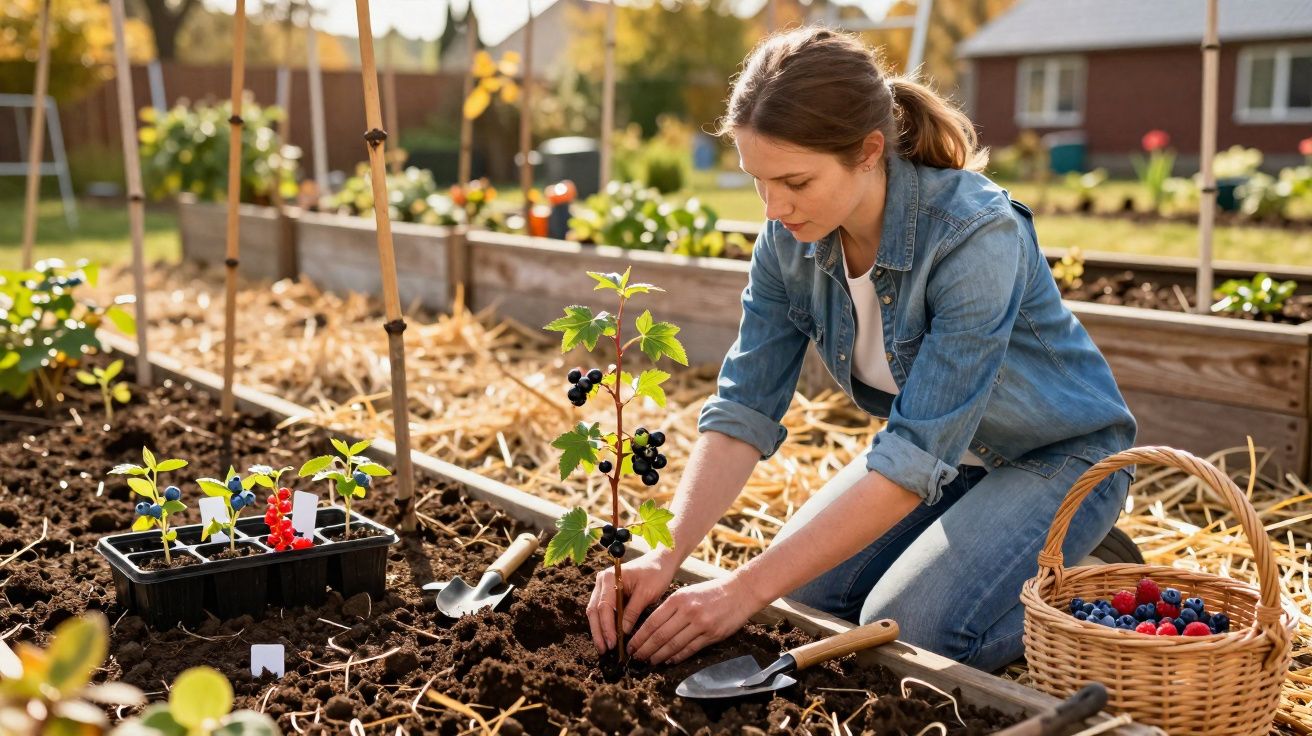
Autumn can look like the garden is winding down, but it’s actually the moment you can quietly set yourself up for an abundant spring - provided you plant at the right time.
The simple advantage is this: put the right fruit plants in while they’re dormant and, although you won’t see much happening above ground, the roots can get established through winter. A particularly effective, budget-friendly approach is to prioritise small fruits that settle in quickly and start growing early.
Why autumn planting transforms your spring harvest
When you plant while the garden’s top growth is resting, you give roots a head start before spring demand kicks in. In many places the soil stays relatively mild through late autumn and early winter, moisture is more reliable, and soil life continues working. That quiet window helps berry shrubs build fine feeder roots and anchor into the soil profile before they need to push leaves, flowers and fruit.
Plant when plants are leafless and dormant. Roots can establish in winter, which often means earlier growth in spring - and earlier flowers and bowls of fruit.
There’s also a clear cost benefit. Late in the year, nurseries commonly offer bare-root stock for less than potted plants. Bare-root plants are lighter to transport, simpler to handle, and often establish rapidly. You also reduce packaging, avoid heated glasshouse production, and cut down on long-distance haulage.
Timing guidance (keep it simple): - UK: late November into early December is often ideal, as long as the ground isn’t waterlogged or frozen. - Colder continental climates (for example, northern USA/Canada): plant after leaf-fall and before the soil freezes hard. - Mild-winter regions: planting can extend into January. - Rule of thumb: plant while the plant is dormant and the soil is workable.
Which fruit to plant now: blackcurrants, redcurrants, raspberries, gooseberries and blueberries
The best candidates for autumn planting are hardy small fruits - particularly blackcurrants, redcurrants, raspberries, gooseberries, and (where your conditions suit) blueberries. These shrubs and canes cope well with winter cold, tolerate unpredictable springs, and reward straightforward care with generous yields.
| Fruit | Soil / pH | Sun | Spacing | Planting form | First harvest |
|---|---|---|---|---|---|
| Blackcurrant | Fertile, slightly acidic to neutral (pH 6–7) | Sun to light shade | 1.5 m | Bare-root or potted | Year 1–2 (best from year 2) |
| Redcurrant | Moist, well-drained, neutral | Full sun is best | 1.5 m | Bare-root or potted | Year 2 |
| Raspberry (summer-bearing) | Rich, well-drained (pH 5.6–6.5) | Full sun | 45–60 cm between canes | Bare-root canes | Year 2 (on second-year canes) |
| Raspberry (autumn-bearing) | As above | Full sun | 45–60 cm between canes | Bare-root canes | Year 1 (late summer–autumn on new canes) |
| Gooseberry | Moist, fertile (pH 6–7) | Sun; tolerates light shade | 1–1.5 m | Bare-root or potted | Year 2 |
| Blueberry | Acidic (pH 4.5–5.5), ericaceous growing medium | Full sun | 1–1.2 m | Often best potted | Year 2 (improves with cross-pollination) |
Step-by-step planting that genuinely works
- Choose your position: aim for morning sun, some shelter from strong winds, and soil that drains after rain.
- Check pH if possible: currants are happiest near neutral; blueberries must have acidic conditions; raspberries sit between.
- Dig wide rather than deep: make the hole roughly twice the width of the roots, but only as deep as the root mass.
- Improve the backfill: mix compost into the soil you’re returning. For raspberries and currants, well-rotted manure is helpful; avoid anything fresh.
- Prep bare-root plants: soak roots for about 30 minutes before planting, and keep them damp while you work.
- Plant at the right depth: set blackcurrants about 5 cm deeper than they were in the nursery to encourage new shoots; plant the others at the original nursery soil line.
- Backfill and firm in: press the soil down gently but thoroughly, then water slowly so the soil settles around the roots.
- Mulch properly: apply 5–8 cm of leaves, wood chips or straw, keeping mulch clear of stems to prevent rot.
- Install support early for raspberries: put posts and wires (or a simple trellis) in now, then tie canes loosely.
Bare-root season is the sweet spot: late November into early winter in mild areas, and as late as the soil allows in colder ones.
A quick extra step that improves results (often overlooked)
Before you plant, take a minute to remove perennial weeds (especially couch grass and bindweed) and break up compacted ground. Berry roots dislike competition and stagnant soil. If drainage is slow, consider planting on a low ridge or in a raised bed rather than hoping winter rain will “sort it out”.
Low-fuss care and a fast harvest timeline
These plants are not demanding, but the first spring is important. One principle matters most: if rainfall doesn’t arrive for a week, water deeply. Continue mulching to conserve moisture and suppress weeds. In spring, feed with compost around the drip line. Avoid high-nitrogen feeds after mid-summer, as soft late growth is more vulnerable to disease.
Pruning that keeps fruit coming year after year
- Blackcurrant: immediately after planting, cut all shoots back to two buds to form a sturdy stool. Each winter, remove around a third of the oldest, darkest wood at the base to keep young, productive canes replacing it.
- Redcurrant and gooseberry: train to an open goblet shape. In winter, maintain a framework of 8–12 branches and cut new laterals back to 2–3 buds.
- Raspberry, summer-bearing (floricane): fruit forms on second-year canes. Once they’ve fruited, cut the brown spent canes down to ground level. Keep the new green canes, tie them in, and they’ll crop the following year.
- Raspberry, autumn-bearing (primocane): fruit is produced on the current season’s growth. In late winter, cut all canes to the ground for a clean, simple system.
Plant now and you can often pick the first handfuls from currants by late spring; expect truly generous bowls from year two. Autumn raspberries may even crop in their first season.
Common pitfalls to avoid
- Waterlogging: heavy clay that stays saturated can rot roots. Improve structure with organic matter, add grit where appropriate, raise the planting area, or choose a better-draining spot.
- Hungry ground: berries respond strongly to organic matter; thin, depleted soil slows root growth and reduces harvest size.
- Skipping mulch: bare soil is vulnerable to frost heave and weed invasion. Mulch stabilises temperatures, holds moisture and helps keep fruit cleaner.
- Planting too close: cramped spacing reduces airflow and encourages mildew and botrytis. Follow the spacing guidance in the table.
- No support for raspberries: canes sprawl, snap and spoil fruit. Even two sturdy posts and tensioned wire makes a noticeable difference.
Why this move pays back for health and the climate
Growing your own berries reduces packaging and “food miles”, and you harvest at peak ripeness - when flavour and vitamin C are at their best. It also makes the garden more practical: children can snack as they play, neighbours can swap cuttings, and a border becomes a pantry shrub by shrub.
Spring blossom also supports bees and hoverflies, which can improve pollination across your entire plot. Birds will want their share of the crop too. You can leave a few clusters as a trade-off, or net lightly just before ripening. If you net, use a soft net with tight mesh and secure it well to reduce the risk of wildlife becoming entangled.
A short row of berry plants can replace dozens of plastic punnets each season, while supporting pollinators and trimming weekly food costs.
Extra gains: realistic yields, space-saving options, and a couple of caveats
It helps to plan using real production figures. A mature blackcurrant often yields 2–4 kg per bush, while redcurrants commonly return 1.5–3 kg. A 3 m row of raspberries can supply multiple freezer bags a week at peak - ideal for breakfast toppings, quick jams and easy puddings with very little ongoing effort.
Short on room? Currants can be trained as cordons along a fence for a narrow footprint. Blueberries are well-suited to large containers filled with ericaceous compost on a sunny patio; in hard-water areas, using rainwater can make a big difference. Autumn-fruiting raspberries sit neatly in raised beds and suit a once-a-year pruning routine.
A few regional notes are worth keeping in mind. In parts of North America, blackcurrants were historically restricted due to concerns about white pine blister rust; many restrictions have been lifted, but it’s still sensible to check local guidance and choose rust-resistant varieties if you garden near pines. For raspberries, watch for cane blight after wet springs: remove and dispose of infected canes and increase airflow through correct spacing and tying-in.
Harvest handling (so none of it goes to waste)
If you expect a glut, plan ahead: berries freeze exceptionally well. Freeze on a tray first, then bag up so they don’t clump, and you’ll have portionable fruit for months. Currants also make excellent cordials and jellies because of their natural pectin, while raspberries are at their best used quickly or frozen the same day.
If you want a straightforward trial, plant one blackcurrant, one redcurrant, and five autumn raspberry canes this winter. With bare-root stock, the initial spend is usually modest. Next summer, keep a note of how many punnets you didn’t buy - many people find that a small test pays for itself within a single season and continues returning value every year after.





Comments
No comments yet. Be the first to comment!
Leave a Comment