
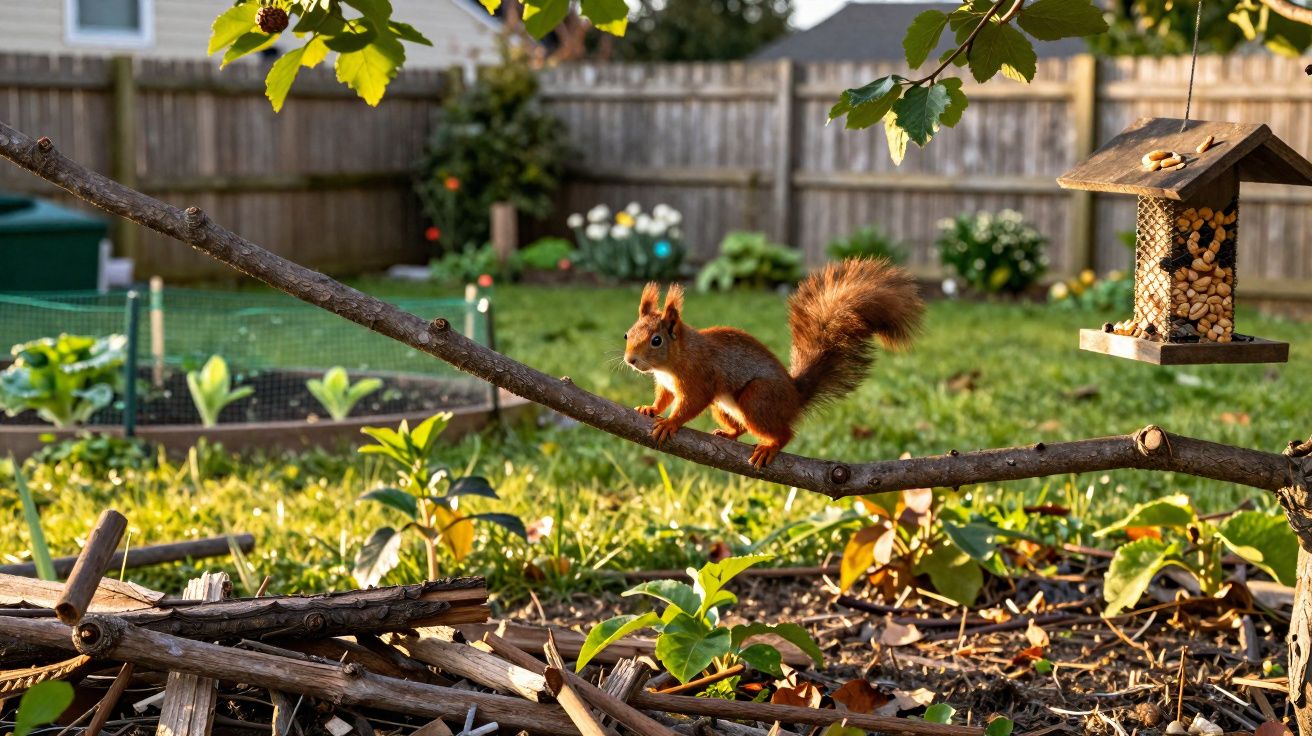
One winter morning, a flicker of russet fur skimming the fence can quietly reveal that something more meaningful is unfolding in your garden.
Upturned bulbs, abandoned nutshells and odd little pits in the lawn may look like pure mischief. Seen another way, they are clues that your patch of green is beginning to function like a pocket woodland - and that a shy, wary neighbour has effectively given your garden an ecological vote of confidence.
When a red squirrel chooses your garden
The Eurasian red squirrel is particular about where it spends time. It relies on mature trees, safe movement routes and dependable food in every season. So if you’re spotting one regularly, it isn’t a random visit: it has decided your garden is worth the risk.
That small outline slipping along a fence line highlights something gardeners and ecologists both value: habitat structure. A flat lawn with a few token shrubs rarely offers enough. Gardens that attract red squirrels tend to have several distinct layers working together:
- tall trees creating a continuous or almost continuous canopy
- thick shrubs and hedges providing shelter and cover
- a ground layer of leaf litter, mulch or rough grass
- plenty of natural food sources across the year
When a red squirrel darts through your garden, it isn’t merely passing through. It’s treating your space as part of a living woodland network.
Put simply, the animal you might blame for shredded tulips is also quietly confirming that your outdoor space behaves more like woodland than like a neat, ornamental lawn.
A living bridge for red squirrel movement: your garden as an aerial corridor
Pay attention to the route it takes. If it can travel from tree to tree without dropping to the ground, you’re seeing what ecologists call a wildlife corridor. In everyday terms, your trees and hedges line up well enough to create a safe “overhead road” above the grass.
For a small prey animal trying to avoid cats, foxes and roads, staying in the branches is often the difference between life and death. Interlocking crowns of oaks, pines, hazels or mature fruit trees can let a squirrel cross an entire street or a run of gardens with minimal exposure.
A connected canopy turns your garden from an isolated square of turf into an important link in a wider ecological chain.
Hollow trunks, thick ivy, tangled limbs and even a slightly unkempt hedge all play a role. They offer fast escape options and sheltered places to rest, groom or sit out rough weather. What looks “untidy” to a gardener who prefers sharp edges can be top-quality habitat to wildlife.
The hidden worth of dead wood and “messy” corners
A dead limb, a rotting stump or an overgrown hedge is often the first thing people want to clear away. For red squirrels (and many other species), these features function as essential infrastructure.
Dead wood supports insects and fungi, which in turn feed birds and improve soil health. As wood ages, cavities form that can become nesting sites. Dense twiggy growth provides cover from predators. Keeping even a small amount of this “mess” helps strengthen the mini-forest architecture your squirrel is already using.
A forest pantry hiding in plain sight
If the same red squirrel keeps coming back, your garden is offering more than a convenient shortcut - it has become part of its pantry. Red squirrels feed on hazelnuts, acorns, pine cones, beech mast, berries and the occasional fungus. They will also take insects and larvae they find in bark or in the soil.
Their best-known behaviour is caching. Each autumn, a squirrel hides or buries hundreds - sometimes thousands - of seeds and nuts across many locations. It remembers a large proportion, but it also forgets plenty.
Every forgotten seed is a potential future tree, meaning the red squirrel is quietly replanting your garden on your behalf.
Those unexpected oak seedlings by the compost heap, or a hazel appearing in a flowerbed, may be the legacy of last autumn’s frantic storing. In other words, the creature you grumble at for digging up bulbs can also be an unpaid tree planter working the night shift.
Why late winter is the hardest season for squirrels
Unlike hedgehogs or dormice, red squirrels do not hibernate. They remain active throughout winter, drawing on food they stored in autumn. By February, those supplies can be worryingly low - particularly for pregnant females.
In hard frosts or late snowfall, a small, dedicated feeder can genuinely help. A straightforward wooden box or sturdy feeder stocked with unsalted nuts (hazelnuts, walnuts), sunflower seeds and the occasional small piece of apple can support them through a lean period. Place it away from windows and where cats cannot easily ambush.
| Good foods for red squirrels | Foods to avoid |
|---|---|
| Unsalted nuts in the shell | Salted or flavoured nuts |
| Sunflower and pumpkin seeds | Bread and pastries |
| Fresh apple or pear (small pieces) | Processed human snacks |
One extra practical point: if you do provide food, keep hygiene in mind. Clean feeders regularly and remove damp, mouldy leftovers to reduce the risk of spreading disease between visiting animals.
Living with squirrels without sacrificing your veg patch
Now for the awkward part: the nibbled strawberries and the disturbed tulips. Red squirrels are naturally inquisitive and will investigate potential food sources, including your best beds. The harm is often limited, but it can still be irritating.
You can reduce the disruption without turning your garden into a fortress:
- protect young fruit trees with flexible mesh to prevent bark damage
- apply a thick mulch over bulbs so cached nuts are easier to bury elsewhere
- fit bird feeders with squirrel baffles or weight-sensitive perches
- provide a separate squirrel feeder so they’re less tempted by your vegetables
A little targeted protection lets you keep your harvest while still benefiting from the squirrel’s ecological “work”.
Chasing, trapping or attempting to relocate squirrels commonly backfires. It causes stress, may be illegal where the red squirrel is protected, and seldom addresses the real reason they keep appearing: your garden is attractive habitat inside the animal’s territory.
How to behave when a squirrel appears
Red squirrels are skittish. A sudden movement can make them freeze - and then vanish. How you act affects whether they feel safe enough to use your garden.
If you spot one:
- stay still and keep noise low for a minute or two
- avoid prolonged direct staring, which can resemble a predator’s gaze
- keep dogs under control and, if possible, call cats indoors
- watch from a window or a bench rather than trailing after it
A calm, predictable presence allows the squirrel to return to feeding or grooming. Some individuals become bolder over time, but that isn’t a cue to hand-feed or try to touch them. Encouraging dependence on people increases the chance of disease transmission and can draw squirrels closer to roads and pets.
Reading your garden through the squirrel’s eyes
If you’re trying to interpret what your new visitor “says” about your garden, think in terms of habitat quality. A regular red squirrel presence often points to:
- healthy trees with strong seed production
- continuous cover from predators, at least along certain routes
- soil rich enough to support fungi, insects and ground-layer plants
- relatively low disturbance at key times of day
A red squirrel treats your garden as a functioning piece of woodland, not merely decoration around a house.
In many towns and suburbs, that is a rare compliment. It suggests your plot contributes to a wider mosaic of parks, street trees and scrubby edges that together form an aerial motorway for wildlife.
Going further: turning a lawn into a mini-forest
If you like the idea of your garden operating as a “mini-forest”, you can lean into it without losing practicality. Aim less for bowling-green perfection and more for a bright woodland glade.
Easy adjustments include:
- planting one or two additional native trees, including smaller options such as hazel or crab apple
- allowing a strip of grass to grow longer along a fence line
- leaving autumn leaves beneath trees instead of collecting every last one
- letting a hedge become slightly taller and thicker
These changes are unlikely to cause neighbour disputes, yet they can dramatically increase cover and food for songbirds, beetles, bats - and, naturally, red squirrels.
If you want to support them even more, favour tree and shrub species that provide reliable natural food (for example hazel, beech, oak and Scots pine where suitable). A diverse mix spreads resources across seasons and reduces the “boom-and-bust” effect of relying on just one or two food sources.
Extra context: grey squirrels, predators and garden balance
In parts of the UK (and in some other regions), the native red squirrel faces serious pressure from the larger, introduced grey squirrel, including competition and disease. A true red visitor - with tufted ears and a slimmer build - indicates your local landscape can still support this native species.
Predators such as birds of prey, martens, foxes and domestic cats also shape squirrel numbers. A thriving garden tends to strike a balance: enough cover and escape routes to prevent easy capture, but also enough openness to reduce ambush risk. That balance helps create a dynamic yet stable ecosystem where no single species runs unchecked.
For gardeners, a red squirrel’s presence ties everyday choices into that living system: when you prune, where you leave a log pile, and which pesticides you avoid all send ripple effects through the small woodland that begins where your patio ends. And that nervous, rust-coloured acrobat on the fence is one of the clearest signs that the woodland is already taking shape.





Comments
No comments yet. Be the first to comment!
Leave a Comment