
The solution is quicker than most people expect.
With energy bills climbing and food costs not far behind, a freezer choked with frost helps neither your wallet nor your weekly shop. The upside is that you can remove ice fast, look after the appliance, and reduce the chances of it returning by sticking to a handful of sensible routines.
Why frost forms - and why it costs you
Frost develops when warm, moisture-laden air gets into the freezer and that moisture freezes onto the cold interior surfaces. Common triggers include lots of door openings, putting away warm leftovers, poorly sealed or loose packaging, and a worn door seal (gasket). Where the freezer sits also plays a part: if it’s cramped against a heat source or doesn’t have enough ventilation, it has to work harder and you tend to see more condensation and ice inside.
As little as 3–5 mm of frost can noticeably increase electricity use and make temperatures less even from shelf to shelf.
Ice takes up usable space and disrupts airflow. Fans have to fight, the compressor runs more often, and temperatures swing, which can reduce food quality and shorten storage life. As frost creeps around the frame, the door may stop closing cleanly. If you ignore it, you’re more likely to end up with extra noise, increased wear, and higher bills for the same level of cold.
The quick, safe freezer defrost method
Switch the freezer off at the mains first. Transfer food to a cool box or insulated bags. Put towels around the base to catch meltwater. Avoid knives and metal scrapers altogether: puncturing the liner can be enough to finish the freezer.
Steam: the fastest low-risk option
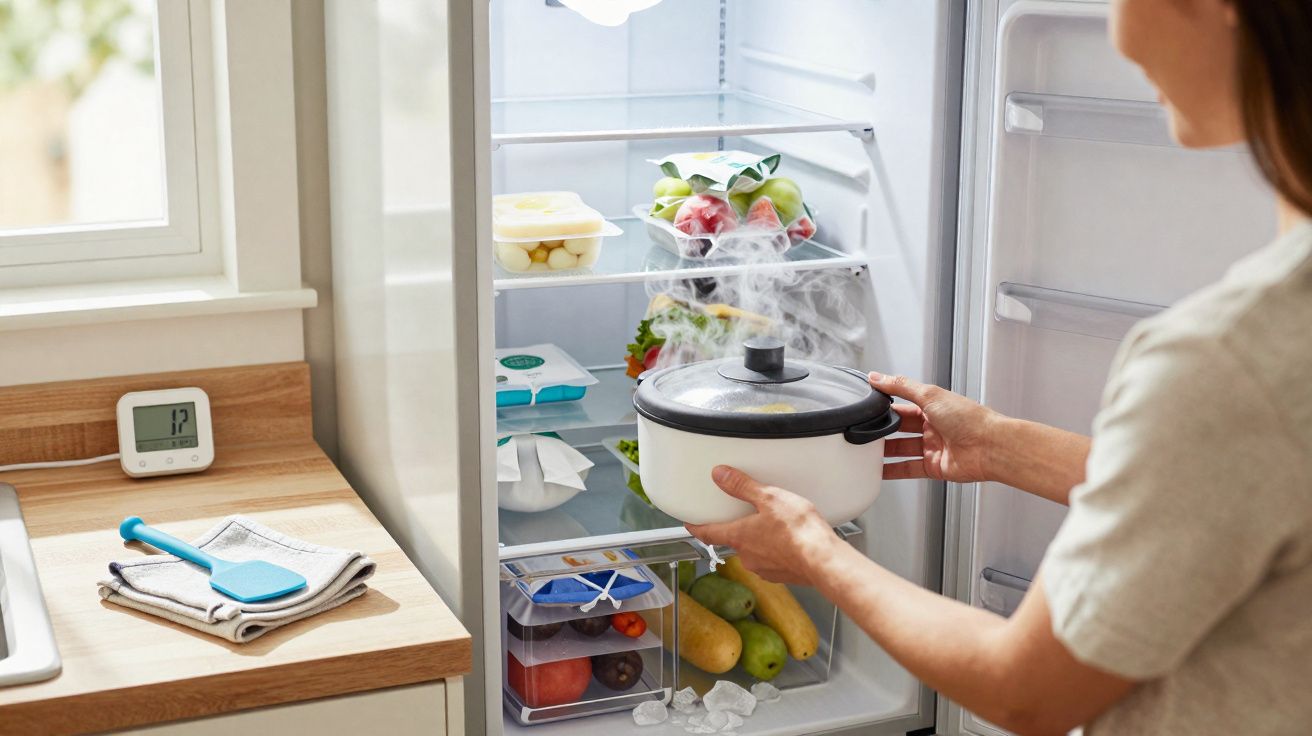
Steam is usually the quickest route. Place a wide, heatproof bowl (or a stable saucepan) of very hot water on a shelf, shut the door, and let the vapour soften the frost. After roughly 15 minutes, larger sheets often start to loosen and drop. Wipe away water as you go, and swap in fresh hot water if the room is cold or the ice is particularly thick.
Hair dryer (only with care)
A hair dryer can speed things up if you use a low or medium heat setting. Hold it well back from plastic walls and any metal parts, keep it moving so heat is spread evenly, and never focus on one point. Make sure the dryer and plug stay well clear of any puddles.
Clean, dry, then re-chill
When the ice has gone, clean the inside with warm water plus either a tiny amount of mild washing-up liquid or 1 teaspoon of baking soda per litre. Rinse, then dry every surface thoroughly with a clean cloth-any moisture left behind can kick-start the next frost cycle. Turn the freezer back on and wait until it settles at -18 °C before putting food back.
- Do not lever ice off with knives, screwdrivers, or chisels.
- Do not tip boiling water directly onto plastic liners.
- Keep plugs and cables away from meltwater.
- Use stable cookware and heatproof gloves when handling very hot water.
| Check | Target |
|---|---|
| Freezer temperature | -18 °C |
| Frost thickness before defrost | 3–5 mm |
| Routine defrost interval | Every 6–12 months |
| Door-seal test | Paper sheet pinched firmly all around |
The five-minute steam trick (step by step)
Boil the kettle. Pour the water into a wide, heatproof bowl and place it on a middle shelf. Close the door. Leave it for 10–15 minutes. Open up and remove loosened sheets of ice by hand or with a plastic spatula. Replace the hot water once if required. Wipe everything completely dry, restart the freezer, and return food only when a thermometer confirms -18 °C.
Keep frost from coming back (freezer habits that work)
Let cold air circulate inside the freezer
Even temperatures depend on airflow. Leave small gaps between items, especially near vents, and resist packing the cabinet right to the top. Group and label food so you can find what you need quickly instead of holding the door open while you rummage. Splitting food into smaller portions helps too: it freezes faster and releases less moisture than large, half-wrapped bundles.
Reduce moisture introduced at the door
Let leftovers cool to room temperature before sealing and freezing. Choose rigid containers or thick freezer bags and press out excess air before closing. After rinsing produce, dry it and wipe any damp lids. Decide what you need first, open once, and close promptly-on humid days, condensation increases every time the door is opened.
Check the door seal (gasket) regularly
The door seal is your first line of defence. Clean the folds and grooves with warm soapy water and a soft cloth, then dry fully so the rubber grips properly. Test the seal with a sheet of paper around the frame; if it pulls out easily anywhere, the gasket may be tired or the door may be misaligned. Also ensure drawers, shelves, and bulky packaging aren’t pushing against the door, and level the appliance so it closes smoothly by itself.
Choose the right position and climate class
Keep the freezer away from ovens, radiators, and bright, sunny windows. Leave a few centimetres behind and at the sides for airflow. Vacuum or dust the rear coil or condenser grille twice a year-fluff acts as insulation, traps heat, and forces longer compressor runs. Set the thermostat to -18 °C, which is widely recognised as a strong balance of safety and efficiency.
Check the climate class on the rating label. Typical ranges are: SN (10–32 °C), N (16–32 °C), ST (16–38 °C), T (16–43 °C). If a freezer is kept in a garage below its lower limit, it may struggle, short-cycle, and create odd frost patterns. If it’s pushed above its upper limit, it will run hot and is more prone to condensation.
Cold food, dry packaging, short openings, and a tight gasket are the combination that keeps frost down and bills under control.
Two extra checks most people miss
If your model has a defrost drain or channel, keep it clear: a blocked drain can lead to water refreezing in the wrong places and encouraging repeat icing. After cleaning, make sure any channels and corners are dry rather than leaving pooled water behind.
It’s also worth checking door hinges and alignment once or twice a year. A slightly sagging door can reduce gasket contact in one corner, letting in humid air even when the door appears shut.
What to do with the food while you work
Pile frozen items together in one insulated bag or cool box to slow warming. Add gel packs or a bag of ice if you have them, and keep the lid closed. Most foods cope with 60–90 minutes above freezing without noticeable quality loss if they remain well chilled. Refreeze anything that’s still icy at the centre. If items have softened significantly, cook them soon.
When to repair - and when to upgrade
Replacing a door gasket is often cheaper than a large grocery shop and can pay for itself within a season. If the liner is cracked, the thermostat behaves erratically, or frost returns within days despite good habits, arranging a service visit is sensible. Older manual-defrost models can be inexpensive to run when kept free of ice. No-frost models reduce icing but can dry food more quickly, so good packaging matters even more.
Real-world savings and small add-ons that help
Removing just a few millimetres of frost can reduce annual consumption for a mid-size unit by a noticeable amount, particularly in humid homes. Temperature discipline makes a difference too: each degree colder than -18 °C increases load without improving safety for most foods. A £10 freezer thermometer removes guesswork. A simple door-open alarm or a smart plug with energy monitoring can reveal habits you can change.
The easiest win is still the same: a bowl of very hot water, the door shut, and 15 unhurried minutes-no forcing and no damage.
Extra tips for longer food quality
Freezer burn is mainly dehydration plus oxidation. Effective packaging blocks air as well as cold: squeeze air out of bags, double-wrap meat, and use rigid containers for soups and sauces. Date labels prevent forgotten items lingering at the back, which also reduces door-open time and food waste. Once a month, bring older items to the front so they get used first.
Safety notes you will want to keep
Unplug before any defrosting. Keep cables dry. Put hot containers on a stable shelf, not on drawers. Avoid chemical de-icers that aren’t intended for food areas. If you use a hair dryer, plug it into an RCD and keep it away from meltwater. If you ever notice a refrigerant smell or see oily stains inside, stop immediately and contact a technician.






Comments
No comments yet. Be the first to comment!
Leave a Comment