
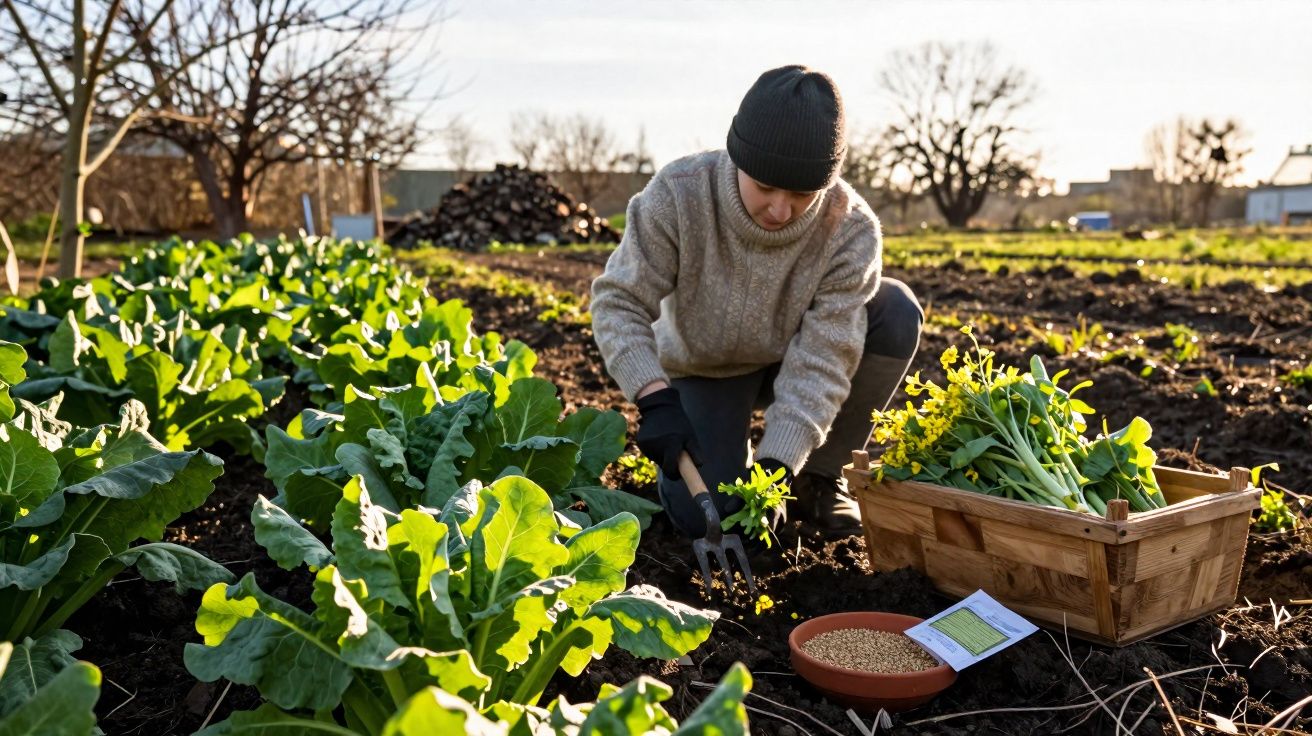
In the tail end of winter, a veg patch can look completely spent. Even so, beneath the surface there’s still plenty you can do to set up the coming season.
Many gardeners simply wait for spring to arrive. But one straightforward job in February can transform what happens next. By sowing a tough, cold-tolerant plant, you can turn pale, bare beds into a living green layer that protects the soil now and feeds your crops later.
White mustard (Sinapis alba): a winter helper hiding in plain sight
Ask at a garden centre and you’ll often be told not to sow anything until conditions warm up. Seasoned growers, however, regularly break that rule using a classic green manure: white mustard, or Sinapis alba.
Think of it as a starter motor for tired soil. It sprouts early, puts on growth fast, and then returns goodness to the ground as it decomposes. It isn’t grown to be eaten - it’s grown to do a job.
White mustard is not a crop for the plate, but a crop for the ground, working quietly to strengthen the next harvest.
Rather than leaving soil exposed to wind, rain and winter wear, white mustard covers it, improves it and enriches it. Whether you’re working a small urban plot or a full-sized allotment, it’s one of the quickest ways to get a big result for very little effort.
Germination at 5 °C: sow while the garden still seems dormant
Most vegetable seeds simply refuse to get going in cold ground. Tomatoes, courgettes and beans all want warmth before they’ll move.
White mustard follows a different pattern. It can begin germinating once the soil is around 5 °C - a temperature many areas of the UK reach by mid to late February, earlier than most people expect.
Instead of letting a bed sit empty until April, you can scatter mustard seed across lightly loosened soil while nights are still chilly. The seed uses winter moisture to get established rather than spoiling in it.
Where other seeds would stall or fail, white mustard uses those cold, damp weeks to claim the space first.
That head start means the soil is already being protected and improved long before you plant out tomatoes or sow your main-crop roots.
Ten days to cover: a green carpet that suppresses weeds
Once you’ve broadcast the seed and gently raked it in, results arrive quickly. In reasonable conditions, you’ll often spot the first shoots in about ten days.
That speed matters for more than appearance. Fast coverage is exactly what prevents weeds from gaining a foothold. Many “volunteer” weeds in vegetable beds germinate as soon as they get light and bare ground - mustard rushes in to remove both.
- It shades the soil surface so weed seeds get less light.
- It takes up water and nutrients before opportunistic weeds can.
- It creates dense foliage that works like a living mulch.
Instead of spending early spring pulling chickweed, annual meadow grass and other unwanted seedlings, you let a temporary crop do the hard work of weed control.
Six-week timing: cut before flowering to return nitrogen
This method depends on getting the timing right. White mustard isn’t meant to stand all year; it’s a short, purposeful cycle with a clear finishing point.
At around six weeks after sowing, as the plants begin showing the first hint of yellow buds, the leaves and stems are holding the highest level of useful nutrients. That’s your cue to act.
Cutting mustard just before full flowering turns it from simple cover into a powerful natural fertiliser.
At that stage:
- Strim or cut the plants down close to the soil.
- Roughly chop the foliage with a spade or shears if possible.
- Mix the green material into just the top few centimetres of soil - no deep digging.
As the soft plant material breaks down, it releases nitrogen and other nutrients into the upper layer where spring crops will feed. Because it’s still tender (not woody), decomposition is relatively quick, making it suitable ahead of sowing and planting.
Leave it until seeds form and you’ll get tougher stems, slower breakdown, and the plant begins drawing on soil reserves to complete its life cycle. Cutting pre-flower avoids that downside and keeps the nutrient flow working for you.
Looser, better-aerated soil - with far less digging
Heavy, compacted soil is a common spring headache. Winter rain and repeated foot traffic press soil particles together, squeezing out air and making it harder for roots to explore.
White mustard improves things from below. Its strong roots push down through dense layers and leave fine channels behind. Soil micro-organisms follow those routes and help break down organic matter as they go.
When the mustard dies back, it leaves a network of pores that act like natural drainage and ventilation.
By the time you’re making planting holes in March and April, the soil often feels more crumbly and easier to work. That improved structure can:
- Reduce waterlogging after prolonged rain.
- Help young roots spread faster.
- Increase air movement in the root zone, lowering the risk of rot.
If you’re aiming to cut back on hard digging, mustard can function as a surprisingly effective “biological spade”.
Measured results: how much more harvest can it deliver?
Across multi-season trials using mustard as a winter cover, the pattern is consistent: plots that grew mustard and incorporated it before flowering produced stronger yields in the following season.
Average yield increases of around 18% have been reported on subsequent crops grown after a white mustard cover.
That improvement isn’t down to one single trick. It’s the combined benefit of:
- Improved soil structure and easier root penetration.
- Added organic matter, which helps hold both water and nutrients.
- Extra nitrogen released as the foliage decomposes.
- Reduced early weed competition.
For home growers, that can translate into heavier tomato trusses, more courgettes per plant, or fuller rows of lettuces - without relying on synthetic fertiliser.
How to sow white mustard in late winter
This is a low-fuss job with minimal equipment. A small packet of seed can cover more ground than you might expect.
| Step | What to do |
|---|---|
| 1 | Remove large debris and pull any tall weeds. |
| 2 | Lightly loosen the surface with a rake or hand fork, avoiding deep digging. |
| 3 | Broadcast white mustard seed by hand, aiming for an even, fine spread. |
| 4 | Rake very lightly so the seed is just covered, then gently firm with feet or a board. |
| 5 | Let rainfall do most of the watering; only water if the surface fully dries out. |
Within a few weeks you should have a dense, bright green stand. At around six weeks, cut and incorporate it, then allow a short settling period before planting your main crops so the initial flush of decomposition calms down.
Two practical extras: no-dig options and pairing with compost
If you garden using a no-dig approach, you can still make use of white mustard. After cutting, leave the chopped growth on the surface as a mulch and apply a thin layer of compost on top. Soil life will pull the material down over time, and you avoid disturbing soil structure.
It can also work well alongside compost in more traditional beds: compost brings stable organic matter, while mustard supplies fresh green material that breaks down quickly. Used together, they support both short-term fertility and longer-term soil condition.
Who should avoid mustard, and what to plant after it
One important caution: white mustard belongs to the brassica family (alongside cabbage, broccoli and kale). If you grow brassicas regularly, sowing mustard and then following it with another brassica in the same spot can encourage soil-borne brassica problems.
If you grow lots of cabbages, cauliflowers or sprouts, don’t plant them straight after a mustard cover in the same bed.
Instead, use mustard as a lead-in to:
- Tomatoes and peppers.
- Courgettes, pumpkins and squashes.
- Leafy salads such as lettuce and rocket.
- Root crops like carrots and beetroot (after allowing enough time for full breakdown).
Keeping plant families rotating like this helps reduce disease build-up and supports a more balanced soil ecosystem.
Making sense of the terms: green manure and cover crop
The phrase green manure can sound unappealing, but it’s simple in practice: it’s a crop grown not to eat, but to feed and protect the soil. White mustard is one of the best-known examples.
A cover crop is closely related as a concept. It’s any plant sown to keep the soil covered between main crops. That living cover shields the ground from heavy rain, erosion and harsh sun - much like a blanket protects skin from cold weather.
A realistic late-winter example for your beds
Imagine a typical small garden with two raised beds. One bed is left empty from November through to April. The other is sown with white mustard in February, then cut in late March and lightly incorporated.
By mid-April, the bare bed is often claggy and uneven, with compacted areas and scattered weeds. The mustard bed, by contrast, tends to be darker, softer and easier to open with a spade, with fewer weed seedlings coming through. When you plant young tomatoes or salad plugs, roots usually establish faster in that looser structure - and you may find you water less because extra organic matter holds moisture.
Each difference can seem minor on its own, but together they influence plant health, growth speed and final yield across the entire season. That’s the quiet advantage of a plant grown for no-one’s palate, yet relied on by many for richer soil and stronger harvests.






Comments
No comments yet. Be the first to comment!
Leave a Comment