
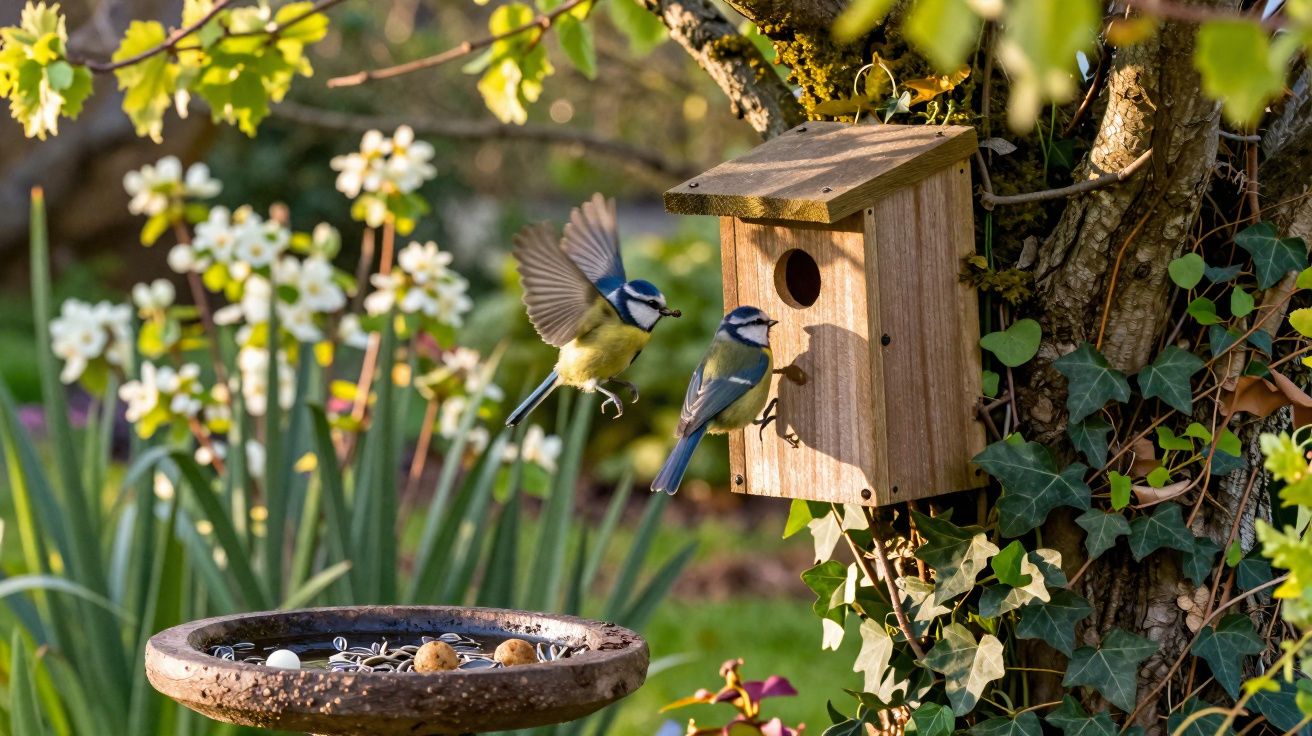
Many gardens feel quiet and empty - but with a few well-chosen tweaks, your outdoor space can become a lively refuge for colourful tits.
Anyone who has watched a tit bringing food to its chicks immediately understands why so many people want more birdsong in everyday life. The good news is that you don’t need a huge plot or specialist knowledge. With a handful of practical steps, even a small city garden, courtyard, or a sizeable balcony can be turned into a haven that actively attracts Blue Tits and Great Tits.
Why tits in the garden are a real win
Tits aren’t just lovely to look at - they quietly provide free pest control. During the breeding season, a family of tits can eat hundreds of insects, larvae, and caterpillars every single day.
If you attract tits, you cut down aphids, caterpillars and the rest - without using chemicals.
That brings several clear benefits:
- Fewer pests: Tits pick caterpillars, aphids and other nuisance insects straight off your plants.
- Less pesticide use: When birds do the work, you can largely avoid sprays.
- More biodiversity: A bird-friendly garden also improves living conditions for many insects and plants.
- Better quality of life: Birdsong, agile flights, courtship displays - it makes the view from the window far more interesting.
This matters especially in towns and cities, where hedges are removed and mature trees are felled, leaving birds short of safe nesting sites. That’s why even the smallest back garden, a tucked-away yard, or a generous balcony can become a valuable mini-oasis.
The right nest box: what really matters for tits
Without a suitable nesting place, many tits will stay away even if there’s plenty of food available. A nest box replaces natural tree cavities - something that “tidy” gardens and younger woodland often lack.
Materials and build quality
Choose a box that’s simple, sturdy, and made from untreated wood. Painted decorative boxes from DIY shops may look charming, but they’re rarely suitable for nesting.
- Material: untreated, solid timber (e.g. spruce, larch, oak)
- Timber thickness: ideally around 18–22 mm for insulation against cold and heat
- No chemicals: avoid toxic paints, stains, preservatives, or internal coatings
- Rain protection: a slightly overhanging roof to stop water getting in
- Cleaning access: at least one side or the roof should open
Inside the box, a slightly rough surface is actually helpful - fledglings need grip when they’re climbing up to the entrance hole.
Entrance hole size (Blue Tit and Great Tit nest box measurements)
A small detail with a big impact is the diameter of the entrance hole. It determines which species can use the box and helps keep out larger competitors or predators.
| Species | Recommended entrance hole diameter |
|---|---|
| Blue Tit | approx. 28 mm |
| Great Tit | approx. 32 mm |
If the hole is much larger, stronger birds such as sparrows or starlings may take over the box and push tits out. Getting the sizing right protects your intended residents twice over.
The perfect position: how to hang a nest box correctly
Simply fixing a box to the nearest tree isn’t enough. Tits are selective - for good reason. The wrong height or direction can make the nest easier for enemies to access and the brood more vulnerable to weather.
Height and protection from predators
A height of at least 2 metres is best, ideally a bit higher. That makes it harder for cats, martens, and curious hands to reach.
- Height: 2–3 metres above the ground
- Fixing: secure it firmly with hooks or screws, not just thin string
- No perch: tits don’t need one; predators use it as a climbing aid
Angle the box slightly forwards so rainwater drains away more easily.
Direction and surroundings
Orientation makes a big difference so that storms and strong sun don’t endanger the nest.
- Direction: east or south-east - morning sun is welcome, but it avoids harsh midday heat
- Shelter: don’t face the entrance into prevailing westerly winds
- Peace and quiet: keep it away from patios, heavily used paths, or windows that are constantly opened
A useful rule of thumb: if you can barely see the box from your favourite seat on the patio, tits usually consider it a good, undisturbed spot.
Make the whole garden tit-friendly (not just the nest box)
A single nest box is rarely enough. Tits need food, cover, and safe landing places. Provide those, and you’re most of the way there.
Natural corners instead of sterile perfection
A garden that’s “neat” to the point of being lifeless - gravel, plastic lawn, and a wall of conifers - offers birds almost nothing. Structure and a bit of wildness bring the garden back to life.
The less perfection, the more life - and that’s especially true for a tit-friendly garden.
Particularly helpful are:
- Native berrying shrubs such as elder, rose hips, or hawthorn
- Dense hedges as cover from birds of prey and cats
- A patch of long grass or a “wild corner” that isn’t constantly mown
- Perennial beds where stems are left standing over winter - many insects overwinter there
This way, tits find not only food but also places to retreat and rest between foraging flights.
Food and water: what tits actually like
In winter, a feeding station can be a real help. During the breeding season, however, insects are the priority because adults need them to feed their chicks.
- In winter: sunflower hearts, high-quality seed mixes, and fat balls without plastic netting
- During the breeding season: keep peanut-heavy feeding to a minimum so birds continue to collect insects
- Water: provide a shallow dish or bird bath; clean and refill it regularly
If you take insect-friendliness seriously, avoid insecticides altogether. Where sprays are used, birds may still find prey - but they can also ingest pollutants along with it.
A little extra that helps (and is often overlooked)
Tits forage constantly, so small hazards add up. If you have large windows or glass doors facing the garden, consider subtle measures to reduce bird strikes (for example, external stickers or patterned film applied to the outside of the glass). It’s a simple change that can prevent serious injuries.
If you share your space with a cat, the most effective “wildlife-friendly” step is management at key times: keeping cats indoors at dawn and dusk during the breeding season significantly lowers predation pressure near nest sites and feeding areas.
Timing: when tits look for new nesting sites
Nest boxes should be up by late winter at the latest. That’s when tits start exploring territories and checking potential nest cavities.
- Best time to hang a box: late winter to very early spring
- If you start later: a box can still be accepted in spring, but it may remain empty until the following year
After breeding, open and clean the box in autumn or winter. Dispose of old nesting material in the general waste - it often contains parasites. A dry brush is sufficient; avoid harsh cleaning products.
What you should avoid
In the garden, good intentions can backfire quickly. Several common mistakes put tits off rather than helping them.
- Fixing a nest box right by busy roads or noisy air-conditioning units
- Putting decorative cats, mirror foil, or bright lights nearby
- Using plastic nets around fat balls - birds can easily get their feet tangled
- Knocking on the box repeatedly or standing right next to it all the time
If you have children, agree clear “distance rules”. Short, calm watching sessions with binoculars are far better than frequent dashes up to the tree.
More than just birds: what a tit-friendly garden sets in motion
Where tits thrive, many other species benefit too. Insects find flowers and shelter, hedgehogs use leaf piles, and butterflies lay eggs on perennials. At the same time, your view of the garden changes: instead of a “lawn with border planting”, it gradually becomes a small, living system.
Once tits have moved in, you can expand step by step: bat boxes on the house, a deadwood pile for beetles, sandy patches for solitary bees. These measures reinforce one another - and turn a quiet corner into a piece of living landscape right in the middle of a residential area.




Comments
No comments yet. Be the first to comment!
Leave a Comment