
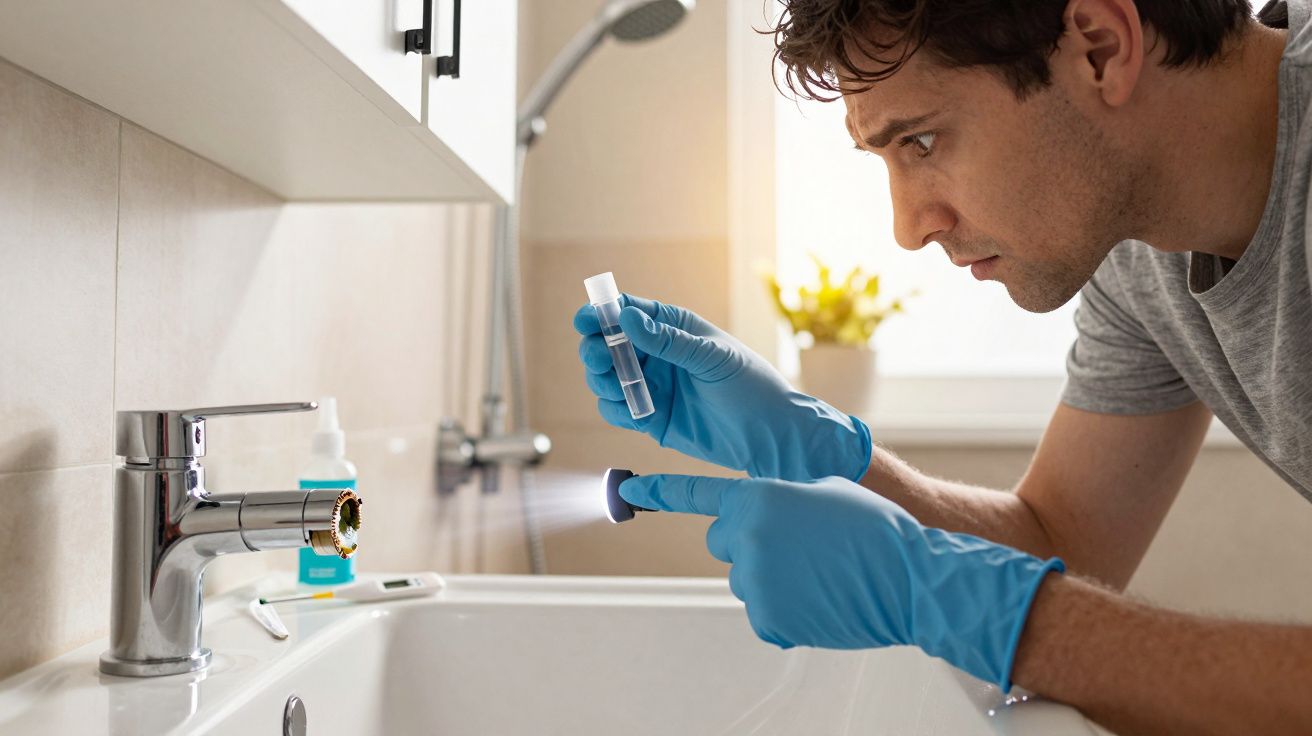
On first glance, water from the tap and a still lake on a summer’s day can seem perfectly safe.
Yet within the hidden world of pipework, that reassuring picture is starting to look more complicated. Scientists are increasingly concerned about a microscopic amoeba that can cope with chlorine and elevated temperatures, allowing it to establish itself in drinking-water systems and warm freshwater environments - and, in exceptionally rare instances, cause fatal illness.
Unseen residents inside our plumbing
Free-living amoebae are single-celled organisms that occur almost anywhere there is fresh water. They can be found in lakes, ponds, puddles and wastewater, and they may also turn up in household plumbing, including showerheads. Unlike parasites that rely on an animal host, these amoebae survive independently, preying on other microorganisms.
They travel by extending temporary, foot-like structures known as pseudopods, which pull the cell forward. As they move, they engulf bacteria and other tiny organisms, digesting them internally. Under a microscope they can appear sluggish and awkward; in practice, they are remarkably resilient and adaptable.
For many years, researchers largely treated these amoebae as background organisms: difficult to detect, assumed to be uncommon, and only occasionally associated with eye or skin problems. That view has changed as evidence has grown that some species can persist in modern water systems.
Some amoebae are anything but benign: they can tolerate heat, chlorine and standard treatment processes, turning today’s pipe networks into long-term refuges.
Certain species such as Acanthamoeba are known to cause serious corneal infections, particularly among contact-lens users. Others, including Balamuthia mandrillaris, can reach the brain via the bloodstream. However, one organism has drawn particular attention because of how quickly it can turn a routine swim into an emergency.
When a swim turns into a neurological emergency
Naegleria fowleri, the so‑called brain-eating amoeba
Naegleria fowleri prefers warm freshwater, typically in the range of about 30°C to 45°C. Long, hot summers, warming lakes, poorly maintained swimming pools and even heated sections of water distribution systems can all create conditions that suit it.
Crucially, the primary risk is not from swallowing contaminated water. The danger arises when warm water containing the organism is forced up the nose - for example while diving or jumping into lakes and rivers, during exposure to inadequately chlorinated pools, or when using a nasal rinse made with contaminated tap water.
From the nasal passages, the amoeba can travel along the olfactory nerve to the brain, where it can trigger primary amoebic meningoencephalitis (PAM), a rapidly progressive infection.
Other health and household topics people are reading about include:
- A winter storm alert as up to 185 inches (about 470 cm) of snowfall could break long-standing records and severely disrupt daily life
- New research strengthening the connection between the Epstein–Barr virus and multiple sclerosis
- Motor technicians explaining why keeping a fuel tank above half full can reduce the risk of fuel lines freezing
- How some households lose money by running appliances at the least cost-effective time of day
- Persistent condensation on windows and the most effective method to reduce it and protect health
- Drain-cleaning advice suggesting an alternative to vinegar and bicarbonate of soda
- Psychological explanations for feeling internally compelled to stay on high alert when nothing appears to be wrong
- Details of a much-discussed “eclipse of the century”, including when it is expected and the best viewing locations
PAM may begin like an everyday infection, but it can accelerate at a terrifying pace, and the vast majority of documented cases are fatal.
Symptoms that can be mistaken for other illnesses
Symptoms usually start a few days after exposure and often resemble bacterial meningitis, which can delay correct diagnosis. Common early features include:
- Sudden fever and a severe headache
- Nausea and vomiting
- A stiff neck and sensitivity to light
- Confusion, changes in behaviour or seizures
Because PAM is so uncommon, clinicians may initially treat suspected viral or bacterial meningitis. By the time laboratory testing indicates Naegleria fowleri, options can be limited and outcomes are generally poor. Published fatality rates are over 95 per cent.
Importantly, cases have been associated not only with swimming, but also with nasal rinsing using tap water that was not boiled or filtered. In these circumstances, the organism can bypass the protections that drinking-water standards are designed to provide.
How an amoeba can outlast chlorine
The protective toolkit: cysts and biofilm
A key reason Naegleria fowleri can be difficult to remove is its life cycle. When conditions deteriorate - such as a lack of food, drying, or chemical stress - the amoeba can switch into a dormant stage called a cyst.
A cyst is enclosed by a thick, protective wall. In this form, the organism can tolerate dry conditions, sudden temperature changes and many disinfectants, including chlorine at concentrations commonly used in water treatment.
Within biofilm on pipes and storage tanks, cysts can be shielded in areas that disinfectants may not penetrate effectively.
A biofilm is a slimy layer made up of bacteria and other microbes that adhere to pipe surfaces. Biofilms can create microscopic pockets where disinfectants disperse poorly. Amoebae can shelter within them, feed on resident bacteria, and re-emerge from the cyst stage once conditions improve.
| Stage | Typical conditions | Resilience |
|---|---|---|
| Active amoeba | Warm, nutrient-rich water | Moderate resistance; mobile and feeding |
| Cyst | Drying, chemical stress, limited food | High resistance to heat, chlorine and desiccation |
This ability to switch between forms means that once Naegleria fowleri enters a water system with suitable temperatures, routine disinfection may reduce numbers without fully eliminating the organism.
Climate change shifts the risk map
Historically, infections were mainly associated with warmer regions. As average temperatures rise, rivers, lakes and reservoirs in more temperate areas can remain warmer for longer, extending the window in which Naegleria fowleri may survive.
Heatwaves can also raise temperatures in shallow lake margins and slow-moving rivers, especially where water receives treated wastewater or industrial discharges. In towns and cities, the urban heat-island effect - combined with extensive, complex pipe networks - can create multiple warm niches.
As water temperatures increase, the boundary that once separated “lower risk” and “higher risk” regions is edging northwards and to higher elevations.
At the same time, much of today’s water infrastructure was built for a cooler climate. Ageing pipes, variable chlorination and limited routine surveillance for rare pathogens can leave gaps in detection. Upgrading networks is expensive and time-consuming, while environmental change is advancing quickly.
The amoeba as a microbial bodyguard
A Trojan horse role for other pathogens
A further, less widely recognised issue is that amoebae can act as protective hosts for other disease-causing microbes. Within their cells they may shelter bacteria and viruses that are harmful to people, including:
- Legionella pneumophila, associated with Legionnaires’ disease
- Non-tuberculous mycobacteria that can infect the lungs and skin
- Certain enteric viruses, including noroviruses
These pathogens can survive - and in some cases multiply - inside amoebae, protected from disinfectants and other environmental stresses. When amoebae detach from biofilms or cysts rupture, these “hidden” microbes may be released back into water in a more robust state.
Amoebae are not only a direct hazard; they can function as mobile safe houses for other pathogens, weakening standard barriers used to keep water safe.
Some scientists also suspect that life inside amoebae may help certain bacteria adapt to conditions similar to the body’s immune defences, potentially influencing patterns linked to antibiotic resistance.
Practical steps that reduce personal risk
Although the likelihood of encountering Naegleria fowleri remains low - particularly where systems are well managed - sensible precautions can reduce risk further. Public health advice commonly includes:
- During heatwaves, avoid getting warm freshwater forced up your nose when swimming in lakes or rivers, especially in shallow or stagnant areas.
- Use sterile, distilled, previously boiled or appropriately filtered water for nasal rinses (including neti pots).
- Maintain private pools properly: keep chlorine at appropriate levels, clean regularly, and pay attention to filters and pipework.
- Avoid stirring up or digging into sediment at the bottom of warm freshwater areas, where amoebae may be more concentrated.
For households that include people who are immunocompromised, it can be helpful to review local water-quality information and seek tailored guidance from healthcare professionals.
Strengthening monitoring in homes and public water systems
Reducing risk is not solely a matter of individual behaviour. Consistent management of water temperature, disinfectant residuals and biofilm build-up across distribution networks can make conditions less favourable for free-living amoebae. Measures such as targeted flushing programmes, improved storage-tank maintenance and better mapping of warm “dead ends” in pipework can help reduce persistent niches.
If severe symptoms suggestive of meningitis occur after nasal exposure to warm freshwater or after nasal rinsing, urgent medical assessment is essential. While PAM is rare, rapid deterioration is possible, and early consideration of exposure history can be clinically valuable.
Why specialists emphasise One Health
The rising attention on amoebae sits within the wider One Health framework, which connects human health with ecosystems, animals and built environments. Water networks intersect all of these.
By coordinating river management, urban planning, wastewater reuse and drinking-water treatment, authorities may be better placed to anticipate emerging risks. For example, cutting nutrient pollution can also limit the microbial growth that supports biofilm and the amoebae that use it as shelter.
Protecting communities from a microscopic amoeba ultimately requires rethinking how we heat, store, move and share water throughout its entire journey.
Key terms and realistic scenarios
Several scientific terms commonly appear in discussions of amoebae and water safety:
- Biofilm: a thin, sticky layer of microorganisms attached to surfaces inside pipes, tanks or natural rocks.
- Cyst: a dormant, resilient form that allows a microbe to persist through dry or toxic conditions for extended periods.
- Primary amoebic meningoencephalitis (PAM): a rare but usually fatal brain infection caused by Naegleria fowleri.
Consider a hot, dry summer in a medium-sized city: river levels fall, water warms, and treatment facilities are pushed to meet rising demand. Meanwhile, more people seek relief by swimming in lakes and rivers. Local decision-makers may need to ask whether reservoirs are warm enough to support amoebae, whether ageing pipework is encouraging biofilm formation, and whether recreational sites require clearer signage about nasal exposure.
In that kind of situation, modest changes - tighter pool-maintenance requirements, clearer public guidance on nasal rinsing, and improved surveillance for unusual infections - could help prevent rare but catastrophic outcomes. Amoebae such as Naegleria fowleri will remain part of freshwater ecosystems; how water is managed, and how it is used, will shape how often it intersects with human health.




Comments
No comments yet. Be the first to comment!
Leave a Comment