
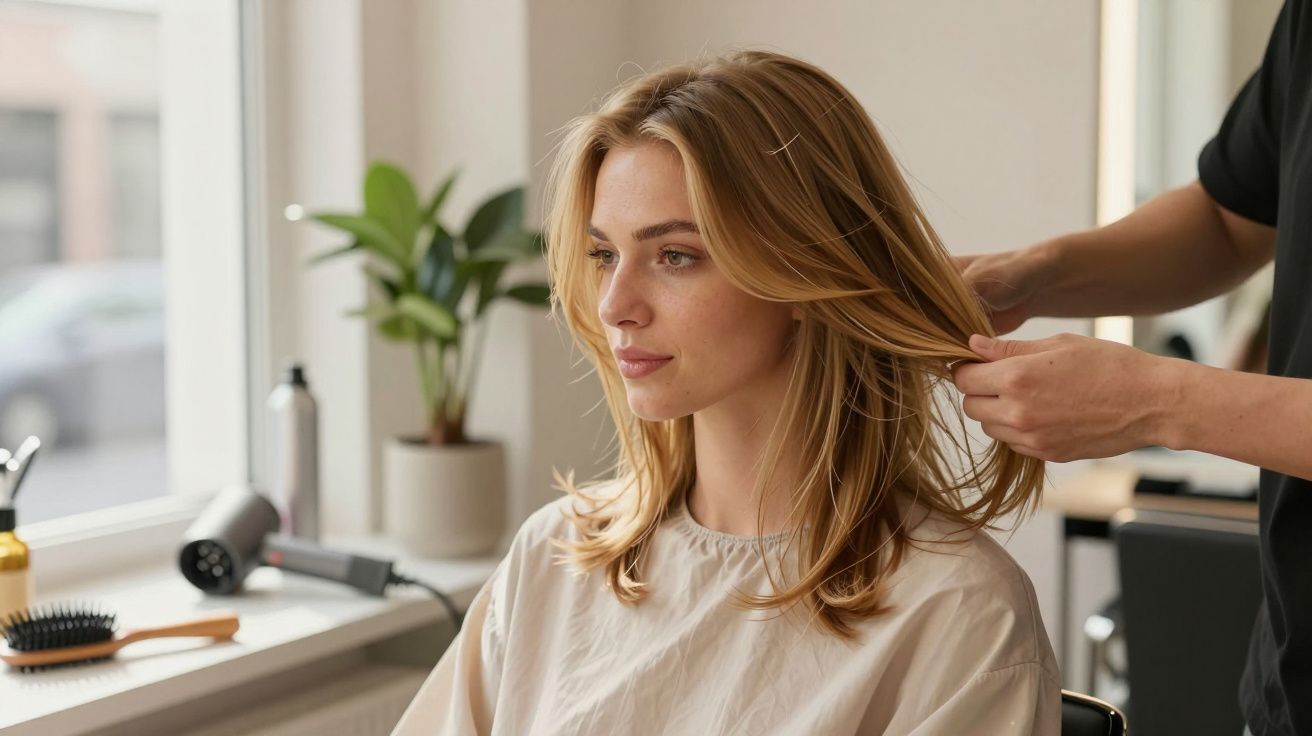
The blunt bob is quietly making room for a softer, lighter silhouette as hair moodboards shift towards 2026.
From catwalks to high-street salons, one mid-length style is steadily taking the lead: the feather cut. Falling somewhere between the shoulders and the collarbone, it’s designed to deliver movement, lift and a kinder outline around the face-without the commitment of a dramatic chop.
What the mid-length feather cut actually looks like
For 2026, the mid-length feather cut lands in the once-dismissed “in-between” length that used to be treated as an awkward grow-out phase. Now, stylists are deliberately making that mid-point feel intentional and current.
The modern feather cut is shoulder to collarbone length hair, broken up with ultra-soft, airy layers and relaxed curtain bangs.
Rather than relying on a single, weighty block of hair, this cut is constructed from lots of fine, feathered layers. The ends are kept light and subtly textured, which creates a sense of motion and a soft, lifted halo of volume.
Crucially, those layers aren’t meant to aggressively thin the hair out. The aim is to keep plenty of substance through the mid-lengths while taking density out of the very tips, so the hair moves more fluidly and doesn’t feel heavy at the bottom.
Most interpretations include curtain bangs that part in the centre and blend into the sides. They skim the cheekbones and jawline rather than forming a solid fringe across the forehead-this is what creates that “feathered” face frame.
Why mid-length hair is suddenly desirable again
For a long time, trends swung between sharp, dramatic bobs and mermaid-long lengths. Mid-length often read as a compromise rather than a choice-and the feather cut is changing that.
- It feels lighter and more relaxed than a strict bob.
- It comes across as more finished than long hair without shape.
- It still allows updos, ponytails and clips, while keeping its outline when worn down.
On spring/summer 2026 runways, this “midi” length appears as softly blown-out waves, brushed-back texture and even natural curls. It looks modern, but not as though it demands constant styling.
Who the 2026 feather cut suits best
A big part of the appeal is adaptability. The feather cut can be tweaked for a wide range of face shapes and hair textures, which is why stylists expect it to move quickly from fashion sets into everyday salon requests.
Thick hair feels lighter, fine hair looks fuller: the feather cut quietly flatters both ends of the spectrum.
Face shapes and the feather effect
On oval faces (which suit most styles), the cut reinforces natural balance: the layers bring movement, while curtain bangs soften the forehead area.
Round faces benefit from the diagonal lines created by face-framing pieces. The long, opening fringe and more vertical layering can visually lengthen the face and add gentle definition around the cheeks.
For square or strongly angular faces, the feathered structure is particularly helpful. Softer ends blur the jawline slightly, and shorter pieces near the temples ease strong features without disguising them.
With heart-shaped faces-wider at the top, more delicate at the chin-this cut can shift volume closer to the shoulders, which helps rebalance the overall silhouette. Curtain bangs subtly narrow the forehead and draw attention towards the eyes.
Hair types: from straight to curly
The feather cut can suit almost any hair type, provided the layering is customised rather than cut as a one-size-fits-all template.
| Hair type | How the feather cut helps |
|---|---|
| Fine, straight hair | Shorter, airy layers can mimic body and reduce the look of flatness. |
| Thick, straight hair | Feathered ends lift weight so the hair moves rather than hanging heavily. |
| Wavy hair | Layers encourage natural bends and help waves form a clearer pattern. |
| Curly hair | Gentle shaping reduces the “pyramid” effect so curls stack more evenly. |
For curls and coils, technique matters. Layers should be planned with the natural pattern in mind-ideally cut curl by curl-to avoid uneven volume. On tighter curls, many stylists keep the shortest pieces a little longer than they would on straight hair, so the curtain bangs don’t spring up too high.
How to style the feather cut in winter 2026
This look is meant to be low effort. The haircut does most of the work, which is especially practical in colder months when scarves, high collars and hats can flatten a more structured blow-dry.
The undone, air-dried version
For an easy, everyday finish, the cut is designed to look good with air-drying.
The simplest way to wear the feather cut is to air-dry, then use a light texturising product for separation and movement.
After washing, squeeze out excess water and work a lightweight mousse or foam into the roots for lift. Then comb a soft-hold cream or spray through the lengths. Let it dry naturally, scrunching occasionally or twisting small sections to encourage the feathered effect.
Once dry, a few mists of salt spray or dry texture spray can bring out the layers without turning the hair stiff. Use your fingers rather than a brush to keep the ends airy.
The polished blow-dry
For office days, dinners or anything that calls for a little more structure, the round-brush blow-dry is back-but with a softer, more relaxed result.
Start with volumising mousse and heat protection on damp hair. Blow-dry in sections, rolling the hair over a medium round brush. At the ends, pull the brush slightly inwards so the shape curves around the face rather than flipping out sharply.
For curtain bangs, dry them forwards and down first, then sweep them to each side while directing airflow from above. This creates the gentle “open” swoop that lifts the eye area.
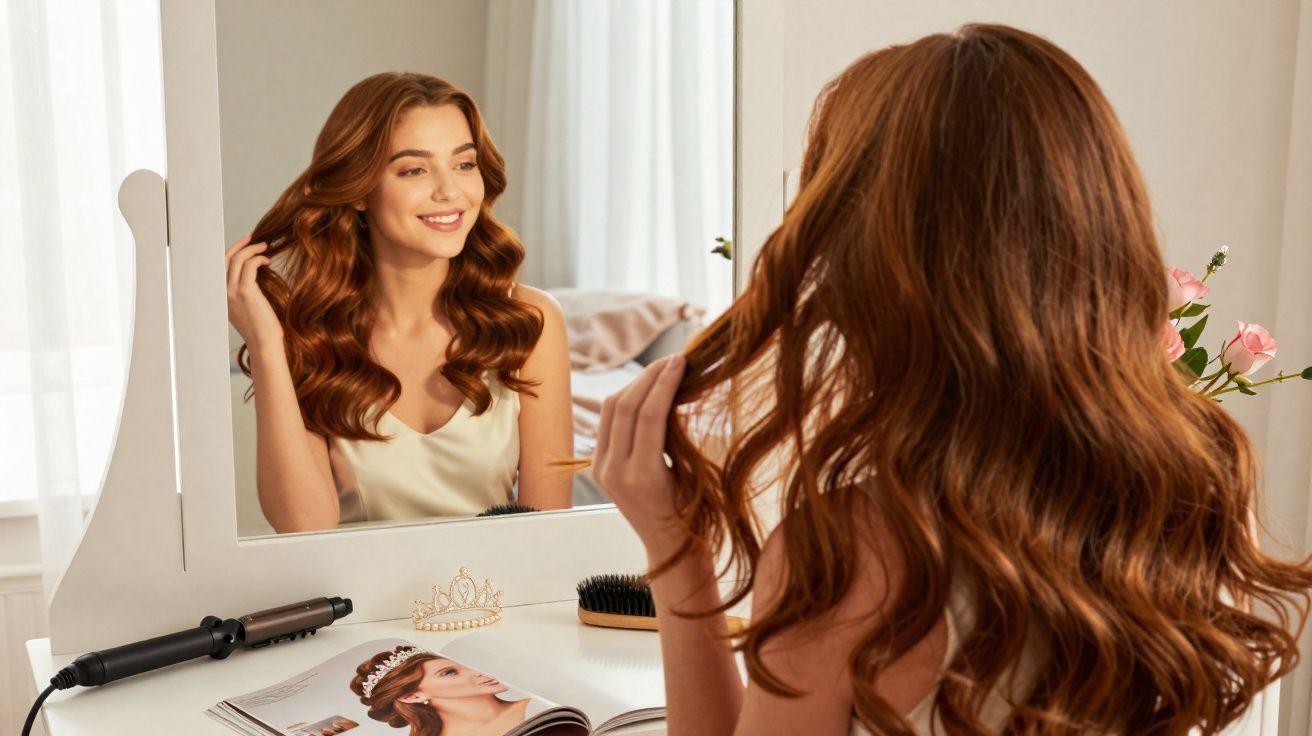
If your hair is naturally very straight, add a few loose bends with a straightener or curling wand using large sections. Brush through lightly afterwards so it looks lived-in rather than like set curls.
Practical tips before asking your stylist for a feather cut
“Feather cut” has meant different things in different decades, so it helps to be very clear at your appointment.
Bring two or three photos and ask for shoulder to collarbone length with soft, fine layering and curtain bangs that blend into the sides.
Points worth agreeing in advance:
- Exact length: should it brush the shoulders, or sit clearly above them?
- How open the curtain bangs should be: parted high and airy, or closer to a soft fringe?
- How much weight to remove: subtle movement, or clearly visible layering?
- Realistic styling time you’re prepared to spend each day.
If your hair is very fine, ask for longer, lighter layers so the ends don’t become wispy. If your hair is very dense, discuss internal layering, which reduces bulk within the cut while keeping the outer line looking full.
A helpful extra to mention: how you actually wear your hair day to day
If you often tuck hair behind your ears, wear glasses, or regularly clip the front sections back, say so. A stylist can adjust the face-framing pieces and curtain bangs so they sit comfortably and don’t constantly fall into your eyes.
Risks, maintenance and how often to trim
As with any layered style, definition softens as it grows out. The curtain bangs usually change first and can start sitting awkwardly on the bridge of the nose or directly in the eyes.
Most stylists advise a tidy-up every six to eight weeks to keep the face frame crisp and maintain your preferred length. If you like a slightly shaggier finish, you can push that schedule a little-often by booking a quick fringe trim between full cuts.
One common pitfall is over-layering, which can leave ends looking stringy, particularly on bleached or very dry hair. To reduce the risk, prioritise conditioning: use a mask weekly, apply leave-in care through mid-lengths and ends, and keep hot tools to a few times a week rather than daily.
Winter-proofing the shape
Because heating indoors and cold air outside can pull moisture from the hair, feathered ends can look frizzier in winter. A tiny amount of nourishing oil (literally one or two drops warmed between your palms) smoothed just over the tips can keep the finish soft without collapsing the volume.
Feather cut combinations and styling scenarios
The cut pairs well with several colour approaches. Soft balayage or face-framing highlights emphasise the movement in the layers and brighten the pieces that swing around the face. If you prefer something more timeless, a single glossy shade can give a cleaner, French-inspired finish.
On rushed mornings, the feather cut is forgiving. A low, loose bun or claw-clip twist still leaves face-framing pieces visible, so the style doesn’t disappear when the length is tied back. A half-up look can lift the crown while the feathered lengths fall freely over the shoulders.
For anyone drawn to a bob but worried it might feel too severe, the 2026 feather cut offers a softer way in: a mid-length, layered, face-framing shape that looks polished on good days and still presentable when you’re short on time.
Related reads currently trending
- US$2,000 direct deposit for US citizens in March: eligibility, payment schedule and IRS guidance
- A centenarian shares the daily habits behind her long life: “I refuse to end up in care”
- A psychologist says life improves when you stop chasing happiness and start pursuing meaning instead
- People who feel mentally overstimulated often carry unprocessed emotional energy
- Brits are rushing to a 26°C island this October – a perfect autumn escape for pensioners
- People who grew up in poverty often show these 10 particular behaviours as adults
- Bad news for gardeners: a £135 fine may apply if you use collected rainwater without proper authorisation from 31 March
- Trees in Panama’s tropical forests are growing longer roots in response to drought




Comments
No comments yet. Be the first to comment!
Leave a Comment