
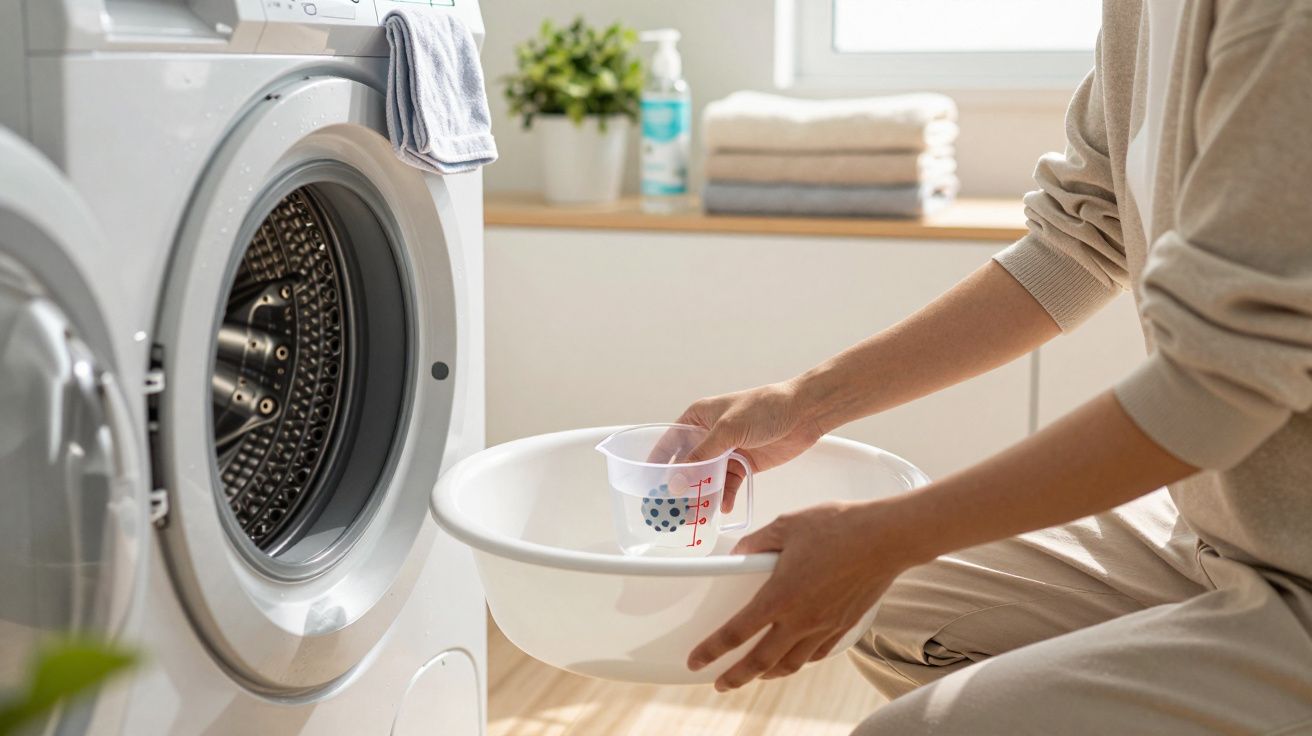
A few small habits are often enough to bend the failure curve in your favour.
Across the UK (and, similarly, the US), households are being hit by out-of-warranty breakdowns and higher call-out charges. A contemporary washing machine ought to deliver around 10 years of service, but early wear, hard water, and heavy-handed detergent dosing regularly cut that lifespan short. The upside: straightforward washing machine maintenance can add years of use, lower running and repair costs, and reduce e-waste-without specialist kit.
Hard water and limescale: washing machine maintenance starts with scale control
In hard-water areas, limescale builds up on heating elements, restricts pipework, and can make pumps work harder. It also clings to sensors, which can throw off timings and performance. Large parts of England and the US Midwest experience hard or very hard water throughout the year, so mineral build-up happens quickly.
Scale can increase energy consumption, stretch out programme lengths, and leave a chalky layer that traps detergent and grime.
What to do
- Once a month, run an empty hot programme at 60 °C (about 140 °F) with 150–200 g of food-grade citric acid or a purpose-made descaler.
- Reduce detergent in soft-water areas, and only increase the dose when hardness is confirmed.
- Check your supplier’s water-hardness map, or test at home using paper water hardness strips.
Keep it simple: citric acid breaks down carbonate deposits without aggressive fumes. White vinegar can work in a pinch, but citric acid is generally gentler on rubber seals.
The forgotten drain filter blocks pumps
The drain filter (typically behind a small flap at the front) catches coins, hair, lint and threads. When it fills up, draining slows, water can stall, and the pump ends up under strain. A surprising number of call-outs come down to this single component-and clearing it usually takes about five minutes.
How to clean it safely
- Switch off at the mains and unplug. Put a tray or towel under the access panel.
- Loosen the cap slowly so any trapped water can trickle out in a controlled way.
- Remove lint, bobbles and grit, then rinse the filter under the tap.
- Turn the impeller gently with a finger to ensure it spins freely, then refit the filter securely.
A clear filter improves drainage, avoids error codes, and helps prevent early pump failure.
Too much detergent does real damage
Using more soap does not automatically deliver cleaner laundry. Excess suds can confuse water-level sensors, and leftover detergent can form a tacky film that feeds odours and biofilm. Over time, that residue can speed up wear on seals and hoses.
Smarter dosing that actually cleans
- Follow the load markers on the cap or scoop-half loads need noticeably less.
- If you use concentrated liquids or powder, measure carefully rather than guessing.
- If you can still smell strong perfume after the cycle, you’ve probably overdone the dose.
Modern detergents rely heavily on enzymes: they work best with the right amount and adequate time, not mountains of foam.
Cold cycles need a monthly 60 °C “hot reset”
Eco programmes at 20–30 °C can reduce electricity use, but cooler washes allow grease and residues to linger in hoses, the sump and the drum. A regular hot maintenance run helps flush that build-up and keeps bacteria under control.
One empty 60 °C maintenance cycle each month reduces smells, cleans sensors, and helps the machine keep accurate timings.
Choose the shortest hot cottons programme. In a hard-water area, add a descaler. The extra energy is usually modest compared with the cost of a service visit.
Seals and the door need air-and a quick wipe
Moisture trapped behind the grey door boot encourages black mould. That mould can stain fabrics, weaken rubber, and create persistent smells. A quick wipe plus ventilation prevents most of it.
A 60-second routine after each wash
- Wipe the door glass and the inner edge of the seal with a microfibre cloth.
- Gently pull back the seal and remove trapped lint or hair.
- Leave the door and detergent drawer slightly open to let the machine dry.
If mould has already started, use a paste of bicarbonate of soda with a little water, then rinse thoroughly. Avoid bleach on stainless-steel components.
Balanced loads protect bearings
Heavy, uneven loads batter the drum and bearings. Sheets can roll into a tight ball; towels can clump into one side of the drum. The result is shaking on spin, a deeper rumble, and a shorter service life.
Keep the spin smooth
- Combine large items with smaller pieces to reduce clumping.
- Don’t exceed the cotton capacity; synthetics weigh less but can still cause imbalance.
- If the machine starts “walking”, pause and redistribute the load.
Make sure the feet are level on a solid floor. Springy floorboards amplify vibration. Anti-vibration pads can help on older boards, but they won’t fix an unstable setup by themselves.
Repair or replace: do the maths, not the guesswork
Energy labels have improved and so have motors and seals. Even so, keeping a current washer going often beats the environmental footprint of buying new. When a fault appears, a basic comparison can prevent an expensive snap decision.
| Fault | Typical repair cost (£ / US$) | When repair makes sense |
|---|---|---|
| Drain pump | 70–130 / 90–160 | Machine under 8 years, no previous pump problems |
| Door seal | 60–120 / 80–140 | Mould or small tears, rest of machine in good condition |
| Bearings | 120–190 / 150–220 | Higher-quality model, drum accessible, parts available |
| Control board | 160–300 / 200–350 | Premium washer under 7 years with a sound casing |
If the repair is under 40% of the cost of a comparable new model and the washer is under 8 years old, repairing often wins on both cost and waste.
The seven-step checklist to add years
- Descale monthly in hard-water areas.
- Clean the drain filter every 1–2 months.
- Dose detergent according to load size and water hardness.
- Run a 60 °C maintenance cycle once a month.
- Wipe seals and leave the door and drawer ajar.
- Balance loads and level the feet.
- Compare repair costs against age and replacement value before deciding.
What these tweaks save in real money
A modern washer’s empty 60 °C maintenance run typically uses around 0.6–1.0 kWh. At common tariffs, that’s roughly the cost of a small coffee spread over the month. Avoiding a single pump replacement-or just one call-out fee-can cover years of these maintenance cycles. Regular descaling can also shave minutes off future programmes, trimming annual energy use.
Detergent, fabric softener, and the “nose test”
Fabric softener can coat fibres and, in some machines, build up in the drawer and valves. If you prefer to use it, try halving the dose and keep it occasional on synthetics. Powder detergents store well and tend to perform strongly on muddy loads; liquids dissolve more quickly in cold washes. Choose one approach, measure it, and pay attention to how the drum smells: “clean metal” with a light soap note is fine, while sour or musty odours suggest biofilm and a need for that hot reset.
Extra help when water is very hard
Where limescale is relentless, an in-line polyphosphate or ion-exchange filter fitted to the cold feed can slow scale formation. These systems need upkeep (replacement cartridges or salt). They’re not a reason to skip maintenance cycles; they simply reduce how quickly deposits form and help protect the heater and sensors.
Simple diagnostics before you call a technician
- Washer won’t drain: check the filter, look for a kinked drain hose, and confirm the standpipe height is correct.
- Cycle times keep changing: clean the pressure hose, run a hot cycle, and reduce detergent.
- Machine smells: wipe the seal, clean the drawer, then run a hot cycle with citric acid.
- Loud spin: check for overloading, level the feet, and listen for a gravel-like bearing noise.
Two last add-ons that pay off
Home water hardness test strips are inexpensive and make detergent dosing much clearer; one pack can last a year and removes the guesswork. A basic watt-meter shows what your machine actually draws on different programmes, making it easier to pick the most efficient options for your typical fabric mix.
It’s also worth a quick look at extended warranties. For budget machines, putting the same monthly amount into a savings pot often covers common repairs. For premium washers with complex control boards, a manufacturer plan can make sense in years five to seven, when parts are still available but labour costs rise.
Related reads (as spotted elsewhere)
- The revived grandmother’s trick for bringing back shine and softness to sheets dulled by limescale
- A newly released set of eight spacecraft images showing the interstellar comet 3I ATLAS with astonishing, unprecedented clarity
- Why many people feel financially behind despite steady progress
- A quick trick for turning plain yoghurt into a creamy dessert
- Why your phone feels slower over time-and the simple fix most people ignore
- When pumas return to Patagonia, penguins vanish by the thousands
- France edges past the UK to secure a €6.7 billion deal for India’s sixth-generation fighter engine
- I cooked this comforting dish and it felt like a reset






Comments
No comments yet. Be the first to comment!
Leave a Comment