
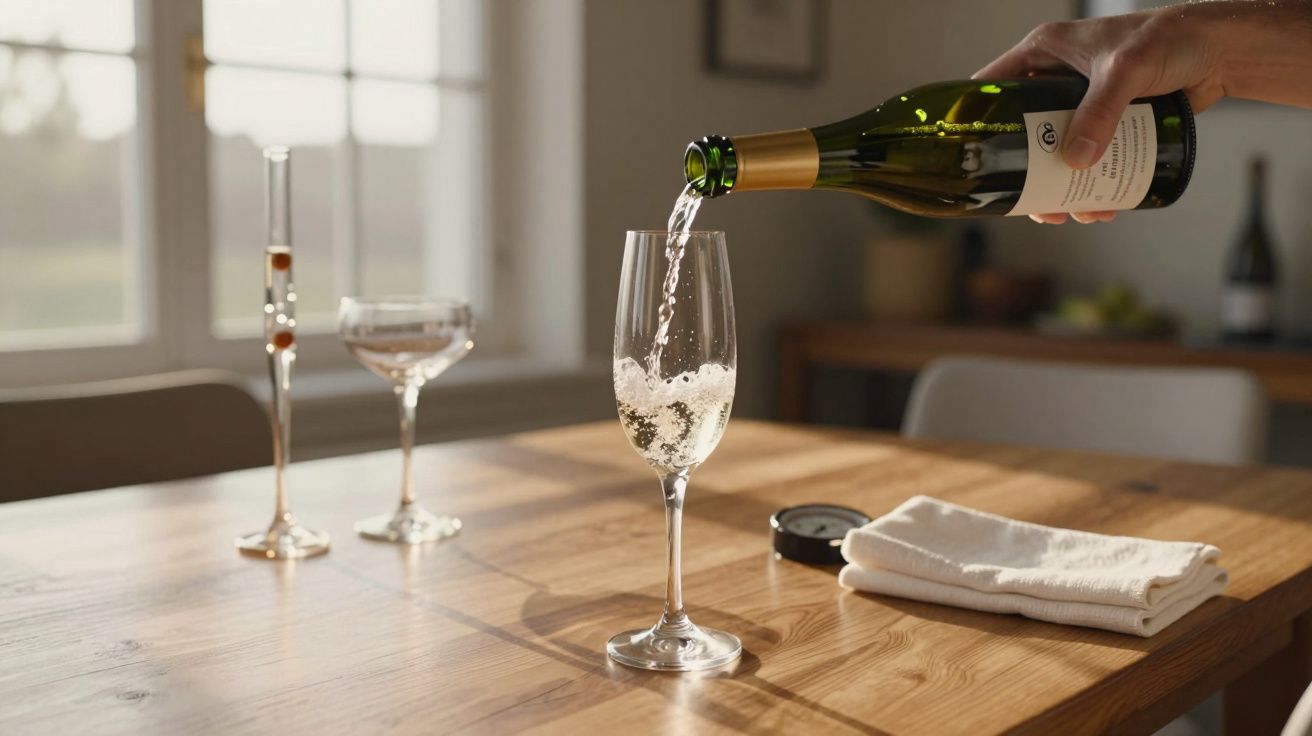
New Year’s Eve, a promotion at work, a wedding toast: the cork goes off, the bubbles surge… and then someone quietly wonders which glass they ought to be holding.
For decades, most of us have accepted whatever arrives-usually a slim flute or a broad coupe-without a second thought. But many champagne houses and wine researchers now share the same view: a lot of Champagne is being poured into the wrong shape of glass.
Champagne is a wine first: why the glass actually matters
Before you think about bubbles, it helps to remember what you are drinking. Champagne is, above all, a wine, and much of its flavour depends on aroma reaching your nose-not just sparkle hitting your tongue. The choice of glass affects how quickly aromas are released, how they are directed towards your nose, and how long the mousse and bead stay lively.
Behind the bubbles: what you’re really paying for in Champagne
Champagne’s protected appellation status means it can only be made in a defined area of north‑eastern France. The vineyards span hundreds of villages, including the Montagne de Reims, the Vallée de la Marne, the Côte des Blancs and the Côte des Bar.
The grapes are harvested by hand, pressed with care, and fermented into a still base wine before a second fermentation happens inside the bottle. That in‑bottle stage-known as prise de mousse-is what creates the effervescence.
After ageing, producers fine‑tune the style with dosage, a blend of wine and sugar. The amount used determines whether a bottle is labelled brut nature (very dry with almost no sugar), extra brut, demi‑sec or doux (sweet, with more than 50 grams of sugar per litre). Those choices shape the final character far more than any label design-so serving it in a glass that respects the wine helps avoid wasting that work.
Why the flute is falling out of favour
The tall, narrow flute became the default symbol of celebration for good reasons: it photographs well, looks refined in the hand, and sends bubbles upwards in neat, showy streams.
Where it struggles is aroma. With its tight column and small rim, the flute gives very little space for the bouquet to develop and reach you.
The flute keeps aromas trapped in a narrow shaft, so you end up tasting mostly chilled fizz and sharpness rather than the full wine.
The opening is so small your nose barely sits over the glass, and the wine’s contact with air is minimal. That limited surface area slows the release of aromatic compounds-particularly those coming from Pinot Noir, Meunier and Chardonnay, the classic trio behind most bottles from the Champagne region.
There is also a simple practical downside: pouring is more awkward. In a busy room or with an unsteady hand, foam can spill over easily. To avoid overflow, hosts often under‑pour, so everyone gets smaller measures than intended.
The coupe: glamorous, but not for serious drinking
The coupe-a shallow, wide bowl associated with 1920s style-wins on theatre. It looks dramatic, suits stacked “champagne towers”, and offers a nostalgic flourish.
The coupe trades freshness and focused aroma for looks, so Champagne can taste flat well before the speeches are finished.
Because the surface area is large, carbon dioxide escapes fast. The mousse (the fine foam at the top) drops quickly, and aromas dissipate in every direction instead of being guided towards your nose. Within minutes the wine can smell less defined and taste notably duller-fine for a rapid toast, less ideal for a carefully made cuvée priced at £30, £50 or more.
Further reading (related topics)
- A simple spoon can change everything: yes, there is an invisible danger with your microwave
- Philippe Etchebest: why the chef never cooks without an empty mixing bowl
- This Italian woman is adamant: this post‑cooking detail reveals low‑quality pasta
- “It ruins everything”: a cheesemonger strongly warns against this charcuterie with raclette
- Only two ingredients are enough to make this no‑bake express cheesecake
- Chocolate spread, raclette cheese, beer: what French shoppers really hunt for on promotion
- Better than wine: why a cheesemonger recommends this drink with raclette
- No, I never choose the same onion for every dish-this one transforms my salads
The tulip glass for Champagne: why experts swear by it
Ask leading champagne houses what they prefer today and you will often hear the same recommendation: a tulip glass offers the best balance between enjoyment and precision.
Named for its flower‑like silhouette, it has a bowl that is slightly broader before tapering gently towards the rim.
The tulip shape gathers aromas, protects the bubbles, and still lets you appreciate Champagne’s fine bead and colour.
That wider mid‑section allows the wine to open up and release aromas, while the narrowing top funnels those scents upwards. Your nose fits comfortably near the rim, and the smaller opening also slows gas loss, helping the effervescence last longer.
How to recognise a good tulip glass
- A bowl that is wider than the rim, but nowhere near as open as a coupe
- Roughly the height of a flute, with a smooth curve outwards and then inwards
- Fine, clear glass so you can watch the stream of bubbles
- A stem long enough to hold without warming the wine
Many modern white‑wine glasses already sit close to this profile. At home, a good all‑purpose wine glass often serves Champagne better than the traditional flutes that appear on shelves every December.
Temperature: the other mistake almost everyone makes
Glassware is only part of the equation. Serve Champagne at the wrong temperature and even a prestige bottle can seem bland-or, at the other extreme, sharp and aggressive.
Producers in Champagne commonly suggest:
| Type of champagne | Ideal serving temperature |
|---|---|
| Non-vintage / standard cuvée | 8–10°C (46–50°F) |
| Vintage or prestige cuvée | 10–12°C (50–54°F) |
If Champagne is too cold, your palate is dulled: you register the sparkle, but subtle flavours and delicate notes go missing. If it is too warm, it can lose its crisp edge and come across heavy and alcoholic.
At home, the simplest approach is time. Chill the bottle in the fridge for 2–4 hours. In a hurry, an ice bucket with water and ice will cool it in around 30 minutes. The freezer is a gamble: distracted hosts have ruined expensive bottles through cracking or even explosions.
One more factor most people overlook: glass cleanliness and handling
Even with the right tulip glass, residue can sabotage the experience. Traces of detergent or grease can kill foam and distort aroma, while dusty cupboard smells can mask the bouquet. Rinse glasses thoroughly, avoid strongly scented washing‑up liquid where possible, and let them air‑dry.
Once poured, hold the glass by the stem rather than cupping the bowl. It keeps the wine closer to its ideal serving temperature and avoids warming it in your hand-especially important for non‑vintage and standard cuvée styles served at 8–10°C.
Practical scenarios: from kitchen party to big wedding
The family dinner test
Imagine a small get‑together: one solid non‑vintage bottle shared among six. You have six flutes and six regular white‑wine glasses. Try this:
Pour half the bottle into flutes and the other half into tulip‑shaped white‑wine glasses. Then ask guests which seems more aromatic, and which glass they would prefer to sip slowly. Most people choose the tulip shape, even if they cannot immediately explain the difference.
The large reception challenge
At weddings and corporate receptions, venues often default to flutes because they stack easily and feel familiar. However, some higher‑end locations now serve both still and sparkling wines in tulip‑style wine glasses. It simplifies service and often makes the drink feel higher quality.
If you are organising a large event, hiring one versatile glass design can be both cheaper and more effective than renting flutes plus separate red‑wine goblets.
Key terms worth knowing
A few pieces of label and tasting vocabulary come up again and again. Understanding them helps you decide which glass and temperature will show the bottle at its best.
- Cuvée: a particular blend or bottling. A house’s entry‑level Champagne is usually its non‑vintage cuvée.
- Vintage: Champagne made from grapes harvested in a single year; typically released in stronger years and often more flavourful.
- Brut: the most common sweetness level, usually 6–12 grams of sugar per litre, giving a dry style that is not overly austere.
- Brut nature / zero dosage: no sugar added; very lean and crisp. These wines often benefit from a slightly larger tulip glass, which can soften the edges by giving the aromas more room.
How to upgrade your next bottle without spending more
You do not need a cellar of rare vintage Champagne to notice these improvements. Even a supermarket bottle can seem more polished when it is served properly.
For most people, switching from flutes to tulip‑shaped wine glasses delivers more enjoyment than paying an extra £20 for the same brand.
Think ahead: chill gently, avoid shaking the bottle, and pour slowly down the inside of the glass. Stop at about half‑full-this leaves space for aromas to collect and helps the wine stay cool for longer.
Flutes will probably remain the star of adverts and films. But on many professional tables, a different silhouette is quietly becoming the norm. If flavour matters to you more than tradition, your next celebration may taste noticeably better-simply by changing the glass you raise.

Comments
No comments yet. Be the first to comment!
Leave a Comment