
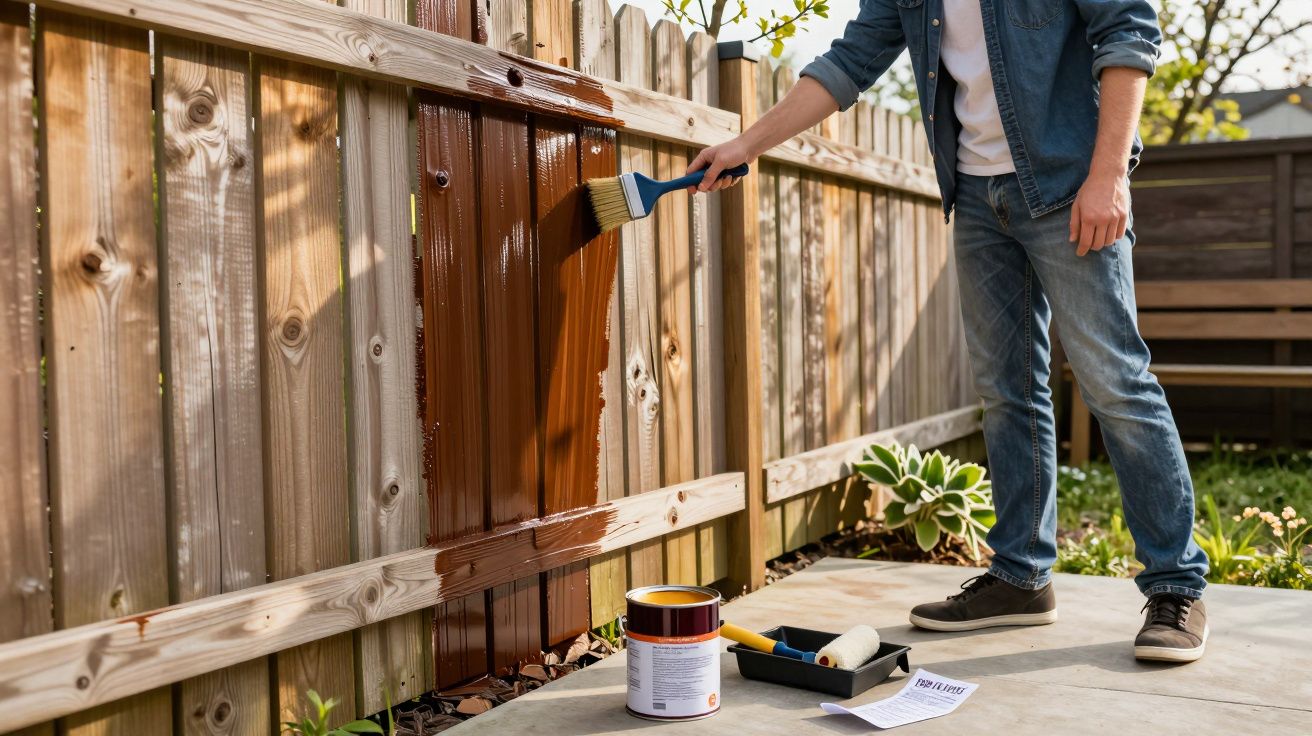
Faded shutters, blotchy decking and garden tables that have turned silvery-grey are a familiar aftermath of months of rain and frost. Then spring arrives, motivation kicks in-and the cost of paint and woodcare often stops the job before it starts. A budget-friendly dark wood stain recently seen on the shelves at discount chain Action is changing the sums for many households.
Spring’s big challenge: rescuing outdoor wood on a tight budget
By the end of February, most exterior timber has already taken a battering from cold snaps, pooled water and gusty weather. Leave it as it is and the combination of UV and moisture continues to break down the surface, meaning today’s “just cosmetic” wear can become tomorrow’s splits, warping and rot. Getting on top of it early gives the wood a better chance before stronger sunshine and April showers arrive.
Conventional DIY retailers stock excellent stains and varnishes, but the price can be hard to swallow. In the UK, a single 2.5-litre tin of a branded exterior stain commonly lands around £25–£40 (or similar in euros). Once you add up a fence, a decent-sized deck or a run of shutters, the total can quickly reach three figures. When that happens, many people put maintenance off-only to spend far more later when boards, panels or garden furniture have to be replaced rather than refreshed.
Affordable woodcare can delay costly replacements by several years, especially for exposed decking, fences and shutters.
The unexpected bargain at Action: a dark stain for under €5
In that context, a deal spotted at European discount chain Action has attracted plenty of attention among cost-conscious DIYers. The retailer is currently selling a Spectrum brand dark brown exterior wood stain for €4.78 in a 2.5-litre container.
At that level, you’re paying roughly €1.91 per litre, which is a small fraction of the going rate for many household-name products. It is a water-based acrylic stain intended for both indoor and outdoor use, and it is promoted as suitable for a wide range of timber-covering practical items such as doors and frames, as well as decorative pieces like benches and planters.
At under €5 for 2.5 litres, this stain sits closer to the price of a takeaway coffee than a typical woodcare product.
What this kind of stain is actually designed to do
Although the label tends to foreground colour and price, an exterior stain has a fairly specific technical purpose. In practice, it is intended to:
- Soak into the top layer of timber to reduce water uptake
- Leave a tinted film that helps screen out UV
- Reduce the cracking and warping that repeated wet–dry cycles can trigger
- Provide a more flexible finish than classic varnish, which can lift and peel
Darker shades-such as “dark brown” or “walnut”-are often chosen because they hide old marks and help mismatched panels or weathered boards look more consistent. They also pair well with the increasingly common combination of black window frames and contemporary metalwork on newer homes.
Related reads people are clicking on
- Rare early-season stratospheric warming is forming this February, and scientists warn its intensity could dramatically reshape the entire winter outlook
- He donated a box of DVDs “then found them resold as valuable collectibles”
- How could these “autofocus glasses” revolutionize consumer optics?
- I tested the Kobold VK7 Vorwerk cordless vacuum-mop in my kitchen – here’s my verdict
- This country could face a historic winter due to a rare mix of La Niña and the polar vortex
- People who barely speak to their siblings as adults often share nine childhood patterns that quietly shaped their family bonds
- No one is putting cushions on their sofa anymore: in 2026, everyone is replacing them with this luxury-inspired accessory
- Helping restaurant servers clear your table is not kindness it is a disturbing sign of your real personality
How to use it: simple steps for a decent result
One of the main attractions of this Spectrum stain is how approachable it is. Water-based acrylic stain products are usually quite forgiving, even if you do not do DIY every weekend. The quality of the end result depends far more on prep work than on any specialist technique.
A useful extra step-especially with bargain coatings-is to test a small, inconspicuous patch first. It lets you confirm the colour once dry, see how evenly the timber absorbs it, and check that it bonds properly to any existing finish.
Basic application in a weekend (Spectrum brand dark brown exterior wood stain)
A simple, workable approach looks like this:
| Step | What to do |
|---|---|
| 1. Inspection | Look for soft, rotten or loose boards; repair or replace these before you start. |
| 2. Light sanding | Use medium-grit sandpaper to remove flaking layers and help open the wood’s surface. |
| 3. Cleaning | Brush or vacuum away dust, wipe with a damp cloth, then allow it to dry fully. |
| 4. First coat | Apply using a synthetic brush or a roller, working with the grain and avoiding heavy build-up in corners. |
| 5. Drying time | Wait the stated interval (often a few hours with water-based products). |
| 6. Second coat | Apply a further thin coat to improve coverage and extend durability. |
Because it is water-based, you can typically wash out brushes and trays with tap water rather than relying on strong solvents. The smell is also usually less intrusive than solvent-based stains, which is particularly welcome when you are working near doors and windows you will be opening frequently.
For many small outdoor projects, the limiting factor is the weather, not the product: pick a dry, mild weekend and work in the shade where possible.
Where a cheap stain makes the most sense
There will always be a place for ultra-premium finishes-particularly on period joinery or expensive hardwood doors. However, a low-cost stain can be a sensible choice on the parts of a property where protection matters more than a flawless, showroom-level appearance.
Good candidates for a sub-€5 stain
- Older garden sheds and storage boxes that already look weathered
- Fence panels where you mainly want a consistent colour rather than perfection
- Raised beds and planters, provided they are treated or lined appropriately
- Basic softwood garden chairs and tables
- Timber pergolas or balcony balustrades that take the brunt of the weather
Using a cheaper product for these jobs can leave more budget available for higher-spec coatings on front doors, window frames or bespoke carpentry-areas where every imperfection is visible and day-to-day wear is greater.
Value, limitations and what to watch out for
A price point this low naturally raises eyebrows. You should not expect the same extended guarantees offered by premium brands, and the resin quality, pigment load and UV inhibitors may be less sophisticated. That does not automatically make it a poor product-it simply means the finish and longevity should be judged with the cost in mind.
How long it lasts will also depend heavily on location and exposure. A shaded, north-facing fence treated with two coats could stay presentable for several seasons, whereas a south-facing deck that bakes in the sun and holds puddles is a much harsher proving ground. Many people who opt for cheaper stains treat them as “maintenance coatings”, adding a light refresher coat every year or two rather than expecting a one-and-done result.
Regular light maintenance with a cheap stain can still outperform neglect with a top-tier product left untouched for a decade.
Checking the label: a few points that matter
Before you put the tin in your trolley, it is worth confirming a few practical details:
- Intended use: make sure it clearly states “exterior” and refers to weather resistance
- Compatibility: check it is suitable for your timber type (softwood, hardwood, previously stained, etc.)
- Number of coats: some budget stains need three coats to reach full protection
- Drying and recoating time: align this with your likely window of decent weather
- Cleaning instructions: water-based products simplify clean-up, but can be less tolerant of constant standing water
It is also sensible to think about storage and disposal. Keep leftover stain sealed and frost-free, and follow your local council’s guidance for disposing of paint products-do not pour residues down drains.
How far can 2.5 litres realistically go?
Coverage rates are usually quoted per litre. A typical water-based acrylic stain might cover around 8–10 m² per litre for a single coat, although rough-sawn or very dry timber can absorb significantly more and reduce that figure.
Using a mid-point estimate of 9 m² per litre:
- One coat from 2.5 L: roughly 22.5 m²
- Two coats from 2.5 L: roughly 11–12 m² of finished surface
In practical terms, that could cover both sides of a modest garden gate plus several fence panels, or a small balcony balustrade alongside a set of planters. A larger deck would require more than one tin, although even then the overall spend may still compare favourably with many mainstream options.
Key terms: stain, varnish and oil
Stain, varnish and oil are often confused, and using the wrong one is a common reason for disappointing results. A stain like the one sold at Action primarily adds colour and protection by soaking slightly into the wood fibres and leaving a thin surface film. In many semi-transparent versions, the grain remains visible.
Varnish, by contrast, forms a thicker layer on top and is often available in gloss or satin. It can look more “furniture-grade”, but it is more prone to peeling if the timber moves or if moisture finds a way underneath. Oils (such as linseed or teak oil) feed into the timber without forming a strong film, creating a natural look but generally requiring more frequent reapplication. The right choice depends on the balance you want between appearance, protection and ongoing upkeep.
Planning a weekend project without nasty surprises
If you are tempted by a bargain stain, a realistic plan makes the job far more enjoyable. Keep the scope manageable: instead of trying to tackle the whole garden at once, pick one clear target such as the front gate and a bench. Check the forecast and aim for at least 24 hours of dry weather, with temperatures ideally above 10°C.
Most frustrations come from rushing the prep. Even half an hour spent sanding and cleaning can make the finish look noticeably more even and last longer. If you are happy with the look and how easy it is to apply, you can always go back for extra tins before peak season-bearing in mind that once deals like €4.78 for 2.5-litre containers start circulating on social media and bargain-hunting forums, shelves can empty quickly.





Comments
No comments yet. Be the first to comment!
Leave a Comment