
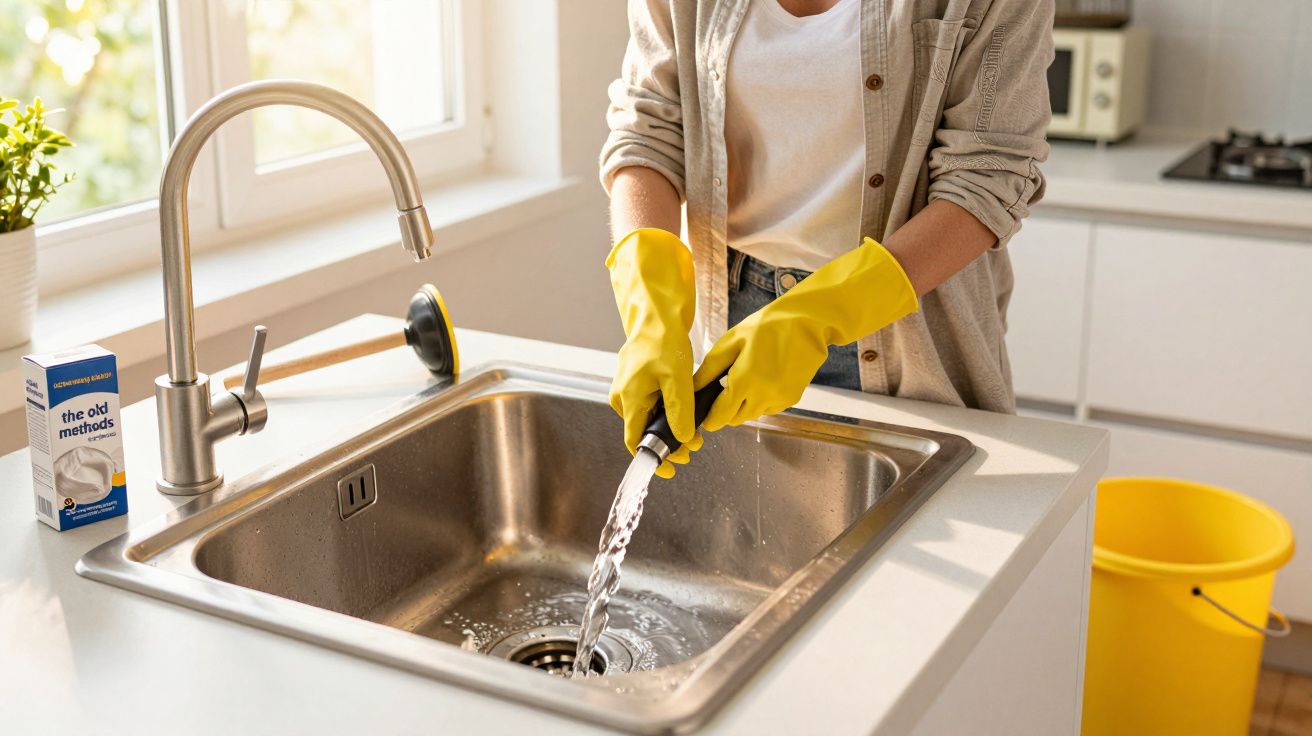
Odours start to creep in, plates pile up, and before you know it the mess is spreading right across the worktop.
There’s a fast, sensible remedy that plenty of householders overlook. It isn’t a magic mixture and it doesn’t rely on chemicals. It’s a straightforward tool used with a controlled, patient touch.
When a blocked sink brings the whole kitchen to a halt
A clogged sink doesn’t only slow down the washing-up. Standing water turns into a breeding ground for bacteria and creates persistent smells that hang around on surfaces and even fabrics. If you carry on preparing food nearby, that damp, dirty area can end up contaminating your prep space.
Back-ups come with a hidden cost too: cupboards can swell, seals can lift, and flooring can stain. An overflow can slip under plinths and into joints. Dealing with it early reduces the risk of damage and helps you avoid a larger repair later.
The baking soda and vinegar myth - and what genuinely works
The foaming combination of baking soda and vinegar does have its uses. It’s helpful for keeping pipework smelling fresher when nothing is actually blocked. What it usually won’t do is shift a tight, compacted clog.
A plunger can work if the obstruction is close to the plughole, but it often isn’t enough when the plug is further along the pipe or tightly packed.
The approach plumbers rely on is a drain snake (also known as a drain auger). It’s a flexible steel cable with a handle and a tip designed to snag, grab or break apart debris. It can travel around bends, reach the blockage, and open up a channel so water can run again.
Pick a cable with proper reach. Around 10 metres (about 33 feet) is enough for most kitchen and bathroom drains.
How to clear a clog with a drain snake (plumber method)
Get set up safely
Put on gloves to protect yourself from bacteria and sharp fragments. Scoop out any standing water with a jug so you can get to the drain opening. For extra peace of mind, unplug any nearby worktop appliances before you start.
Feed the cable in
Insert the tip of the drain snake into the plughole and ease the cable in carefully. Allow the coil to follow its natural curve as it goes around elbows and bends. If it stops at a bend, pull back a little and try again from a slightly different angle. Don’t force it-pushing too hard can kink the cable or scrape the pipe.
Turn the handle and break up the blockage
When you hit firm resistance, you’ve reached the clog. Rotate the handle steadily. Spinning helps the tip bite into grease, food debris, or stringy hair. Work slowly so the tip stays engaged. If the snake has a hooked tip, you may be able to draw material back out rather than shoving it further down.
More household reads (as seen elsewhere):
- Cleaning specialists reveal a punchy household trick that strips grease off kitchen cupboards in only a few minutes
- Homeowners get a shock as a new rule starting on 15 February bans mowing the lawn between 12:00 and 16:00, with fines on the line
- What’s the tiny hole in a nail clipper for - and how do you use it properly?
- Heavy snow is now officially forecast to intensify late tonight, with warnings that visibility could collapse within minutes, yet motorists are still planning long journeys
- He tipped beer onto his compost, and the outcome amazed every gardener in his neighbourhood
- Forget steaming: the unexpected way to cook broccoli that keeps more nutrients - and why nutritionists are divided on it
- A huge Franco–Indian partnership targets a blind spot in road safety set to reach €3.3 billion by 2035: two-wheelers
- Day will turn to night: astronomers confirm the date of the century’s longest solar eclipse
Smooth, consistent turns beat brute force. Keep tension on the cable and let the spiral do the cutting.
Flush, tidy, and finish
When the cable starts moving freely, withdraw it while gently turning. Run warm (not boiling) water to check the flow is clear. If water still sits in the bowl, repeat the pass.
Wipe down the cable, put any retrieved debris straight into the bin, and wash your gloves. Don’t flush the waste down the toilet-you risk creating a second blockage.
Why boiling water and brute force often make things worse
Boiling water sounds like a quick win, but it can soften PVC fittings and distort gaskets. That kind of heat stress shortens the life of traps and joints. Warm water is a safer choice and will still carry away loosened grease.
Aggressive yanks on the drain snake can scrape the pipe interior, loosen slip joints, or damage seals. A calm, even action is more effective and helps keep the plumbing intact. If your tool includes instructions, follow them-tip design, cable thickness, and the recommended direction of rotation can vary by model.
Warm water plus gentle torque helps protect pipes, joints, and your weekend.
What a drain snake changes
Shop-bought mixes tend to work on what they can reach near the surface. A drain snake tackles the clog itself-past the trap and the first elbow-so once the tip meets the plug, the fix is usually quick. You avoid harsh chemicals and you don’t spend hours waiting to see whether a reaction has done anything.
The same tool can deal with kitchen grease, bathroom soap residue, and hair build-ups. Look after the cable and it can last for years, often paying for itself after only a couple of saved call-outs.
| Method | Best use | Typical time | Risk | Notes |
|---|---|---|---|---|
| Baking soda + vinegar | Light maintenance | 30–60 minutes | Low | Helps with odours; usually too weak for compact clogs |
| Plunger | Shallow clogs near the drain | 5–10 minutes | Medium | Seal both sink bowls; can force debris deeper |
| Drain snake | Most kitchen and bath clogs | 1–5 minutes once contact is made | Low–medium | Effective beyond the trap; use gentle movement to protect the pipe |
Smart habits that prevent the next clog
Use a simple sink strainer to catch scraps, and empty it regularly so water keeps moving. Wipe greasy pans with kitchen roll before washing up so fats and gravy don’t go down the drain. Grease cools and hardens inside elbows, gradually forming a plug.
After a big, greasy meal, run hot (not boiling) water with washing-up liquid for about a minute. The soapy film helps residues slide along instead of sticking. Pay attention to gurgling noises, slower draining, or new smells-acting early prevents small build-ups turning into a tightly packed blockage.
- If you ever remove the trap, place a bucket underneath first; water and grit will spill.
- With a double sink, block the other plughole or air gap when testing the flow.
- Waste disposal units need separate attention: isolate the power, clear the chamber, and reset it before you blame the drain.
Extra care that isn’t always mentioned (but helps)
After use, rinse the drain snake with warm soapy water, dry it, and lightly oil the cable before storage to slow rust and keep the coil smooth. If you regularly deal with hair, consider keeping a separate cable for the bathroom so kitchen grease doesn’t coat it and attract more debris.
It also helps to work with good lighting and protect the area under the sink with an old towel-retrieved sludge and drips are easier to control when you’ve planned for them.
When it’s time to call a professional
Some issues are beyond a standard household cable: a partly blocked soil stack, a sagging section that holds water, or heavy build-up much further down the line. If the blockage returns quickly, or your snake never seems to reach it, book a licensed plumber. They can use longer cables and inspection cameras to pinpoint exactly where the snag is.
Don’t combine chemical drain cleaners with mechanical tools. If caustic residue coats a metal cable, it becomes a burn risk. If you used a cleaner earlier, flush thoroughly, ventilate the room, and wait before you attempt snaking.
Prices depend on the city and access, but a basic kitchen drain visit is often in the low hundreds. Multiple affected fixtures, corrosion, or a deep main line can push the cost higher. Ask for a clear scope of work and whether camera diagnostics are included.
Quick add-ons that save time and money
For flats, a mid-length snake of 6–10 metres is often plenty; houses with longer runs may benefit from a longer cable. A small hook tip is handy for pulling hair and food; a corkscrew-style tip can chew through thicker plugs. If hair is a recurring problem, keep a dedicated bathroom cable so kitchen grease doesn’t build up on it.
If you rent, read your tenancy agreement. Some landlords require permission before you dismantle a trap. Take photos of the pipework, connections, and washers before loosening anything. Refit by hand first, then tighten gently-over-tightening can crack plastic nuts.
The 60-second rhythm once you reach the clog
Notice the point where the cable stops. If your drain snake has a lock nut, tighten it. Turn the handle slowly for 10–20 rotations, then push forward a few centimetres. Rotate again. When the cable suddenly advances, the plug has broken. Keep turning as you draw the cable back, then run warm water to wash the loosened debris away.
No foam, no fumes-just a cable, a crank, and a clear drain in under a minute once the tip gets there.
For homes with septic tanks or older pipework
Avoid chemical cleaners to protect the bacteria in your tank and to reduce stress on older seals. For routine upkeep, use warm water with washing-up liquid, and use a drain snake when you need to correct a developing blockage. Cast iron pipes can have rough interiors that snag hair; a gentle pass every few months can stop mats forming in the same spot.
Treat clogs as feedback rather than bad luck. Fats, starchy waste, coffee grounds, and fibrous peelings are common offenders. Change what goes in, and the pipe stays clearer for longer. A small strainer basket, a wipe-out for pan grease, and a basic drain snake can turn a recurring nuisance into an occasional inconvenience.



Comments
No comments yet. Be the first to comment!
Leave a Comment