
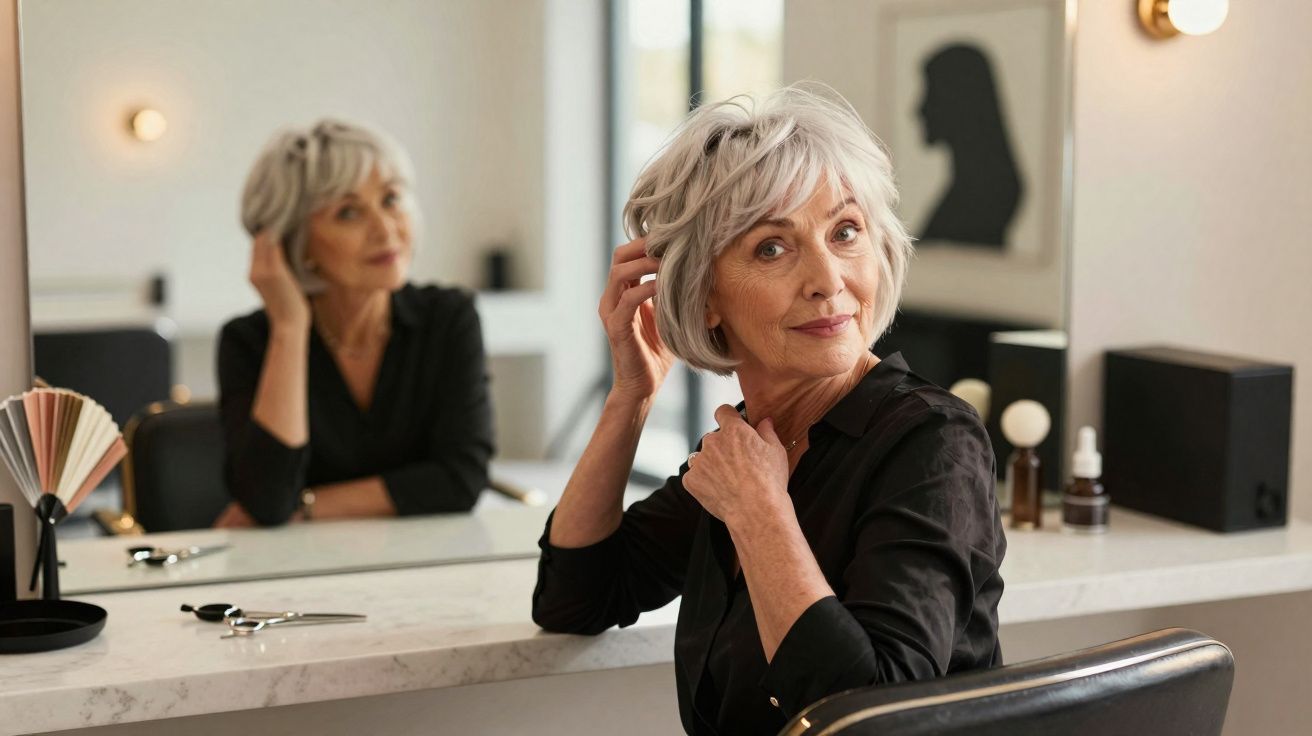
Springtime appointments are increasingly seeing a quiet pattern: women in their 70s and beyond arriving at the salon asking for a bold change that can split a waiting room.
Hairdressers say a crisp, contemporary short crop called the “trixie cut” has become an unexpected favourite with older clients. Some describe it as transformative; others dismiss it as overdone. That divide speaks to wider ideas about how women are expected to age - and who gets to decide what looks “appropriate” after 70.
What the “trixie cut” actually looks like
In practical terms, the trixie cut is a short, shaped crop that lands between a pixie style and a more traditional gamine cut.
The shape is compact, the neck is clean, and the front can be soft or edgy depending on how bold you feel.
It is usually defined by:
- A short, tapered back that exposes the neck
- Gently cropped sides that sit close and highlight the cheekbones
- A textured top to add lift and movement
- A fringe that can be blunt, side‑swept, or feathered
- Subtle layering to keep volume where the hair remains at its thickest
On older hair, many stylists soften the perimeter rather than making it razor‑sharp, aiming for a modern finish that does not read as severe. The cut generally stays above the collar, which often gives an immediate sense of lightness.
Why women over 70 are requesting the trixie cut now
From London to New York - and in smaller towns too - stylists describe hearing the same request from older clients: “a cut that wakes me up a bit”.
A few influences appear to be feeding this change.
Thinning hair and everyday practicality
As hair ages, it commonly becomes finer, drier and less buoyant. A longer style that once felt glamorous can start to look flat, clingy, or reveal thinning at the crown. Shorter shapes such as the trixie cut can work with that texture rather than fighting it.
Removing weight makes fine hair look fuller, and a structured crop tends to hold its shape with minimal styling.
There is also a comfort factor. For many women in their seventies, shoulders and hands do not move as freely as they used to. Managing rollers, a heavy hairdryer, or heated styling tools can be exhausting. A wash‑and‑go haircut that still looks deliberate is not just about appearance; it supports day‑to‑day ease.
A low‑key pushback against “age rules”
The popularity of the trixie cut also reflects a broader cultural shift. Women who spent decades being told to keep their hair “flattering” and “discreet” are increasingly asking why age should dictate either length or attitude.
Many bring in reference images of actresses and influencers in their sixties and seventies wearing cropped, sharply defined hair: Judi Dench, Jamie Lee Curtis, or fashion editors with silver crops and statement glasses. For a growing number of grandmothers, the goal is to move away from the expectation of soft perms and beige cardigans - and towards something that feels like themselves.
Why the cut becomes controversial after a certain age
Not everyone responds warmly. The very same haircut that makes one woman feel renewed can prompt eye‑rolling from friends or family.
Common criticisms include “trying to look young” or “ridiculous on a grandmother”. In many cases, the disagreement is less about hair and more about what society expects older women to look like.
The trixie cut becomes a lightning rod for anxieties around ageing: who is allowed to be visible, stylish and even a little provocative past 70.
Some hairdressers admit they nudge cautious clients towards gentler, less dramatic versions, concerned that a big change could unsettle partners or relatives. Others argue their responsibility is to the client in the chair, not to the people waiting at home.
Common fears about the trixie cut - and how stylists answer them
| Concern | Typical stylist response |
|---|---|
| “My face will look too hard.” | Use feathered edges and side fringe to soften lines. |
| “Short hair will make me look older.” | Add top volume and light around the face to lift features. |
| “My family will say I’ve lost it.” | Start with a slightly longer version; refine at the next visit. |
| “My curls or cowlicks will misbehave.” | Cut with the natural pattern, not against it, and leave strategic length. |
How the trixie cut can leave someone feeling “reborn”
Women who choose the style often speak less about how it looks and more about how it feels.
Many describe walking out of the salon lighter, more awake, and unexpectedly unburdened. For some, cutting away a long, tired style symbolises a turning point - widowhood, illness, retirement, or years spent caring for other people.
Hair becomes a tool of self‑definition, a way of saying: “I am still changing, still allowed to surprise you.”
There is a practical emotional benefit too. A tidy, intentional haircut often attracts compliments. Friends notice; strangers comment. That small loop of social feedback can strengthen confidence at an age when many say they feel overlooked in public spaces.
Trixie cut colour choices: silver, highlights, and bolder shades
Colour strongly influences whether a trixie cut reads as soft, severe, youthful, or striking.
- Natural silver: Particularly effective with a clean crop, creating a modern, architectural effect.
- Soft highlights: Fine, cool‑toned highlights near the fringe can brighten the face without demanding constant maintenance.
- Bold shades: Some clients add a pastel streak or choose a deeper chocolate tone for extra drama.
Stylists often advise avoiding flat, very dark colours, which can make the contrast between thinning hair and skin look unforgiving. Lighter, more translucent tones usually complement both texture and complexion.
Who the trixie cut tends to suit - and who may struggle with it
Even with the buzz around it, the trixie cut is not a universal fix. Face shape, daily routine and personal taste all play a part.
The most successful versions reflect the wearer’s character, not just the season’s trend.
In broad terms, it often works well for:
- Women with decent density on top, even if the sides are finer
- Those happy to show their neck and ears
- People who enjoy using glasses, earrings or lipstick as key style anchors
- Anyone willing to return to the salon every 5–7 weeks to keep the outline sharp
It can be more challenging for very curly or tightly coiled hair if the stylist lacks confidence with texture. In that situation, a slightly longer, layered variation can keep the essence of the cut while avoiding tight edges that are hard to control.
Practical tips before you book a trixie cut
Hairdressers often suggest approaching the decision more like a considered wardrobe refresh than an impulse purchase.
- Gather three to five photos of older women with a similar hair type - not only celebrities with thick, studio‑styled hair.
- Arrange a consultation before the cut, especially if you are taking off a lot of length.
- Ask how it will grow out; a well‑cut trixie should still look presentable after six weeks.
- Check that your stylist has recent experience with short, structured cuts on grey or white hair.
At home, most versions need very little: a small amount of mousse, a quick blow‑dry using your fingers, and perhaps a pea‑sized dab of wax to define the texture. Too much product or fussing can make the style look rigid and old‑fashioned.
Age, hair, and the politics of “acting your age”
The debate over whether the trixie cut is joyful or “ridiculous” points to deeper tensions about ageing in public. Men are often applauded for going grey and keeping hair short; women are questioned both for wearing it long and for cutting it close.
The debate says less about the cut and more about who is allowed to experiment once they reach a certain birthday.
Some psychologists who research ageing note that small style decisions can reinforce a sense of agency. When older women choose a haircut because it suits them - rather than to satisfy children or neighbours - it can subtly influence how they approach other choices too, from dating again to going back into part‑time work.
Trying the trixie cut attitude without committing to the full chop
If you are unsure about a dramatic change, you can still take elements from the trixie idea. Options include:
- Taking the back and nape shorter first while keeping more length around the face.
- Adding a light, wispy fringe to see whether a stronger frame suits your features.
- Requesting internal layers at the crown to build lift without an obvious loss of length.
These in‑between steps can act as a useful “simulation” of how a decisive crop might feel. If you like the lighter weight and simpler styling, committing fully often feels far less daunting at the next appointment.
There are also style pairings that achieve impact without major colour changes. Some women combine a modified trixie with bold frames, red lipstick or statement earrings. The contrast of a clean silhouette with clear style accents can look confident rather than attention‑seeking, helping to avoid some of the social criticism that more intense cuts can attract after 70.




Comments
No comments yet. Be the first to comment!
Leave a Comment