
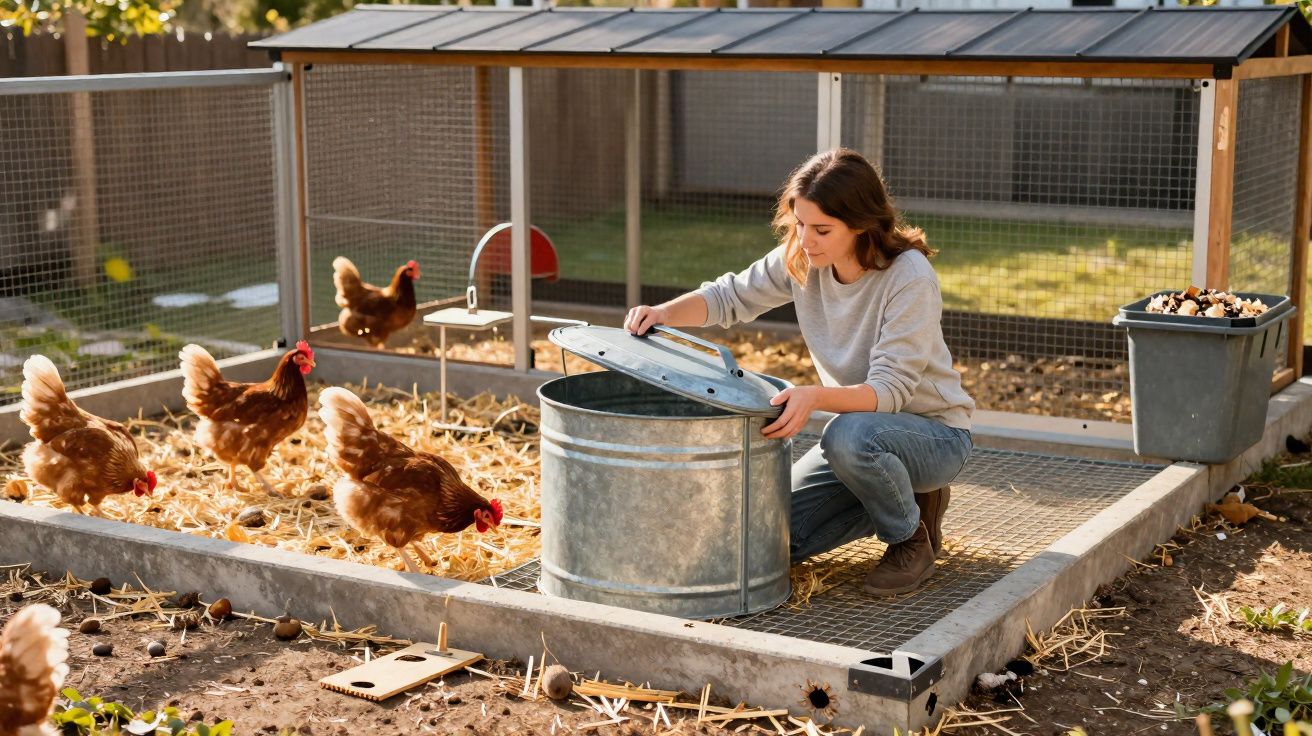
Keeping chickens means you will, sooner or later, run into an unwanted visitor: the brown rat (Norway rat). It’s drawn to hen houses, helps itself to feed, steals eggs and puts the flock under stress. The upside is that, with smarter routines and a few targeted tweaks, you can make a chicken coop far less appealing to rats-without spending a fortune.
Why rats find your chicken coop so tempting
To a rat, a typical hen house looks like an all-inclusive hotel: leftover feed, scattered grain, water, soft bedding, dark corners and shelter overhead. That combination is exactly what pulls them in.
Their athletic ability makes the problem worse. Rats can:
- jump up to 1 metre high,
- swim extremely well,
- dig deep tunnels,
- squeeze through gaps of around 2 centimetres,
- gnaw through wood, thin plastic and crumbly concrete with their teeth.
For many keepers, the damage goes well beyond a few missing grains. Rats:
- eat eggs,
- can injure or kill chicks,
- keep the whole flock in constant stress,
- can noticeably reduce laying performance,
- foul the coop and run with droppings and urine.
The health risk is often underestimated. Rats can spread pathogens such as Salmonella or leptospires. Anyone working in the run, collecting eggs or changing bedding may come into indirect contact.
Typical warning signs include scratching sounds at night, a strong ammonia-like smell, soil holes with smooth edges, and rats that are even out in daylight.
Quick wins: five things you can change today
Before you reach for traps, concrete or a pest-control company, take a hard look at day-to-day habits. Many rat issues persist simply because food is always available and the coop sends out small “invitations”.
1. Lock down feed-every day, without exceptions
The single most important move is to remove easy access to food. That starts with straightforward actions:
- take feeders and leftovers out of the run each evening,
- don’t leave grain sitting openly in the coop,
- avoid scattering feed all over the run.
If you like to “overfeed” by hand, you may be unknowingly laying out a rat buffet. A better approach is smaller portions that the birds finish quickly.
2. Store feed supplies in truly rat-proof containers
An opened sack of layers’ pellets in the corner of a shed is, to rats, basically a sign saying “Help yourselves”. Much safer options include:
- old metal dustbins with tight-fitting lids,
- thick barrels made from robust plastic,
- sturdy metal bins from an agricultural supplier.
Thin plastic storage boxes rarely survive a rodent’s teeth for long. If you raise containers slightly on bricks or pallets, you also make climbing up to them more awkward.
3. Only make feed available when it’s actually needed
Pedal-operated feeders are particularly effective: the hens open the lid with their weight, while other animals can’t easily get to the feed. That reduces spillage on the ground-and therefore the draw for rats.
Without specialised equipment, a simple rule still works: feed in the morning, clear everything away completely in the evening. In many coops, that change alone noticeably reduces rat visits.
4. Check water points and stop the drips
Leaking drinkers and small puddles by the coop aren’t just unhygienic-they provide rats with a constant water supply. A watertight, easy-clean drinker that you inspect regularly removes that extra advantage.
5. Rethink compost and kitchen scraps
Many chicken keepers place the compost near the coop. It’s convenient, but it can attract rats quickly if the compost heap:
- sits very close to the hen area,
- is open and easy to access,
- contains meat scraps, processed meats, cheese or other animal products.
Better: use a lidded compost bin, keep it a little distance from the chickens, and avoid meat and cheese scraps. Any kitchen leftovers intended for the hens should be fed straight away rather than left lying around.
Turn the coop into a rat barrier (brown rat-proofing for chicken keepers)
If you want lasting peace, you’ll usually need some building measures. The good news is that you don’t necessarily need an expensive full rebuild-often, well-chosen interventions in the right places are enough.
Concrete slab, raised coop, or reinforced floor
Three common solutions have proved practical for small-scale setups:
| Solution | Advantages | Disadvantages |
|---|---|---|
| Concrete slab (8–10 cm) | long-lasting, easy to clean, highly resistant to burrowing underneath | more labour, material cost, difficult to relocate |
| Coop on posts (30–40 cm height) | underside is visible, nests are spotted quickly, good airflow | steps/ramps needed, must be well anchored in high winds |
| Timber floor with wire mesh stapled underneath | suitable for existing coops, manageable cost | timber must be protected from damp |
When it comes to mesh, quality matters: spot-welded wire with small apertures (about 6–13 millimetres) and a strong wire gauge holds up far better than cheap aviary wire.
Find weak points-and seal them properly
Rats don’t need a large entrance. A simple check helps: if a pencil fits through a gap, a young rat can usually force its way through too.
Common problem spots include:
- cracks in a concrete floor,
- gaps around doors and hatches,
- unsealed openings where water or electrical lines enter,
- timber that already looks gnawed.
For closing holes, use tough, bite-resistant materials such as:
- steel wool or fine metal shavings packed tightly into gaps,
- metal sheet fixed over high-risk areas,
- mortar or repair concrete for larger cracks.
Make the run and fencing part of the defence
The run shouldn’t become a rat motorway. Use tight-aperture, ideally welded wire fencing, bury it about 20 centimetres into the ground and bend it outwards to make digging underneath much harder. At the top, a smooth edge or an outward overhang helps limit climbing.
Traps, poison, and when it’s time to call in professionals
If you’re seeing multiple rats during the day, or the ground is riddled with holes, prevention alone often isn’t enough. At that point, trapping-or a professional pest controller-becomes relevant.
Using traps the right way
If you want to avoid poison, look at snap traps or electric traps. Key rules include:
- place traps along walls and established runways,
- for the first two days, leave them unset with bait so the rats build trust,
- prevent hens and other pets from reaching the traps, for example by placing traps inside boxes with side entrances.
Suitable baits include peanut butter, small pieces of nuts or strongly scented dry feed. By checking traps frequently and disposing of carcasses hygienically, you also avoid smells that could warn other rats.
When a specialist company makes sense
In severe infestations, in densely built-up neighbourhoods, or where children regularly play in the garden, professional pest control can be the safer option. Specialist firms:
- assess routes and nesting areas,
- use approved rodenticides only in secured bait stations,
- monitor results and adjust the approach.
If you take this route, you should still keep up strict feed hygiene and fix building weak points-otherwise new rats will move in over time.
Why patience is your most important ally
A rat problem in the garden rarely appears overnight. It usually builds gradually: first a few scratching noises, then occasional sightings, and eventually a network of tunnels around the coop. Control tends to be more like a game of chess than a one-off blitz.
Anyone who consistently removes food sources, reduces hiding places and closes building gaps step by step first strips rats of comfort, then takes away their refuge-and finally removes their reason to stay.
It also helps to look at your setup with fresh eyes: where would an animal feel safe? Which corners do you barely see? How often are there truly no grains left on the ground? If you’re honest with yourself, the biggest leverage points are usually obvious.
In the long run, the effort pays back in several ways: the hens stay calmer, laying becomes more consistent, the coop is easier to clean, and the risk of disease drops significantly. And, as a bonus, you regain the feeling that you’re in control-rather than dreading the next rustle every night.





Comments
No comments yet. Be the first to comment!
Leave a Comment