
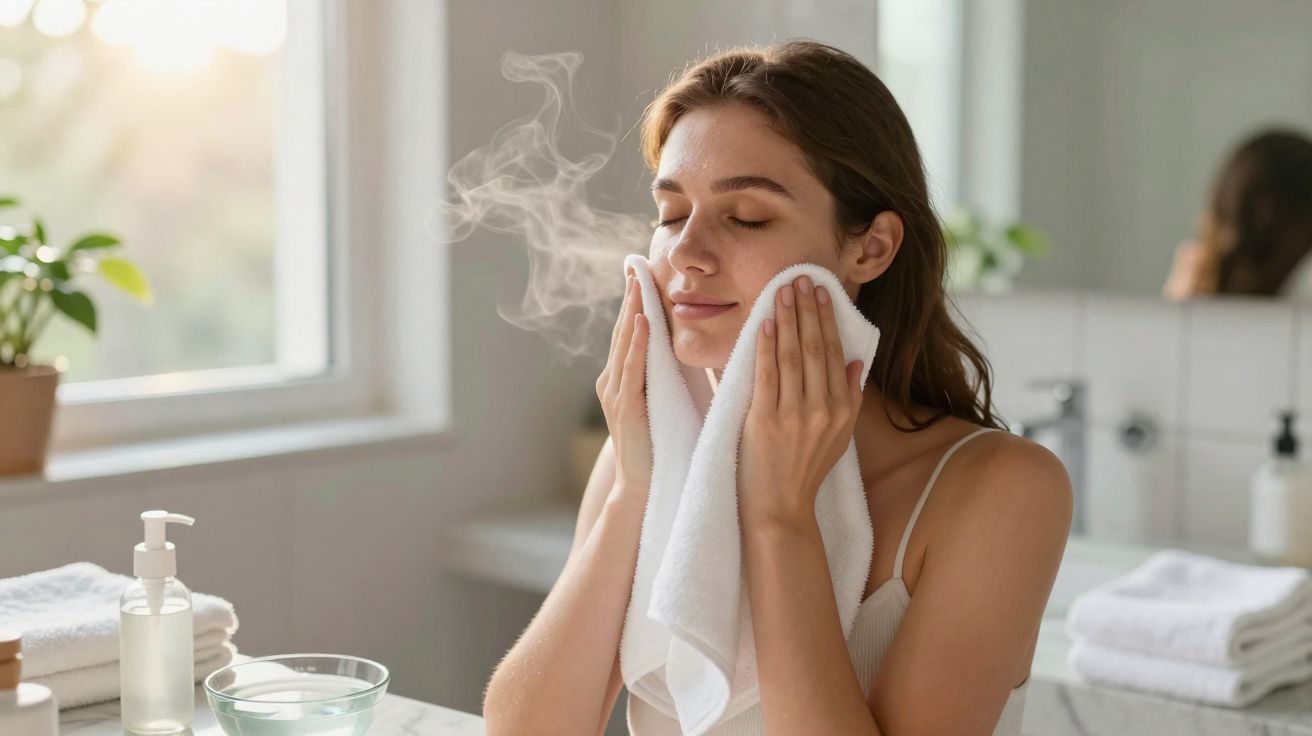
A flannel that was only lukewarm-nothing dramatic, nothing pricey. Just a folded washcloth Anna lifted from the basin, squeezed out quickly, then pressed to her face for a few breaths. The bathroom light was gentle, the mirror fogged, and for a moment there was only the weight of cotton against her skin. No phone. No emails. No skincare trends shouting at her. Just warmth.
When she peeled the cloth away, she looked at her reflection, genuinely surprised: her skin seemed softer, her pores looked finer, and cleansing suddenly felt easier. And a quiet question surfaced-the one many of us recognise:
What does a warm cloth actually do to our face?
Why a warm cloth before cleansing is more than a comfort gimmick
If you’ve ever used a warm cloth intentionally before cleansing, you’ll know straight away: it’s doing more than providing a quick “spa” feeling. The warmth settles over the day’s tension like a soft filter. Skin looks less dull, facial muscles slacken, and the person in the mirror seems a little gentler.
We all know that moment when your skin is begging for a “reset”, but your energy is already gone. This simple step can feel like a small hack from another era-slightly old-fashioned, yet surprisingly effective.
In many beauty salons, a warm compress cloth has been standard for years. Before any extraction begins, a cloth goes on the face first-usually with calm, matter-of-fact confidence. One beautician told me some clients come in for that moment alone: those 60 seconds when you briefly forget you’re there for blackheads and congestion.
Interestingly, in a small social media poll, lots of people said they could feel the “softer pores” effect immediately. Not a scientific study, of course, but it’s a pattern. Skin seems less “sealed”, cleansers feel easier to work in, and even stubborn make-up residue loosens more readily.
What’s happening underneath is fairly straightforward. Heat shifts the skin into a kind of “ready mode”. Blood vessels dilate slightly, and the upper layers of skin become more pliable. Sebum that’s built up in pores becomes a touch more fluid, and debris is easier to shift.
Here’s the plain truth: pores don’t “open” like doors. They aren’t little flaps. But the skin around them becomes softer, more flexible, and more receptive to cleansing. A warm cloth is basically a pre-drink for your skin-before the main cleansing party begins.
How to use a warm cloth (warm cloth cleansing) without secretly stressing your skin
The method sounds almost too simple to take seriously: take a soft cotton cloth or flannel, run comfortably warm-not hot-water over it, wring it out, and lay it over your face. Keep it there for 30 to 60 seconds, breathing steadily, letting the warmth do its work.
Then remove the cloth, apply your cleanser, and massage gently. If you like, you can dampen the cloth again and use it to lift the cleanser off. No scrubbing, no frantic rubbing-more like slowly wiping away a long day.
The most common mistake: making the water too hot “so it works faster”. Let’s be honest-hardly anyone dutifully tests the temperature on the back of their hand every time before putting the cloth on their face. But skin often pays you back later: redness, tightness, or even more blemishes.
If your skin is sensitive, prone to redness, or inclined towards rosacea, it can react quickly and badly to too much heat. And then there’s the classic problem: old, rough flannels-practical, yes, but about as gentle as fine sandpaper. The result is micro-irritation and tiny abrasions you only notice when your serum suddenly stings afterwards.
A dermatologist once put it rather dryly:
“Most ritual mistakes don’t happen with the product, but with how you use it. A warm cloth can feel like a hug for the skin-or like a small sunburn in the bathroom.”
If you want to get the most out of the cloth, a quick check helps:
- Keep the water only as warm as feels pleasant-never stinging
- Use a soft, clean cloth that’s washed regularly, without harsh fabric softeners
- Keep contact time short: 30–60 seconds rather than five minutes of a “light steam bath”
- If your skin is sensitive, just lay the cloth on-don’t rub it across the face
- Cleanse straight afterwards, instead of checking your phone and letting everything dry down
What heat does to your pores-and what you’re only imagining
So the big question remains: if pores don’t truly open, why does skin feel so different after a warm cloth? Part of it is psychology. Warmth tells the nervous system you can downshift. Facial muscles relax, we frown less, and the skin appears smoother.
At the same time, heat temporarily changes the texture of sebum. It becomes a bit more fluid and less “waxy”, so it’s easier for cleansing to carry it out of the pores. Not magic-more like biology in slow motion.
A second effect happens right at the surface. The stratum corneum-the outermost layer of skin-takes on moisture, swells very slightly, and looks more even. Cleansing gels, gentle foaming cleansers, or cleansing oils glide more smoothly, so you don’t have to rub as much.
Many people say that with a warm cloth, they reach for harsh physical scrubs less often. Fewer grains, less frustration, fewer red patches. And yes, congestion can seem to settle over time, because cleansing stops feeling like an attack and starts feeling like a ritual.
What many people imagine is that a warm cloth alone “pulls out” blackheads or clears deep, under-the-skin bumps. It doesn’t. It simply creates better conditions so other steps-thorough but gentle cleansing, possibly chemical exfoliants, or appropriate skincare-can work more effectively.
A warm cloth isn’t a miracle cure, but it is a quiet amplifier. Especially in routines shaped by stress, fatigue, and “quick, quick, get to bed”, that kind of subtle amplifier can be the difference between “I did something” and “my skin actually thanks me for it”.
| Key point | Detail | Benefit for the reader |
|---|---|---|
| Heat makes sebum more mobile | A warm cloth slightly liquefies sebum and makes the stratum corneum more supple | Cleansers work more efficiently, pores look finer, and blemishes can be controlled more easily over time |
| A gentle method instead of hardcore exfoliation | A short, mild warming phase often replaces aggressive scrubbing | Less redness, fewer micro-injuries, and a more stable skin barrier with equal or better cleansing results |
| A ritual with a mental effect | That minute under the cloth slows the evening down and reduces stress levels | Skincare feels more tangible and consistent-less like a chore and more like a break |
FAQ
- Is a warm cloth suitable for all skin types? Usually yes, as long as the temperature stays moderate. If your skin is very sensitive, red, or prone to rosacea, use lukewarm rather than properly warm cloths and keep the contact time short.
- How often can I use a warm cloth before cleansing? For most people, 1–3 times a week is enough. Daily use can work if your skin is resilient, the water isn’t too hot, and the cloth remains soft, with no vigorous rubbing.
- Can it make spots disappear faster? A warm cloth alone won’t make spots “disappear”, but it can help remove sebum and dirt more thoroughly. Combined with suitable skincare, your complexion can improve in the long term.
- Are facial steam baths better than a warm cloth? Steam is more intense, but it can be too irritating for sensitive or very dry skin. A warm cloth is more controlled, gentler, and easier to fit into everyday life-especially in the evening.
- Can I add oils or fragrance to a warm cloth? If you tolerate essential oils, you can add a tiny drop to the water. Many people, however, are sensitive to fragrance on the face. It’s safer to use the cloth plain and apply skincare products separately.




Comments
No comments yet. Be the first to comment!
Leave a Comment