
Cold evenings are returning, along with that familiar sinking feeling when you think about the next round of energy bills.
In both the UK and the US, many households face the same winter choice: turn the heating up and swallow the cost, or pile on extra layers and put up with the chill. Increasingly, however, energy specialists and budget‑minded homeowners are pointing to a third option-treating the home as a small ecosystem of overlooked heat sources. Used with a little care, these can edge indoor temperatures up by one, two, sometimes three degrees, without touching the thermostat.
How households are quietly banking “free” heat
The principle is straightforward: rather than allowing everyday warmth to disappear, you direct it into the spaces where you actually sit, cook and unwind. Ovens, hot baths, tumble dryers and even sun hitting dark flooring all give off heat that often goes unused. With sensible timing, those routine activities can function like a small, informal micro‑heating system.
Profiting from heat you already pay for – cooking, washing, bathing – can shave real money off winter energy bills.
In several European countries, energy advisers now describe this as a useful add‑on alongside insulation and efficient boilers. It is not a substitute for proper heating, and it will not rescue a badly insulated home. But when gas and electricity prices swing around, an extra couple of degrees can make a room feel noticeably more comfortable-and reduce how often you feel the need to nudge the thermostat upwards.
The kitchen trick: turning meals into mini radiators
Cooking is among the biggest everyday heat generators indoors. During evening meal prep, a typical electric oven runs at roughly 180–220°C, then continues to give off warmth for some time after it is switched off.
Instead of shutting the door and keeping that residual heat trapped, some households leave the oven door slightly open once the food is removed and the oven is off. Over the next ten to twenty minutes, warm air spills into the kitchen and may drift into a nearby hallway or living space.
Leaving an oven door half open after cooking, once it is switched off, can lift the temperature in a small kitchen by around 1–2°C.
Safety, however, is not optional. Homes with young children or pets may need a barrier-or may be better off skipping this approach altogether. Specialists also caution against doing this for extended periods with a gas oven because of combustion fumes. The underlying idea remains: steer heat you have already created for cooking into the home, rather than letting it fade away inside a closed metal box.
Batch cooking as a heating strategy for your home
Batch cooking is often recommended because it cuts food costs and saves time. It is also being noticed as a gentle source of warmth. Spending an afternoon roasting vegetables, baking bread or simmering stews has a double benefit: it stocks the freezer and helps warm the house.
- Cook multiple trays of roasted vegetables back‑to‑back while the oven is already hot.
- Put bread or biscuits in straight after the main dish, using the retained heat.
- Schedule these sessions for late afternoon or early evening, when outdoor temperatures begin to fall.
This often leaves the kitchen as the warmest room just as people arrive home cold and hungry. It will not replace central heating, but it can postpone the point at which you turn it on-or allow you to keep it one notch lower.
Bathroom heat: from hot bath to warm hallway
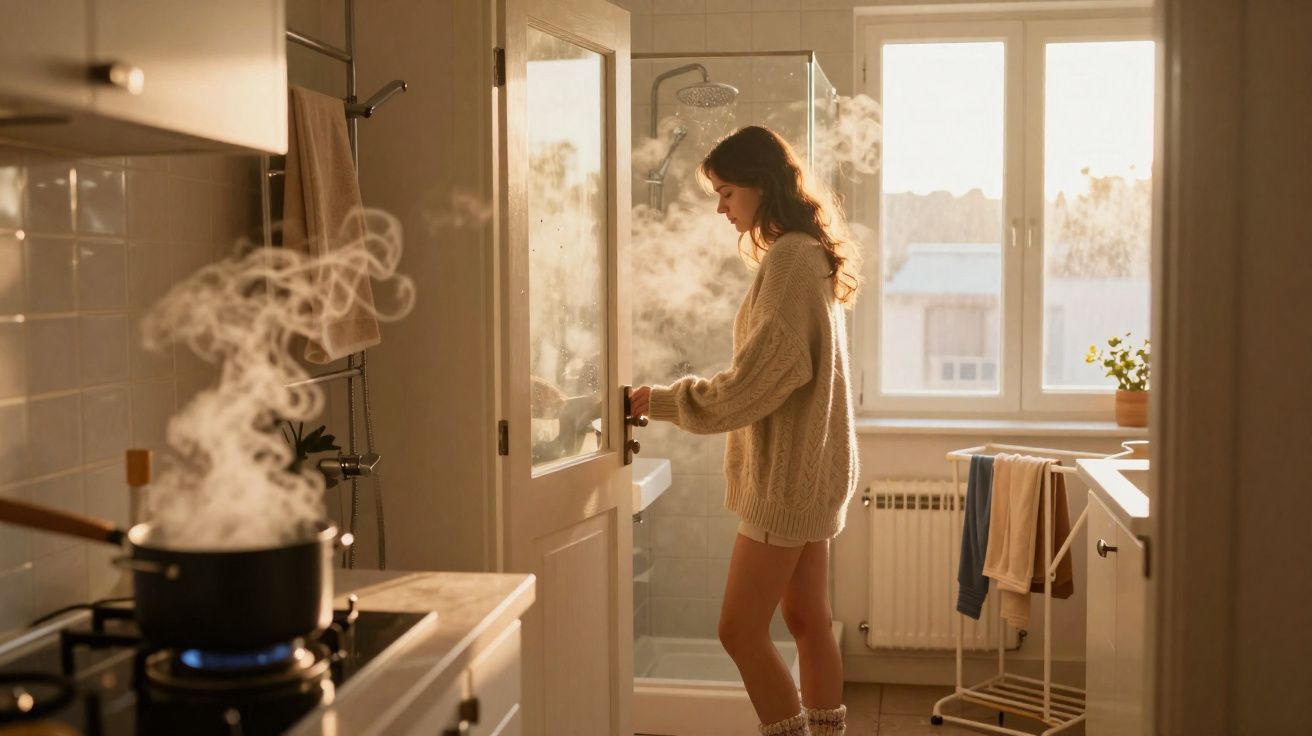
The bathroom is another easy‑to‑miss heat source. A hot bath or long shower produces significant warmth and steam. Usually, that heat is quickly lost through an extractor fan or an open window used to clear moisture.
A more deliberate method works in two phases. Keep the bathroom door closed while bathing to hold onto the warmth, then-once you have finished and the heaviest steam has eased-open the door to let warmer air spread into nearby areas.
A single evening bath can turn an icy hallway into a neutral, more comfortable zone, just by opening one door at the right time.
Ventilation still matters. Fans or windows should run briefly to reduce the risk of mould, particularly in older properties prone to damp. The key is timing: enjoy some of the heat first, then ventilate enough to keep ceilings and walls dry.
Tumble dryers, radiators and hidden domestic radiance
When winter arrives, outdoor washing lines often go unused and tumble dryers do more of the work. The warm air produced during a drying cycle is commonly kept behind a closed door until it cools, or vented away. If you open the door shortly after the cycle ends, that stored warmth can spill into a utility room or corridor.
As with bathroom steam, a little ventilation remains important to avoid condensation. But for a short period, you can release a soft wave of heat that costs nothing extra-because the energy has already been spent drying clothes.
| Source of heat | Typical duration | Where to redirect it |
|---|---|---|
| Electric oven after cooking | 10–20 minutes | Kitchen and nearby rooms |
| Hot bath or shower | 15–30 minutes | Bathroom, hallway, adjacent bedroom |
| Tumble dryer just after a cycle | 10–15 minutes | Utility room, small open‑plan space |
Some households also adjust their layout to make better use of existing warmth. Sofas are moved nearer to interior walls. Chairs are shifted away from chilly external walls where the air feels more draughty. Thick rugs are laid over tiles or bare floorboards to remove the icy feeling underfoot, helping rooms feel warmer even when the air temperature is unchanged.
Timing: the quiet science behind those extra degrees
Beyond any single trick, timing is what makes the biggest difference. The same activity can be wasteful or smart depending on when you do it. Laundry loads, oven use and hot baths have their strongest effect when they are lined up with the coldest parts of the day.
Linking heat‑producing chores to the daily temperature curve turns routine tasks into a coordinated comfort plan.
In practical terms, this usually means:
- Running the dishwasher or washing machine in late afternoon or evening so any residual heat contributes during peak cold.
- Showering or bathing later in the day rather than mid‑morning, when the home is often already less chilly.
- Grouping cooking tasks so the oven is heated once, rather than being turned on and off several times.
Alongside smart scheduling, small measures that slow heat loss make every gained degree count. People use rolled towels or draught excluders at the base of doors, close curtains as soon as daylight fades, and shut off rarely used rooms so heating-whether natural or mechanical-stays concentrated where daily life actually happens.
Money, carbon and comfort: why these tricks matter this winter
Across Europe and North America, energy regulators continue to warn that gas and power markets remain fragile. Even where prices dip, many households still feel the impact of earlier rises. In that context, changes in day‑to‑day behaviour at home can make a meaningful difference.
None of these ideas competes with proper insulation, double glazing or a modern heat pump for long‑term savings. Even so, they can add a flexible layer of resilience. For renters unable to modify their building, and for low‑income households already cutting back on food or healthcare, capturing “waste” heat from everyday routines may be one of the few remaining levers they can realistically pull.
There are also clear limits and potential downsides. Using gas ovens as heaters too heavily brings safety and indoor air‑quality issues. Poorly handled humidity from baths and dryers can encourage mould and worsen respiratory problems. Energy advisers stress moderation and common sense: use residual heat briefly and deliberately, and support it with short, regular ventilation.
From simple hacks to a wider heating strategy
For many people, these small habits become a gateway to a wider reassessment of winter comfort. Once you begin to notice how readily warmth escapes, you are more likely to look for insulation gaps, ageing windows and under‑used rooms that swallow heat. Some local councils already hold workshops that show residents how to spot draughts with a candle, reposition furniture away from cold walls, or seal obvious air leaks with low‑cost materials.
Households that prefer a more data‑led approach sometimes take it further by treating the home like a small experiment. Using inexpensive digital thermometers, they record temperatures before and after cooking or bathing, then work out which actions provide the best comfort boost. That rough tracking helps shape everyday habits: when stews are most worthwhile, when to shut internal doors, how long to leave an oven or dryer door open, and which rooms merit warming versus which can remain cool.
This approach does not depend on advanced technology. It is built on noticing patterns, trying small adjustments and refining routines-accepting that even modest, slightly improvised changes can make winter feel less harsh, one or two quiet degrees at a time.





Comments
No comments yet. Be the first to comment!
Leave a Comment