
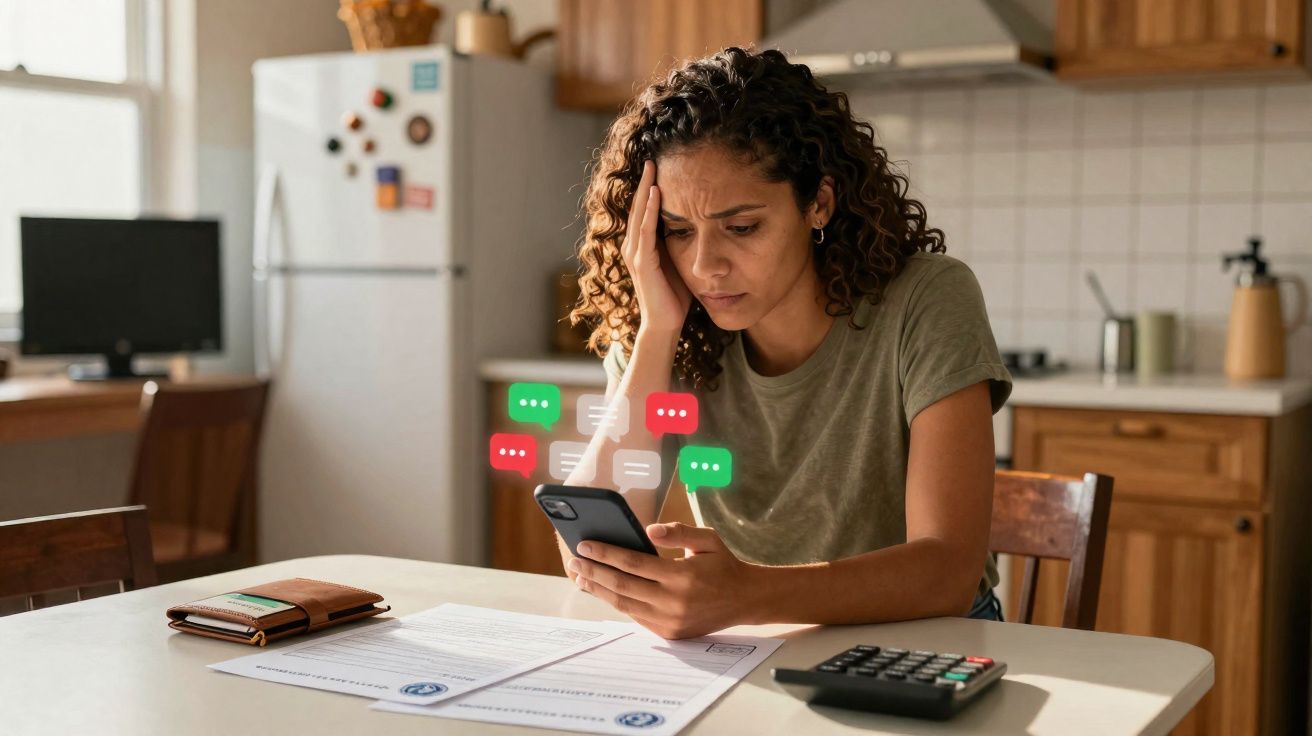
RSA supposedly limited to the unemployed, a king cake reimbursed by Social Security, a “new benefit” that’s dropped from the sky… misinformation about social benefits has found a highly lucrative niche. Social security bodies are trying to fight back, but with limited success.
It only takes a click to find them. Carefully chosen keywords, punchy headlines, short formats tailored for TikTok, YouTube and Facebook: false claims about social benefits are everywhere. And they attract huge audiences.
“We’ve seen a steady rise in the number of fake news items for the past two years,” Damien Ranger-Martinez, Director of Communications at the National Family Allowance Fund (Cnaf), confirmed to Le Parisien. The trend has gathered pace since last spring.
The same observation is being made at Agir-Arens (the supplementary pension scheme for private-sector employees) and at the National Old-Age Insurance Fund (Cnav). “We saw a surge in false information in April 2025,” says Sandrine Toscanelli, Director of Information and the CNAV brand. “They were saying absolutely anything, purely to generate clicks and sell advertising space.”
A well-oiled business model
The people behind this “fake content” often have a straightforward commercial aim. They are professionals who buy domain names and use keywords to pull in readers: the more you click to watch an online video, the more they get paid. And the raw material is easy to source.
Most of the time, the claim seems plausible on TikTok because it starts from something real (a reform under way, a benefit being uprated) that some creators know how to twist to hold attention.
One of the most striking recent examples dates back to the start of the year. Laurent Wauquiez, leader of France’s The Republicans (LR) MPs, publicly protested about Social Security reimbursing a gluten-free king cake. In reality, only people with coeliac disease can request cover for certain gluten-free products, up to €45 per month. But viral videos pushed the entire debate towards the cake, and the buzz largely drowned out the correction.
The fallout can be severe. “It can also fuel tensions in society and stigmatise part of the population,” the Cnaf communications director stresses. With only a few shares, a well-crafted falsehood can turn an administrative mechanism that has existed for years into a supposed tax scandal-further feeding distrust of the redistribution system.
Fake news about social benefits (RSA and Social Security): AI as a chaos multiplier
The phenomenon is not new, but it has changed in character. Producing a convincing fake video has become quick and easy. “AI adds a multiplier effect to this phenomenon,” is how Agir-Arens sums it up. And Google’s algorithm can rank this content positively, sometimes placing at the top of search results a swarm of sites that recycle information without checking it.
There is another, more troubling layer: the possibility of foreign interference. At Cnaf, staff recall clicking on viral videos only to end up on conspiracy forums, or even on Russian disinformation sites. Hard to prove, yet hard to dismiss. “What is certain is that the Russians are very good at spreading false information in order to divide, even if they are not the original source,” one of Le Parisien’s contacts said.
The government is said to have earmarked one billion dollars to fight this disinformation war, using specialist companies that generate credible avatars which enter online discussion networks and create websites.
On the ground, the damage is substantial. Fake news is overwhelming call centres and local offices in day-to-day operations. At Agir-Arens, there are complaints of “a lack of trust in public bodies among claimants”: beneficiaries arrive convinced they are not being told the full story about their entitlements.
In response, social security organisations are increasing reports to the public prosecutor’s office, filing complaints for brand misuse, asking Facebook or YouTube to remove content, and setting up dedicated pages to warn about the latest fake news. But resources remain limited.






Comments
No comments yet. Be the first to comment!
Leave a Comment