
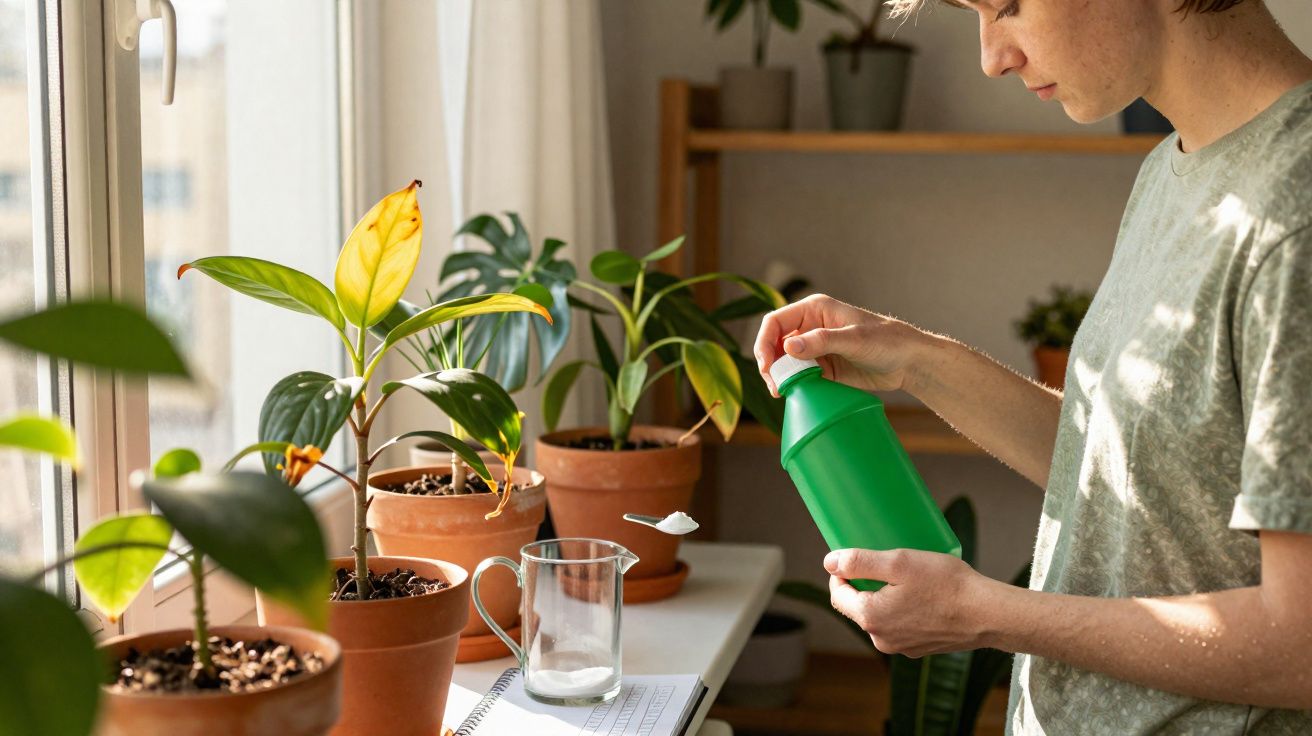
It’s Saturday morning, and somewhere in a third-floor flat a watering can is, once again, being turned into a mixing station. A spoonful of fertiliser here, another splash there - “so the monstera grows nicely”. The packet promises lush green and XXL leaves, and Instagram does the rest. Who wants to be the only one in the group with a droopy pothos?
A few days later, the leaf edges turn brown. The plant looks like it’s nursing a hangover. And what do many people do? More fertiliser, more frequent watering. What starts as love becomes pressure; what’s meant as care turns into overload - for the plant, and if we’re honest, for us as well.
This is exactly where something interesting happens - and it says a lot about how we relate to plants.
When plant love tips into overdoing it
Most of us know the script: you buy a new plant, carry it home almost ceremonially, and quietly promise yourself that this one won’t die. So you search online, ask around, compare advice. And many end up with the same conclusion: plenty of water, plenty of light, plenty of fertiliser - surely that must help. Deep down sits the equation: more effort = better results.
Plants operate on a lower volume. They grow over weeks, not minutes. They “speak” through leaves, not words. If you’re not used to that kind of feedback, anxiety turns into action - and fertiliser is the perfect outlet. It’s quick, it feels helpful, and it’s a bit like an energy drink for anything green.
I once saw a weeping fig (Ficus benjamina) in a shared flat in Berlin that looked like a miserable Christmas tree in February: yellowing leaves, bare branches - and next to it, a massive bottle of liquid fertiliser. The resident told me she’d been giving “extra loads” every two weeks because it kept dropping leaves. A classic vicious circle: the plant was probably stressed by dryness and being moved, so it shed leaves - and the “solution” was to force even more nutrients on it.
Hobby gardening studies suggest how common this pattern is: many hobby growers estimate their fertilising as significantly higher than what the packaging recommends. The drivers are predictable - impatience, uncertainty, and social-media pressure. No one wants to be the person whose plants look “just okay”. So people tweak, optimise and adjust. Often with a perfectly good fertiliser - simply in the wrong dose.
From a biological point of view, over-fertilising is fairly straightforward: salts from the fertiliser build up in the compost, and the water balance around the roots is disrupted. Root cells lose water; they can effectively “burn”. You see it as brown leaf tips, and plants that suddenly wilt even though the soil is damp. The logic of “it looks unwell, so it must need more nutrients” crashes head-on into reality. What it actually needs is recovery: less stress and clean water. Fertiliser isn’t a plaster - it’s more like an espresso shot for someone who hasn’t slept for days.
There’s also a psychological layer: fertilising feels active. You get the sense you’re “doing something”. Waiting, watching, and tolerating mistakes is far harder. Let’s be honest - when your favourite plant is struggling and every online shop is pushing specialist feeds, hardly anyone happily strolls past the fertiliser shelf for weeks on end.
Reprogramming your houseplant fertiliser reflex
A sensible starting point is to make fertilising a routine rather than a panic response. It sounds dull, but it saves lives - plant lives. For houseplants, a mild liquid fertiliser every two to four weeks during the growing season is often enough, roughly March to September. In winter, many species can be left unfertilised altogether because growth slows down. Instead of guessing, it’s worth using a measuring spoon or the line on the cap. For many plants - especially sensitive ones - half the recommended amount is plenty.
If you’re unsure, set a simple calendar reminder or stick a bit of masking tape on the watering can with the date of the last feed. That turns the impulsive “Oh no, it looks limp - quick, fertiliser!” moment into a quiet, predictable rhythm. Plants thrive on consistent slowness.
One of the most common mistakes is changing several things at once: more fertiliser, a different spot, different compost, a new watering pattern - and afterwards nobody can tell what helped or harmed. Many plants respond to stress with similar symptoms: yellow leaves, soft stems, brown tips. If you fight that reflexively with fertiliser, you often end up pouring petrol on the fire. A frank check-in helps: Have I watered a lot lately? Is it in a draught? Was it repotted?
Another overlooked issue is hidden fertiliser sources. Fresh compost is often pre-fertilised; slow-release feed can sit in the mix as colourful pellets. Add liquid fertiliser on top and the roots end up soaking in a nutrient soup they never asked for. Plants aren’t elite athletes who need daily protein shakes. Many cope better with “make-do” conditions than we expect.
A plant seller with 30 years’ experience once told me:
“Most plants don’t die because nobody cares. They die because someone wanted too much.”
It helps to install a few mental guardrails around fertiliser:
- Recognise the growing season: Only feed when the plant is actually growing (new leaves, shoots, roots).
- Don’t “feed” sick plants: Find the cause first (light, watering, pests), then act gently.
- Less is more: If in doubt, use half the dose - over-fertilising is harder to fix than mild underfeeding.
- Flush regularly: Every few months, water thoroughly with plenty of clean water to dissolve accumulated salts.
- Learn to pause: After stress (repotting, moving location), don’t fertilise at all for 2–3 weeks.
If you treat these points like a small internal cheat sheet, you’ll notice something quickly: plants often respond better to calm than to constant intervention - a sort of quiet agreement between you and your potted greenery.
Why less fertiliser often leads to better plants
In the end, fertilising touches something bigger: our pace of life. We live in a mode where growth is meant to be visible, measurable and shareable. With plants, that only works to a point. They don’t adjust to our schedules out of politeness. A pothos doesn’t care about your content plan; a fiddle-leaf fig doesn’t care about your moving date. Try to shove them forward with nutrients and you’ll quickly discover how stubborn real biology can be.
People who drastically cut back their feeding routine often report surprising changes: fewer brown tips, steadier growth, and far fewer mysterious “it was fine вчера and now it’s dead” moments. The focus shifts away from “What else can I add?” towards “What can I remove so the plant can cope more easily?”. Patio plants that get a small dose of fertiliser only every four weeks often look more relaxed than those given a new specialist mix every week.
Maybe that’s the small lesson a pot of basil on the kitchen windowsill is trying to teach: not every problem needs another bottle from the garden centre. Sometimes it only needs time, light, water - and the nerve to do one thing less. Many of us already have enough fertiliser at home; what we lack is the confidence not to tip it into the watering can at every wobble. If you like, share this with people who “over-care” for their plants out of love - not to judge them, but to try out what a calmer approach to fertilisers feels like. Perhaps the overactivity turns into something far more valuable: a quiet, steady friendship with your own indoor jungle.
| Key point | Detail | Benefit for the reader |
|---|---|---|
| Over-fertilising is widespread | Uncertainty and overactivity often lead to feeding too often and too strongly | Recognises their own habits and can question damaging routines |
| Biological effects of too much fertiliser | Salt build-up in the compost, root damage, brown leaf tips, wilting despite moisture | Understands symptoms better and stops reaching for fertiliser on autopilot |
| A simple, gentle feeding plan | Lower doses, clear intervals, pauses during the dormant period, flushing the compost | Practical guidance for healthier plants with less effort |
FAQ
- How can I tell if I’ve used too much fertiliser? Typical signs include brown or scorched leaf tips, whitish crust on the soil surface, sudden wilting despite damp soil, and a “chemical” smell when watering. If several of these appear at once, pausing fertiliser and thoroughly flushing the compost is sensible.
- Should I fertilise a sick plant to make it stronger? Usually not. Unwell or stressed plants often can’t process extra nutrients. Check light, water, temperature and possible pests first. Once it has recovered, you can resume feeding carefully - at a low dose.
- Is pre-fertilised compost enough for houseplants? For new plants or straight after repotting, pre-fertilised compost is often sufficient for 4–8 weeks. During that time, you generally don’t need additional liquid fertiliser. After that, you can start slowly with a low concentration.
- How often should I fertilise during the growing season? For most houseplants, a liquid fertiliser every two to four weeks between March and September is enough. Slow-growing species often manage with even longer intervals. Better slightly less often but consistently than constantly “in between”.
- Can I reverse over-fertilising? In many cases, yes. Remove the plant from its outer pot, then flush the compost slowly with plenty of lukewarm water until it runs clear from the bottom. After that, don’t fertilise for several weeks and water normally. Severely damaged roots can reduce the chances, but plants often recover surprisingly well.





Comments
No comments yet. Be the first to comment!
Leave a Comment