
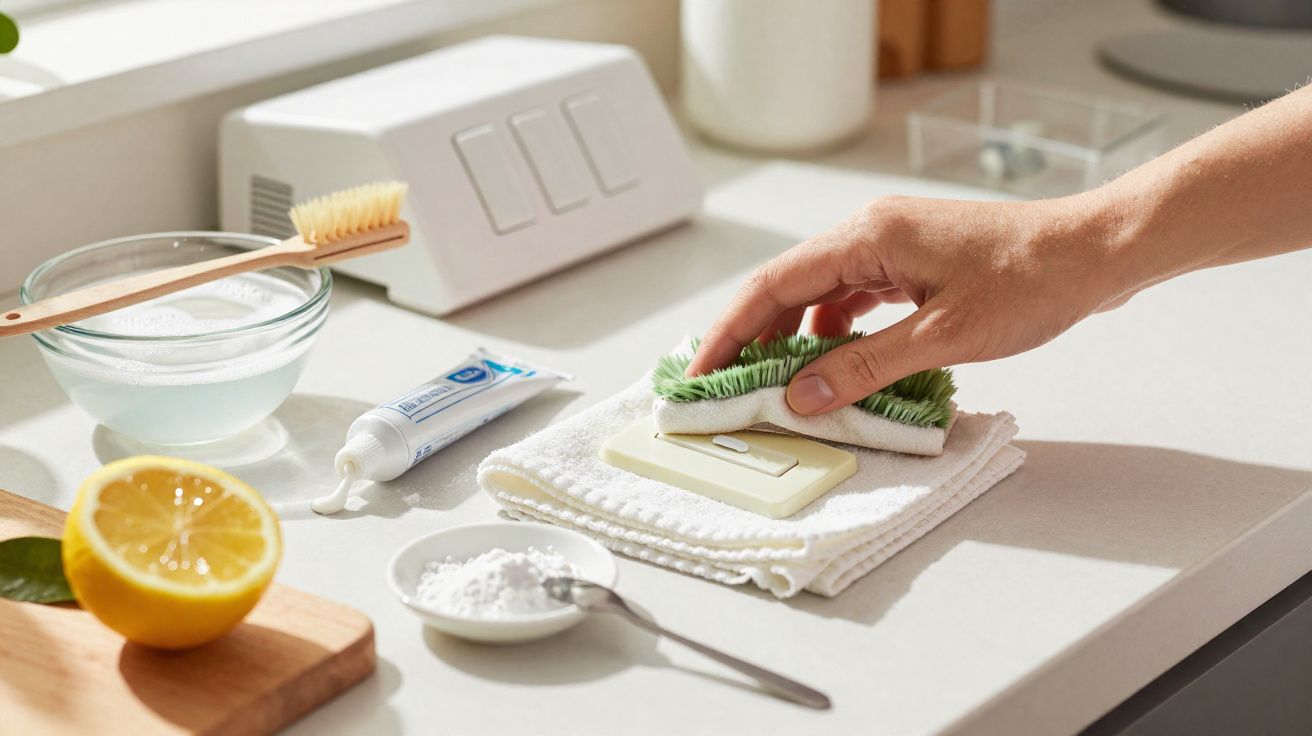
White switches, food processors and plastic storage boxes can suddenly look beige rather than bright - and instantly appear old and grubby.
Many household appliances and plastic parts shift colour over the years. What started as a clean white often turns into a yellowish haze that ordinary wiping won’t remove. The good news is that, with a few targeted methods, a bit of patience and the right products, you can restore a lot - frequently without harsh chemicals and without damaging the material.
Why plastic turns yellow in the first place
To choose an approach that actually works, it helps to understand what causes the discolouration. Not every yellow tint is the same, and not every technique suits every type of plastic.
"The main enemies of white plastic are direct sun, prolonged heat and greasy build-up."
Sunlight (UV) attacks certain components in plastics - common in light switches, kitchen appliance housings and older computer keyboards. Heat from hobs, ovens or internal heating elements speeds the process up. Over time, pigments and plasticisers react, leaving surfaces looking yellowed and dull.
There’s also a second, very domestic culprit: grease. In kitchens, an invisible film settles on handles, extractor hoods, microwaves and switches. That layer traps dust and often creates an uneven, patchy yellow cast.
Common cleaning mistakes that make it worse
Being too rough with plastic usually backfires. The most frequent missteps include:
- using very hot water, which can warp plastic or leave it looking matt
- heavy-duty abrasives and coarse sponges that create fine scratches
- chlorine-based bleach, which can attack the material
- putting parts in the dishwasher when they are not dishwasher-safe
Even small scratches act like tiny valleys: grime collects in them and darkens the surface, making the plastic look even more aged.
"Before any treatment: check the material and test on a hidden area."
A good test spot is on the back, beneath a lip, or on an inner surface - anywhere you can see whether a product dulls, stains or damages the finish.
Bleaching yellowed plastic with hydrogen peroxide
Hydrogen peroxide - often sold as “hydrogen peroxide solution” - is one of the most effective options for yellowed plastic, especially items that were originally very pale or white.
What you’ll need
- hydrogen peroxide solution at a suitable concentration
- household gloves
- cling film or a shallow tray
- soft cloths or a brush
Before you begin, the pieces should be clean and free of grease. Remove surface dirt using a mild washing-up liquid, then dry thoroughly.
How to apply it
- Put on gloves and protect the worktop.
- Apply hydrogen peroxide evenly to the yellowed areas - place small parts in a tray, and coat larger surfaces using a brush or cloth.
- Cover with cling film to stop the liquid evaporating too quickly.
- Leave for several hours depending on how strong the yellowing is; many people choose a bright spot because light can support the effect.
- Rinse very well with clean water and dry.
For heavily yellowed items, repeating the process can help. The key is to keep checking that the plastic is not becoming brittle or developing blotches.
"Hydrogen peroxide can visibly refresh plastic - but leaving it on too long or using too high a concentration can damage the surface."
Polishing away light yellowing with toothpaste
Toothpaste works like a very gentle polish, making it useful for mild yellowing and grey haze - for example on light switches, remote controls or appliance casings.
Choosing the right toothpaste
Plain white pastes without coarse particles are best. “Extra whitening” types that contain a lot of abrasives, or gel toothpastes with colourants, are less suitable as they may scratch the plastic or cause staining.
Step by step
- Clean the surface with a slightly damp cloth, then dry it.
- Put a small amount of toothpaste onto a soft cotton cloth.
- Rub over the yellowed areas using small circular motions.
- For grooves and textured surfaces, use a soft toothbrush.
- Wipe off thoroughly with lukewarm water and buff dry.
This approach is most effective when the surface is simply dull and lightly discoloured. If the yellowing is deep within the plastic, it has clear limits.
The powder paste trick: baby powder and starch against grease
If grease is the main reason for the unattractive colour - for instance on handles, kitchen fronts or extractor hoods - a blend of baby powder (or talc) and cornflour can be very effective.
Mix a simple “powder paste”
- baby powder or talc: 2 tablespoons (approx. 30 ml by volume)
- cornflour: 2 tablespoons (approx. 30 ml by volume)
- a little water to make a thick paste
- optional: a splash of lemon juice
Combine the two powders, then add water drop by drop until you get a spreadable paste. If you like, add a little lemon juice - it can enhance the freshening effect and has a mild bleaching action.
How to use the paste
- Clean the area and let it dry.
- Spread the paste evenly, working it into less accessible crevices too.
- Leave it for several hours, ideally overnight.
- Remove the dried layer with a damp cloth.
- Rinse carefully so no white residue remains.
"The powder mixture absorbs grease and dirt like a sponge and can noticeably brighten the overall appearance."
On strongly textured surfaces such as vent grilles or ridged handles, a second round can be worthwhile.
Lemon for freshness, odour control and a slight sheen
Lemon juice is not usually the main solution for heavy yellowing, but it works brilliantly as a “finish” once the plastic is already clean.
Ways to use it
- apply neat to a cloth and wipe over the surface
- dilute with a little water as a gentle cleaning solution
- combine with a little salt or bicarbonate of soda for a mild polishing effect
The juice helps neutralise smells, loosens light residues and makes surfaces look fresher. On sensitive plastics, it’s better to dilute it and avoid long contact time, as too much acidity can leave the finish looking dull.
Keeping pale plastics looking good for longer
If you don’t want the same problem to return a few months after all the effort of brightening, a few simple habits help.
- Wipe down appliances briefly after cooking or frying, before grease layers build up.
- Avoid leaving white plastic parts in direct sunlight for long periods.
- When planning a kitchen layout, allow distance from particularly hot zones.
- Choose gentle cleaners, microfibre cloths or soft cotton cloths.
- Schedule an occasional quick “refresh” clean with a mild product.
"A light, regular care routine avoids drastic rescue missions with stronger products."
When you need to be cautious
Not all plastics behave the same way. High-gloss finishes, clear covers and parts with printed icons need extra care. Strong products can damage logos, markings or displays.
With sensitive electronics such as computers, games consoles or older games-console housings, protect the internal components or treat only removable parts. Moisture and electronics do not mix well, even if you’re only cleaning the exterior.
Practical examples from everyday life
In the kitchen, combining methods often pays off: degrease first with washing-up liquid, then freshen individual switches with toothpaste, and finally wipe fronts with a little lemon water. In bathrooms and hallways - for example light switches and socket surrounds - the toothpaste method alongside routine cleaning is often enough.
On older appliances such as kettles, toasters or retro-style food processors, hydrogen peroxide treatment can take years off the look. Make sure you follow the instruction manual, and apply the product only to the plastic casing - not to metal parts or rubber seals.
If you’re unsure, begin with the gentlest options first: toothpaste, lemon water or the powder paste. If you see improvement, you can avoid stronger chemicals and, at the same time, be kinder to both the material and the environment.






Comments
No comments yet. Be the first to comment!
Leave a Comment