
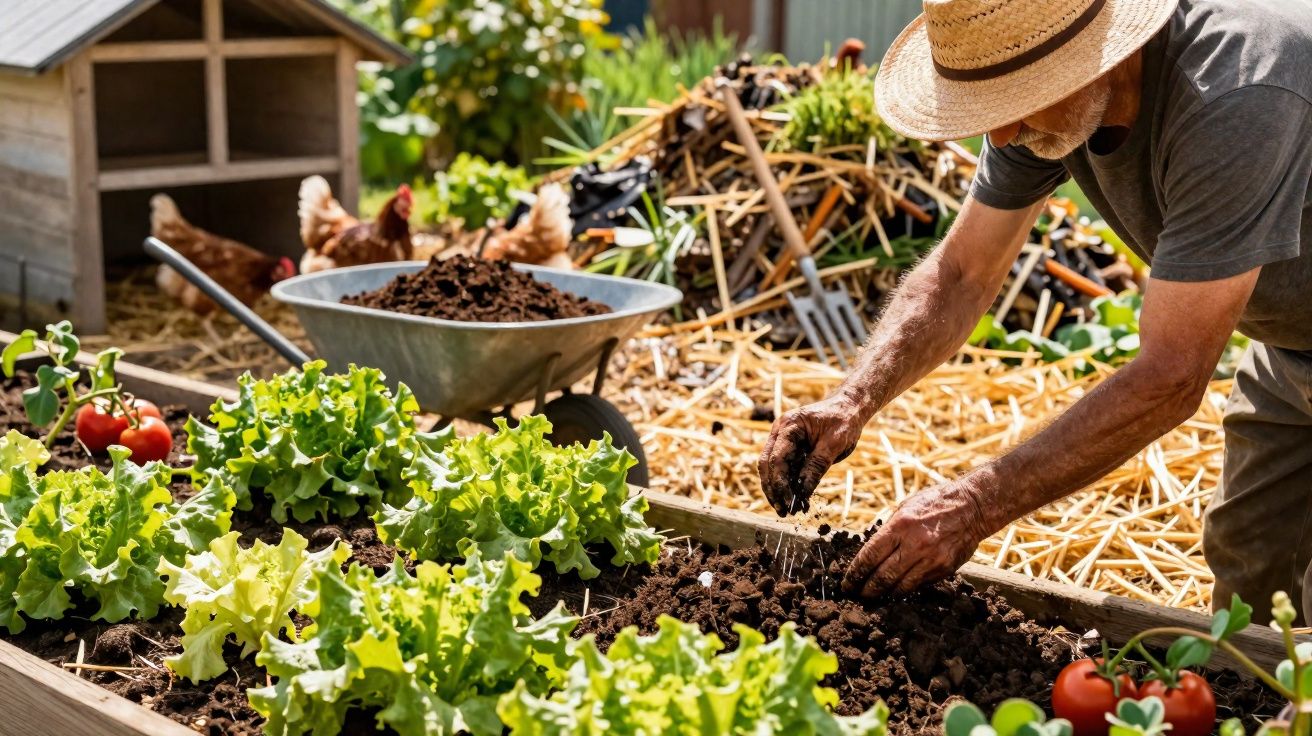
Many hobby gardeners reach for bags of specialist fertiliser as soon as spring arrives. If you keep chickens, though, you already have a powerful fertiliser at home - freshly produced every day. Chicken manure from the coop can feed beds and fruit trees with nutrients that easily rival shop-bought products. The key is turning this “waste product” into a gentle, highly effective soil tonic.
Why chicken manure is so valuable in the garden
Among commonly used animal manures, chicken manure is considered a real powerhouse. It contains far more nitrogen, phosphorus and potassium than manure from cattle, sheep or horses - and those are exactly the nutrients that drive growth, flowering and fruit set.
“When prepared properly, coop manure becomes ‘black gold’ for tired soils.”
In day-to-day life, dirty bedding often ends up casually tipped onto the compost heap - or even put in the general waste. That throws away a free source of nutrients that can work wonders, especially in vegetable beds.
What’s actually in chicken bedding
When you clean out the coop, you typically end up with a mixed bundle of:
- straw or wood shavings
- feathers
- chicken manure
- leftover feed and sand
The most interesting material sits directly beneath the perches. That’s where most droppings collect - highly concentrated, and therefore especially nutrient-rich. This mix is the foundation for the fertiliser you’ll use later.
The risk: fresh chicken manure can scorch plants
As potent as chicken manure is, it’s also risky if applied directly. Fresh manure behaves like an overly strong liquid feed, and the roots and leaves of young plants are particularly sensitive.
If you spread bedding straight from the coop onto a bed, the following can happen very quickly:
- roots get burned and plants wilt from the base upwards
- leaves develop brown edges and blotches
- seedlings die within a few days
Gardeners call it a “hot” fertiliser: too much nitrogen delivered too fast. The soil may cope, but plants often cannot. That’s why chicken manure needs a maturation period before it goes anywhere near beds or fruit trees.
Six months of rest: manure turns into fine compost
How the maturing process works
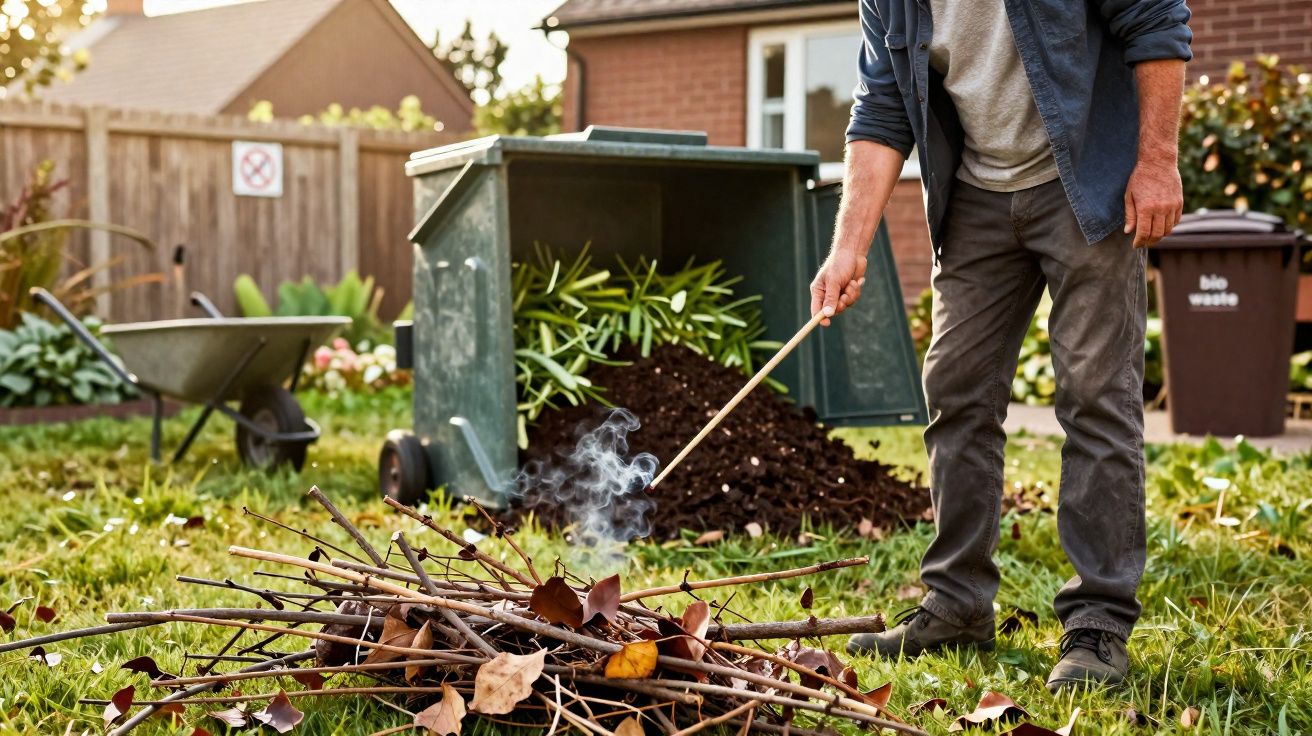
The safest route is composting. Coop bedding can go onto a dedicated heap or be added to the main compost. From there, a slow transformation begins:
- the heap heats up, killing germs and weed seeds
- the structure breaks down so everything becomes finer and more crumbly
- the sharp smell fades, leaving an earthy scent behind
After roughly half a year, the aggressive mix becomes a mild, plant-friendly compost. The nutrients are still there, but now in a form that plants can absorb gradually.
Moisture and air: without care, there’s no good fertiliser
For composting to work well, the heap needs a little attention:
- Check moisture: it should feel like a wrung-out sponge. Too dry slows decomposition; soaking wet leads to rotting.
- Turn it regularly: about every three weeks, loosen and shift the heap with a garden fork. This adds oxygen and keeps microorganisms active.
“The better the heap is aerated and kept evenly moist, the quicker sharp manure becomes a fine, crumbly premium compost.”
How to apply chicken manure compost in the bed
Vegetable beds: a thin layer, a big effect
Once it has matured, the manure compost is ready to use. For hungry vegetables, it works well as a “nutrient crust” around plants:
- Layer thickness: 2 to a maximum of 3 centimetres
- Distance from stems: leave a few centimetres clear so nothing rots
- Best timing: in spring after planting, or in early summer
These crops benefit especially:
- tomatoes
- courgettes and pumpkins
- aubergines
- brassicas such as broccoli or white cabbage
With every watering and each rainfall, small amounts of nutrients dissolve and move down to the roots. Plants grow vigorously, develop thicker stems and lush leaves - without synthetic fertiliser.
Fruit trees and berry bushes: a ring, not a mound
Chicken fertiliser also works beneath apple trees, blackcurrants and raspberries. Here, a ring application is usually best:
- mark the area under the canopy
- lay a continuous circle of compost, 2 to 3 centimetres thick
- leave a gap right next to the trunk so nothing rubs against the bark
The finest roots sit mainly around the canopy’s outer edge. That’s exactly where the compost layer delivers nutrients. The following year, woody plants often respond with more blossom, sturdier shoots and larger fruit.
A protective layer on top: why mulch is the quiet star
Straw, hay, lawn clippings: a lid for the nutrient buffet
If compost is left exposed, nutrients can be lost through sun, wind and heavy rain. That’s why the compost layer should be covered with a second layer of plant material, such as:
- clean straw
- hay without heavy seed heads
- slightly dried lawn clippings
- chopped herbaceous plant cuttings
This mulch cover does several jobs at once:
- it keeps the soil moist for longer
- it prevents nutrients from being washed away
- it slows weed growth
- it stops hard surface crusts forming after rain
“Compost from the coop plus a plant cover on the bed - this double approach makes beds noticeably easier to maintain.”
How soil life turns it into “luxury soil”
Under a mulch layer, earthworms, woodlice and countless microorganisms thrive. They break down both compost and mulch, blend them into the existing soil, and create channels and air spaces as they work.
The results in the soil:
- the ground becomes looser and water infiltrates more easily
- roots find more air and room to grow
- the topsoil turns dark and finely crumbed, holding water like a sponge
From coop waste to a system: gardening in your own nutrient cycle
Financial and environmental benefits
Anyone who uses chicken manure from the coop consistently can save real money. Expensive bags of specialist fertiliser become unnecessary - or at least far less frequent purchases. At the same time, you reduce the amount of waste that needs disposing of.
For many people who grow a lot of their own food, there’s another benefit: more control over what goes onto their land. You know exactly what you’re putting into the soil, instead of guessing what additives an industrial producer may have included.
Where the limits and risks are
Even with all the enthusiasm, using chicken manure requires a bit of judgement:
- never spread fresh manure on beds; always compost it thoroughly
- on very heavy clay soils, apply a thinner layer
- in dry summers, water regularly so nutrients can actually reach the roots
If you’re using chicken compost for the first time, it’s wiser to start with a smaller area. That makes it easier to see how vegetables and fruit trees respond, and to adjust quantities next year.
Practical, everyday examples from the garden
A common scenario looks like this: in autumn, the coop is fully mucked out and the material goes onto a separate heap in a corner of the garden. In spring, you add a bit of lawn clippings and dry leaves, turn the heap once or twice - and by late summer you have fine compost ready to use.
The next year, it’s worked into beds around tomatoes, peppers and cucumbers, then topped with a thin mulch layer of straw. Many hobby gardeners report stronger plants, less watering, and tomato vines that keep producing for an impressively long time.
At the same time, you can reserve some compost for one or two fruit trees. A narrow ring beneath the canopy is enough to produce visibly fuller fruit bowls on the kitchen table after two years.
If you want to understand your soil better, simple checks can guide you: if a hard crust forms after rain, add more mulch. If water drains poorly, a mix of coop compost and coarse structural material such as chipped branches can help. Combined with regular use of chicken manure fertiliser, this gradually builds a living, resilient soil that copes better even with weather extremes.




Comments
No comments yet. Be the first to comment!
Leave a Comment