
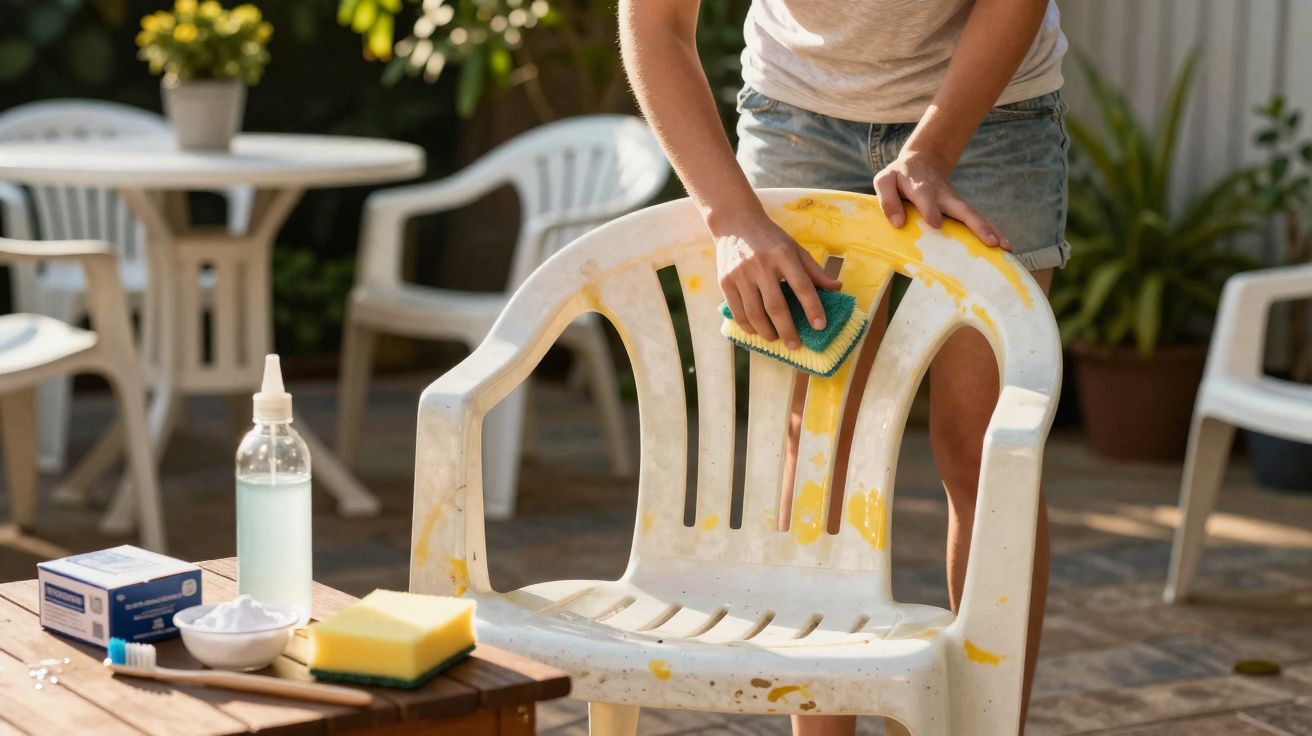
There’s no need to cart them straight off for bulky waste.
A lot of people only realise how battered the patio really looks when the first warm weekend arrives: the table is stained, the stackable chairs are dull and yellowed, and the whole garden set looks older than it actually is. Rather than spending on expensive replacements, plastic can often be revived surprisingly well with a simple blend of cleaning products you probably already have in the kitchen cupboard.
Why plastic garden furniture looks shabby so quickly outdoors
Plastic has a reputation for being tough, low-maintenance and weather-resistant. Rain, hail and damp air are usually no problem for a plastic garden set. The real culprit is elsewhere: sunlight, temperature swings and everyday grime gradually attack the surface.
UV light slowly roughens plastic at a microscopic level. It loses its shine, turns matt and becomes slightly porous. Those tiny pores then trap whatever is floating around outside: dust, pollen, soot, algae and mould spores. On light-coloured or white plastic, these deposits stand out particularly clearly-so it can quickly take on a grey, beige or yellowish cast.
It helps to tell these two situations apart:
- Just dirty: the plastic looks matt, blotchy, slightly greyish or greenish, but still feels smooth and solid.
- Already damaged: the surface looks chalky, rubs off when touched, or the chair shows small cracks or breaks.
In the first case, a thorough clean with the right mix is usually enough. In the second, the material has genuinely aged-at that point you can only disguise it (for example with specialist plastic paint) or dispose of it properly.
"Before you reach for a brush, do a safety check: a cracked plastic chair can suddenly buckle under weight."
The easy household cleaning mix from the kitchen cupboard (for plastic garden furniture)
For most yellowed or dull plastic garden furniture, a combination of three classics found in many homes does the job: soapy water, a vinegar cleaner, and bicarbonate of soda (baking soda).
Ingredients that tackle greying and yellowing
- warm water
- standard white vinegar cleaner or plain white vinegar
- bicarbonate of soda (baking soda), and for extreme cases a small amount of washing soda as well
- liquid soft soap, bar soap, or a little washing-up liquid
- optional: a cleaning stone for heavily soiled white surfaces
For a bucket with about 3 litres of warm water, this ratio has proved effective:
- about 250 millilitres of vinegar cleaner
- 3 tablespoons of bicarbonate of soda
- a generous squirt of soap or washing-up liquid
The mixture will start to foam slightly-this is intended. Use it straight away while the reaction is still active.
Step-by-step: how to brighten up your garden furniture
- Remove loose dirt: brush off cobwebs, leaves and dry dust first using a hand brush or a soft brush.
- Dampen the surfaces: quickly rinse the furniture with clean water so the cleaner clings better.
- Apply the mixture: dip a sponge or soft cloth into the bucket and rub it in generously over the surfaces.
- Let it work: for obvious stains, grey film or yellowish areas, leave it for 10 to 15 minutes.
- Scrub gently: go over it with a soft brush or the rough (but non-scratching) side of a sponge.
- Rinse thoroughly: hose down or use a watering can until no foam remains.
- Allow to dry: dry with a microfibre cloth to prevent water marks.
"On yellowed white plastic, extra bicarbonate of soda boosts the effect-but on coloured plastic, use it sparingly so you don’t dull the colour."
What to do differently with heavily yellowed or coloured garden furniture
Bright white plastic furniture left in full sun for several summers often develops a stubborn yellow tinge. In that case, it can be worth treating the worst patches more intensively.
White furniture: tackling the extreme cases
If you want to target strongly discoloured areas, work more locally:
- mix bicarbonate of soda or a small amount of washing soda with a little water to form a thick paste
- apply the paste directly to the yellowed patches
- leave for 10 to 20 minutes-do not let it dry out
- massage in with a soft brush, then rinse very thoroughly
A cleaning stone can also help lift ingrained road grime and stubborn build-up. Always test first in an inconspicuous spot to see how the plastic reacts.
Coloured and anthracite garden sets
With grey, green or other coloured seating sets, the emphasis should be on soapy water and vinegar. Too much bicarbonate of soda or washing soda can fade the surface and leave colours looking flatter. In that case, keep the mix gentler and instead allow a little longer for it to work.
Mistakes that permanently ruin plastic furniture
Many people automatically reach for products that work well in the bathroom or kitchen-but can damage outdoor plastic furniture.
- Chlorine cleaners and strong bleaches: they may remove marks at first, but they attack the plastic, making it brittle and blotchy.
- harsh solvents: limescale removers or oven cleaners don’t just dissolve dirt-they can also damage the surface itself.
- wire wool and hard scouring pads: they create fine scratches where dirt quickly collects again, so the chair looks grimy again soon after.
- pressure washers: on already aged plastic, the forceful jet can cause material to flake off.
- oil or cooking oil for “polishing”: it sounds clever, but it doesn’t work-furniture becomes greasy, attracts dust and soon looks worse than before.
"If you scratch, bleach or roughen plastic, you only get a brief win-over time the condition gets noticeably worse."
Enjoy your garden set for longer with minimal effort
To stop your furniture looking like it’s been pulled from the shed of an abandoned campsite every spring, a small routine makes all the difference. It takes little time, but prevents stubborn build-up from forming.
In-season cleaning rhythm
During the months you regularly sit outside, simple habits are enough:
- wipe down every two weeks with warm soapy water
- don’t leave blossom dust or bird droppings to sit for weeks
- don’t leave glasses and plant pots standing without coasters, otherwise rings will form
If you stack the chairs when not in use and keep them under a parasol or a cover, you significantly reduce direct UV exposure. That noticeably helps preserve the shine.
Proper storage during the colder months
At the end of the season, it’s worth doing a slightly more thorough job:
- clean the garden furniture once properly
- let everything dry completely so moisture doesn’t sit in gaps and seams
- if possible, store in a shed, garage or a dry cellar
- alternatively, use sturdy protective covers that still allow air to circulate
Even though plastic won’t rust or rot, constant damp, frost and winter sun will make it age faster. If you spare it those stresses, you’ll keep the garden set longer-and need to replace it far less often.
When repairs are no longer worth it
No cleaning trick overrides one hard limit: safety. A chair with cracks in the legs, or a seat that crackles when you press down on it, no longer belongs on the patio-it should be disposed of. Paint cannot restore structural strength.
If you want to improve the look of older pieces, you can use specialist paints designed for plastic after cleaning. They can mask faded tones and small visual flaws. The surfaces must be completely grease-free and dry first, otherwise the paint will not adhere.
For many households, the best approach is a combination: give everything a deep clean with household products, discard any risky pieces, and keep using the rest in good condition. That saves money, reduces waste, and lets you enjoy summer on chairs that no longer bring bulky waste day to mind.



Comments
No comments yet. Be the first to comment!
Leave a Comment