
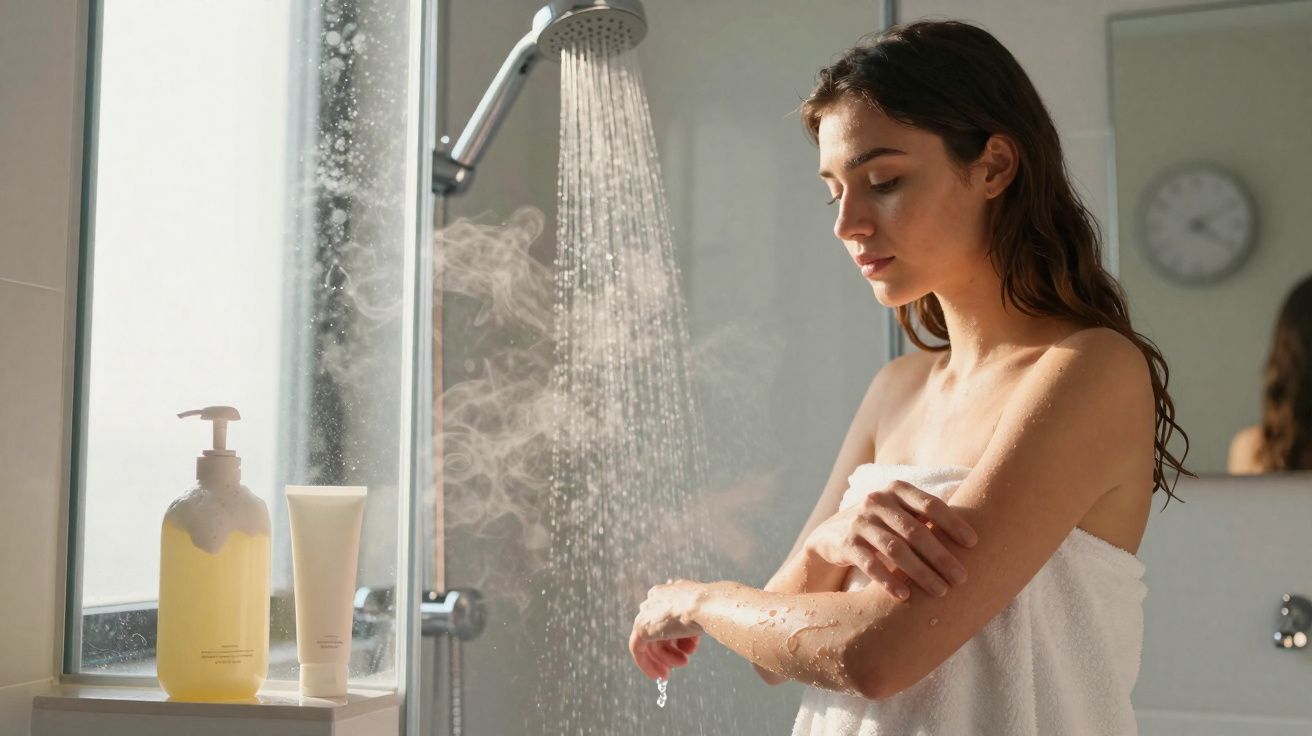
The bathroom fills with steam, the mirror turns foggy, and you’re standing under the spray convinced you’re doing your skin a favour.
A hot shower, a nicely scented shower gel, that gratifying “squeaky clean” finish. Then you spot yourself in natural daylight and wonder why your face and legs look dull, tight - almost ashen. You swap moisturiser. You blame the weather. Perhaps your diet. Hardly anyone suspects the shower. Yet for many people, that’s exactly where the slow, quiet damage starts: day after day.
There’s a small, almost imperceptible error in the way many of us wash. It doesn’t burn or sting, so it flies under the radar - until, one day, it doesn’t.
The silent mistake in your shower routine that’s drying out your skin
Most of us assume the villain is simply hot water or a harsh soap. Sometimes it is. But the habit that most reliably leads to dry skin is subtler: spending too long under running water, using too much foam, and cleansing areas that don’t actually need that level of washing every single day.
What feels like self-care can quietly become over-cleansing. A long, hot shower is soothing and can feel almost therapeutic, particularly after a hard day. You stay under the stream, letting fragrant suds slide over your arms and legs. It’s a mini spa moment. Your skin, however, interprets it as repeated removal of natural oils and protective lipids. Wash after wash, the skin barrier weakens.
In theory that can sound vague. In an actual bathroom, it often looks like this: a 12‑minute shower, body wash from neck to toes, plus a scrub once or twice a week “just to be thorough”. The water is nearly as hot as you can bear because cooler water doesn’t feel “properly clean”. You step out pink, wrap yourself in a towel, scroll your phone for five minutes, and only then consider applying lotion.
Dermatology clinics see the consequences in slow motion. Eczema flare-ups after winter, unexplained rough patches on the backs of the upper arms, shins that itch at night. People are convinced they have “naturally dry skin”. When clinicians ask about shower habits, a pattern often emerges: long, hot showers with full-body lather every day. The issue isn’t one dramatic mistake, but a daily micro-error. Over time, skin can seem to “forget” how to stay comfortable without constant effort.
Here’s the logic your skin follows. The outer layer - the stratum corneum - is often described like brickwork: skin cells are the bricks, and natural oils and lipids act as the mortar. Long, hot showers soften and dissolve that mortar. Meanwhile, surfactants in shower gels lift away not only dirt and sweat, but also those protective lipids. Once the barrier thins, water escapes from the skin faster than any cream can replace it. That creates a loop: the drier your skin feels, the more you crave long, comforting showers - which then dry you out further.
How to shower without wrecking your skin barrier
You don’t need to replace everything on your bathroom shelf. The solution is mostly about changing the choreography of your shower: think targeted cleansing, brief contact, quick comfort, rather than a long soak with full-body foam.
- Shorten the shower to roughly five minutes on most days.
- Use lukewarm water - warm enough that you still get some steam, but not so hot that your skin turns pink.
Next, be strategic with cleanser. Use soap only on areas that genuinely need daily washing: underarms, groin, feet, and any visibly dirty areas. For many people, arms, back and legs don’t need a heavy lather every day unless you’ve been sweating, training, or doing physical work.
Choose a mild, low-fragrance cleanser labelled for dry or sensitive skin. And treat “squeaky clean” as a warning sign, not a goal: that squeak is often your natural oils being stripped away.
Changing a shower routine isn’t about being perfect; it’s about testing what your skin responds to. On a freezing Tuesday morning, you’ll want hot water like a hug - fair enough. Instead of going “all or nothing”, lower the temperature slightly and shave a minute or two off. If you love the foamy cloud of shower gel, use less product but keep the ritual: lather it in your hands first, then spread it with gentle strokes rather than scrubbing.
On hair-wash days, let shampoo run over your body briefly while you rinse, but don’t depend on it to “wash everything”. That mix of surfactants and fragrance can be rough on already vulnerable areas such as the neck or the backs of the knees. Rinse well, step out, and pat your skin dry with a towel instead of rubbing vigorously - a small change that helps protect the barrier you’re trying to rebuild.
Your skin’s favourite moment is the one many of us rush or skip: the three-minute window after you leave the shower. This is when your skin is still slightly damp and most receptive. That’s your best chance to lock water in. Apply a simple, fragrance-free body lotion or cream in a thin, even layer, especially on shins, forearms, and any itchy patches. Think of it as finishing the shower properly, not as an optional extra.
Let’s be honest: hardly anyone manages that every single day. Some nights you’ll climb into bed with towel-dry skin and no energy for body care. That’s normal. The aim isn’t perfection - it’s creating a baseline where, on most days, your shower leaves you comfortable rather than tight and flaky. Small adjustments, repeated, can change the entire story your skin tells.
“Your skin doesn’t suddenly ‘turn dry’ at 30 or 40,” says London-based dermatologist Dr Maya Khan. “It usually reflects years of tiny daily habits in the shower and bathroom. Change the routine, and the skin often surprises you with how resilient it actually is.”
Two often-overlooked factors: hard water and bathroom timing
If you live in a hard-water area (common across much of the UK), minerals in the water can interact with cleansers and leave residue that feels tight or itchy. You don’t need to panic-buy gadgets, but it can help to: use a gentler cleanser, rinse thoroughly, and be consistent about moisturising within that three-minute window. If you already use a water softener, you may find you can get away with even less product.
Timing also matters more than most people realise. If you stand around on your phone in a warm bathroom before moisturising, your skin continues to lose water as it cools and dries. Keeping your lotion where you can reach it easily - and applying it before you’re fully dressed - is often the difference between “fine” and “itchy by evening”.
Here’s a simple checklist many dermatologists wish people would follow:
- Keep daily showers to around 5–7 minutes.
- Use lukewarm, not scalding, water.
- Soap only where it’s needed most each day.
- Skip daily scrubs; keep exfoliation to 1–2 times a week.
- Moisturise within three minutes of stepping out.
Rethinking what “clean” should feel like on your skin
Once you start paying attention to how your skin reacts to different showers, your definition of “clean” often changes. That tight, shiny feeling some people take as proof of freshness is frequently a sign the barrier has been over-stripped. A healthier kind of clean is almost unremarkable: skin that feels calm and soft, not pulling around your mouth when you smile or around your knees when you bend.
This is where the emotional side of showering matters. On a stressful day, a long, hot wash can feel like the only time you get to be alone with your thoughts. You’re not just rinsing off sweat; you’re rinsing off the day. On a deeper level, making the shower shorter or cooler can feel like giving up comfort - which is why many people know what they “should” do, yet default to old habits anyway.
A long, 20‑minute shower on a cold Sunday night isn’t a moral failing. The shift is making it the exception, not the routine. You can trade some of that heat for comfort in other ways: softer towels, a richer body cream, or even a brief massage with lotion as you get dressed. Sensory-wise, these can soothe as effectively as an extra five minutes under the spray.
Most of us recognise the moment when we realise our skin has been signalling for weeks: the itch behind the knee, flakes caught on black tights, hands that look a decade older in winter light. Often, the most effective fix isn’t found in the pharmacy aisle - it’s in the shower routine you’ve been running on autopilot since your teens. Once you adjust the script, the improvement can feel almost suspiciously quick.
Instead of asking, “Which cream will rescue my dry skin?”, a better question is: “What is my skin going through every morning and night?” Less foam, gentler water, faster moisturising - none of these habits look impressive lined up on a shelf. But they quietly rebuild the “mortar” between your skin cells, which is what determines whether you feel like sandpaper or silk when you get dressed tomorrow.
| Key point | Detail | Why it matters to you |
|---|---|---|
| Shower length and water temperature | Keep it to 5–7 minutes using lukewarm water | Reduces moisture loss and helps skin stay supple |
| Where to use soap | Target underarms, groin, feet, and visibly dirty areas | Avoids unnecessary stripping of the protective film |
| Post-shower routine | Apply moisturiser to slightly damp skin within three minutes | Locks water into the skin for longer-lasting comfort |
FAQs
- How do I know if my shower is drying out my skin?
If your skin feels tight or itchy, or looks flaky within an hour of showering, your routine is probably too harsh. Persistent redness after your skin has cooled is another clue.- Is a daily shower bad for dry skin?
Not automatically. Daily showers can be fine if they’re short, lukewarm, focused on key areas, and followed immediately by moisturiser.- Are hot showers always harmful?
Occasional hot showers are fine for most people. When they’re long and daily, they’re more likely to disrupt the skin barrier and worsen dryness.- What type of body wash should I use for dry skin?
Choose gentle, fragrance-free (or low-fragrance) cleansers labelled for dry or sensitive skin. Ingredients such as glycerine, ceramides, or oats are commonly well tolerated.- Can I skip body lotion if I use a moisturising shower gel?
Even “moisturising” shower gels rinse away. A leave-on lotion or cream applied after showering is still the most reliable way to keep skin comfortable.




Comments
No comments yet. Be the first to comment!
Leave a Comment