

The toner stings first.
Then the redness creeps in, slowly, like an unwelcome guest taking over your cheeks. You look down at the cotton pad, baffled: it claims to be “soothing”. “Ideal for sensitive skin.” Your face - hot, tight and protesting - couldn’t disagree more.
Later, half lying in bed, you start scrolling and tumble into a rabbit hole of 10-step routines, viral essences and “must-have” toners. Everyone appears to swear by them. Meanwhile, your skin is practically pleading with you to stop.
So you try something quietly defiant: you skip toner. No cotton pads. No tingling. Just cleanser, serum, moisturiser. One week goes by. Then two. And your skin begins to look… calmer.
That small act of leaving something out leads to a much bigger question.
When “doing less” becomes a radical skincare move for sensitive skin (and skipping toner)
You notice it on an ordinary Tuesday morning, catching your reflection in the mirror. Your face is less flushed than usual. No dry flakes around your nose. The tightness that used to arrive immediately after toning? Gone.
You didn’t discover a miracle in a bottle. You simply stopped using one.
Skipping toner breaks an unspoken rule in modern skincare: more steps equals more glow. But with sensitive skin, every added layer is another opportunity to irritate, strip, or overwhelm. Your skin barrier isn’t a trendy concept - it’s the fine line between “healthy glow” and “why is my face burning again?”
Sometimes the kindest routine is the one that deliberately leaves something out.
Dermatologists have been hinting at this for years, albeit quietly. A London-based dermatologist once told me that for many of her most reactive patients, skin can improve dramatically when they remove a single step: daily toner.
No complicated protocol. No prescription-only fix. Just… less.
Before you start, one practical note: if your skin is flaring, simplify for long enough to see a pattern - and consider taking clear photos weekly in the same lighting. It’s far easier to judge redness, peeling, and tightness when you can compare properly rather than relying on memory.
And don’t forget the unglamorous basics that support a fragile skin barrier: lukewarm water (not hot), a clean towel you pat with rather than rub, and daily SPF. Sun exposure can keep sensitivity simmering in the background, even when your products look “gentle”.
A toner break: what happens when you remove one step
A woman in her thirties told me she’d tried everything to calm her redness: green-tinted primers, “calming” masks, fragrance-free mists. Nothing stuck. Her mornings were a six-step performance, and her nights stretched to eight.
At a friend’s suggestion, she took a month-long toner break. No acids. No floral waters. No clarifying liquids “to balance pH”. She kept a simple gel cleanser, a bland hydrating serum, and a rich moisturiser.
By week three, the peeling around her mouth stopped. The sting she used to feel when stepping outside on a windy day? Noticeably weaker. “It’s like my face finally exhaled,” she said, laughing at how unglamorous her bathroom shelf looked now.
She still scrolls past toner-heavy routines. She just doesn’t feel compelled to copy them any more.
The reasoning is fairly straightforward. Sensitive skin often means a compromised - or easily triggered - skin barrier. That barrier is your defensive wall, built from lipids and cells designed to keep moisture in and irritants out.
Many toners - especially exfoliating or clarifying ones - include acids, alcohols, or plant extracts that chip away at that wall. Even “soothing” toners can come with long ingredient lists packed with actives, fragrance components, and preservatives. Each may be fine on its own, but together they can overload skin that’s already on the edge.
Your skin doesn’t care how aesthetically pleasing your shelf looks. It cares about balance. When you strip it, prod it, and flood it with actives between cleansing and moisturising, it has to work overtime to regain equilibrium.
For some people, removing toner isn’t a loss at all. It’s the breather their skin has been waiting for.
How to skip toner without sabotaging your routine
Going toner-free isn’t the same as ignoring your skin. It’s about reassessing what that “middle step” is genuinely doing for you.
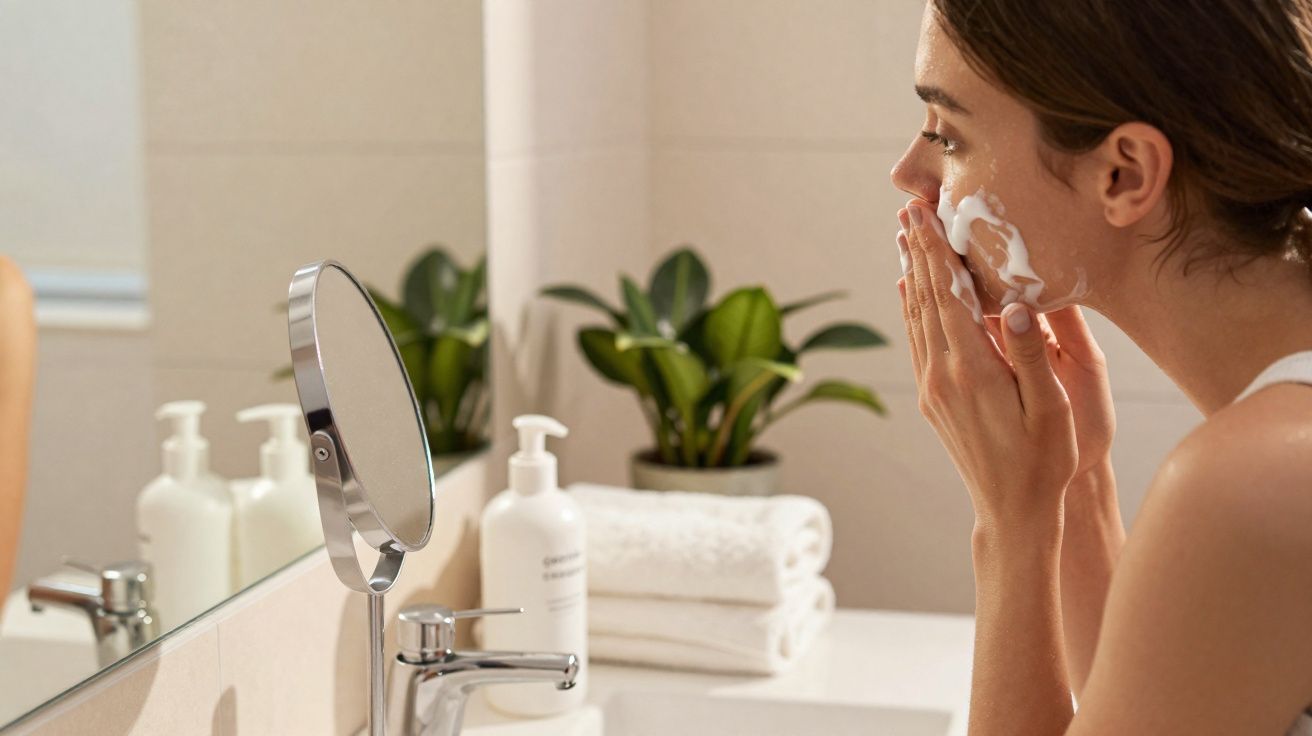
Start by letting your cleanser do the right kind of work: choose something low-foam, fragrance-free, and designed for sensitive skin or a weakened skin barrier. After rinsing, your face should feel comfortable and soft - not squeaky-clean or tight.
Instead of toning, go straight in with hydration while your skin is still slightly damp. A straightforward serum containing glycerin, hyaluronic acid, or panthenol can give you the plump, refreshed feeling you once expected from toner - without the sting.
Then seal it in with a moisturiser that’s a touch richer than you think you “ought” to use. Sensitive skin often does better with extra cushioning.
On a practical level, the switch can feel oddly wrong at first. You might miss the ritual: sweeping a cotton pad over your face, the faint herbal scent, the sense you’re “doing something”.
On a deeper level, there’s often a quieter fear running underneath: what if your pores clog, your skin looks dull, or your old acne comes back because you dared to remove one sacred step?
Here’s what’s usually happening: skin frequently reacts not to what we take away, but to what we keep layering on top of irritation. So give yourself at least three to four weeks of toner-free living before you decide it “didn’t work”. If you crave that fresh, clean sensation, try splashing cool (not icy) water on after cleansing, then press it in with your hands before applying serum.
Let’s be honest: almost nobody actually keeps up, every single day, with those magazine routines featuring ten products spaced out with perfect timing.
“When my patients stop toner, they usually tell me two things,” a dermatologist in Paris explained. “First, their skin feels boring. Then, a month later, it feels stable. And for sensitive skin, stability beats excitement.”
That “boring but stable” mindset can be strangely comforting when you’re staring at your bathroom shelf. It also helps to rewrite the story you’ve been sold about toner: it’s optional, not compulsory.
- If your skin stings within 30 seconds of applying toner, treat it as feedback that your skin barrier isn’t happy.
- If you’re using an exfoliating toner daily and your skin looks red, shiny, and tight, consider reducing frequency or stopping altogether.
- If your routine already includes acids or retinoids, skipping toner often lowers the total irritation load.
- Watch for patterns: better skin on lazy days often means your routine is trying too hard.
When skipping toner changes more than your skin
Something shifts when you decide you don’t have to follow every trend. Skincare becomes less about performing a flawless sequence and more about responding to what’s actually happening on your face that morning.
You start picking up subtler signals: a patch of tightness that appears after a new product, how your cheeks flush differently in winter, the mornings your skin looks best after you did almost nothing.
On a cold evening, you might find yourself at the mirror with wet hands and a simple moisturiser, realising this unremarkable moment is now your normal. No drama. No tingling. Just skin being skin.
In a group chat, the conversation may drift from “Which toner should I buy?” to “What can I remove that my skin won’t miss?” Someone admits they feel oddly guilty without that extra step. Someone else confesses they only stuck with toner because everyone on TikTok seems to have one.
We’ve all had that moment of wondering whether our skin is reacting to life or to our products. Stress, pollution, and lack of sleep all play a part. Skipping toner won’t fix everything - but for some, it removes one more variable from an already crowded equation.
There’s relief in not chasing perfection. In accepting your skin might prefer three products over seven. In recognising that sometimes the smartest beauty move is simply putting a bottle back on the shelf and walking away.
Maybe that’s why skinimalism resonates so strongly with sensitive types: less noise, less friction, more room for your skin to show you what it’s like without constant interference from yet another liquid promising balance, clarity, and radiance on demand.
| Key point | Detail | Why it matters to you |
|---|---|---|
| Less toner, more calm | Removing toner often reduces redness and a burning sensation | A reminder that soothing skin can start with simplification |
| Fragile skin barrier | Acid-based, alcohol-heavy, or strongly fragranced toners can aggravate sensitive skin | Helps you spot products that maintain irritation rather than resolving it |
| Targeted minimalist routine | Gentle cleanser + hydrating serum + protective moisturiser | Gives you a concrete framework to trial a toner-free routine |
FAQ
- Can I skip toner if I have sensitive but acne-prone skin?
Yes. Prioritise a gentle cleanser and a single, low-dose acne treatment (such as azelaic acid or salicylic acid in one product) rather than layering an exfoliating toner on top of everything.- Won’t my skin’s pH be unbalanced without toner?
Most modern cleansers are pH-balanced, and healthy skin naturally rebalances itself within minutes - so a separate “pH-balancing” toner is rarely essential.- Is a hydrating mist the same as a toner?
Not quite. And for sensitive skin, even a simple mist can irritate if it’s heavily fragranced or packed with actives; treat it as an optional comfort step, not a must.- How long should I test a toner-free routine?
Give it at least three to four weeks - ideally a full skin cycle - before deciding whether redness, dryness, or flare-ups have improved.- What if my skin feels tight without toner?
That usually suggests your cleanser is too harsh or your moisturiser is too light. Adjust those first, rather than reintroducing a potentially irritating toner.




Comments
No comments yet. Be the first to comment!
Leave a Comment