
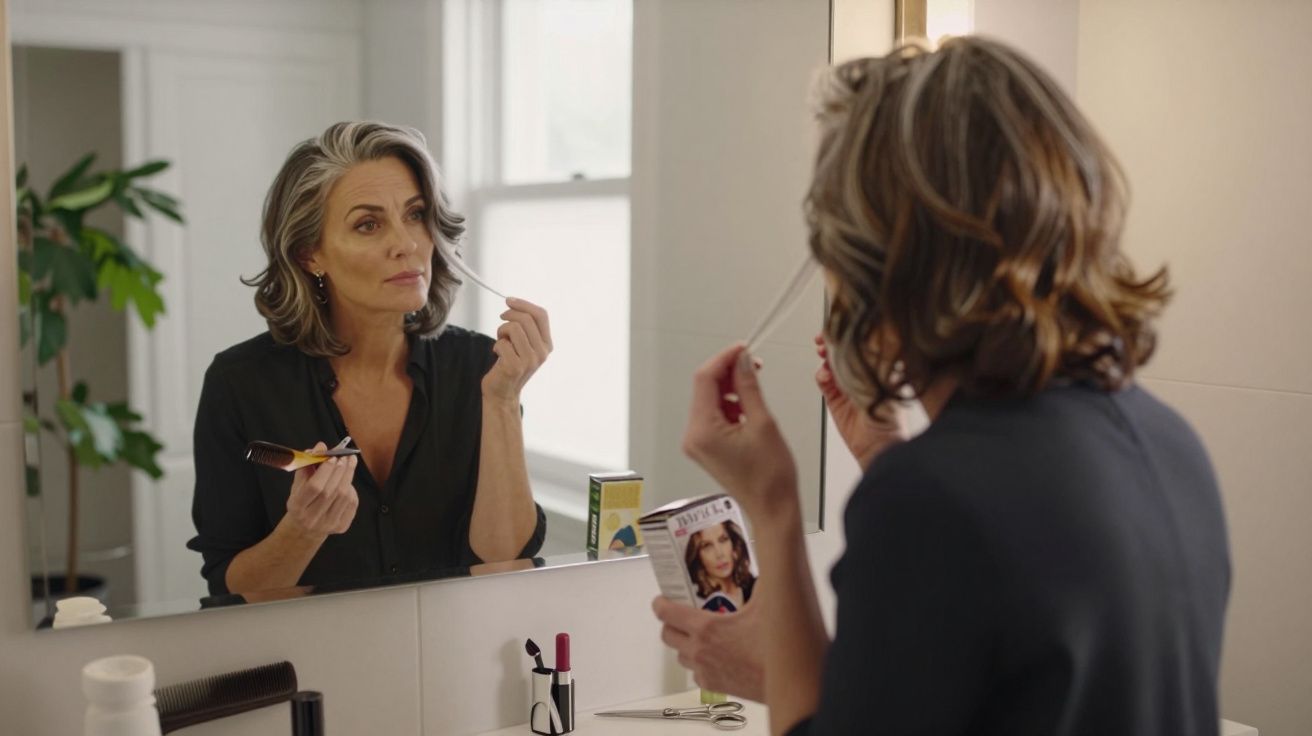
At a certain point, the mirror becomes bluntly honest: silver strands begin to outnumber the shade that used to look consistent from root to tip.
For some people, those first flashes of grey feel freeing-smart, contemporary, even a little fashionable. For others, they spark a rush of anxiety, immediate salon bookings and the uncomfortable sense that youth is slipping away one hair at a time.
Grey hair and salt and pepper hair: a cultural battleground
Salt and pepper hair once carried a straightforward message: you were getting older. Today, it often sits at the centre of a wider conversation about taste, social status and self-acceptance.
Glossy magazines feature women in elegant silver bobs and cool steel-grey pixie cuts. Meanwhile, hair dye remains a big business, and social media is packed with people sharing pricey routines designed to keep every grey strand out of sight.
Salt and pepper hair now sits at the intersection of beauty trends, age politics and personal identity.
Whether grey reads as effortlessly stylish or quietly drags down your look is often about context-your haircut, skin tone, lifestyle and, most importantly, what you believe your hair communicates about you.
The science behind salt and pepper strands
Why hair goes grey in the first place
Hair turns grey when melanocytes-pigment-producing cells inside the follicle-slow down or stop producing colour. It tends to happen gradually and not in a uniform way.
Genetics decides much of the timeline, but habits and health can influence the pace. Smoking, long-term stress and certain nutritional deficiencies have been associated with earlier greying. Some medical treatments may speed it up too.
The classic salt and pepper pattern appears when some follicles continue making pigment while others don’t, creating a mix of dark and light strands.
Texture changes matter as much as colour
Grey hair frequently behaves differently from pigmented hair. As those pigment cells reduce, the hair shaft can change, leaving strands that feel drier, coarser or more wiry.
The texture shift is one big reason grey can either look chic and architectural or frizzy and unkempt.
Without extra moisture and smoothing support, new grey growth may sit away from the scalp, resist sleek blow-dries and stop responding to styling routines that used to work.
Added perspective: Grey hair is also more vulnerable to environmental factors that affect tone and shine. Hard water, heat styling and UV exposure can make silver look dull or yellowed over time, which is why many people who embrace grey add a weekly clarifying wash, a heat protectant and occasional toning products to keep the colour crisp.
Why some people insist grey looks effortlessly chic
The confidence association
People who choose to go grey often treat salt and pepper hair as a deliberate statement. Not battling every strand can come across as self-assurance rather than “giving up”-especially when the haircut is sharp and clearly intentional.
Actors, presenters and influencers who embrace silver frequently say they feel more like themselves, not less. That message lands with anyone exhausted by constant upkeep and the unspoken pressure to look younger at all costs.
Grey, when it looks chosen rather than tolerated, reads as modern, minimal and unfussy.
When grey complements your complexion
Grey pigments sit against the skin differently than brown, black or blonde. For certain complexions, that shift can make the face look brighter.
Related reads (as seen online):
- The discreet overnight method for cleaning oven racks without scrubbing
- “My gran’s secret weapon” - the vinegar-and-newspaper trick that outperforms any glass cleaner
- In 2026, these four zodiac signs are tipped to become millionaires
- “My plumber laughed… until it worked” - the £1 trick that cleared our sink instantly
- The world’s longest high-speed underwater rail line is under way - linking two continents beneath the ocean
- How your brain responds differently to handwritten lists compared with digital ones
- People who feel emotionally complex often experience the world more deeply
- Check your change: this “rare” 50p coin is worth £150
Common observations from colourists include:
- Cool-toned skin often suits icy greys and silvers.
- Olive skin can look especially striking with gunmetal or charcoal tones.
- Freckles and light-coloured eyes may pop more with a soft, blended salt and pepper effect.
Colour professionals often note that when skin undertones and the new hair shade harmonise, grey can look fresh rather than dull.
Lower maintenance-and a different kind of luxury
Going grey can also signal a quieter form of luxury: spending less time and money fighting nature, and more on hair condition and cut quality.
Instead of monthly root coverage, some people opt for regular gloss treatments, deep hydration and precise trims. The message changes from “I’m battling my age” to “I take care of myself properly.”
Why others say grey secretly ruins your entire look
Greys can drain colour from the face
The most common criticism of salt and pepper hair is that it can make someone look “washed out”. That response isn’t purely emotional. As melanin reduces in hair, it can also reduce in skin over time.
When both hair and skin lose pigment, the face may look flatter overall. Under-eye darkness, redness and uneven tone can appear more obvious against pale strands.
Unplanned grey can act like harsh lighting: it reveals every shadow, line and patch of dryness.
People who feel grey “ruins” their look often say they appear tired on video calls or washed out in photos-even when they feel perfectly well.
Patchy growth can look neglected
Salt and pepper hair rarely arrives as a smooth, elegant gradient. It commonly shows up first at the temples, crown or parting. That unevenness can read as messy, especially with a dated or shapeless cut.
Grey hair critics often argue the issue isn’t the shade itself but the signal it sends: hair that looks unmanaged can imply you’ve stopped caring. In competitive workplaces, that assumption can feel like a genuine risk.
Gender bias still shapes the reaction
| Perception | Common reaction for men | Common reaction for women |
|---|---|---|
| First visible greys | “Distinguished”, “mature” | “Ageing”, “needs colour” |
| Fully silver look | “Classic”, “authoritative” | “Brave choice”, “not for everyone” |
| Visible roots between colours | Often overlooked | Quickly judged as “unkempt” |
The same salt and pepper pattern that earns a man praise for looking “distinguished” can prompt comments that a woman has “let herself go”. That double standard still influences how people judge themselves in the mirror.
How to decide whether to embrace or cover grey hair
Questions to ask yourself first
Before you book a colour appointment or reach for a box dye, many stylists recommend a quick reality check:
- How much time are you genuinely willing to spend on monthly maintenance?
- Does your job subtly reward looking younger, or does it value gravitas and experience?
- Do you feel most like yourself when you look highly polished, or when you look a bit more relaxed?
- If you stop colouring, are you prepared for an awkward transition stage?
These questions help separate personal preference from external pressure-and from routine you’ve never questioned.
Middle-ground options
For many people, it isn’t a strict choice between “fully dyed” and “fully grey”. Many colourists now focus on grey management rather than total concealment:
- Soft highlights: blend greys into lighter strands so regrowth looks purposeful.
- Lowlights: add depth around the face to prevent greys from draining you out.
- Glosses and toners: adjust natural grey towards a cooler, creamier or smokier finish.
- Root blurring: apply semi-permanent colour just along the parting and hairline.
These techniques soften harsh regrowth and turn salt and pepper hair into part of the look rather than something to fight.
Added perspective: If you do colour at home, it’s worth treating it like skincare: patch test, respect processing times and be realistic about upkeep. Allergic reactions to hair dye (particularly certain darker shades) are no joke, and a professional colourist can often achieve a softer grow-out that reduces the need for frequent reapplication.
How cut, make-up and clothes change the entire effect
The haircut is non-negotiable
Most stylists agree on one rule: a poor cut can be disguised by fresh colour; a poor cut paired with grey usually can’t.
Clean shapes-sharp bobs, cropped pixies, layered lobs-help grey look intentional. Long hair that hangs without structure can slide into “tired” territory once pigment fades.
Grey hair demands a clearer haircut. The less colour you have, the more shape you need.
Small tweaks beyond the salon chair
Many people who go lighter naturally find they need a few subtle adjustments elsewhere:
- Foundation: slightly warmer or more luminous formulas can stop skin looking flat beside pale hair.
- Lip colour: stronger reds, berry tones or rosy neutrals can bring back contrast that darker hair used to provide.
- Wardrobe: cool greys, navy, crisp white and rich jewel tones often flatter silver better than beige or muddy browns.
These changes don’t alter who you are; they simply help your new hair shade work with your features rather than against them.
Social pressure, dating apps and workplace politics
Online life has intensified the salt and pepper debate. On dating apps, some people with visible grey say they get fewer matches, while others find that grey helps them stand out as honest, low-maintenance and confident.
At work, people in public-facing roles may feel quietly nudged towards colouring-particularly in industries where youth is (fairly or unfairly) linked to innovation. In fields such as law, academia or politics, visible grey can communicate something else entirely: seniority, experience and steadiness.
The same head of hair can be an asset in one setting and an obstacle in another.
That push and pull leads many people to do silent cost–benefit maths before letting grey spread without intervention.
Terms and scenarios that make the dilemma easier to navigate
Understanding “transition line” and “demarcation”
Two salon terms are particularly useful:
- Transition line: the visible point where dyed hair meets natural regrowth.
- Demarcation: a stark, obvious border between two colours, often across the mid-lengths.
When people say grey “ruins” their look, they may be responding less to the grey itself and more to that abrupt split. Methods such as balayage and gradual lightening are designed to soften the line during the grow-out.
A realistic six-month plan
If you’re weighing up a change, it can help to imagine two clear routes.
Scenario one: you maintain colour. Plan for salon visits every 4–6 weeks, root-touch-up products at home, and spending that can add up to several hundred pounds per year, depending on your area and routine.
Scenario two: you move to blending and then full grey. The first four months can look uneven, and you might choose a shorter cut to remove old dye more quickly. Spending often shifts towards deep conditioners, smoothing serums and-if you want to prevent yellow tones-a purple shampoo.
Neither option is more virtuous. One exchanges time and money for a consistently youthful finish. The other trades an awkward transition for lower maintenance and a different style message.
For many people, the salt and pepper debate isn’t really about whether grey is chic or ruinous-it’s about who gets to decide what your hair should say about you, and how boldly you want it to speak.





Comments
No comments yet. Be the first to comment!
Leave a Comment