
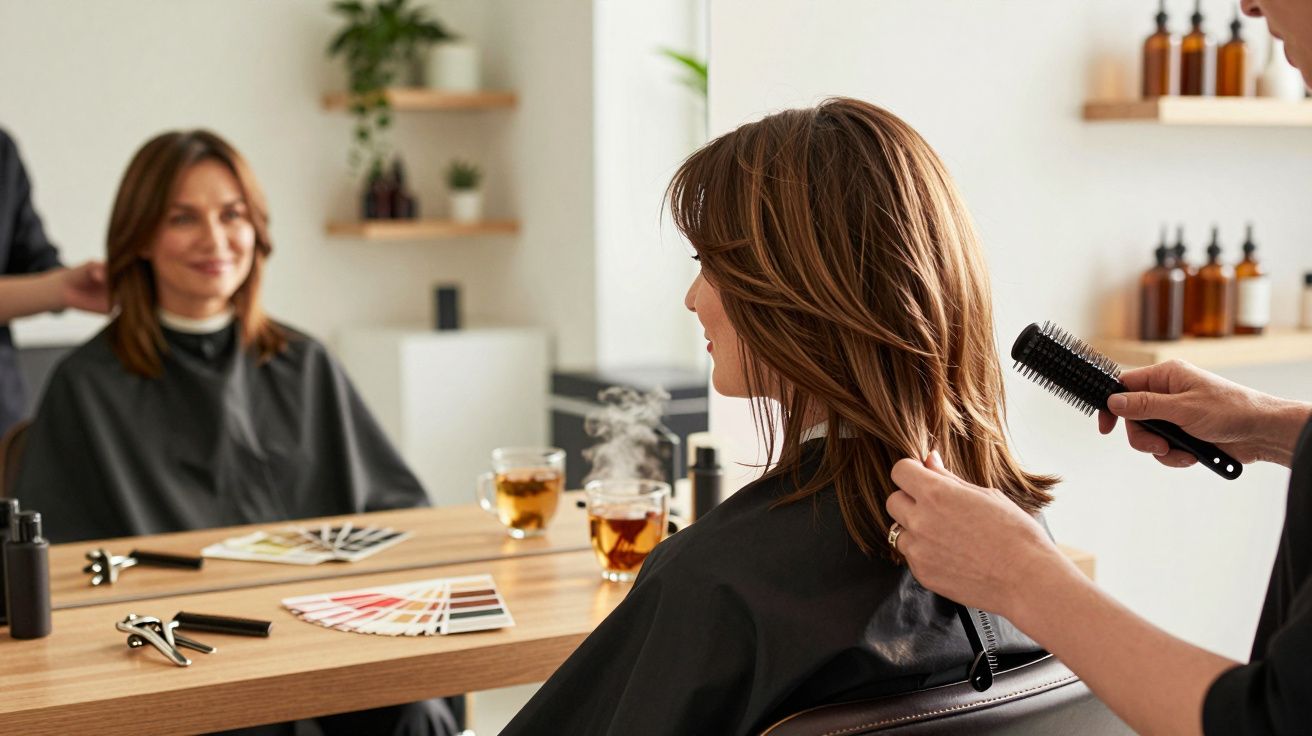
Whether you prefer a short cut, something mid-length, or an artfully layered shape, the most flattering haircuts of 2026 are designed to refresh your features rather than chase youth relentlessly.
From London salons to Los Angeles studios, women over 50 are steadily rewriting what “age‑appropriate” hair is supposed to look like. With newer professional cutting methods and softer silhouettes, this year’s focus is on defining bone structure, making the complexion look brighter, and adding believable movement-without the hair looking over-styled.
The 2026 shift: from anti-ageing to pro-face framing
Hair trends in 2026 are stepping away from heavy, high‑maintenance looks. Celebrity stylists are increasingly choosing cuts that cooperate with natural texture instead of fighting it. The aim is hair that feels lighter, fresher and more mobile-modern rather than obviously “done”.
That change matters even more after 50, when hair commonly becomes finer, drier or less dense, and when colour can start to look a little flat. The right cut can counterbalance those shifts.
Instead of pursuing youth, the strongest looks of 2026 frame the face, increase movement and subtly lift the features.
Below are the main haircut and colour ideas experts are recommending if you want your hair to quietly take a few years off your overall appearance.
Matching the trend to your face shape and lifestyle (before you pick a cut)
A fashionable cut only looks right if it suits your bone structure, hair type and day‑to‑day routine. Stylists recommend turning up with an honest picture of how you actually wear and style your hair.
- If you rarely use heat tools, choose shapes that look good air‑dried, such as a layered midi flick or an anti-fringe that works with your natural texture.
- If you enjoy blow‑drying, pairing a brow bone contouring fringe with invisible balayage can deliver a polished finish that still looks current.
- If your hair is very fine, ask for internal layers and gentle texturising rather than heavy thinning, which can make the ends appear wispy.
Being realistic about how often you’ll use styling products or tools helps your hairdresser design something you can genuinely maintain-rather than a look that’s beautiful on day one and annoying by week two.
Key terms that often confuse clients (and how to say what you mean)
Salon language can feel vague, especially when trends jump from social media to real life. These simple definitions can make consultations easier.
- Texturising: cutting subtle variation into the hair so it doesn’t sit like a solid block; it improves movement without creating obvious layers.
- Face-framing layers: shorter pieces around the front, shaped to track the cheekbones and jawline, often giving the face a visual lift.
- Balayage: freehand colour painting for a softer, less stripey result than traditional foils.
Reference photos plus the right terminology give your stylist a clearer starting point and lower the chance of a disappointing misunderstanding.
The midi flick (women over 50): mid-length hair with a soft kick
The midi flick is one of 2026’s standout shapes. Picture hair that skims the collarbone-sitting between a lob and a classic mid‑length cut-finished with light layers and ends that flick outwards or curve away from the face.
Why the midi flick flatters over-50 faces
- Collarbone length creates the illusion of a longer neck and a slimmer jawline.
- Soft layers build volume through the mid‑lengths rather than concentrating fullness only at the tips.
- Loose waves soften sharper lines and help blur fine wrinkles around the mouth and chin.
Stylists suggest requesting a textured, layered cut that lands at the clavicle, then styling it with loose, “undone” waves. A sea-salt spray or a texturising spray helps keep the finish airy rather than rigid.
The midi flick works especially well if a bob feels too severe, but longer hair is starting to feel heavy or lacking life.
With straight hair, you can create that subtle, face‑opening movement using a round brush and a quick flick of the ends with a hairdryer. With naturally wavy or curly hair, enhancing your existing pattern using a diffuser gives a relaxed, effortless finish.
The anti-fringe: long, face-hugging layers instead of a blunt bang
Fringe trends are getting softer in 2026. The anti-fringe is not a harsh, straight‑across bang; it’s a set of longer, layered pieces that skim the jawline and cheekbones and wrap around the face.
What makes the anti-fringe so wearable
Rather than cutting a flat line over the forehead, these longer sections are shaped to follow the face’s natural oval. You can wear them centre‑parted, swept to the side, tucked behind the ears, or blown out for volume.
For women over 50, the practical advantages are clear:
- Visually refines the jawline by creating vertical lines on either side of the face.
- Softens forehead lines without the heaviness (and frequent trims) that a shorter fringe often demands.
- Works with bobs and longer cuts, adding movement while keeping length.
Think of the anti-fringe as a built‑in soft‑focus effect: it frames the face rather than covering it.
It’s also easy to adapt. On days you want an open, clean look, you can push the longer pieces back. For evenings, blow them out into a curtain‑like shape and add lift at the roots for a subtle “facelift” impression.
The brow bone contouring fringe: spotlight on the eyes
Another 2026 favourite is the brow bone contouring fringe. Here, the fringe sits around eyebrow height and lightly grazes the top of the cheekbones, mirroring the face’s natural structure.
How it creates a younger, sharper gaze
Because it sits close to the brow bone, this fringe pulls attention straight to the eyes. It can soften the look of crow’s feet while still showing plenty of skin, keeping the result chic rather than heavy.
Stylists often cut it on a very gentle diagonal so it grows out in a forgiving way-meaning fewer salon visits and less pressure to keep a razor‑sharp edge.
A brow bone contouring fringe can behave like make‑up: it contours the upper face and intensifies the eyes without harsh lines.
It tends to suit straight to slightly wavy hair best. If your hair is very curly, a lighter, more diffused version can still frame the eye area while letting your natural texture take centre stage.
| Fringe type | Best for | Key benefit after 50 |
|---|---|---|
| Anti-fringe (long layers) | Round or square faces | Helps elongate and slim the jawline |
| Brow bone contouring fringe | Eyes that need definition | Draws attention to the eyes and softens lines |
Invisible balayage: natural colour with no harsh regrowth
Cut makes a big difference, but colour strongly influences how fresh your face looks. In 2026, the standout technique for women over 50 is invisible balayage-an ultra‑soft approach designed to grow out gracefully.
How the new balayage works
A colourist weaves very fine highlights and lowlights through the mid‑lengths and ends, avoiding heavy streaks at the roots. The goal is depth and gentle dimension rather than obvious stripes.
Warm undertones-think honey, beige gold, soft caramel or coppery chestnut-are frequently chosen to brighten the complexion. These shades reflect light in a way that flatters mature skin, which can lose some natural radiance over time.
When it’s done properly, invisible balayage looks like naturally sunlit hair, with almost no obvious line of regrowth.
If you have some greys, this technique can blend them rather than battling them. Carefully placed lighter pieces around the face can make silver strands appear intentional and polished rather than uneven.
Real-life scenarios: choosing what actually works on you
If you have straight, greying hair that sits below the shoulders and has started to look limp, switching to a collarbone-length midi flick can make an immediate difference. Adding warm invisible balayage around the front can lift the skin tone. The shorter length helps the ends look thicker, while subtle brightness near the face brings energy back to the overall look.
If your hair is thick and wavy and you regularly wear glasses, an anti-fringe with shaped face layers may be more practical than a short, blunt fringe. You keep the movement and character of your hair, while the longer pieces prevent your glasses and fringe from constantly competing for space on your face.
Benefits and small risks to weigh up
Every change involves trade‑offs. A brow bone contouring fringe can make the eye area look striking, but it may need more frequent styling if your hair kinks in humidity. Invisible balayage can brighten the face with minimal regrowth lines, yet bleach-even used sparingly-can slightly dry hair that’s already fragile.
Weighing those factors against your priorities (lower maintenance, stronger hair, a sharper jawline, or brighter colour) makes it easier to choose a 2026 trend that supports how you actually live-not just how you look in a single Instagram shot.
Two extras that help these 2026 cuts look better for longer
One often-overlooked piece of the puzzle is the condition of the scalp and mid‑lengths. If your hair has become drier with age, a weekly nourishing mask and a lightweight leave‑in conditioner can improve softness and shine-so face-framing layers and a midi flick move naturally rather than looking frizzy or stiff.
It also helps to agree a simple maintenance plan with your stylist. Even low‑effort shapes benefit from tidy-ups: for example, booking occasional fringe trims (if you choose the brow bone contouring fringe) and timing your invisible balayage refreshes around how quickly your natural base grows can keep the result looking intentional without locking you into constant appointments.
Related reads (as referenced)
- From 9 to 15 March 2026: Jupiter’s retrograde ends-plus a quiet turning point you shouldn’t overlook
- Could a vast Chinese engineering project really slow the Earth’s rotation? What NASA says
- After six years of trials, the four-day week wins over 90% of Icelandic workers
- “I put a bit in the bottom of the vase-it’s magic”: add this to make a tulip bouquet last longer
- Vitamin B7 becomes a key piece in understanding cancer resistance
- One factory to rule them all: Airbus keeps pressure on the global helicopter market with a high‑tech plant in southern France
- Switzerland unveils a major breakthrough that could open a new way to generate electricity with water and light: hydrovoltaics
- An Einstein prediction confirmed on Mars could transform future missions




Comments
No comments yet. Be the first to comment!
Leave a Comment