
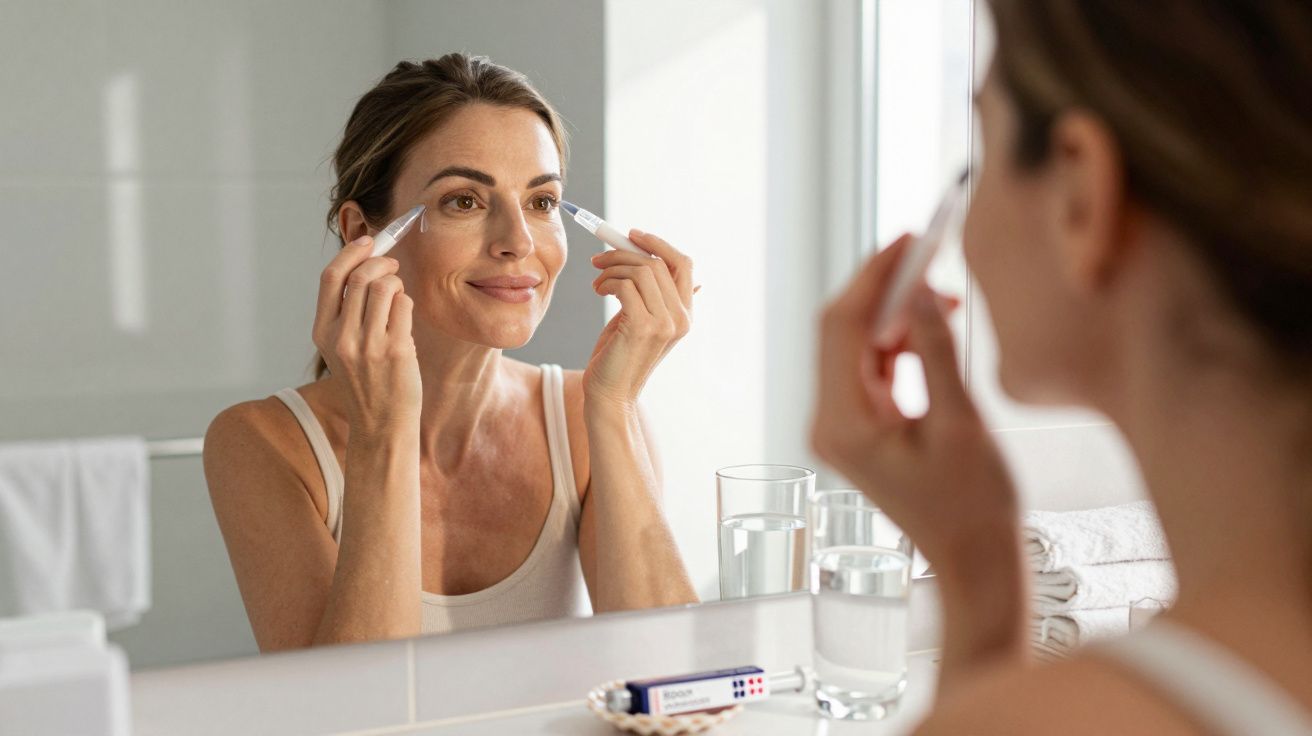
In a beauty industry dominated for years by injectables and expensive in-clinic procedures, a single pharmacy-style product has been gaining traction for a bold promise: wrinkles that look blurred in 60 seconds. Built around collagen, multiple forms of hyaluronic acid, and a precise brush applicator, Thalgo Minute Wrinkle Filler presents itself as a fast, non-invasive option for people who like the look of Botox-style smoothing but want to avoid needles.
From treatment room to bathroom shelf
Skin specialists have long explained how repeated facial movement, daily stress and environmental pollution gradually weaken the skin’s supporting framework. That understanding helped injectables rise: they can relax the muscles that crease the skin and restore volume where it’s diminished.
Even so, more people are now reluctant to book another appointment involving injections. Into that moment steps a newer category of “instant” targeted skincare, including Thalgo Minute Wrinkle Filler, typically sold in French pharmacies for a little over €50 (around £40–£45). Positioned as a 2‑in‑1 targeted treatment and immediate smoother, it aims to mimic some of the visual impact associated with Botox-without restricting facial expression.
This collagen and hyaluronic acid treatment is designed to blur wrinkles in one minute, then keep working on them with continued daily use.
Rather than acting on muscle activity, the approach focuses on expression lines-crow’s feet, the vertical frown line between the brows, and fine creases around the mouth-using hydration, surface smoothing and light-diffusing effects so lines catch the light less harshly.
How a 60‑second “wrinkle eraser” is meant to work
The brand’s technical story is straightforward: combine several types of hyaluronic acid with marine-derived pro-collagen and smoothing plant extracts, then place them precisely where the crease forms.
Four kinds of hyaluronic acid for a layered effect
Hyaluronic acid occurs naturally in the skin and is valued for its ability to bind many times its own weight in water. In this product, four forms are used together:
- High molecular weight hyaluronic acid: sits nearer the surface, creating a hydrating film that can make skin look instantly plumper and smoother.
- Medium molecular weight hyaluronic acid: is intended to reach slightly deeper levels to support the upper dermis.
- Low molecular weight hyaluronic acid: is designed to travel further into the skin and may help improve the feel of elasticity over time.
- Hyaluronic acid microspheres: settle into fine lines and expand modestly as they take on moisture, giving a visible “filler” style effect.
Taken as a system, this layered approach targets both a quick cosmetic improvement and a more gradual refinement in texture. The brand’s claim is that daily use supports longer-term softening of the look of wrinkles, while still delivering that immediate “plumped” finish.
Collagen, alfalfa, pro-collagen and marine ferment: the supporting ingredients
Alongside hyaluronic acid, the formula includes marine pro-collagen (inspired by the skin’s collagen architecture), plus alfalfa extract and a marine ferment. These are presented as helping skin look firmer and better supported-particularly around areas that naturally lose tautness with time.
The emphasis is not on freezing expressions, but on reinforcing skin so lines appear shallower and softer.
While the language can sound lab-heavy, the underlying ideas are broadly consistent with what independent studies often show: well-formulated hyaluronic acid can temporarily reduce the appearance of wrinkle depth via hydration and surface effects, and some marine and botanical extracts demonstrate mild firming benefits in clinical testing.
Application with a brush tip: treat “line by line”
A key design feature is the brush applicator. Instead of spreading product across the whole face, you apply it directly along each crease.
A typical routine, following the brand’s guidance, looks like this:
- Finish your usual steps: cleanse, then apply serum and moisturiser.
- Gently squeeze out a small amount so it comes through the brush tip.
- Trace the product into each targeted line (for example crow’s feet, nasolabial folds, and frown lines).
- Lightly tap or softly smooth with fingertips until it disappears into the skin.
The silicone-like feel is intended to create an immediate soft-focus blur (similar to the effect of a make-up primer), while the active ingredients start hydrating and supporting the skin beneath.
What early user feedback suggests
Thalgo has shared results from a small self-assessment with 21 volunteers. This is not the same as a large, independent clinical trial, but it does illustrate how users felt it performed day to day.
| Claimed effect | Percentage of volunteers | Time frame |
|---|---|---|
| Wrinkles appear less visible | Almost 90% | After use |
| Notice an instant filling effect | 95% | Within 1 minute |
| Face looks younger | 80% | After 28 days of use |
In this small panel, almost all users reported a visible filling effect within 60 seconds.
These outcomes describe perception rather than instrument-measured changes. Even so, they align with what many people now want from anti-ageing skincare: an immediate cosmetic payoff, plus incremental improvement over several weeks when used consistently.
Is Thalgo Minute Wrinkle Filler really an alternative to Botox?
A topical formula and an injected neuromodulator do fundamentally different jobs. Botox (and similar treatments) works by reducing the muscle contractions that fold skin. A cream cannot reach those muscles or change how they move.
Where an instant wrinkle filler can compete is the look of the skin. For early to moderate expression lines, a combination of hydration, smoothing texture and light-scattering can make creases appear noticeably less deep-at least for a period of time.
There are also practical and personal reasons people may prefer a tube to a syringe:
- No needles and no clinic appointments.
- Lower upfront spend than a full injection session.
- Results are reversible and fade if you stop using it.
- You can target specific lines while keeping full expression everywhere else.
That said, very deep, static wrinkles-often linked to years of repetitive movement plus structural volume loss-tend to respond more convincingly to professional procedures. A topical product may soften their visibility, but it cannot rebuild deeper support in the same way.
Who tends to get the most from a one-minute wrinkle filler?
Dermatologists frequently note that topical results depend heavily on the starting point. Skin with early signs of ageing generally shows a more obvious improvement than advanced wrinkling.
People most likely to appreciate a 60‑second wrinkle filler include:
- Those in their late 20s through to 40s who notice expression lines lingering after smiling or frowning.
- Anyone wanting a quick, “camera-ready” finish before an event.
- People who have used injectables and would like to extend the time between appointments.
- Individuals who are cautious about invasive options but happy to commit to a more active skincare routine.
Skin type also plays a role. A silicone-like, smoothing finish often suits normal to dry skin because it adds slip and a soft-focus effect. If your skin is very oily or spot-prone, you may prefer a lighter texture. As with any product used near the eyes, patch testing is sensible-particularly if you are prone to sensitivity.
What “pro-collagen” and “marine ferment” actually mean
Anti-ageing labels can blur the line between science and marketing, so it helps to translate a couple of common terms.
Pro-collagen usually describes ingredients intended to support the skin’s own collagen environment, rather than collagen being absorbed whole (which generally doesn’t happen in a meaningful way). These ingredients may help protect existing fibres or encourage the skin to maintain structure. Effects are typically gradual and modest compared with injectables, but they can contribute to a firmer look over months.
Marine ferment generally refers to compounds produced when marine microorganisms or algae are processed under controlled conditions. They can contain amino acids, minerals and protective molecules. Some research suggests benefits such as improved hydration, smoother texture and better resilience against environmental stress-particularly relevant in polluted urban settings.
How to combine instant fillers with your existing routine (without pilling)
If you already follow a structured regimen, an instant wrinkle filler usually fits in easily: apply it after hydrating steps and before make-up. In the morning, sunscreen is non-negotiable, because UV exposure accelerates the breakdown of collagen and hyaluronic acid.
To reduce “pilling” (product rolling up on the skin), keep layers thin, allow each step to settle for a minute or two, and press-rather than rub-the wrinkle filler into place. If you wear foundation, applying a small amount of base over the top with a sponge or gentle tapping tends to preserve the blurred finish.
Many people also pair this category with nighttime actives such as retinol or peptides. Retinol supports cell turnover and collagen pathways, while peptides are commonly used to improve the look of firmness. In that context, Thalgo Minute Wrinkle Filler becomes a daytime finishing step: it doesn’t replace a good routine, but it can make the results look more immediate-particularly under bright office lighting or in high-resolution photos.
Sensible expectations and basic safety notes
Because the effect relies heavily on hydration and surface optics, results can vary with dehydration, room humidity and how well the skin is prepped. If lines are deeper or the skin is very dry, you may see more of a smoothing “primer” effect than a true filled look-so adjusting moisturiser and using gentle exfoliation (where appropriate) can improve how evenly the product sits.
As with any targeted treatment used close to the eyes and mouth, avoid applying directly into the eye or onto broken skin, and stop using it if irritation occurs. If you are under dermatological care or using prescription-strength actives, it’s worth checking compatibility with a pharmacist or clinician before adding another leave-on product.






Comments
No comments yet. Be the first to comment!
Leave a Comment