
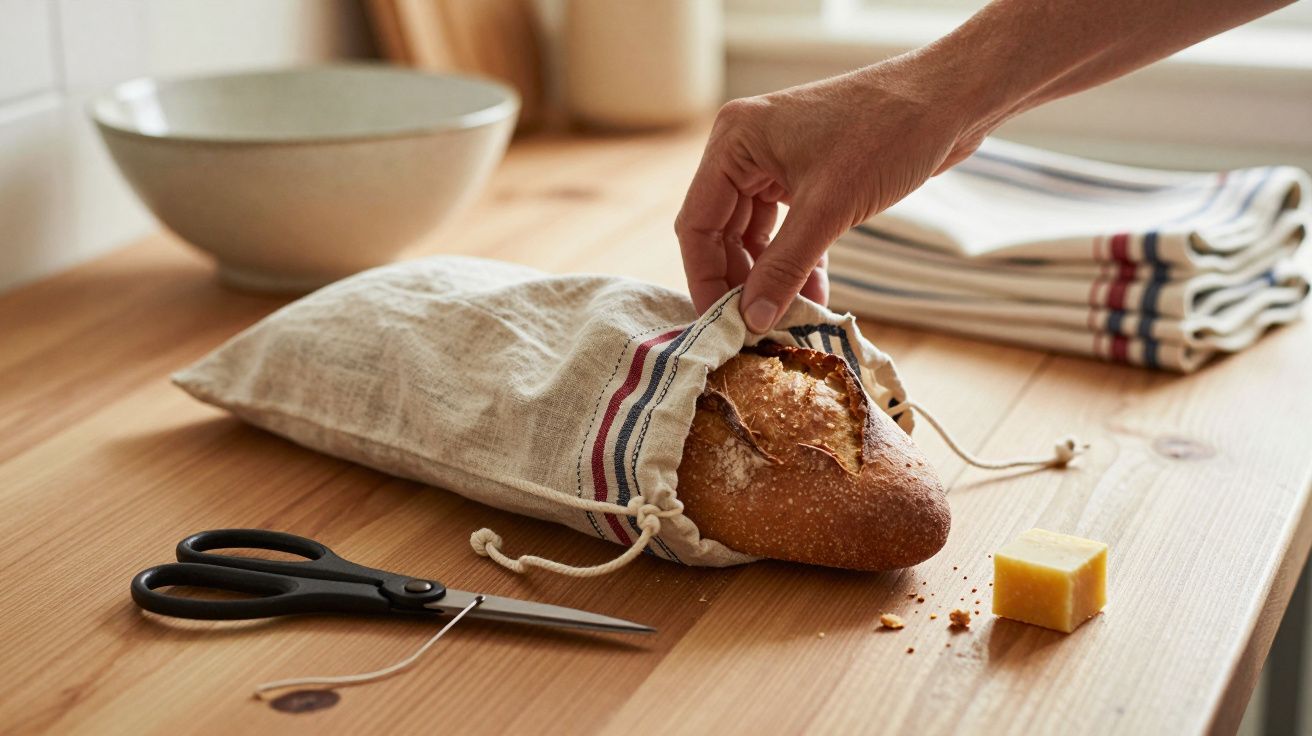
A surprisingly modern favourite can start with something as ordinary as a kitchen staple.
What used to be nothing more than a humble helper by the sink is suddenly having a moment as the star of a sustainable trend. With a few straightforward stitches, old striped tea towels can be turned into reusable bread bags-practical, good-looking and genuinely useful day to day. If you bake at home or pop to the bakery most mornings, you’ll cut down on waste, save money and bring a touch of kitchen nostalgia back into rotation.
Why old striped tea towels can be worth their weight in gold
Those well-worn cloths at the back of the cupboard may look a bit tired, yet they’re often better made than many new alternatives. Plenty of these classics are woven from pure linen or from Metis-a traditional blend of linen and cotton-which makes them hard-wearing, pleasantly textured and impressively long-lasting.
That combination is exactly what you want for reusable bags:
- They’re already softened through repeated washing and feel comfortable in the hand.
- The fibres cope with daily use and are less likely to tear.
- The familiar coloured stripes instantly add country-kitchen character.
- Nothing new needs to be manufactured-the fabric is already there.
Reusing old tea towels saves resources and brings a piece of traditional kitchen culture back into everyday life.
Environmental bodies such as France’s ADEME promote precisely this approach: don’t bin natural-fibre textiles-reuse them around the home. A bread bag made from existing cloth fits neatly into a lower-waste lifestyle.
The trend: bread bags made from old striped tea towels
Across Instagram, Pinterest and similar platforms, they’re everywhere: home-sewn bread bags made from inherited striped towels. They replace paper and plastic packaging, look great hanging on a row of hooks and suit everything from a sleek city flat to a rustic country kitchen.
There’s a financial upside too. Bread bags made from new, handwoven linen can easily cost around £13–£17 each. If you already have suitable tea towels, you’re usually spending only pennies on thread and a drawstring.
A quick note on size and hygiene (before you start)
Before cutting anything, decide what you’ll store most often-small rolls, a sandwich loaf or a large sourdough. A simple rule: make the finished bag long enough to accommodate the loaf plus a little extra height for the drawstring channel, and wide enough that the bread isn’t compressed (squashing speeds up staling).
For food use, start with a towel that’s clean, odour-free and not treated with strong fabric softeners. If you’re repurposing a second-hand towel, wash it hot once, then rinse thoroughly so it’s fresh and neutral for storing bread.
A bread bag in three simple steps
You don’t need professional sewing skills for your first bag. A straight seam, a bit of patience and an iron are more than enough.
Cutting with care
Trim away any heavily worn areas or holes. Keep the strong, striped sections. If you can incorporate at least one original hem, you’ll save time and get a neat edge with less effort.Strong seams
Fold the fabric lengthways with the right sides together. Stitch the long edge and the bottom edge. Turn the bag right side out, then topstitch very close to the seam to enclose the raw edges and reinforce the construction. This enclosed-seam method (often called a French seam) makes the bag notably durable.A practical closure
Fold a wide hem to the inside at the top, stitch all the way around, and leave a small gap to thread a cord through. This creates a channel for a cotton drawstring so the bag can be pulled closed.
If a sewing machine feels intimidating, hand-stitching works as well. It takes longer, but with thicker linen fabrics it’s surprisingly manageable.
Why linen keeps bread fresher for longer
Linen and Metis behave very differently from plastic or paper bags. The weave is tight, yet the fabric remains breathable-creating a small, natural microclimate inside the bag.
- The crust stays crisper because it isn’t “smothered” by condensation.
- The crumb dries out more slowly, so the bread stays pleasantly moist inside.
- Moisture can escape, which makes mould less likely.
A handy side benefit: linen tends to be less appealing to certain pantry pests. In a well-kept kitchen, fabric bags generally offer insects very little incentive.
A “bee wrap” effect with beeswax
If you’d like to extend freshness a little further, you can treat the inside of the bag with beeswax. Use pure, untreated beeswax pellets, or leftover wax from candle-making.
How to do it:
- With the bag clean and completely dry, rub a thin layer of beeswax on the inside or sprinkle on finely grated flakes.
- Place a piece of baking parchment inside, then warm it carefully with an iron until the wax melts and spreads evenly.
- Let it cool-now you have a flexible, lightly waxed coating.
The bag stays breathable, but gains a natural protective layer that helps keep bread noticeably fresher.
To clean, use lukewarm water and a little mild washing-up liquid or a small amount of gentle soap. Avoid hot water, which can melt the wax; rinse lightly and let it air-dry.
Care, everyday tips and creative variations
Before the first use, run the old tea towel through the washing machine to remove dust, storage smells and any lingering detergent residues. A quick press with the iron tightens the fibres and makes sewing easier.
For daily use: always let bread cool completely before putting it into the bag. Hang the bag on a hook or peg so air can circulate. If you bake frequently, wash the bag every one to two weeks depending on use-though if it’s wax-treated, keep washing brief and lukewarm.
No offcut goes to waste
The pieces left over after cutting are ideal for other zero-waste household helpers:
- Lavender sachets: Stitch narrow strips into small pouches, fill with dried lavender and hang in the wardrobe.
- Bowl covers: Cut circles and add elastic to cover bowls and dishes-an alternative to cling film.
- Bags for loose goods: Smaller versions of the bread bag work well for rice, pasta or pulses when shopping at refill and packaging-free shops.
Over time, you can build a whole set of reusable kitchen essentials-made entirely from fabric that might otherwise have ended up in the bin.
Why the effort genuinely pays off
Take a homemade bread bag to the bakery once and you’ll quickly notice the difference. The fabric bag stands out, often sparks a chat, and quietly proves that a more sustainable routine doesn’t have to look like sacrifice. Many bakers are used to customers bringing their own bags now and are happy to pop fresh bread straight inside.
The benefits are straightforward: less waste paper, fewer flimsy plastic bags and a clearer picture of what you consume. By using textiles you already own, you reduce packaging over the year and cut the demand for newly produced goods-an advantage that matters even more when prices are rising.
There’s also an emotional pull. If the cloth originally came from a grandparent’s kitchen, it carries family history. A forgotten piece of fabric becomes a daily companion-full of memories, yet perfectly suited to modern life. That blend of nostalgia and practical sustainability is exactly why this trend has real staying power, and why old striped tea towels make such a satisfying weekend project.

Comments
No comments yet. Be the first to comment!
Leave a Comment