
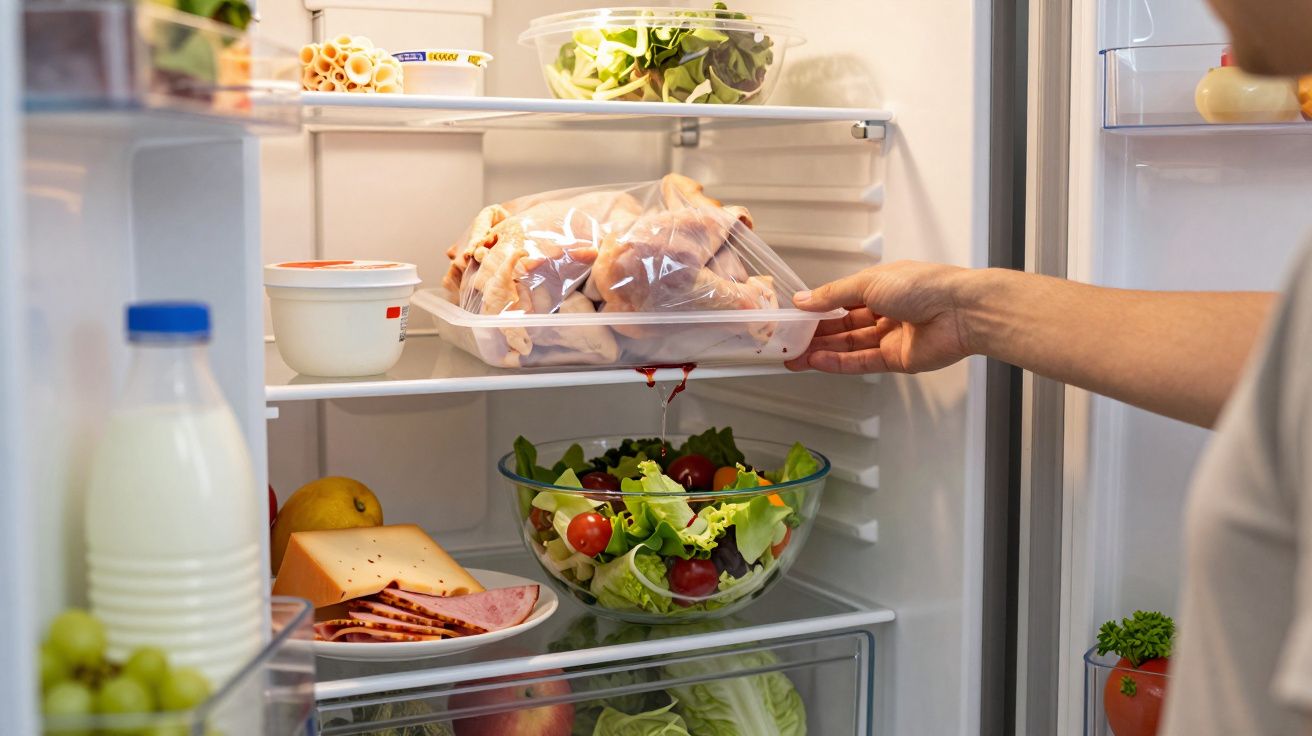
The fridge feels like a safe harbour: cold, clean, everything neatly wrapped. That sense of security can be misleading. One wrongly placed pack of raw meat or fish is enough to load salad, fruit and ready-to-eat foods with illness-causing bacteria-without any obvious smell or visible warning.
Why the fridge is not a germ-free safe
A modern refrigerator slows bacterial growth, but it does not kill bacteria. Even at 0–4 °C, many germs can still cope surprisingly well. This includes Salmonella and certain strains of E. coli, which repeatedly cause severe diarrhoea.
Health authorities generally advise setting the coldest area of the fridge to around 4 °C. That lowers the risk, but it does not eliminate it. Unless a food is cooked properly or thrown away, bacteria can survive in the fridge and be passed on.
The real danger often isn’t the food itself, but the route its bacteria take through the fridge.
That is exactly why organisation matters: if certain foods are stored in the wrong place, germs from raw products can quickly end up on items you eat uncooked-and therefore straight into your body.
The most common mistake: raw meat above ready-to-eat foods (cross-contamination)
In many households, the fridge looks much the same: a tray of raw chicken somewhere in the middle, with cheese, yoghurt and perhaps an open pasta bake left over from last night nearby. Down in the salad drawer sit leafy greens, cucumber and tomatoes.
This layout is almost designed for cross-contamination. As soon as packaging leaks or meat juices seep out, tiny amounts can drip down or smear across a glass shelf. That liquid can contain millions of bacteria.
It becomes even more risky when people store meat and vegetables in the same drawer. Many will “just for a moment” rest a pack of steak on top of salad leaves or beside carrots because it is convenient. A single trace of meat juice is enough to contaminate raw foods.
It becomes dangerous when bacteria move from a product that will later be heated thoroughly onto food you eat straight from the fridge.
Typical higher-risk items in the fridge
- raw chicken breast, turkey, minced meat
- raw fish and seafood
- defrosted frozen foods where thawing liquid escapes
- cardboard sleeves or outer plastic wraps that have been on supermarket checkout belts
Foods that are particularly vulnerable
- leafy salads, herbs, sprouts
- tomatoes, cucumbers, peppers-often already washed
- ready-made dishes such as pasta salad or potato salad
- sliced meats, cheese, desserts that will not be reheated
If meat juices drip from above onto these foods, it does not matter that the meat will later be cooked through-the salad or dessert remains raw and won’t be heated.
Who needs to be especially careful
A Salmonella infection is rarely subtle. Common symptoms include:
- severe diarrhoea
- stomach cramps
- nausea and vomiting
- fever and circulation problems
It can affect anyone, but the following groups often suffer more severely:
- babies and young children
- very elderly people
- pregnant women
- people with weakened immune systems or underlying health conditions
For these groups, a “simple” stomach bug can have serious consequences, including hospital treatment. All the more reason to prevent the fridge becoming a hidden transfer point for bacteria.
Three simple rules to make your fridge safer
The good news: a few everyday changes can noticeably reduce the risk. You do not need to go overboard with disinfectants-you need a clear system.
1) Clear shelves: raw foods at the bottom, ready-to-eat at the top (refrigerator food safety)
The basic rule is straightforward: anything that will be cooked and spoils easily belongs on the coldest shelf at the bottom. Anything already prepared, or eaten cold, should be kept higher up.
| Area in the fridge | Suitable foods |
|---|---|
| Lowest, coldest shelf | raw meat, poultry, raw fish, seafood, delicate cooked meats |
| Middle shelves | cooked foods, leftovers, bakes, yoghurt, quark, cheese |
| Top shelf | ready desserts, open jam, opened tins moved into non-metal containers |
| Salad/vegetable drawer | fruit and vegetables, ideally kept separate from meat and fish |
| Door shelves | drinks, sauces, ketchup, mustard, eggs (depending on household habit) |
The key point: raw meat and raw fish do not belong on higher shelves-even if the pack looks perfectly sealed.
2) Seal meat properly-and bin the outer packaging
A lot of germs sit on the outside of packaging, not only inside it. Cardboard that has travelled along a supermarket conveyor can pick up whatever is on that belt. If it goes into your fridge, those germs can transfer onto shelves and nearby products.
If you store raw meat or fish in the fridge, keep it in an additional leak-proof container-without the cardboard sleeve.
Practical steps:
- Remove cardboard outer packaging and loose film as soon as you get home.
- Put meat and fish into leak-proof boxes before they go into the fridge.
- Never store defrosted items uncovered; keep them in containers so thawing liquid cannot escape.
3) Protect fruit and veg
The salad drawer is not a “neutral zone”. If you park a pack of meat there “just briefly”, you contaminate the space used for salad and fruit. The risk increases further when already washed foods are stored uncovered.
Better options:
- Store vegetables in separate bags or boxes where possible.
- Wash produce shortly before eating, not immediately after shopping.
- Never park raw meat or fish in the vegetable drawer.
Clean without obsessing: how often to clean the fridge
You do not need to scrub the fridge every day. A realistic routine works better: once a month, a thorough clean with warm water and a little washing-up liquid or household vinegar is enough for most homes.
It also helps to deal quickly with anything you can see:
- wipe up leaked meat juices or thawing liquid immediately and thoroughly
- replace cloths or sponges regularly, or wash them hot
- clean door handles and frequently touched areas more often
If you already clear out your fridge regularly, tie cleaning to checking best-before dates. That way, spoiled foods disappear before they become an issue.
Extra tip: don’t overfill the fridge
Air needs to circulate for the fridge to hold a consistent temperature. If shelves are packed tightly, some areas may sit warmer than you think, which gives bacteria a better chance to persist. Leaving small gaps between items and avoiding blocking vents helps your fridge maintain the target 4 °C more reliably.
How cross-contamination actually happens
The term cross-contamination describes a simple but nasty process: bacteria move from one food or surface to the next.
This can happen, for example:
- when meat juices drip onto salad
- when you handle raw chicken and then immediately touch cheese or fruit
- when the same knife is used for raw meat and bread
- when a chopping board is only quickly wiped and then used for raw vegetables
The fridge plays a central role because foods sit close together, often for several days. Even tiny amounts of germs can have time to spread onto new surfaces.
Everyday scenarios many people will recognise
Some habits seem harmless in the moment but significantly raise the risk. Typical examples:
- After a barbecue, a leftover raw sausage is placed “quickly” next to potato salad.
- An opened pack of meat is left overnight above an uncovered bowl of fruit.
- A bag leaking thawing liquid from defrosted fish sits in the vegetable drawer, right against a cucumber.
In all of these situations, Salmonella can spread onto foods you later eat cold or only gently warmed. The main mistake is often not the butcher’s counter or the product itself, but storage at home.
Temperature, timing, and healthy scepticism
Keeping an eye on fridge temperature reduces risk further. A small thermometer inside the fridge quickly shows whether the supposed 4 °C is actually being reached-or whether the appliance is set too warm.
Clear time limits help too: leftovers should not stay in the fridge for longer than two to three days. After that, bacterial levels can rise and the flavour usually deteriorates as well. Opened packs of sliced meats or soft cheese are best not given a second or third life if the smell or appearance raises doubts.
A little scepticism pays off: if something looks odd, smells off, or the packaging is badly swollen, it belongs in the bin-regardless of the date printed on the label.





Comments
No comments yet. Be the first to comment!
Leave a Comment