
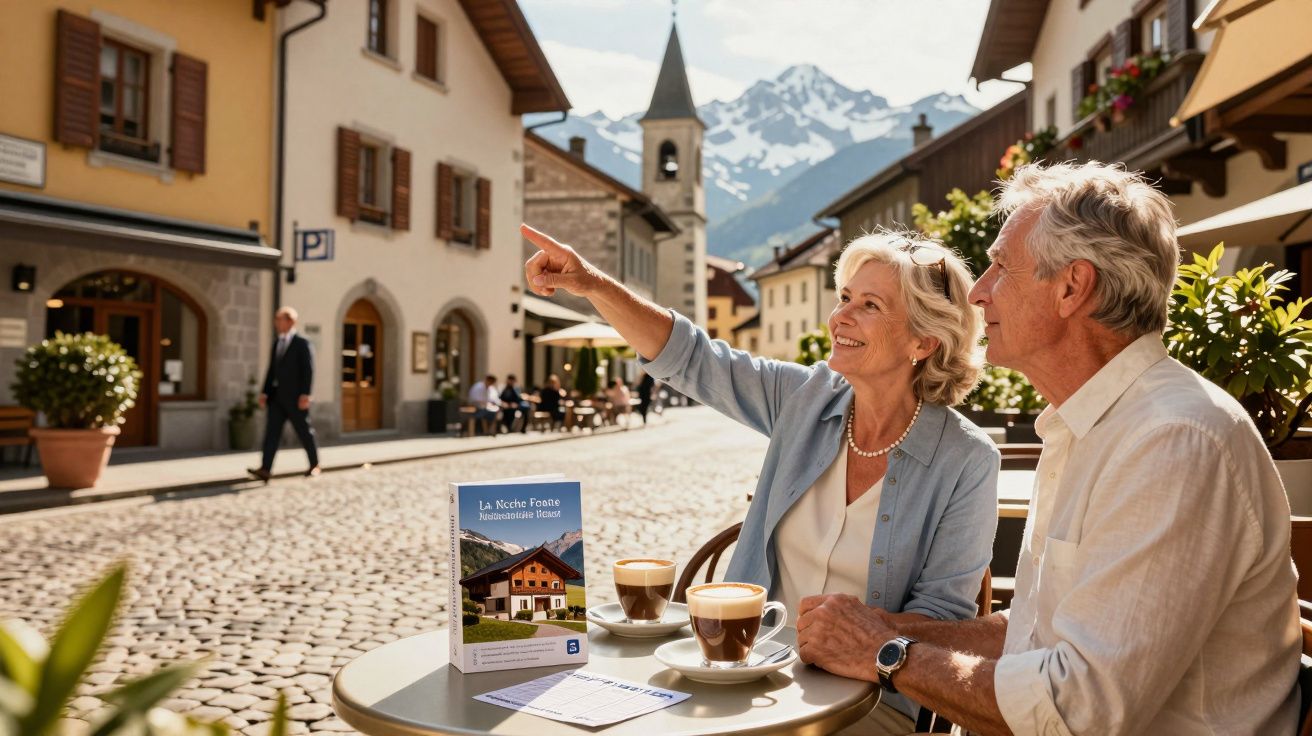
More and more older people are leaving big cities and settling in a small Alpine town between lake and mountains - with striking knock-on effects for the wider area.
Stepping away from working life often brings a wish for calm, reliable healthcare and a touch of comfort - ideally without the upheaval of emigrating abroad. In the French Alps, just a short hop from Geneva, one place is rapidly becoming a draw for well-off retirees from across France.
From hidden gem to hot spot: La Roche-sur-Foron in Haute-Savoie
The town in question is La Roche-sur-Foron, in Haute-Savoie. With roughly 11,000 residents, it sits in a near-perfect position: between Geneva, Annecy, Thonon-les-Bains, Lake Geneva, and the mountains around Chamonix. Living here feels quiet and settled, yet within under an hour you can reach international hospitals, major shopping centres or the lakeside.
Officially, La Roche-sur-Foron is part of France’s “most beautiful detours” programme - a label for attractive small towns away from the country’s biggest tourist magnets. Cobbled lanes, historic buildings, and a compact centre with shops and markets make it look postcard-pretty, but day-to-day life is surprisingly contemporary and convenient.
With Alpine views on one side and the Lake Geneva area on the other, the town offers a rare mix of village-like warmth and big-city proximity - exactly what the retiree market is chasing right now.
A key driver is the pull of nearby Geneva. Many newcomers worked there previously, still travel across the border as cross-border commuters, or simply know the area from business trips. In retirement, they move a little further out to a quieter neighbour - and typically pay noticeably less for property than they would closer to the border.
Why La Roche-sur-Foron appeals so strongly to retirees
Despite its strategic location, La Roche-sur-Foron remains a manageable, human-scale place. It isn’t a faceless landscape of tower blocks; instead, it’s a blend of detached homes, smaller residential developments and a historic core. A few weeks of regular walks are often enough to start recognising familiar faces from the market, the bakery and the café.
Many retirees particularly value:
- a calm, residential feel without late-night party noise
- a lively town centre with a market, independent shops and weekly events
- clubs and community initiatives that make it easy to meet people
- a relatively safe environment, including in the evenings
For grandparents, connectivity matters as well: children and grandchildren working in Geneva or Annecy can visit easily at weekends. Family stays close, without having to live in the thick of city bustle.
Transport links: quiet living, easy access
La Roche-sur-Foron benefits from a well-developed rail network. The cross-border CEVA train links the town with Geneva and other places across the region. For older residents, that translates into straightforward journeys for medical appointments, shopping trips or family visits - often without needing a car.
- Direct services towards Geneva and Annecy
- Strong links to hospitals and specialist care
- Less pressure to keep driving as you get older
People aged over 70 often appreciate not feeling stranded if driving becomes difficult. If you fancy the mountains or the lake, trains and buses can get you there - without wrestling with Alpine passes.
Property: expensive, but still cheaper than right by Geneva
An Alpine retirement in this area isn’t a bargain. Local prices clearly reflect Swiss influence. The median purchase price is about €4,382 per m². That’s high by French standards, but still relatively moderate compared with places immediately on the border.
Here’s a quick snapshot:
| Item | Typical figure |
|---|---|
| Purchase price per m² | approx. €4,382 |
| Rent per m² | approx. €17–18 |
| Rent for a 50 m² flat | approx. €850–900 / month |
For retirees with a healthy pension or additional assets, these figures can be manageable - particularly if they’ve sold a previous home in an expensive metropolitan area. For those on lower incomes, it’s far tougher: the market is, in practice, highly selective.
Living on retirement income: what’s realistic
A common benchmark in France is that a single person needs roughly €1,800 per month to live without major sacrifice, and a couple around €3,600. In an area like Haute-Savoie, which effectively sits within the wider Lake Geneva orbit, day-to-day costs tend to be higher than in economically weaker regions.
For a single retiree in La Roche-sur-Foron, a typical monthly budget usually falls between €1,600 and €2,200, including housing costs. Renting a larger flat, eating out frequently, or travelling often can quickly push spending towards the upper end.
Health cover is another line item: private top-up policies for older adults average €50–120 per month, depending on what’s included. In return, several clinics and specialist doctors are reachable nearby - a decisive factor as people age.
This region isn’t designed for tight budgets - but for well-secured retirees it delivers a combination many “move abroad” fantasies can’t match: familiar language, strong infrastructure and high levels of safety.
Life between Lake Geneva and the peaks
Geographically, La Roche-sur-Foron occupies what many would call a premium setting. Lake Geneva is within easy reach, as are the ski areas around Chamonix and other Alpine resorts. For active retirees, that means leisure options across almost every season.
Typical activities on the doorstep
- hiking on easy to moderate routes in the Pre-Alps
- walks or cycle rides along the lakeside
- skiing and snowshoeing in winter
- visits to farmers’ markets, wine festivals and regional events
Many newcomers say they spend far more time outdoors in retirement than they ever did in a big city. With nature so close and distances short, the barrier to “just going for a walk” is much lower - it can start literally at the front door.
Two practical factors newcomers often underestimate
Seasonality is one. Alpine winters can bring cold snaps, snow and darker days, which affects everything from walking conditions to heating use and day-to-day mobility. For retirees, it’s worth thinking about practical home features (good insulation, step-free access, storage for winter gear) as much as the view.
The other is services that support independent living. Beyond hospitals and specialists, day-to-day quality of life often comes down to accessible public transport, nearby pharmacies, local traders who deliver, and community organisations that help newcomers build routines and friendships. In a small centre like La Roche-sur-Foron, those networks can be the difference between “quiet” and “isolated”.
What UK readers can take from this trend
Even though La Roche-sur-Foron is in France, the boom reflects a broader pattern that’s easy to spot elsewhere too: once people retire, many want neither remote rural isolation nor the cost and intensity of a major city. Demand is growing for smaller towns with:
- strong medical provision
- dependable road and rail connections
- a functioning town centre rather than an empty high street
- plenty of nature close by
If you’re weighing up a later-life move - whether in the UK or elsewhere in Europe - it’s this blend that matters. Pure “dormitory villages” with thin infrastructure tend to age poorly. Small hubs with rail access, hospitals within reach and a lively core usually hold up better - and sustain a higher quality of life.
One more point that’s easy to overlook is clubs and local networks. In La Roche-sur-Foron, they help ensure newcomers don’t drift into isolation. Sports groups, language classes, cultural associations and volunteering roles provide structure - and stop retirement turning into a solitary routine.
Anyone considering a move later in life can use this town as a useful reference point: it isn’t just the scenery that counts, but the full package of connectivity, costs, healthcare, everyday amenities and social life. La Roche-sur-Foron shows how quickly a small town can rise when those elements align.






Comments
No comments yet. Be the first to comment!
Leave a Comment