
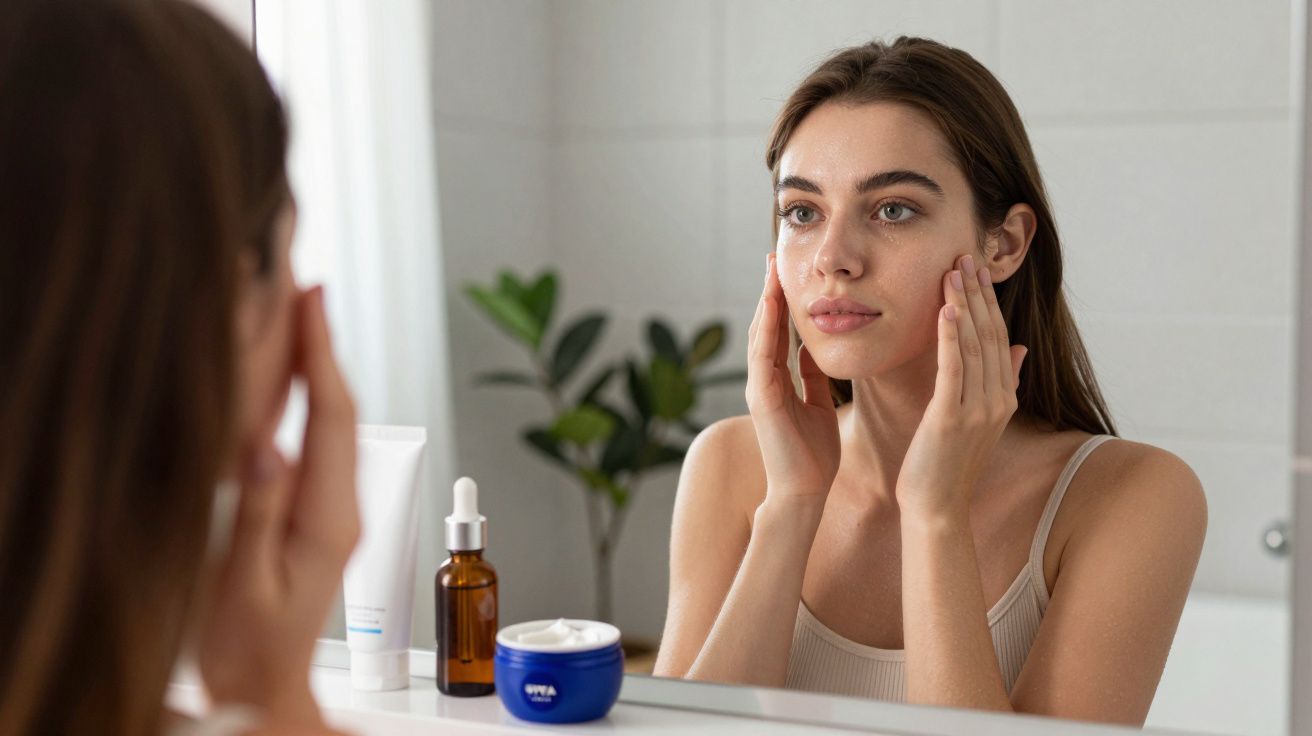
The famous blue tin has been sitting in British bathrooms for generations, used for just about everything - from rough elbows to after-sun. But how does this cult cream perform in a proper facial stress test when you apply it consistently every night to only one side of your face? That’s exactly what was tried - and after just seven nights, the differences were surprisingly clear.
Why choose the blue NIVEA Creme in the first place?
NIVEA Creme is one of skincare’s true classics. For more than 100 years, its core formula has remained largely unchanged. There’s no flashy packaging and no need for influencer-led hype - and yet the little tin still sells in its millions.
The reason is simple: it’s extremely rich and works across lots of different areas of the body. Many people rely on it as an all-rounder, for example:
- Caring for dry hands and feet
- A soothing cream after sun exposure
- Smoothing rough elbows and knees
- A “rescue” cream when skin feels irritated or tight
- A protective layer against winter cold, especially on the face
Even so, one question remains: in 2026, is an “everything cream” like this still credible as a facial moisturiser, when we have highly specialised serums, retinol, niacinamide and the rest?
The one-sided facial test with NIVEA Creme
To find out, the experiment was made deliberately strict: for one week, every evening only one side of the face was treated with a thick layer of NIVEA Creme. The other side followed the person’s usual routine, without NIVEA as an extra final layer.
The evening routine (what was used on both sides - plus NIVEA on one)
The test person stuck to their normal skincare and simply added NIVEA on one half:
- Double cleanse (an oil-based cleanser, followed by a gel or foaming cleanser)
- A serum suited to the skin type (for instance, a hydrating hyaluronic acid serum)
- Eye cream
- A lightweight moisturiser
- Finally: a thick layer of NIVEA Creme as an “overnight mask” - but only on one side of the face
This approach is similar to the “slugging” trend, where an occlusive (sealing) layer is applied over skincare so less moisture can escape from the skin overnight.
In the test, NIVEA acted like a protective film: it sealed in the products underneath and noticeably slowed overnight moisture loss.
What changed after the first week
Within a few days, differences between the two sides began to show.
Morning results you could actually feel
On the NIVEA side, the skin looked noticeably plumper in the morning. It appeared smoother and better hydrated. Fine dehydration lines - especially the kind that like to show up around the mouth and across the cheek during the day - were less obvious there.
The side without NIVEA wasn’t neglected; it still received the regular routine. But side-by-side, the contrast was hard to miss: the NIVEA side felt softer, as if it had held on to more water overnight.
| Area | With NIVEA | Without NIVEA |
|---|---|---|
| Morning skin feel | Softer, smoother, well hydrated | Normally cared for, but slightly drier |
| Visible appearance | A gentle glow, fewer dehydration lines | More matte, fine lines slightly more noticeable |
| Pores / blemishes | In the T-zone, a few small spots appeared | No additional change |
Where the method hits its limits
As impressive as the glow effect was, the experiment wasn’t completely free of downsides. In the T-zone - forehead, nose and chin - a few small blemishes popped up on the NIVEA side. Nothing dramatic, but visible.
That lines up with what dermatologists often say about very occlusive products: if you’re prone to combination skin, oily skin or congestion, sealing everything in can make blackheads or spots more likely.
As an intense hydration booster, NIVEA performed well - but as an every-night layer it was simply too much, particularly across the T-zone.
Slugging with NIVEA Creme: how often is it worth doing?
The takeaway from the week-long trial is clear: used as an “overnight mask”, this cream can deliver. Used daily, though, it can become overly rich for many skin types.
Who is this approach best for?
- Dry to very dry skin: tends to benefit the most, particularly in winter or in centrally heated homes
- Normal skin: often tolerates it well if used occasionally rather than nightly
- Combination and oily skin: should keep it to specific areas and avoid repeating it too frequently
A sensible frequency might look like:
- Once a week as a “hydration treatment”
- Or every two weeks if your skin is more spot-prone
Amount matters too. The test used a deliberately generous layer to maximise the effect. For everyday life, a thinner application is often enough - especially just on drier zones like the cheeks or around the mouth.
What actually causes the “blue tin” effect?
The formula is built around a blend of fats and waxes that sit on the skin like a film. The result is less evaporation of water that’s already stored in the deeper layers.
This is known as an occlusive effect. NIVEA Creme doesn’t necessarily flood your skin with cutting-edge actives - its real talent is helping you keep what you already have.
NIVEA Creme works less like a high-tech serum and more like a lid that keeps moisture held beneath the skin’s surface.
That’s why pairing modern skincare with a classic cream can make sense: start with lighter textures containing ingredients such as hyaluronic acid, niacinamide or antioxidants. Then apply a layer of NIVEA to help “lock in” those steps and guard against overnight dehydration.
How to work NIVEA Creme into a routine (without going to extremes)
If you don’t want to replicate the test at full intensity, you can introduce it more gently. Practical options include:
- Apply only to cheeks that often feel dry, and skip the T-zone
- Use it as an emergency mask after a cold winter walk or a day on the slopes
- Smooth it overnight onto very dry areas such as hands or the skin at the edge of the lips
- Before a long-haul flight, apply a thin layer to the face to limit moisture loss in the cabin air
If you have sensitive skin, it’s wise to patch test first - for example, along the jawline - before using it over the entire face.
Where the risks are - and who should be cautious
As straightforward as the blue tin seems, it isn’t ideal for everyone. People with pronounced acne or very oily skin may find the occlusive film leads to more issues. It isn’t that pores are “blocked” in a technical sense, but a warm, moist environment can encourage bacterial growth.
Those with very reactive skin or frequent redness may also do better with a gradual approach. The dense texture can trap heat, which some people with rosacea find uncomfortable.
Why classic products still deserve attention
This experiment suggests that an old, uncomplicated formula can still earn its place in a modern routine - as long as you use it strategically. NIVEA Creme won’t replace a targeted serum or a well-chosen day moisturiser, but it can work brilliantly as an extra layer during periods when skin is feeling dried out.
There’s also a psychological angle worth noting: seeing and feeling a thicker layer on the skin signals “serious care” to many people. Turning that into a more mindful evening ritual can help you wind down - and good sleep is an underrated contributor to healthier-looking skin.
If you’re tempted to try it, you don’t have to commit to a full week of treating only half your face. Even a quick experiment over a cold weekend - when you don’t need your complexion to look flawless all day - is often enough to realise: the blue tin can do more than trigger childhood nostalgia.
Extra tips for getting better results (and fewer spots)
Two details can make a noticeable difference if you’re using NIVEA Creme as a sealing step:
First, apply it to slightly damp skin or over a hydrating layer. Occlusives work best when there’s moisture to keep in - otherwise you may simply be sealing in dryness.
Second, keep hygiene in mind. If you use the classic tin, consider scooping product out with clean hands (or a small spatula) and closing the lid promptly. When you’re applying a rich, occlusive layer, reducing the chance of introducing bacteria is a simple way to lower the risk of new blemishes.



Comments
No comments yet. Be the first to comment!
Leave a Comment