
Many people recognise that brutal dip in performance after lunch.
Your eyelids start to droop, your head feels foggy, and your to‑do list suddenly looks twice as long. Instead of thinking clearly, you’re just battling a microsleep. For this everyday drama there’s a surprisingly straightforward way out-no energy drink, no double espresso and no gruelling gym session required.
Why lunch can knock you out mentally
What a blood sugar spike has to do with brain fog
A lot of people blame the afternoon slump on “not enough sleep” or “seasonal tiredness”. Often, though, the real issue is sitting right there on your plate. The typical lunchtime classic looks like this: a big portion of pasta, a heavy canteen meal, a white-bread sandwich, plus dessert on top-eaten quickly so you can “get on with things”.
Meals like these tend to be packed with fast-acting carbohydrates. The result is predictable: blood glucose rises rapidly. Your body responds with a sizeable insulin release to deal with the surplus. Not long afterwards, blood glucose drops again-and that’s when the familiar crash hits.
A rapid blood sugar drop after a heavy lunch drains mental energy and can flatten your concentration.
At the same time, digestion is working at full tilt. A large share of your blood flow is diverted to the gastrointestinal tract, leaving less available for the brain. You feel sleepy and unmotivated, and thinking can feel as sluggish as chewing gum-precisely when you’re often expected to be creative, make decisions and perform.
The good news: the post-lunch slump isn’t inevitable
You don’t have to simply put up with it. Two manageable adjustments can reliably reduce the worst afternoon dips:
- a more considered, lighter lunch
- a short, planned burst of movement and hydration immediately after eating
It may sound unremarkable, but the difference can be noticeable. Try it consistently for a few days and many people find-even within the first week-that the mental fog clears and focus stays steadier for longer.
The ideal lunch “building blocks”: light, filling and no crash
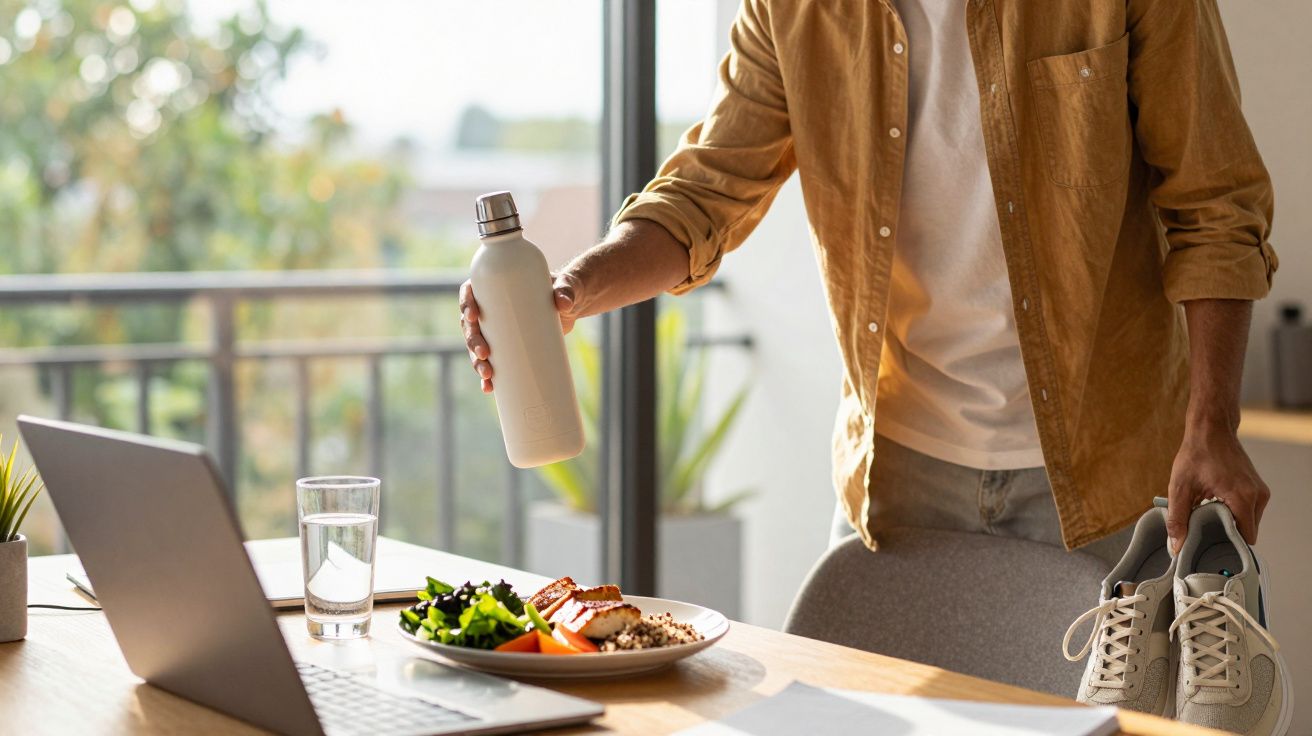
A post-lunch slump lunch plate under 600 kilocalories
Aim for a lunch of under roughly 600 kilocalories, high in fibre and protein, with moderate portions of slower-digesting carbohydrates.
One practical template:
- Protein source: for example, about 150 g chicken breast, fish, tofu, eggs or low-fat quark
- Large portion of vegetables: broccoli, green beans, salad leaves, cucumber, peppers, courgette-mix and match as you like
- Slow carbohydrates in a smaller amount: lentils, chickpeas, beans, wholegrain rice or quinoa
- Fat in moderation: a little olive oil, nuts or seeds for flavour and satiety
Protein keeps you fuller for longer without sitting heavily in the stomach. Fibre from vegetables and pulses slows the rise in blood glucose. That helps energy stay more stable, rather than collapsing an hour later.
If you slightly reduce your lunch portion and add more vegetables, you’re effectively buying concentration and alertness for the whole afternoon.
The classic “starter + main + dessert” combination can push many people beyond their limit quickly. A better option is to skip one element-save dessert for the evening, for instance, or take a smaller main and bulk out the rest with salad.
The key after eating: 10 minutes of movement and water
Why a short walk beats a third coffee
The second part of the trick starts the moment you put down your last forkful. Instead of sitting straight back down, a brief activity block is worth its weight in gold. The ideal is about 10 minutes of brisk walking.
What happens in your body:
- Your leg muscles act like a pump and keep blood moving.
- Circulation stabilises and the heart works more efficiently.
- Digestion proceeds more smoothly and bloating eases.
- The brain receives more oxygen-so you feel more awake.
You don’t need to be sporty. A quick loop around the block, a few flights in the stairwell, or a lap of the office building is enough. The key is to keep moving and not slip straight back into a seated posture.
Targeted hydration: the underestimated wake-up tool
Many people mistake tiredness for simple lack of fluids. Even mild dehydration can slow thinking and make headaches more likely. That’s why the mini routine after lunch should include a large glass of water-around 250–500 ml.
A glass of water after a meal can make your head feel noticeably clearer within minutes.
Still water at room temperature is ideal. If plain water feels dull, add lemon slices, cucumber, or fresh mint. What matters most is that your total fluid intake increases across the day.
Anti–post-lunch slump at a glance
This approach is easy to capture in a quick overview:
| Typical workplace problem | Targeted measure | What it does in the body |
|---|---|---|
| Heavy, dragging fatigue centred around the stomach | Lighter meal with plenty of vegetables and less sugar | More stable blood glucose, reduced bloating |
| Sudden urge to put your head on the desk | 10 minutes of brisk walking after eating | Better circulation, oxygen boost for the nervous system |
| Racing thoughts and no clear line of thinking | Drink a large glass of water straight away | Brain cells work more efficiently, improved focus |
Turning the trick into a routine that sticks
Drinking more without feeling forced
The biggest challenge is rarely knowing what to do-it’s doing it consistently. Simple prompts help:
- Keep a large, marked water bottle visible on your desk.
- Set three to four reminders on your phone spread across the day.
- Make drinking water a small “start ritual” before meetings or phone calls.
If you get bored quickly, use unsweetened tea or experiment with fresh herbs and fruit slices. The deciding factor is whether your daily fluid intake genuinely increases.
Movement-even in a home office
In an office, the walk to the canteen often forces a bit of movement. When working from home, that disappears and it’s easy to stay seated for hours. Even then, you can build in a mini routine:
- Stand up intentionally after eating-don’t go straight back to the laptop.
- Add a few gentle stretches for your back and shoulders.
- Take phone calls standing up or walking around your home.
What matters isn’t how “athletic” the movement looks-it’s that it happens at all.
No one needs to chase personal bests. It’s enough to deliberately interrupt the fixed seated posture and give your circulation a simple signal: “We’re still active.”
Two extra levers that support afternoon energy
Alongside food, movement and hydration, your environment and caffeine timing can make the afternoon dip easier to manage. If you can, get daylight soon after lunch-step outside for a couple of minutes during your 10-minute walk. Natural light helps your internal body clock stay alert and can make you feel more switched on than staying under indoor lighting.
Caffeine can help too, but strategy matters. If you’re already planning a brisk walk and a large glass of water, you may find you need less coffee overall. When you do have it, consider waiting until after your post-lunch walk rather than reaching for it immediately-this often reduces the “coffee on top of a crash” feeling and may prevent a later dip.
Three building blocks for more afternoon energy
At its core, the anti–post-lunch slump plan comes down to three simple building blocks that are easy to remember:
- Fewer fast carbohydrates, more vegetables and protein - your plate largely determines your energy until you finish work.
- 10 minutes of movement straight after eating - not a workout, just a planned, short activity boost.
- Drink consistently - especially one large glass of water immediately after the meal.
If you put these three points into your calendar or task manager, you’re far more likely to follow through when the day gets busy. Small adjustments can produce very real results: less yawning in meetings, a clearer head for complex tasks, and more energy left for the evening at home.
On packed workdays it’s especially worth a trial run: a slightly lighter lunch, a fixed plan for a short walk, and deliberate hydration. Many people notice after just a few attempts that the dreaded performance dip becomes much smaller-without extra caffeine or a strict diet.


Comments
No comments yet. Be the first to comment!
Leave a Comment