
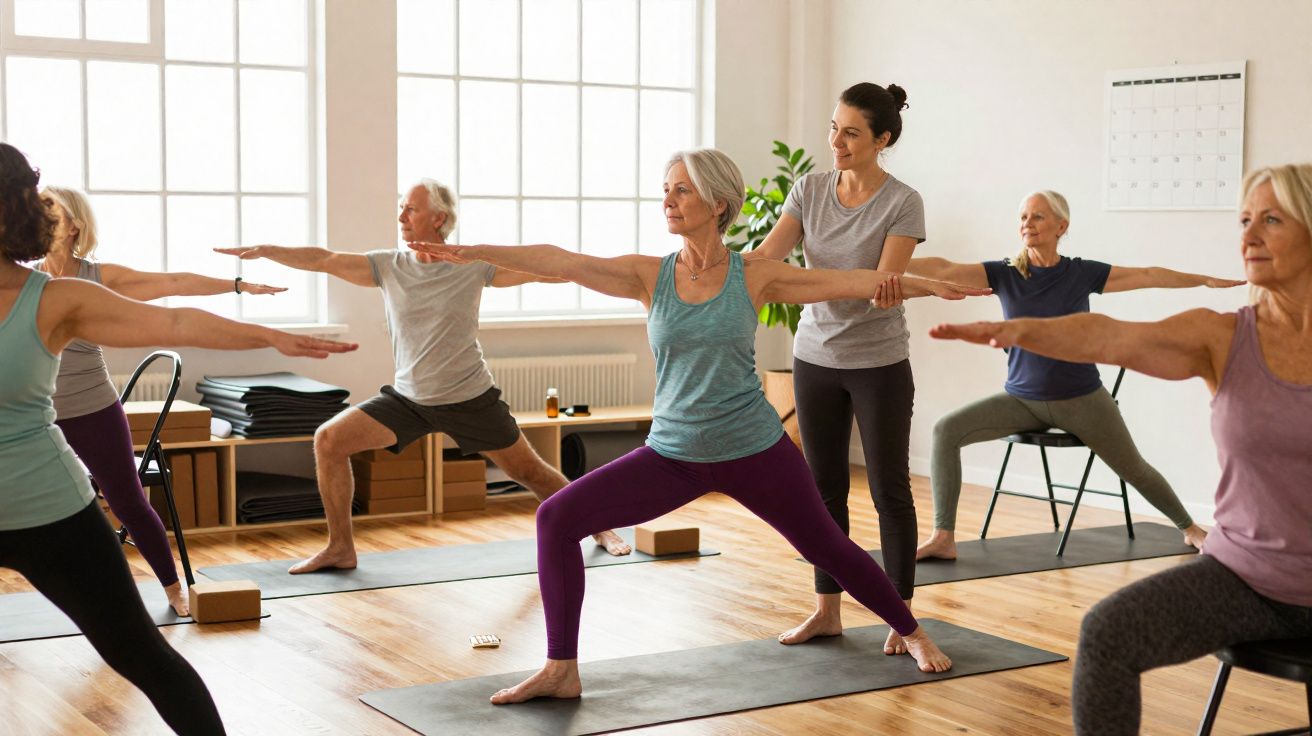
Walks and swimming lengths still matter. Even so, clinicians increasingly recommend one practice that weaves strength, balance, breathing and concentration into the same 60 minutes.
Why yoga keeps winning after 60
Plenty of people think yoga is simply a gentle stretch and a bit of calm. It can be-but it’s also purposeful strength training, joint-kind mobility work and consistent balance practice. For older adults, that combination targets common age-related issues: falls, stiffness, backache, poor sleep and mounting stress. You can practise on a mat or in a chair, and each movement can be made easier or more challenging without jolting joints or feeding competitiveness.
For adults over 60, yoga bundles strength, balance, mobility, and stress relief into one low-impact routine that adapts to changing bodies.
Evidence and clinical insights
Studies have associated regular yoga with reduced persistent pain and lower use of pain relief medicines in older adults, including research reported in Pain Medicine. Wider reviews also link practice with improved sleep and better indicators of anxiety. Clinicians often highlight the built-in breathing techniques, which can help steady the nervous system and support healthier blood pressure responses during effort. There may be cognitive benefits too: coordinated movement plus measured breathing can train attention and memory alongside physical capacity.
What happens in the body
Yoga uses unhurried transitions and held positions to develop several systems at once. Muscles work through longer ranges of motion, and smaller stabilising muscles around the hips, ankles and spine start doing their share. Joints move smoothly without repetitive pounding. The diaphragm is coached to drive the breath, which can help calm the heart rate. Altogether, these effects translate to daily abilities-climbing stairs, rising from a chair and turning to look behind you-without feeling unsteady.
Pain relief without more pills
A number of styles can ease discomfort in the lower back, neck and knees by combining gentle mobility with core engagement. The principle is straightforward: move frequently but not forcefully; load tissues in a controlled way rather than compressing them. With time, many people notice fewer flare-ups and better tolerance for everyday tasks. Classes often finish with a short relaxation, which can settle the nervous system and reduce the intensity of pain signals.
Short, consistent sessions beat rare heroic workouts. Ten to twenty minutes, most days, builds a durable base without setbacks.
Balance, posture and strength
Single-leg work and slow step-back patterns sharpen balance reactions that can prevent falls. Postures that lift the chest and strengthen the upper back help counter rounded shoulders that often develop with age. Holding your own bodyweight builds practical strength in the thighs and glutes, easing load on the knees and reducing the chance of a misstep on stairs or uneven pavements.
Sleep, stress and the brain
Movement guided by the breath helps shift the body away from “fight or flight”. That change in state often means falling asleep more quickly and waking less during the night. Paying close attention to alignment and breathing becomes a kind of moving meditation. Research links these habits with improvements in working memory, switching attention and mood in older adults. It isn’t mysterious-it’s consistent repetition supported by steady breathing.
Yoga after 60 compared with walking and swimming
Walking and swimming are excellent for cardiovascular fitness. However, they can miss pieces many older people need for day-to-day resilience, such as specific balance drills and strength at the end of a joint’s comfortable range. This quick comparison clarifies how each option contributes.
| Feature | Walking | Swimming | Yoga |
|---|---|---|---|
| Balance training | Limited | Limited | Targeted |
| Strength at end range | Low | Low to moderate | Moderate |
| Joint impact | Low | Very low | Very low |
| Pain management | Variable | Often helpful | Often helpful |
| Sleep and stress | Moderate | Moderate | Strong |
| Cognitive support | Modest | Modest | Notable |
| Equipment needed | Shoes | Pool access | Mat or chair |
All three have value. Yoga stands out because it brings balance, mobility, strength and self-calming into one adaptable session that you can do at home.
Getting started safely
Begin with a gentler approach. Hatha and restorative classes tend to move at a slower pace and give you time to learn. Chair yoga can remove worry about getting down to and up from the floor. Iyengar-influenced classes often prioritise alignment and use props to make positions safer and clearer. Ideally, choose a qualified teacher familiar with arthritis, osteoporosis and joint replacements, so they can modify poses confidently.
- Begin with 2–3 shorter sessions each week, around 15–25 minutes per session.
- Mobilise ankles, hips and shoulders before attempting longer holds.
- Breathe through your nose and aim for an even, steady flow of breath.
- If you have spinal problems, avoid extreme twists; keep the movement smaller.
- If you have glaucoma or poorly controlled blood pressure, avoid long holds with the head below the heart.
- Use a chair, wall or blocks to improve balance and comfort.
- Stop if you feel sharp pain; adjust the position or choose a different pose.
Progress feels best when you can still talk in full sentences while holding a pose. Strain less; repeat more.
A note on home practice (especially for yoga after 60)
If you practise at home, set yourself up to succeed: a non-slip surface, enough space to extend your arms without knocking furniture, and a sturdy chair (not one on wheels). Keep a cushion or folded blanket nearby for comfort under knees or hips, and consider practising near a wall for added confidence during balance poses.
A simple weekly plan to try
Day 1: A chair-focused sequence: ankle circles, seated cat–cow, gentle seated twists and sit-to-stand practice.
Day 3: A standing balance flow: heel-to-toe walking, tree pose using a wall, and supported step-back lunges.
Day 5: A floor session: bridge pose, supported sphinx and side-lying leg lifts.
Finish each session with five minutes of relaxed breathing.
Results many people notice in the first month
Getting up from the sofa or out of a car often feels more straightforward. Mornings can start with less stiffness. Standing for cooking or gardening may take less effort. Sleep may become more settled, and worry can feel less relentless. The most unexpected change for many is confidence: feeling steadier affects how you move through a room, a supermarket aisle or a busy pavement.
Finding the right class and teacher
Aim for smaller classes where there’s space for questions and individual adjustments. Ask how the teacher accommodates knee replacements, osteopenia or vertigo. Props should be treated as standard tools, not as a sign you’re “not good at yoga”. Strong classes offer choices continuously. If you leave feeling overstimulated or remain sore for several days, the session was probably too intense-try a different teacher or switch to a chair-based option.
What to look for in a yoga after 60 class
Seek clear safety cues (especially for knees, hips and spine), pacing that allows you to breathe comfortably, and encouragement to rest whenever needed. You should feel worked-never punished.
Useful add-ons and combos
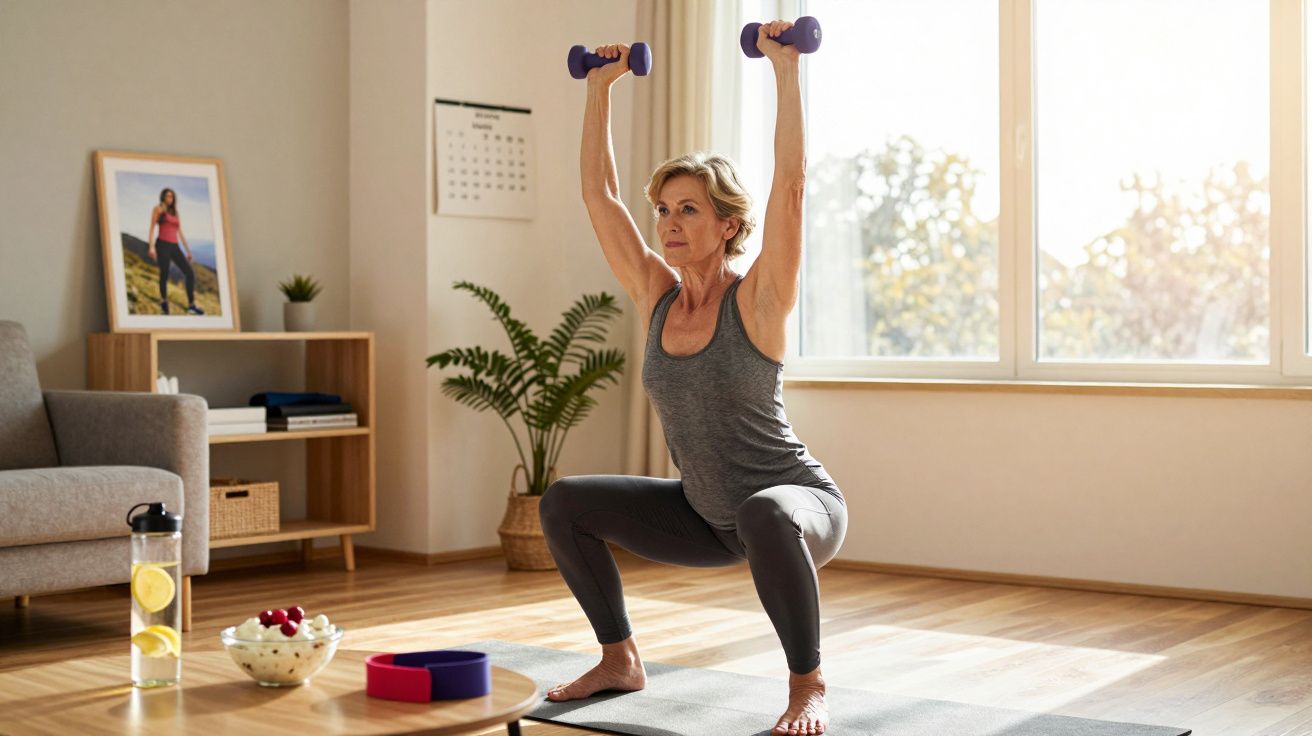
Yoga combines well with short walks for heart health and daylight exposure (supporting vitamin D). Adding two brief strength sessions each week using resistance bands or light weights can increase bone-loading benefits, particularly around hips and wrists. Many older adults also enjoy tai chi on rest days, as it reinforces balance and gentle weight shifts without leaving you drained.
If you live with osteoporosis, slipped discs or high blood pressure, ask your clinician what to avoid and what is encouraged before you begin. Poses are always adjustable: minimise spinal flexion if needed, keep twists small, swap kneeling for seated options, slow the breath without holding it. The aim isn’t a picture-perfect pose-it’s a body that manages everyday life with less pain and more ease.



Comments
No comments yet. Be the first to comment!
Leave a Comment