
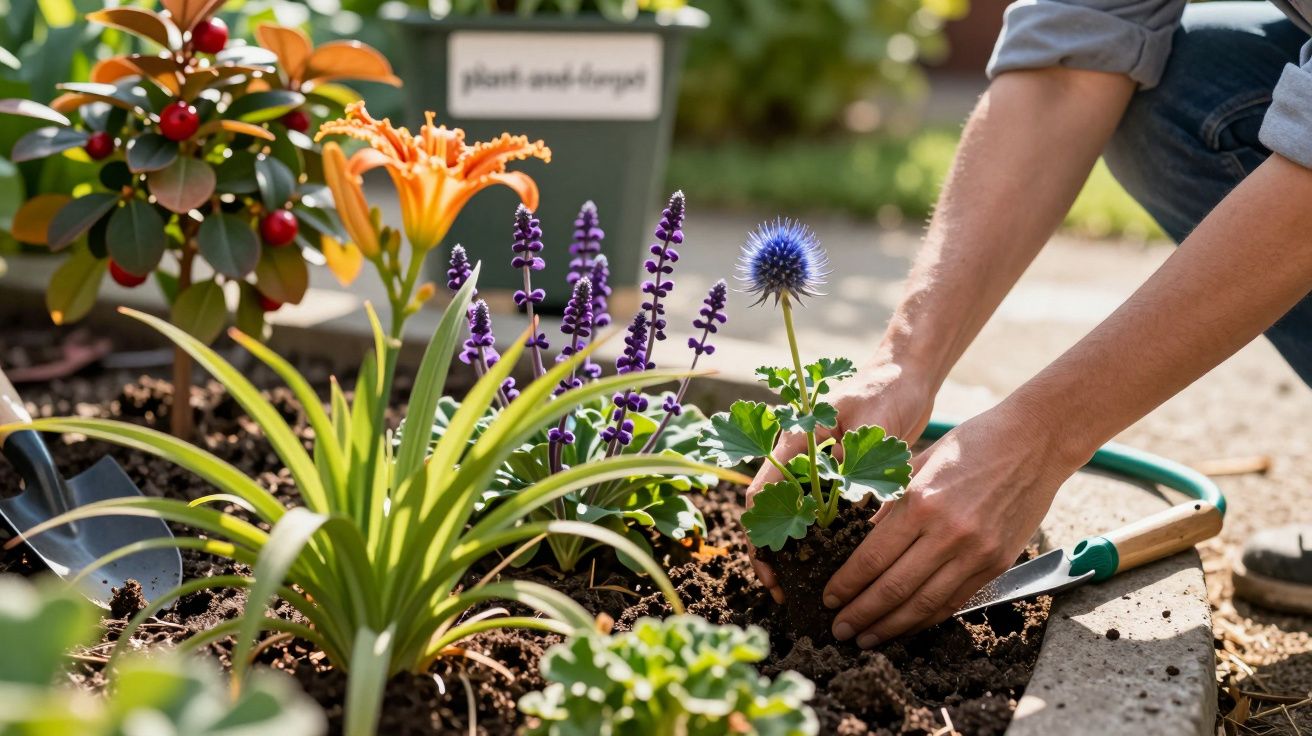
Busy diary, limited budget, but still picturing a lush garden?
There are plants that get on with the job quietly, even when you don’t have much time to spare.
Across Europe and North America, gardeners increasingly want outdoor spaces that look smart without hours of weekend weeding or specialist horticultural know-how. The seven plants below are hardy, accommodating and good-looking, coping with everything from sandy patches to dry shade-ideal if you want greenery that largely takes care of itself.
Why low-maintenance plants matter now
Hotter, drier summers and higher water bills are reshaping the way people plan home gardens. Many traditional cottage-garden favourites demand frequent watering, lifting and dividing, or regular pruning-tasks that simply don’t suit modern routines.
Low‑maintenance plants save time, reduce water use and still keep borders full, colourful and alive with pollinators.
In broad terms, the plants here fall into two categories: herbaceous perennials (often called “border perennials” or just “perennials”) and shrubs/small trees, which gardeners refer to as woody plants or woody ornamentals. Both come back year after year, and none require fussy, complicated care.
A practical tip before you start: even the toughest plants establish faster if you improve the planting hole with a little garden compost and water thoroughly on planting day. After that, they’re far more forgiving than high-maintenance bedding schemes-particularly useful in areas prone to hosepipe restrictions.
Easygoing perennials for a low-maintenance garden: colour that returns every year
1. Cranesbill geranium (Geranium species)
Don’t mix these up with the bright, tender pelargoniums often seen in summer window boxes. True cranesbills are hardy, long-lived perennials that form tidy hummocks of leaves, then carry simple, cheerful flowers over many weeks.
Different species solve different awkward spots. Balkan cranesbill (Geranium macrorrhizum) copes with dry shade under trees, where lawns and many bedding plants struggle. Blood cranesbill (Geranium sanguineum) is happier in sun and will flower reliably in poor, even stony ground.
Cranesbill geraniums tolerate patchy watering, resist most pests and diseases, and almost never demand dividing or replanting.
Once flower stems start looking tatty, snip them off. If you want plants looking especially fresh, shear them lightly in mid-summer; new leaves appear quickly and you’ll often get another flush of flowers.
2. Daylily (Hemerocallis hybrids)
A daylily bloom really does last just one day-but the point is how many buds each clump produces. With so many flowers opening in succession, plants can look in peak colour for weeks. Expect shades of yellow, orange, rich red and near-purple, in both sleek classic forms and more ruffled varieties.
To keep every detail from the original source (even the odd bits), here are several “related” lines that were included alongside the daylily section:
- Why walking barefoot on cold floors can make your whole body feel colder
- Netflix: It’s one of the best action-adventure movies of all time, and you only have 2 days left to see it
- Here’s the precise age when making new friends gets harder, according to researchers
- Straight out of science fiction: Japanese scientists find the “off switch” for ageing that could add 250 years to our lives
- Underfloor heating is now just a memory: everyone is choosing this alternative that saves money and heats better
- Forget the French bob; this square cut will be the trendiest in 2026, according to experts
- Tenant fails to return keys at end of lease, court rules landlord cannot charge extra rent
- Wildlife experts stunned after GPS collar shows a young polar bear swimming an extraordinary distance across open sea
Back to the garden: daylilies do best in sun or light shade in reasonably moisture-retentive soil, yet they cope with dry spells far better than many other showy perennials. Once established, they ask very little.
- Watering: only in prolonged drought after the first year
- Feeding: one generous feed in spring is usually sufficient
- Care: remove faded flower stems and dead leaves to keep things neat
Plant a few varieties together beside a path or patio for an extended, shifting display. They also work well as low-effort edging around shrubs.
3. Russian globe thistle (Echinops ritro)
If you want structure without the workload, Russian globe thistle is hard to beat. From July to September it produces steel-blue, ball-shaped flowerheads that bring a strong architectural note to sunny borders. The prickly foliage and stout stems stay upright and presentable, even in gusty weather.
It will grow in almost any free-draining soil-light sand, stony ground, or slightly clayey soils-while tolerating summer dryness with ease. The main thing it won’t forgive is shade: give it full sun and it will pay you back in high-impact colour.
Globe thistles are among the best nectar plants for bees, hoverflies and butterflies in hot, dry, sunny gardens.
Cut stems for indoor arrangements if you like, or leave them standing. The seedheads dry beautifully, adding winter interest and offering insects shelter. Generally, one clear-up cut in late winter is all that’s needed.
4. Woodland sage / steppe sage (Salvia nemorosa)
A relative of culinary sage but grown for ornament, Salvia nemorosa sends up upright spires of purple, pink or white flowers above fragrant foliage. It excels in full sun and lean, well-drained soil, including sandy ground that defeats more demanding plants.
These salvias strongly dislike sitting wet through winter, which makes them excellent for raised beds, gravel gardens and slopes. In fact, in poor, dry soil they often flower better than they do in rich, heavy ground.
If you trim off spent flower spikes, you can encourage a second round of blooms. Otherwise, a firm cut back in early spring keeps clumps compact and flowering freely.
Tough shrubs and small trees for “plant-and-forget” structure
Perennials provide seasonal colour, but woody plants create the framework-the “bones” of the garden. The three options below are not dependent on routine pruning and are typically resilient on ordinary garden soils.
5. Copper serviceberry (Amelanchier lamarckii)
Called copper serviceberry for its bronze-tinged young leaves, this large shrub or small tree can grow to about 6 metres while still looking airy and elegant. It earns its keep across the seasons: spring flowers, early summer fruit and glowing autumn colour.
Copper serviceberry copes with both damp and chalky soils and rarely needs more than the occasional thinning cut.
In April and May, it’s covered in clouds of white, starry blossom. By July, the dark berries ripen; they’re edible and popular with birds. When autumn arrives, the foliage shifts to rich reds and oranges-one plant delivering interest for most of the year in a medium-sized garden.
6. Beauty bush (Kolkwitzia amabilis)
Beauty bush more than justifies its name in late spring, when arching stems are smothered in soft pink, bell-shaped flowers. Outside that peak, it forms a relaxed, fountain-like shrub that sits well at the back of a border or within an informal hedge.
It’s happy in sun or partial shade. Full sun gives the best flowering, but it remains robust in brighter shade near buildings or under taller trees. Most normal garden soils are suitable, provided they drain and aren’t over-enriched.
Too much feeding encourages leaf growth at the expense of flowers, so keep fertiliser light. It copes with short dry spells; water only during extreme drought while it’s still getting established.
7. Cornelian cherry (Cornus mas)
Cornelian cherry is a multi-stemmed dogwood that can eventually reach 8 metres, though it takes gentle shaping well if you want to guide its form. It’s also one of the earliest shrubs to bloom: small yellow flowers appear in clusters as early as February, often before the leaves arrive.
That early timing offers valuable nectar for bees on milder late-winter days. Later in the year it produces red, olive-shaped fruits. When fully ripe they are edible and, in parts of Europe, are traditionally made into jams and syrups.
Cornelian cherry tolerates heat, wind, dry spells and light shade, making it one of the most resilient choices for low-input gardens.
The main thing it won’t tolerate is waterlogged ground. In any reasonably drained soil, it can thrive for decades with minimal intervention.
A useful extra for low-effort gardens: if you include a simple water butt and prioritise mulch (see below), you’ll cut summer watering further-particularly helpful in drier parts of the UK and on free-draining soils.
Quick comparison: what each plant offers
| Plant | Main strength | Best position | Water needs once established |
|---|---|---|---|
| Cranesbill geranium | Ground cover, weed suppression | Sun to dry shade | Low |
| Daylily | Long flowering season | Sun or part shade | Moderate to low |
| Russian globe thistle | Drought-tolerant, pollinator magnet | Full sun | Very low |
| Woodland/steppe sage | Vertical structure in poor soils | Sunny, well-drained spots | Very low |
| Copper serviceberry | Four-season interest | Sun or light shade | Low |
| Beauty bush | Mass of late spring flowers | Sun to part shade | Low |
| Cornelian cherry | Very early bloom, edible fruit | Sun or part shade | Low |
How to combine these plants in a real garden
For a straightforward, low-care border of roughly 5 × 3 metres, place a cornelian cherry (Cornus mas) or copper serviceberry (Amelanchier lamarckii) at the back as the main structural feature, and position a beauty bush (Kolkwitzia amabilis) to one side (or flank the tree with it).
In the front and middle, plant broad drifts of cranesbill geranium (Geranium species), daylily (Hemerocallis hybrids) and woodland sage / steppe sage (Salvia nemorosa). Add Russian globe thistle (Echinops ritro) as bold, upright punctuation through the planting.
This combination provides flowers from late winter (cornelian cherry) through spring (serviceberry and beauty bush) and into high summer (sage, globe thistle, daylilies and cranesbill). The shrubs contribute height and a sense of shelter; the perennials knit the planting together and suppress weeds by shading the soil surface.
Two gardening terms worth knowing
Well-drained soil means water soaks in and then moves through the ground, rather than sitting in puddles for days. A quick check is to dig a small hole, fill it with water, then look again an hour later. If most or all of the water has gone, the drainage is typically suitable for the plants listed here.
Mulch is a loose layer spread over the soil, commonly bark chips, compost or gravel. Used around these seven plants, mulch reduces evaporation, helps keep roots cooler in hot spells and slows weed growth-making an already forgiving garden even easier to manage.
Balancing low effort with long-term health
Even the most robust ornamentals benefit from a bit of attention in their first year. Consistent watering during establishment encourages deeper rooting, which then means far less watering in future summers. It’s best thought of as a short “set-up” period that pays dividends for years.
After that, small, regular actions beat occasional big interventions: a light feed in spring, cutting back old stems over winter, and a quick scan for invasive weeds. With those basics in place, the seven plants above can turn an unloved corner into a resilient, attractive garden that fits around real life-rather than taking it over.






Comments
No comments yet. Be the first to comment!
Leave a Comment