
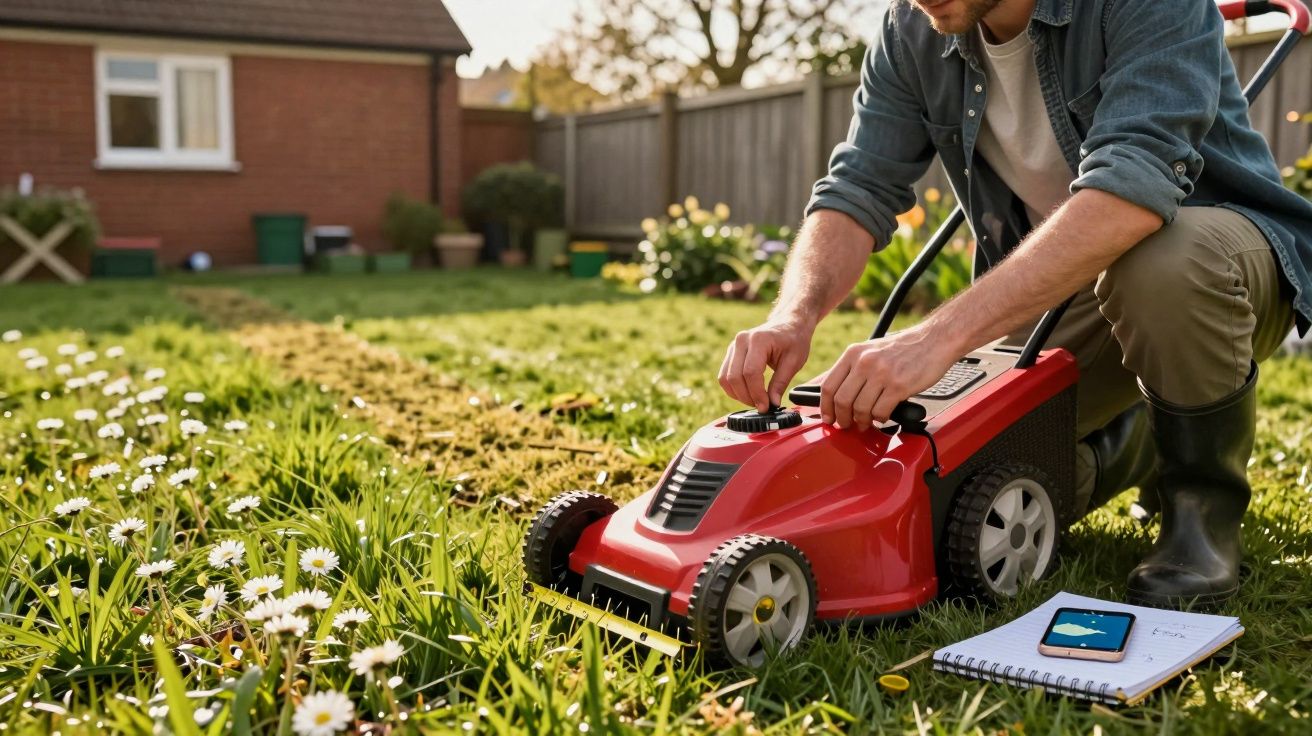
March arrives, the lawn begins to stir, and the mower suddenly seems hard to ignore.
Get the setting wrong, however, and you can undo weeks of recovery in a single pass. The first cut of the year feels like drawing a line under winter, yet it’s also the moment many lawns take their biggest knock. If you mow too low, start too soon, or cut in poor conditions, the grass can stay weakened for the whole of spring. A handful of carefully judged centimetres can be the difference between a rich green carpet and a thin, yellowing garden.
Reading your lawn: when March really is the right time
Plenty of gardeners treat the calendar like an instruction manual and bring the mower out as soon as March appears. In reality, your lawn keeps its own timetable. Temperature, rainfall and-crucially-soil moisture are far more important than the date.
Look for these signs that the lawn is ready for its first cut:
- The grass has shifted to a bright, even green rather than a tired winter brown.
- Most blades are around 8–10 cm tall.
- The ground feels firm underfoot, not spongy or waterlogged.
- A walk across the lawn doesn’t leave muddy footprints behind.
A basic ruler will tell you more than guesswork ever will. Push it straight down into the turf and check the longest blades around it. If the grass is still under 8 cm, hold off. If it’s already beyond 10 cm, plan a very gentle first cut instead of a severe chop.
Soil condition matters just as much as height. Cutting on heavy, wet ground compresses the soil and leaves ruts; roots then struggle for air, and moss is quick to move in.
Only begin the first cut once the grass is 8–10 cm and the soil is firm rather than squelchy.
Weather traps: why a sunny morning can still be the wrong moment
Spring sunshine can be misleading. Early in the season the grass is still recovering from cold weather, and poor timing can shock it just as growth is restarting.
Avoid mowing when:
- The grass is wet with morning dew or there’s been recent rain.
- Hard night frosts are still common.
- Strong, cold winds are drying the surface.
Wet grass tends to fold under the mower rather than being sliced cleanly. It can block the deck, tear at the plant, and leave a ragged finish that encourages disease. There’s another risk too: if you cut late in the day and a sharp frost follows overnight, the newly exposed tips can scorch, slowing recovery for weeks.
Aim for a dry afternoon, once the dew has lifted and the chance of a hard frost that night is low.
Further reading (as seen alongside this article)
- Fine hair after 50: a hairstylist reveals the tricks that really work on her clients
- Reverse colouring: the secret salon trick that makes salt-and-pepper hair look younger
- Another nuclear fusion world record, this time from the US private sector
- Salt and pepper hair: “reverse colouring” is the best technique to avoid a granny look
- With its 337 metres and 100,000 tonnes, the largest aircraft carrier on Earth rules the oceans
- Bad news for a climate optimist: satellites in the Pacific measure 35-metre monster waves that some scientists call natural variability and others a terrifying sign of climate chaos
- This retired couple never worked a day in their lives – yet they’ll receive a more than comfortable pension in 2026
- I’m a hairdresser and this is the best advice I give to women over 50 who colour their hair
The one-third rule: the quiet law that protects your lawn
It’s still common to see people drop the mower to its shortest setting to “get it done” in one go. The lawn may look tidy for a day or two, but the damage can linger for the rest of the season.
Grass blades aren’t just there for appearance-they act like solar panels for the plant. Take too much off at once and the grass suddenly loses the energy source that feeds its roots.
How the one-third rule works in practice
Never remove more than one-third of the grass height in a single cut.
This guideline matters throughout the year, but in March it isn’t optional. For example:
| Current height | Maximum you should cut | Height after mowing |
|---|---|---|
| 9 cm | 3 cm | 6 cm |
| 10 cm | 3.3 cm | ≈ 6.5–7 cm |
| 12 cm | 4 cm | 8 cm |
If your lawn has raced ahead to 12–13 cm because you waited, don’t be tempted to scalp it down to bowling-green height. Instead, schedule two or even three mows over several weeks, lowering the height gradually while keeping within the one-third rule each time.
March lawn mowing height: the magic figure of 5–6 cm for the first cut
Most lawn professionals point to the same comfortable target for the first spring mow: 5–6 cm. It sounds modest, but it strikes an important balance.
The ideal height after the first March cut is roughly 5–6 cm.
At that height, several benefits line up at once:
- Enough leaf remains for strong photosynthesis.
- Winter-worn tips are removed, encouraging fresh, clean growth.
- The soil surface stays more shaded, which slows evaporation.
- Weed seeds find fewer bare patches and struggle to establish.
Keeping the lawn slightly higher also supports tillering-the process where each grass plant produces extra side shoots. More shoots create a thicker sward, fewer gaps, and less opportunity for moss and dandelions to take hold.
Setting your mower: centimetres, not guesswork
Many mowers use vague numbers or icons instead of clear centimetre settings. A “3” on one model might mean 4 cm, while on another it could be closer to 7 cm.
To remove the uncertainty, do a quick one-off check:
- Put the mower on a firm, flat surface such as paving or a path.
- Set the cutting height to the highest or second-highest notch.
- Measure from the ground to blade height with a ruler or tape measure.
Adjust until you reach that 5–6 cm target, then note which setting corresponds to it on your machine. Many walk-behind mowers sold by major DIY retailers reach this height on their highest or near-highest setting-but measuring is the only way to be sure.
The pre-mow checklist for a strong spring lawn
Before you tackle that untidy March growth, a few quick checks can prevent weeks of bother later:
- Sharpen or replace the blade so it cuts cleanly rather than tearing.
- Remove sticks, stones, and children’s toys from the lawn.
- Mow in straight, slightly overlapping passes without racing.
- If the grass is long, collect heavy clippings to prevent smothering.
- If you wish, apply a light layer of well-rotted compost to support soil life.
A sharp blade and a calm, steady pace matter just as much as the height setting.
What happens if you ignore the height rule?
Mowing too low in March doesn’t usually kill a lawn outright, but it often triggers a chain of small setbacks that build up.
When little leaf remains, the grass has to draw on root reserves simply to survive. Those reserves should be powering spring thickening and deeper rooting; instead, they’re spent replacing lost foliage. The result is a lawn that:
- Turns yellow in patches, especially on thin or poor soils.
- Develops bare areas where weed seeds can germinate.
- Lets moss dominate in damp or shaded spots.
- Becomes less tolerant of summer drought and foot traffic.
Once moss and weeds establish, you’re often pushed towards scarifying, overseeding and extra watering. Starting properly at 5–6 cm is both cheaper and kinder than trying to rescue a stressed lawn in May.
Two real-life scenarios: cautious vs impatient gardener
Imagine two neighbours on a typical suburban road.
Alex waits until late March. The grass is about 9 cm, the soil has dried, and he mows down to 6 cm using a sharp blade. A fortnight later, the lawn has filled out with very few bare patches. By April it feels soft and springy, needing only a light trim every week to ten days.
Next door, Sam mows early in March during the first warm spell. The lawn is still wet, the grass is only 6–7 cm, and the mower is set far too low. The result is a 3 cm stubble with wheel marks. By late April, pale patches appear, moss spreads near the path, and daisies move into the thinnest areas. To put it right, Sam ends up aerating, overseeding and watering heavily.
Same weather, same soil-just a different level of respect for a few centimetres of grass.
Key terms gardeners often hear in spring
Lawn advice often includes technical terms that sound more complex than they are. Two you’ll hear frequently around the first cut are:
- Tillering: when a grass plant produces additional shoots from its base. More shoots mean a denser, tougher lawn.
- Scalping: mowing so low that stems (and sometimes even soil) are shaved, leaving brown or bare areas that take a long time to recover.
A first cut at 5–6 cm encourages tillering, while cutting too low increases the risk of scalping-especially on uneven ground with bumps and dips.
Related spring tasks that boost the effect of the first cut
The first mow pays off most when it’s paired with gentle follow-up rather than harsh treatments. A light rake after mowing lifts lingering winter debris and lets air move through the sward. If you have small bare patches, spot-seeding while the soil is still cool helps new seedlings establish before summer warmth arrives.
A thin topdressing of compost or a fine soil mix can also feed soil life and subtly level shallow hollows. Combined with the right mowing height, these small steps help the lawn stay greener, resist weeds, and cope better with children playing, pets running about, and garden furniture throughout the season.
A practical note on UK lawns in March
Because many UK lawns are a mix of ryegrass and fescues, spring growth can be rapid once temperatures rise-yet the ground often stays damp after winter. That combination makes the first cut especially sensitive to timing: wait for firmness underfoot, then keep to the one-third rule and a 5–6 cm finish.
If you’re unsure, it’s safer to start slightly higher and reduce gradually over subsequent mows than to take too much off in one go. The grass will tell you quickly which approach it prefers-through colour, density and how well it rebounds.





Comments
No comments yet. Be the first to comment!
Leave a Comment