
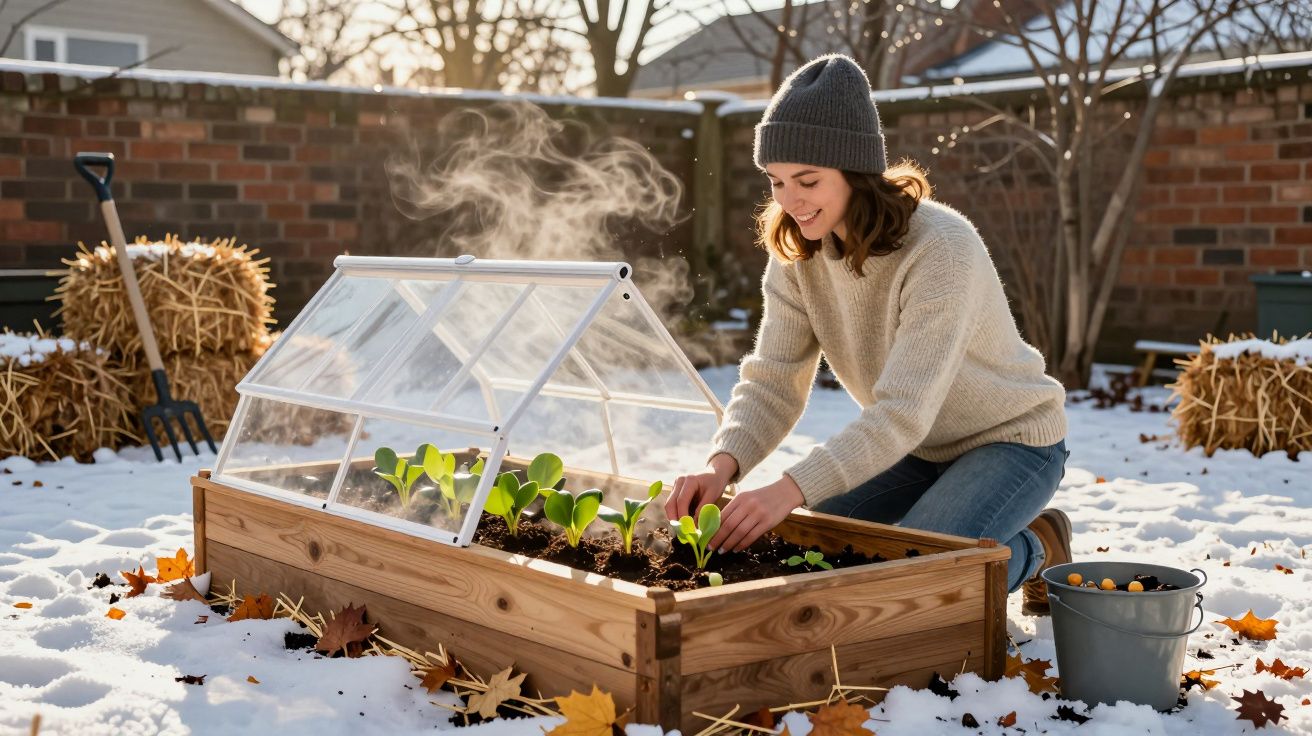
My beds didn’t come to a halt. They simply changed pace.
A bout of curiosity nudged me into trying a low-tech way to keep things moving through winter. What I ended up with was a reliably warmer, plant-friendly microclimate made with biology, not electricity-and largely fuelled by kitchen scraps.
Why the winter slowdown is overrated
A lot of gardeners down tools once the first proper frost arrives: taps get turned off, beds are blanketed with mulch, and seed trays get packed away. But beneath leaf litter and mulch, soil life carries on regardless of the cold. Microbes don’t “pause” for winter-they keep digesting, and that process releases heat. With a bit of planning, you can capture that natural warmth and steer it towards crops so they keep ticking over through the darkest months.
Old-school growers understood this well. Market gardeners used warm decomposition to push salads and roots early-even in January. Today we tend to call the method hotbeds, but the principle is straightforward: build a compost heap that runs hot, then grow on or above it.
The quiet furnace under your feet
Fresh, active compost is more than a way to reduce waste; it’s a genuine heat source. As carbon-rich and nitrogen-rich materials break down, bacteria generate substantial warmth. A well-made heap often holds 50–65°C in the centre, and that heat can be directed into seed trays, cold frames, or raised beds positioned above the hot core.
Active compost can reach 50–65°C. If you redirect even part of that warmth into seedlings and salads, winter stops feeling like an off-limits season.
What actually creates the heat
Two variables do most of the work: the carbon-to-nitrogen balance and moisture.
- Dry browns (fallen leaves, straw, shredded prunings) supply carbon for microbes.
- Fresh greens (grass clippings, vegetable peelings, coffee grounds, manure) bring nitrogen and trigger rapid growth.
- Add water until the mix feels like a thoroughly wrung-out sponge.
- Air gaps matter: microbes need oxygen, so structure is your friend.
And then there’s the deciding factor:
Size matters: a heap of roughly 1 m³ (about a cubic yard) retains heat far better than a small pile and can run hot for weeks.
Build a simple hotbed in a weekend (no electricity)
You can create a hotbed directly on soil, on a patio, or inside a compact cold frame. No heaters, no cables-mostly free or scavenged materials.
Materials checklist for a hotbed
- Roughly 1 m³ of browns: dry leaves, straw, or chipped branches
- Roughly 1 m³ of greens: fresh clippings, veg scraps, coffee grounds (well-rotted manure is a bonus)
- Water (enough to reach wrung-sponge moisture throughout the heap)
- Optional frame: straw bales, pallets, or a basic wooden box
- Boards or a slatted crate to hold seed trays above the hottest core
- A compost thermometer (useful) or a metal rod to gauge heat by touch
Assembly steps
- Choose a site that gets winter sun and is protected from prevailing winds.
- Start with a coarse base (twiggy material or a pallet) to improve airflow from below.
- Build in layers: 10–15 cm of browns, then 5–10 cm of greens, repeating until you reach size. Lightly water between layers.
- With a fork, roughly mix the top 30 cm to even out oxygen and moisture.
- Finish with an insulating cap of about 10 cm of straw or leaves.
- After 48–72 hours, check the centre: it should feel hot.
- Set seed trays or a shallow growing bed on a raised platform above the core, and ventilate slightly to reduce condensation.
Keep trays 10–20 cm above the core. Too close and you can cook roots; too far and you lose the benefit. Fine-tune the height with timber offcuts or blocks.
A practical note before you sow
Hotbeds tend to “spike” early. If you plant immediately, you may expose roots to excessive heat. Let the heap hit its peak temperature, then settle slightly before you rely on it for seedlings. A thermometer makes this easy, but even a metal rod left in the centre for a minute will tell you whether the core is still fiercely hot.
What to grow above a hotbed
Give hardy crops a few extra degrees at the roots, add a simple cover overhead, and they respond quickly. The goal isn’t tropical growth-it’s keeping the root zone mild enough that plants don’t stall.
- Corn salad (mâche), spinach, rocket (arugula), winter lettuce
- Radishes, baby turnips, early carrots
- Asian brassicas: mizuna, tatsoi, pak choi, mustard greens
- Pea shoots and broad bean tips for tender, vitamin-rich greens
- Parsley, chives, coriander (cilantro) for steady cut-and-come-again herbs
You can also use a hotbed as an early-season nursery. Tomatoes, peppers and basil can be started in late winter because warm roots speed up germination. Later, harden plants off under a straightforward cover.
Spacing and watering tweaks
Extra warmth accelerates growth-but it also dries compost and potting mix faster. In cold, clear spells, check moisture every two days. Water in mid-morning so foliage dries before nightfall. Under covers, give seedlings slightly more space than your summer spacing to reduce humidity and lower the risk of mildew.
Hotbed timeline and actions
| Week | Core temperature | What to do |
|---|---|---|
| 0–1 | Rapid rise to 50–65°C | Allow it to peak. Build the platform and set up the frame. Don’t sow yet. |
| 1–4 | Steady at 50–60°C | Sow hardy leaves in trays. Vent on sunny days. Keep a close eye on moisture. |
| 5–8 | Cooling to 40–50°C | Plant quick roots. Start early tomatoes in plug trays with a light cover. |
| 9–12 | 30–40°C | Keep salad production going with successive sowings. Add fresh greens if the heat drops. |
| After | 25–35°C | Use as a warm nursery bed. When it’s spent, spread the compost over veg beds. |
Common mistakes (and how to dodge them)
- Heap too small: target 1 m³ (about a cubic yard) so it can ride out cold snaps.
- Bad balance: pale, sluggish heaps usually need more greens; smelly, slimy heaps need more browns and more air.
- Overcompacting: don’t stamp it down-structure preserves air pockets.
- Dry core: if temperature falls and the material feels dusty, water with warm water from a can.
- Overheating trays: if the compost climbs above 65°C, lift the platform by a few centimetres.
- Critters: fix wire mesh beneath the heap to deter rodents, and avoid adding meat or dairy.
Think of a hotbed as a living radiator: feed it a balanced mix, and it repays you in salad bowls and earlier starts.
Small-space hotbeds for balconies and courtyards
No lawn and no room for a full heap? A 200–300 litre bin can still provide worthwhile warmth. Drill airflow holes near the base, then layer browns and greens exactly as you would in a larger build. Lay a wooden shelf across the top and set seed trays under an upturned clear storage box to create a mini cloche. City growers can often collect coffee grounds and bagged leaves for free. It won’t match a full 1 m³ hotbed, but the temperature lift is still noticeable.
Another neat approach: stack two pallet collars on paving, insulate the sides with cardboard, and fill the space as a compact hotbed. Top it with an old window to mimic a cold frame, and crack it open on bright days to prevent damping-off.
Costs, gains and a quick back-of-the-envelope check
Bagged leaves and coffee grounds can cost nothing. Straw bales or pallet collars may cost a modest amount. A compost thermometer is optional, though genuinely helpful. In exchange, one hotbed can provide weekly harvests of greens plus early roots for 8–12 weeks, right when shop prices are typically highest. When the heat fades, you’re still left with a pile of rich compost to refresh spring beds.
Safety and practical notes
- Ventilation: trapped humidity encourages disease-open covers on every bright day.
- Gas and smell: active compost releases CO₂ and a little ammonia, so keep hotbeds outdoors (or only in a well-ventilated shed).
- Fire risk: self-heating is rarely an issue below 80°C, but keep the heap moist and away from timber walls.
- Hygiene: wash hands after handling fresh manure. Keep edible leaves away from raw compost-grow in trays or in clean soil placed above the heap.
Two smart add-ons to boost hotbed winter results
Place thermal mass close to plants: dark water containers soak up daytime warmth and ease overnight temperature drops. Combine your hotbed with a light row cover or horticultural fleece to cut wind-chill and radiative cold. Used together, they often lift night-time temperatures around leaves by a couple of degrees-enough to reduce frost stress and keep growth moving.
If a heap is too bulky, try a manure trench under a raised bed as an alternative. Dig a shallow trench, pack it with fresh, balanced organic matter, cap it with 20–25 cm of soil, then plant into that top layer. The trench warms the roots while the bed looks completely normal-tidy, effective, and ideal where a large hotbed won’t fit.






Comments
No comments yet. Be the first to comment!
Leave a Comment