
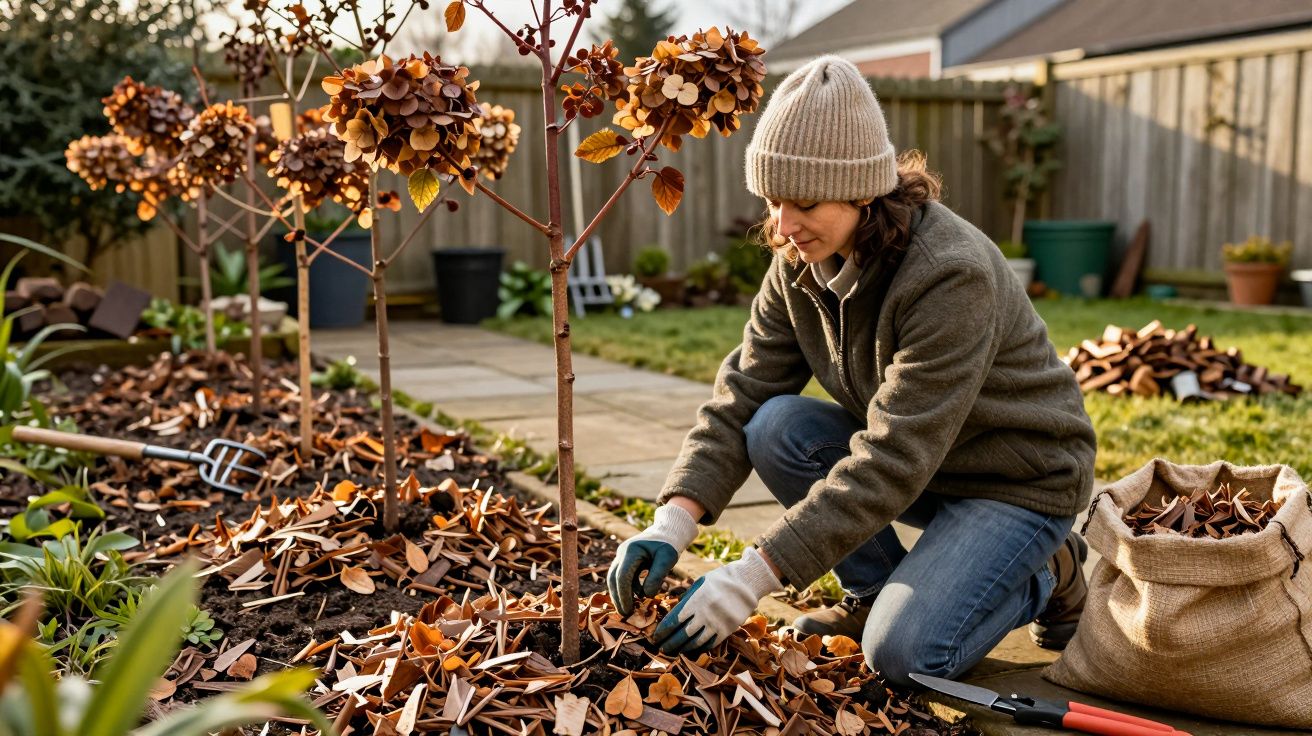
Most gardeners only start thinking about summer-flowering shrubs when the first mild days arrive. With hydrangeas, that approach can be a costly delay. Right in the middle of winter, one quick, low-effort task can be the difference between a modest scatter of flowers and a shrub that’s packed with colour.
January: the make-or-break moment for summer hydrangea blooms
By mid-January, winter has usually taken hold across much of the UK, Europe and North America. Your hydrangeas may look like brittle, lifeless twigs, but they are very much alive. In classic mophead and lacecap types (Hydrangea macrophylla), next summer’s flower buds are already formed on last year’s wood.
Those buds are effectively tiny vaults holding June and July’s display. If they are damaged by frost, you do not merely lose a bit of foliage-you can lose the entire show you were counting on.
Winter is not “dead time” for hydrangeas. It’s when next summer’s blooms are either safeguarded or wiped out.
The risk is highest during January and February cold snaps. A sudden drop after a mild spell can catch plants unprepared: stems may survive, yet the tender buds can be frost-burnt overnight.
That is why gardeners who consistently get generous hydrangea displays do not wait for spring. They act while the ground is still workable-before prolonged, deeper frosts set in.
The real battleground is at soil level (hydrangea root protection)
Hydrangeas thrive in cool, moist, living soil, and their roots often sit close to the surface. That makes them easy to establish, but it also leaves them exposed when the cold penetrates the top layer of ground.
Fine feeder roots are usually the first casualties. If the plant’s base (the “crown”) freezes hard, the shrub will often live-but it may spend the season rebuilding stems and leaves. In that situation, flowering becomes optional, and many plants simply do not have the spare energy to bloom well.
Protecting the root zone in winter helps the plant save its energy for flowers rather than emergency regrowth.
So the key January aim is straightforward: build a thermal buffer over the root area using a thick, breathable layer of organic material-much closer to a woodland floor than to anything plastic or airtight.
Why you should keep the secateurs away in winter
One of the most common mistakes with hydrangeas happens at this time of year: pruning too early. Brown flower heads and tired-looking stems can be hard to ignore, and many people feel compelled to “tidy up”.
Winter pruning of traditional hydrangeas is one of the fastest ways to ruin the next flowering season.
Those spent flower heads are not just untidy leftovers. They act as a surprisingly useful layer of protection, helping to shelter buds lower down the stems from harsh air and frost. If you remove them in January, you expose buds directly to freezing conditions and leave fresh cuts just as the weather is at its most unforgiving.
Experienced growers usually postpone any meaningful pruning of Hydrangea macrophylla until late spring, once the worst frosts have passed and new growth makes it obvious which stems are alive and worth keeping.
Winter “armour”: natural materials that genuinely work
For most gardens, the best cold protection is already on hand. You do not need pricey fleece tunnels or complicated frames. You need the right mulch, applied generously.
Best materials to protect hydrangea roots
- Fallen leaves: Dry oak or beech leaves are especially useful; they break down slowly, stay springy, and trap insulating air.
- Pine bark: Bark chips insulate for a long time and gently acidify the soil, which can encourage bluer tones in some varieties.
- Straw or hemp: Light and airy, with plenty of air pockets that act like a natural duvet against temperature swings.
- Dry fern fronds: In wooded or rural areas, old fern growth can make a surprisingly effective, mineral-rich covering that sheds water well.
Many gardeners combine two or three. Leaves add bulk (and later nutrition), while bark or straw helps stop the layer collapsing into a wet, compacted mat.
How to apply winter mulch properly (without smothering the plant)
A token handful of leaves will not do much when temperatures drop sharply. Think of this as putting a proper winter coat around the base of the shrub.
| Step | What to do |
|---|---|
| 1. Light tidy | Clear weeds and loose debris at the base, but do not dig or rake aggressively. |
| 2. Prepare material | Collect dry leaves, bark, straw or ferns. Do not use anything already mouldy. |
| 3. Spread evenly | Make a wide ring around the plant, reaching at least to the outer edge of the branches. |
| 4. Build thickness | Aim for 10–15 cm of mulch for meaningful frost protection. |
| 5. Leave a gap | Keep 1–2 cm clear around the main stems to reduce the risk of rot at the collar. |
Do not press it down to make it look neat. The trapped air is what provides insulation. A heavy, compacted layer holds moisture against the stems and can encourage fungal issues.
The best winter mulch feels like a thick, loose duvet-not a flattened carpet.
A few extra winter checks that help hydrangeas in the UK
Cold is not the only winter stress. In exposed gardens, drying winds can desiccate buds and stems, particularly where plants are in open positions or on raised ground. If possible, use a windbreak (even temporary hessian) or position vulnerable shrubs where fences and hedges reduce wind chill.
Also consider moisture: hydrangeas dislike sitting waterlogged, but going into a freeze bone-dry can add stress. In mild spells, if the soil is dry and not frozen, a light watering can help the plant cope-especially in sheltered urban gardens where winter rainfall may not reach the root zone evenly.
Why this 15-minute job improves flowers and soil health
Once in place, winter mulch works in several ways at once. First, it acts as an insulating blanket, slowing how quickly cold reaches the soil and smoothing out abrupt shifts during stop–start winters with alternating frost and thaw.
When spring warmth returns, the same layer begins to change. Fungi, bacteria and earthworms gradually break it down, turning it into humus-a dark, crumbly material that holds nutrients and moisture like a sponge.
What starts as winter protection becomes slow-release fertiliser by the time hydrangeas wake up.
That extra humus supports the roots just as the shrub is investing in fresh growth and flower development. Later, as summer heat arrives, any remaining mulch helps keep the soil cooler and reduces evaporation, meaning less frequent watering.
What not to do: common winter mistakes with hydrangeas
Three habits that put next year’s flowers at risk
- Hard pruning in January: Cutting old wood and removing flower heads too soon exposes buds and wastes the plant’s stored energy.
- Leaving bare soil: Uncovered ground around the base acts like a cold sink, allowing frost to reach tender roots faster.
- Relying on plastic covers alone: Plastic traps condensation and can promote rot; it offers limited root protection unless paired with organic mulch.
Another frequent mistake is piling mulch right up against the stems in a “volcano”. Hydrangeas resent a permanently damp collar. That small clear ring around the stems lets the plant breathe while the roots stay protected.
Different hydrangeas, slightly different winter needs (Hydrangea macrophylla and more)
Hydrangeas do not all behave identically. Hydrangea macrophylla (mopheads and lacecaps) mainly flower on old wood, so bud protection is crucial. Panicle hydrangeas (Hydrangea paniculata) and smooth hydrangeas (Hydrangea arborescens) generally flower on new wood, so they are often more forgiving if top growth is damaged.
Even so, a winter mulch still pays off for these tougher types: stronger root development, improved moisture balance, and richer soil life. In colder areas, it can be the difference between a plant that merely survives and one that flowers heavily from the base upwards.
Practical scenarios: how much protection is actually enough?
In a mild, built-up garden where temperatures rarely fall far below freezing, a lighter layer of 5–8 cm of leaves or bark can be sufficient to steady soil temperatures.
In more exposed or rural settings-especially where winter lows commonly reach -5°C or below-going up to 15 cm is sensible insurance.
For potted hydrangeas on patios or balconies, roots are far more vulnerable because the compost chills quickly. Wrapping the pot with jute, cardboard or bubble wrap and adding a thick mulch layer on top can reduce stress markedly. Grouping containers together near a wall can also create a slightly warmer microclimate.
Extra gains: colour control, water savings and pest balance
Mulch choice can subtly influence flower colour in some hydrangeas. Pine bark (and pine needles) gradually lowers soil pH, encouraging bluer tones in varieties that respond to acidity. Leaf mould and compost tend to keep conditions closer to neutral, which often supports pinker shades.
Over time, repeating winter mulching changes how the whole border behaves. Soil retains water more evenly, reducing swings between drought and saturation. Helpful organisms multiply in the organic layer, speeding nutrient recycling. Even slugs and snails-often blamed for everything-are less likely to cause major harm when plants are vigorous and well-nourished.
Over several seasons, that small January routine does far more than protect hydrangeas from a few frosty nights: it steadily moves the planting area towards a more stable, resilient balance, better able to handle cold winters and unpredictable summer heatwaves.
Related reads (as seen elsewhere)
- In China’s Gansu province, the village of Liqian still intrigues historians: some locals with green eyes and fair hair are thought to descend from Roman soldiers from around 2,000 years ago. DNA studies suggest traces of European ancestry, keeping this East-meets-West mystery alive.
- What your fear of disappointing other people may be telling you psychologically.
- China spent more than a decade quietly building new islands with vast quantities of sand-prompting debate over whether it is masterful statecraft or a troubling rehearsal for conflict in the Pacific.
- Over 65 and noticing you feel less patient than you used to? Psychology offers a possible explanation.
- Why mild discomfort can show up after mentally demanding work.
- [News] The delay to MGCS highlights France’s “transition tank” problem.
- A nationwide strike begins on 13 January: what you need to know.
- 14 yoga poses designed to open tight hips and improve mobility.





Comments
No comments yet. Be the first to comment!
Leave a Comment