
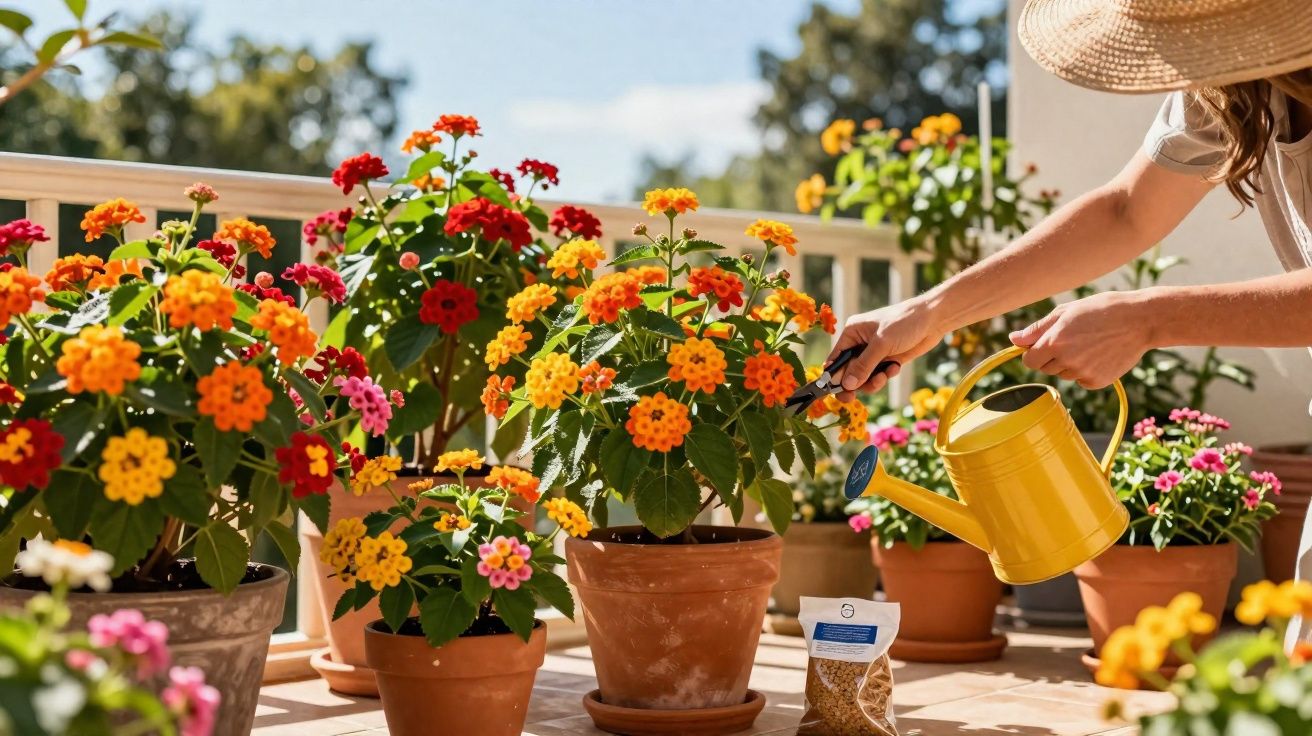
A shrub that pushes out new blooms almost without pause, shrugs off heat with ease, and floods balconies and gardens with colour - it sounds like magic.
That is exactly the effect you get with lantana, known in German as Wandelröschen. This tough shrub produces fresh flowers for months on end, even shifting through different colours as it goes, while remaining surprisingly straightforward to look after. If you can offer it a safe spot for winter, you can enjoy this underappreciated queen of the garden for many years.
Why lantana is considered an “immortal” shrub
In its native Central and South America, lantana grows as a perennial shrub that can become partly woody. In tropical regions it spreads quickly and persists year-round. In the UK and similar climates it cannot tolerate frost outdoors, but with proper overwintering in a container it will keep going for many years - hence its reputation for being practically “immortal”.
Lantana flowers from spring right through to autumn - with a colour show that keeps changing.
What makes it especially intriguing is how the individual flower heads change shade over time. They often begin yellow, move through orange, and then deepen into strong red or pink. That means the plant can look as though it has been redecorated several times over, even within a single day.
Location: where Wandelröschen feels most at home
To position this long-flowering plant well, it helps to think of its natural habitat: warm, sunny, and fairly airy. That combination is easy to recreate on a balcony, patio, or terrace.
- Light: A full-sun to very bright position, ideally with many hours of direct sunshine.
- Warmth: Sheltered spots by house walls or under pergolas are perfect.
- Wind: A light breeze is fine, but avoid constant draughts and cold gusts.
- Pot or border: In the UK it’s mainly grown in containers, either as a standard (tree form) or as a shrub; in the ground only in very mild areas and with winter protection.
On balconies, the shrub form suits window boxes or larger pots. Standards, by contrast, create striking focal points by an entrance or on a terrace.
Planting lantana correctly: how to get it off to a good start
If you bring home a lantana from a garden centre, it’s worth setting it up properly from the outset. The roots dislike waterlogging, but the plant also doesn’t appreciate compost that dries out completely.
Drainage is essential
In nursery production, lantana is usually grown in an ideal, free-draining mix. At home, conditions can be very different. That is why a coarse drainage layer in the pot matters:
- Fill the bottom of the container with expanded clay pellets or coarse shards of terracotta.
- Keep the drainage hole clear so excess water can run out freely.
- Add a good-quality multi-purpose compost above, optionally mixed with a little sand or fine expanded clay.
This creates an open, permeable growing medium that holds moisture without leaving the roots sitting wet.
Step-by-step planting
- Choose a container slightly larger than the root ball.
- Add the drainage layer, then a first layer of compost.
- Remove the plant from its nursery pot and gently loosen the outside of the root ball.
- Position the lantana so it sits at the same height as it did previously.
- Backfill with compost and press down lightly.
- Water thoroughly, but do not allow water to stand in the saucer.
Care: how Wandelröschen flowers for months
From May - and sometimes right into October - lantana puts on its display. To keep it going for as long as possible, it needs regular water and nutrients, but without overdoing either.
Watering: never let it dry out completely
Lantana is considered fairly tolerant of dry spells, but it shows stress quickly when short of water. First the flowers drop; then the leaves begin to hang limp.
- Keep the compost evenly, lightly moist in summer.
- Let the top layer dry slightly between waterings.
- Tip away any standing water in the saucer after 10–15 minutes.
- During hot spells on a balcony or terrace, water a little more often, but moderately.
If the root ball dries out completely, lantana reacts sensitively and needs time to recover.
Feeding: fuel for the flower machine
Continuous flowering takes energy. A consistent feeding routine repays you with maximum bloom:
| Period | Feeding |
|---|---|
| April to September | Add liquid feed for flowering plants to the watering can once a week |
| Start of the season (March/April) | Alternatively, work a slow-release fertiliser into the top layer of compost |
| From October | Stop feeding and let the plant settle into its resting phase |
Pruning and shaping: keeping the shrub compact
In window boxes, Wandelröschen is often treated as a one-season plant, so a major cut-back isn’t usually done. If you want to keep your plant for several years, it’s best to reach for the secateurs in late winter.
Spring cut-back
New growth typically gets going in March or April. That’s when a firm prune pays off:
- Shorten all shoots to around 10–15 cm.
- Remove weak, thin, or inward-growing branches completely.
- With standards, shape the crown clearly so it stays rounded and dense.
In summer, many gardeners encourage the next flush of flowers by removing faded blooms regularly by hand or with scissors. It takes a few minutes each week, but it’s rewarded with an almost uninterrupted sequence of flowers.
Overwintering: getting this long-flowerer through the cold
Lantana and frost do not mix. If it lives outside in a pot or garden, you need to move it before the first cold nights arrive.
The right winter quarters
The ideal place is bright and cool, for example:
- an unheated conservatory
- a bright stairwell
- a cellar room with a window
- a frost-free hobby room at around 10 °C
The sweet spot is roughly 10 °C with good ventilation. If you don’t have a bright spot, you can keep Wandelröschen somewhere darker, but then it should be cooler - around 5 °C. At this stage it needs very little water: keep the compost only just moist so the root ball does not dry out entirely.
From February onwards, its water needs increase slightly. Then acclimatise the plant gently to warmer conditions, start feeding again for the first time, and put it back outside after the last frosts in May (around mid‑May).
Toxic to pets, paradise for insects
One point that is often missed at purchase: all parts of lantana are considered toxic, including the ornamental berries. If you have cats, dogs, or small children, choose the position carefully.
- Place containers out of reach of small children and pets.
- Wear gloves when pruning and avoid skin contact with the sap.
- Pick up fallen leaves and fruit promptly.
For butterflies, wild bees, and many other insects, lantana is a genuine nectar-rich magnet.
Especially in urban balcony gardens, the shrub can become a valuable food source when other flowers have long finished.
Practical design tips for using lantana
Because Wandelröschen flowers so tirelessly, it works brilliantly as a centrepiece in pots and planters. It looks particularly balanced alongside plants that enjoy similar conditions:
- With Mediterranean herbs such as rosemary or thyme, positioned nearer the pot edge.
- With trailing companions such as trailing petunias or verbena to soften the rim.
- As a standard above lower, densely leafy groundcover plants in a container.
If you don’t have much time for intensive care, it’s wiser to choose robust varieties and use larger pots. A bigger volume of compost dries out more slowly and is more forgiving if you miss a watering.
What many people don’t realise: risks and opportunities in the garden
In warmer countries, lantana is sometimes classed as invasive because it can spread unchecked. In our climate, the weather prevents that from happening. At the same time, you still benefit from its strengths: a long flowering period, strong appeal to pollinators, and flexible container use.
For families with small children, a compromise may be worthwhile: grow lantana only on higher balconies or terraces where youngsters cannot access it freely. If your main goal is to attract butterflies and bees, combine the shrub with other nectar-rich flowering plants to create a small “insect buffet”.
The calculation is simple: prune it properly in spring, water it consistently, and overwinter it well - and lantana will deliver colour, scent, and life for years, without fuss but with impressive stamina.





Comments
No comments yet. Be the first to comment!
Leave a Comment