
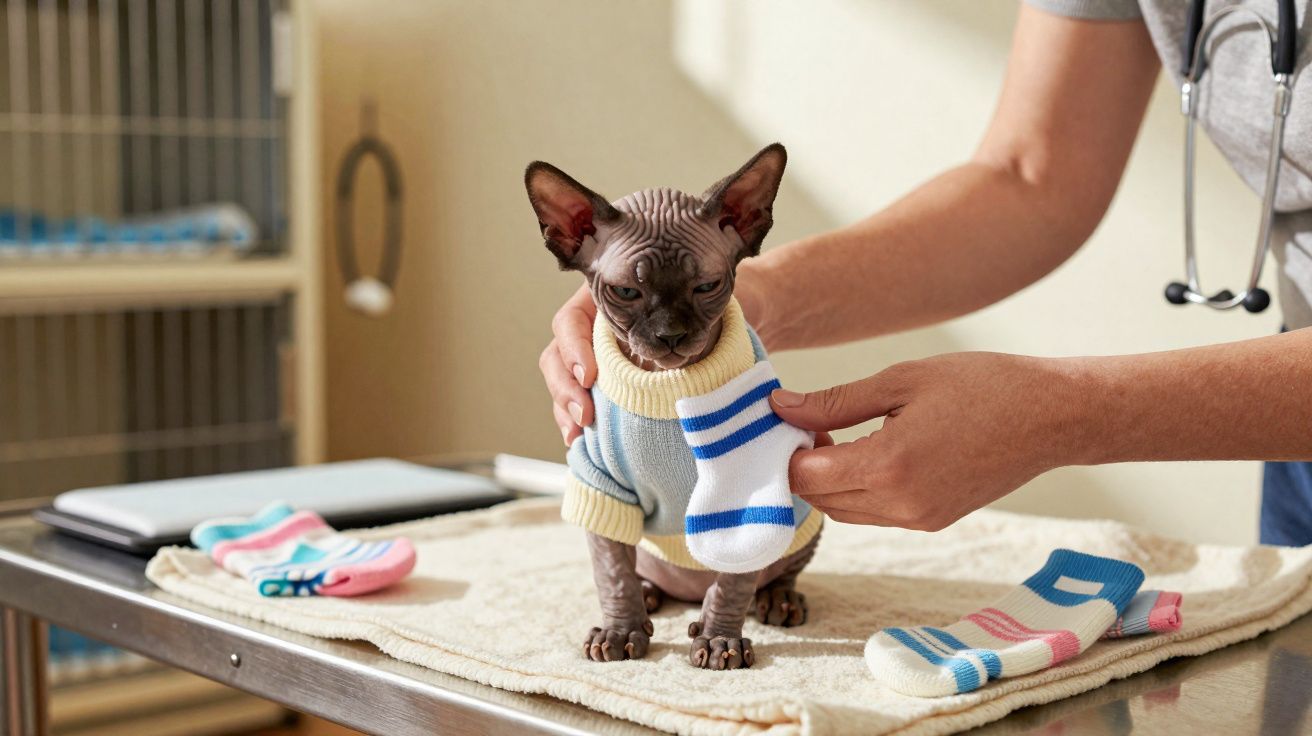
The story of the tiny Sphynx kitten Sammie starts in crisis: barely two weeks old, seriously ill, hairless and constantly shivering with cold. At SPCA Merced, it looked as though his fate was almost sealed. Then the shelter team and vets stepped in, tried something unexpected - and completely changed the kitten’s prospects.
A far-too-young kitten in an emergency
When Sammie arrives at SPCA Merced, he is barely beginning life. He is around two weeks old, minuscule, naked and far too weak. Sphynx cats are born without fur anyway, but on an animal this young the lack of insulation is especially critical.
Staff describe a skinny, listless little scrap who can hardly move. Instead of playing or mewing, he trembles from the cold. On top of that, he has a severe respiratory infection. The illness is so advanced that his left eye is bulging outward - a dramatic consequence of the inflammation.
“The tiny body is fighting an infection, being underweight and constant hypothermia at the same time - a dangerous combination for such a young animal.”
The vets quickly conclude that without consistent treatment and reliable warmth, Sammie has very little chance.
Severe diagnosis, uncertain outcome
Medically, the situation is precarious. A serious respiratory infection in a newborn can become life-threatening in a very short time. The protruding eye shows just how much pressure has already built up around the head. Those responsible face a difficult decision: euthanise, or try everything?
They deliberately choose to fight for him. Sammie is given medication and inhalation therapy, and is placed with a foster family where someone can keep a close eye on him around the clock. Yet even with antibiotics and intensive care, one central issue remains: temperature.
Why hairless cats get cold so quickly
Unlike most other breeds, Sphynx cats do not have protective fur. Many people find the look striking, but it brings health challenges - especially for babies:
- They lose body heat far more quickly.
- They burn more energy simply to stay warm.
- They are more prone to colds and other infections.
- They often need extra heat sources or clothing.
For an adult, healthy Sphynx, a cosy blanket or a warm room is often enough. For a tiny, ill kitten, it is not. The carers soon realise that despite a hot-water bottle and a blanket, Sammie still cannot properly warm up. His body is so slight that he struggles to retain heat.
The unusual sock idea
In the foster home, the team looks for something that does more than a blanket - something that sits close to the body, won’t slip off, and is still soft. Purpose-made clothing for kittens this small is hard to find. So the carers rethink the problem and end up with an everyday item most people have at home: socks.
They take a soft sock, carefully cut small holes for his legs, and adjust the length. In just a few minutes, it becomes a sort of mini jumper for Sammie. The fabric fits snugly without squeezing. The kitten can still move, but stays wrapped up like in a tiny sleeping bag.
“A simple sock becomes a made-to-measure layer of warmth - and for Sammie, a real lifeline.”
The first attempts help almost immediately: Sammie shakes less, sleeps more deeply and drinks better. His body temperature steadies. Instead of spending all his energy just keeping warm, he can finally put strength into growth and recovery.
First successes: gram by gram back to life
After only a few days in his “sock outfit”, Sammie’s condition changes noticeably. He starts to gain weight - at first only a few grams, but steadily. For an animal this small, every gram is a meaningful step.
Carers also see him becoming more alert. He begins to look around with curiosity, responds to voices, and seeks out the closeness of the people caring for him. The mix of warmth, medication, regular feeding and hands-on nursing clearly pays off.
For the team, it matters emotionally as well. They no longer see only a critical emergency case, but a tiny creature determined to fight. The socks become part of his routine. Time and again, the carers adjust the size and cut so he stays comfortable - and remains well protected through every growth spurt.
Surgery and a turning point
Despite the progress, his eye remains a concern. The severe bulging carries risks, including pain or lasting damage. After weighing everything up, the vets decide an operation is necessary. Surgery is always a risk for an animal so young, but weeks of care have significantly strengthened Sammie’s condition.
The procedure goes well. After the anaesthetic he is initially exhausted, resting a great deal and kept warmly wrapped. The sock solution proves useful again: it helps prevent him from cooling down after surgery and gives him extra stability.
Over the following days, the turning point becomes clear. His appetite returns, he moves more confidently, and he seems far more lively. Carers report that he starts to play, nibble at fingers, and eagerly explore anything within reach.
From worry case to family member
With each day, the fragile little scrap grows into a spirited, active Sphynx tomcat. His personality becomes more obvious too: affectionate, cuddly, and a bit cheeky. Many people who follow his journey fall for him - and in the end, a family chooses to take him in permanently.
In his new home, Sammie does not have to be cold. The family makes sure he has plenty of warm resting spots, using beds, blankets and - yes - little “jumpers” when it is cooler. The improvised sock fix becomes something of a signature: photos show him in different mini outfits, sometimes plain, sometimes colourful.
“A seriously ill, shivering little tomcat has become a beloved pet who now lives safely and cared for.”
What Sphynx cat owners should bear in mind
Sammie’s story highlights just how sensitive hairless cat breeds can be to temperature. Anyone considering taking in such a cat should research properly beforehand. A few key points:
- Room temperature: Hairless cats usually need homes that are a bit warmer than those for other pets.
- Resting places: Snug caves, beds with blankets, and spots near a radiator are ideal.
- Clothing: Light jumpers or shirts can make sense in draughts or in winter.
- Skin care: Without fur, oils build up faster on the skin, so regular cleaning is part of the routine.
- Sun protection: They burn more easily in the sun, so direct sunlight should be limited.
Especially with kittens or unwell animals, it is worth watching behaviour closely: if a cat often shivers, desperately searches for warm places, or seems constantly tired, hypothermia could be the cause. A simple item of clothing or a better heat solution can often bring a clear improvement in quality of life.
Improvised help in everyday life with animals
The sock idea shows how creative animal lovers can become when things are serious. Of course, a solution like this does not replace a vet - but it can support medical treatment in a practical way. Anyone making something themselves should always ensure the animal cannot get tangled up or injured.
Soft, stretchy fabrics without hard seams or buttons work best. Openings must be large enough so nothing cuts in. Alongside socks, some owners use baby bodysuits, cut-down children’s T-shirts, or specially adapted dog jumpers for very small cats.
Why stories like this matter
Cases like Sammie’s show how much commitment goes into shelters and foster placements. People there often work with limited resources and find inventive answers - from improvised clothing to specialised feeding methods. Many of these ideas can be used at home too when an animal needs extra support.
Anyone who chooses an animal from rescue is not only bringing home a pet, but also turning a difficult beginning into something better. Sammie’s path makes that unmistakably clear: a few brave decisions, a piece of fabric and a great deal of care can be the difference between a weak kitten giving up - or one day strutting confidently across the living room.






Comments
No comments yet. Be the first to comment!
Leave a Comment